
We promise clear, upfront pricing that matches real Singapore expectations. Our aim is to help homes and offices plan maintenance with confidence. We state typical one‑off and recurring cleaning rates openly, and we note that weekend bookings may incur a small surcharge.
Who we work for: household and commercial customers who want steadier performance, fewer breakdowns and measurable improvements in indoor quality. We explain that final price depends on unit type, access and condition, and that we outline charges before any work begins.
Our approach is professional and safety‑led. We use correct methods, perform performance checks and offer clear options — including steam cleaning or chemical wash — so you know what to expect. Further down the page we detail pricing tiers, what’s included, recommended frequency and our end‑to‑end process.
Air purifier service cost in Singapore: our transparent pricing
We publish straightforward fees so building managers and homeowners can plan maintenance without surprises.
We quote clearly and confirm the scope in writing. That means you see the price and expected work before we start.
One-off servicing and maintenance visits
One-off visits suit newly moved-in flats, post-renovation dust, odour problems or a sudden performance drop. A typical visit includes inspection, basic cleaning and functional checks.
Extra charges may apply for non-standard access, replacement parts or urgent bookings. We always confirm any change with you before proceeding.
Contract and subscription options for offices
For offices we offer contract plans that simplify budgeting. A clear example is the Daiohs WHA-320 plan, billed per year over a two-year term. That anchors expectations and removes repeated purchase decisions for clients.
What “one fee for all” covers and how we avoid hidden charges
One fee for all means equipment provision (where applicable), scheduled visits, inspection, clean-up and repair or 1‑to‑1 replacement for mechanical failure. We list common triggers for extra charges—weekend slots, site restrictions or additional work—and confirm any variation before we act.
For office managers who want a broader cleaning and facilities checklist, see our business cleaning checklist.
What’s included in our air purifier servicing
We list every step we take so managers and homeowners know exactly what to expect.
Inspection, clean-up and performance checks for better quality
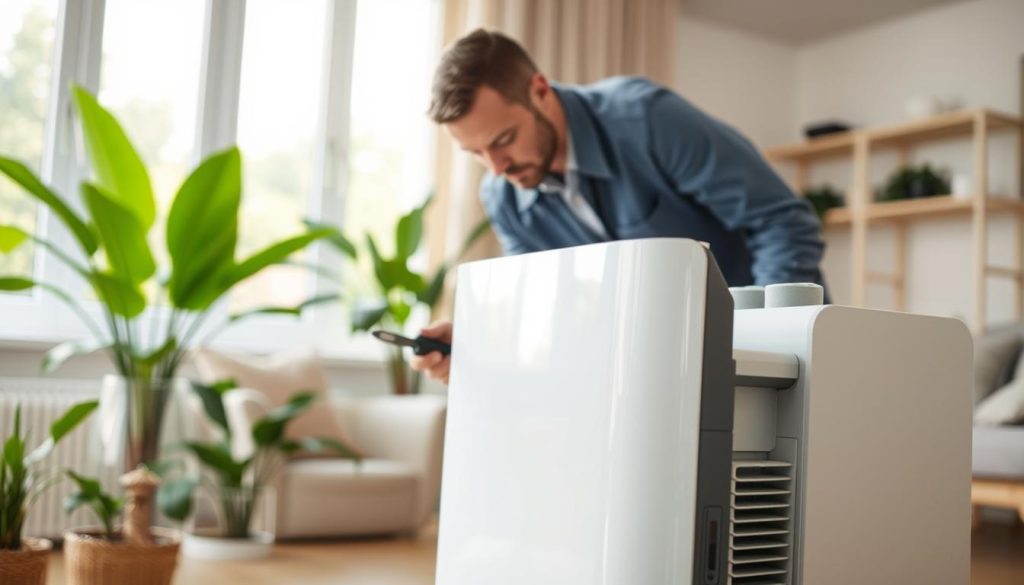
We run a concise inspection checklist that covers visual condition, airflow, unusual noise, seals and fittings.
Technicians also look for dust loading and other signs that reduce indoor quality.
Filter servicing schedule and replacement intervals
Our cleaning standards include tidy work-area practices and careful internal and external cleaning to remove buildup that affects performance.
For offices we recommend visits every four months, with a full-stage replacement at 12 months for 4-stage True HEPA systems.
- What we confirm: filter fitment, condition and whether cleaning or replacement is required.
- Performance checks: airflow verification and operational tests after work is done.
- Scale: single unit checks vs standardised multi‑unit routines so every machine gets the same attention.
Note: Many clients confuse this upkeep with aircon maintenance. We clarify overlap on indoor hygiene but not on cooling coil repairs.
For practical DIY tips on upkeep, see our cleaning guide.
Steam cleaning vs chemical wash for healthier air
Choosing the right cleaning method affects long-term performance and indoor wellbeing. We compare steam cleaning and chemical wash so you can weigh hygiene, materials and environmental impact.
Steam cleaning: high-pressurised steam with water only
Steam cleaning uses high‑pressure steam and plain water to remove contaminants. It kills bacteria, mould, viruses and odour without leaving residues.
This method suits customers who prioritise hygiene and a chemical‑free outcome. It also reduces the risk of corrosion on delicate aircon coil fins.
Chemical wash: chemical solutions and potential residues
A chemical wash uses detergents and solvents to break down grime. It can be very effective at removing stubborn deposits.
However, chemicals may leave traces on coils or in a drain pipe, and some occupants are sensitive to residues in enclosed spaces.
Environmental considerations and drainage system impact
Chemical runoff can pollute drainage and require responsible containment. By contrast, steam reduces chemical discharge and lowers environmental impact.
Coil fin care and corrosion risk
Harsh chemicals can weaken fins over time and shorten equipment life. We recommend steam when long‑term material care and sustained quality matter most.
Decision guide: choose steam for hygiene‑focused, residue‑free outcomes. Choose chemical wash when heavy grime demands stronger chemistry, but plan for containment and fin inspection.
How often we recommend servicing for homes and offices
We set clear intervals based on real usage so maintenance matches how you actually run each unit.
For a typical aircon run eight to ten hours a day, industry guidance recommends steam cleaning once every 10–12 months as a preventive measure against a choked cooling coil.
We advise this cadence for most home settings, but you should bring it forward if you have pets, recent renovation dust, heavy cooking odours, allergies or high occupancy.
Steam cleaning frequency based on typical daily usage
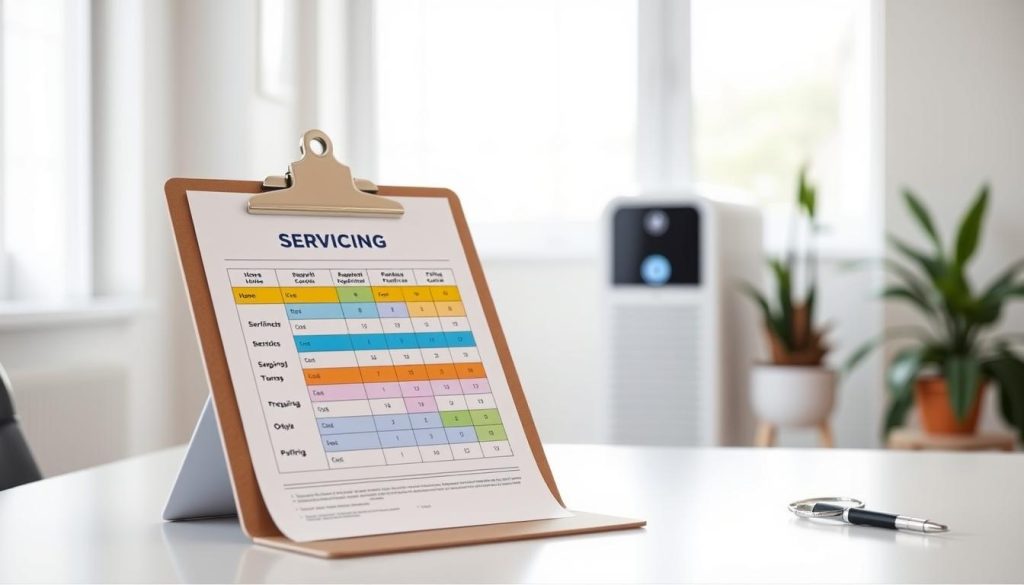
Practical plan: with 8–10 hours daily use, book steam cleaning every 10–12 months.
If a unit runs longer hours or the room has more particulates, shorten the interval. These months assume steady, typical use.
Filter change cadence for office plans
For an office subscription we recommend routine filter checks every four months. That keeps performance stable and avoids reactive visits.
Every 12 months we replace all filter stages. Staged changes prolong life and protect system efficiency across multiple units.
| Setting | Typical action | When (months) |
|---|---|---|
| Home (normal use) | Steam cleaning | 10–12 months |
| Home (high particulate) | Advance cleaning / inspect | 6–9 months |
| Office (managed plan) | Filters change (staged) | 4 months; full change at 12 months |
| Multi-unit sites | Synchronised servicing | Align to office cadence |
Summary: we favour usage-based servicing rather than one-size-fits-all rules. This makes planning simple and keeps aircon performance consistent across homes and commercial spaces.
What affects your final price
Several clear variables shape the final fee you’ll see on your quote. Below we explain the main drivers so you can compare offers and plan visits with fewer surprises.
Unit model, size and location
Model and size affect labour and materials. Larger or older wall-mounted models take longer and may need extra parts.
Location can add complexity: high mounting, tight ledges or obstructed access increase time and risk.
Number of units and site type
Multiple units typically reduce the per‑unit time as we work more efficiently across the site.
For a residential home we expect quicker access. Offices need coordination, permits or after‑hours work that can increase overall charges.
Weekend surcharges and extra charges
Market practice often includes a modest weekend surcharge. A common example is a small uplift for Friday–Sunday slots, though some providers discount evening visits.
Additional charges cover non‑standard work, replacement parts or urgent callouts. We confirm any variation before we proceed.
Cleaning time per wall‑mounted unit
Plan for roughly 1 hour to 1 hour 30 minutes per wall‑mounted unit depending on model size and location.
Price anchor: steam cleaning is quoted before GST per wall‑mounted indoor unit, model dependent. This helps reduce uncertainty when you compare quotes.
- Tip: Share model photos before booking for a more accurate quote.
- Tip: Schedule multi‑unit visits together to lower disruption and total price.
Our service process from booking to clean air
We map every step from enquiry to handover so clients know exactly what will happen on site.
Plan recommendation and confirmation
We begin by gathering site details, usage patterns and performance goals. Then we recommend a tailored plan and confirm scope, timing and access needs.
On confirmation, we issue a clear timeline and, for contracts, outline support terms including free inspections and repair or 1‑to‑1 replacement for mechanical failure.
Delivery and installation for office systems
For office subscriptions we follow a proven flow: call or email → customised package proposal → sign the contract → deliver and install the system.
Subscription support keeps performance steady and helps preserve energy efficiency over time. For example, view our office filter options here.
On-site protection and tidy finishing
We deploy protective sheets and a water collector funnel to prevent spills during steam cleaning. Technicians handle units carefully and leave work areas clean and professional.
Before we leave, we run post‑work checks, confirm operation with the customer, and document what was done and the next recommended servicing date.
Conclusion
We believe choosing maintenance should be simple and predictable. Pick a plan that matches your use, building type and desired air quality. Transparent pricing and clear inclusions make comparison easy.
Decide between a one‑off visit or a contract based on frequency and occupancy. Our one fee for all option bundles visits, filter changes, inspection, tidy finishing and repair to remove hidden charges.
Regular servicing and correct cleaning methods protect long‑term performance and the broader system. Frequency depends on use, environment and the number of units; we will recommend a schedule that fits homes and offices.
Request a quote to confirm site details and choose a plan with a clear scope. We aim for straightforward booking, reliable work and predictable support so customers see no surprises.

