

We introduce our range as a reliable cleaning system for Singapore workplaces. Our aim is to help teams choose the right model for different floor types and debris profiles. We focus on solutions that keep operations moving and maintain consistent dust control.
Our products use a water-based capture method and strong airflow to bind dust and improve exhaust air freshness. That bagless design reduces dust clouds at emptying and limits allergen build-up in bags.
We will assess each machine by filtration design, wet/dry capability, suction efficiency, noise, tank capacity and on-site handling. This helps you pick a model that suits workshops, warehouses, contractors and commercial floors.
In short: we present reliable machines that cut re-settling dust, improve indoor air and simplify emptying routines. For more on how water-based units work, see our detailed guide at what is water filtration vacuum.
Why choose an industrial water filter vacuum cleaner for cleaner air and dust control
A machine that locks debris into a liquid bath reduces re‑entrainment and delivers noticeably fresher exhaust air. We focus on practical benefits for Singapore workplaces: less visible dust blow‑back during cleaning and more confidence in indoor air hygiene for staff and visitors.
Water‑bath filtration that binds dust for fresher exhaust air
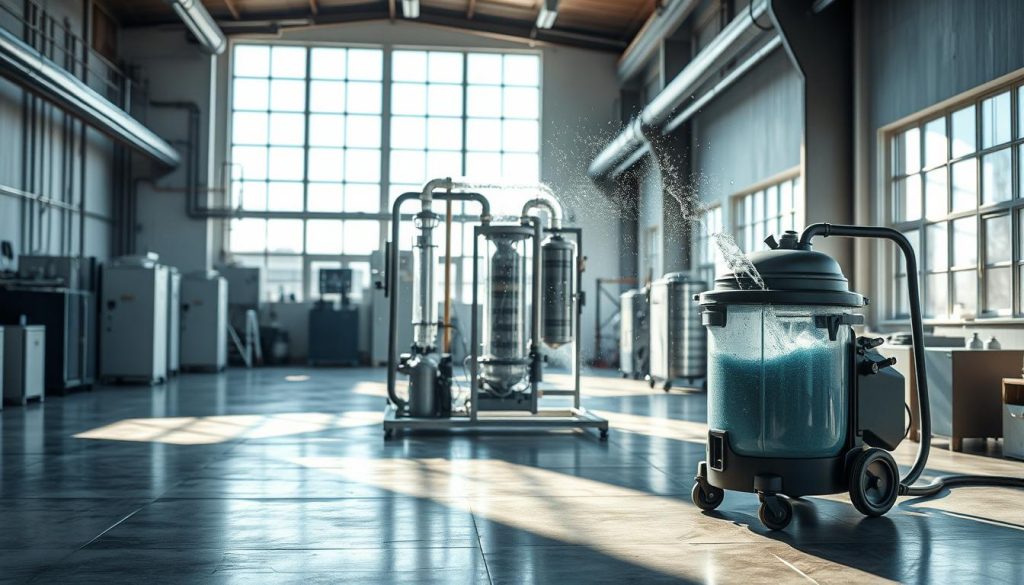
High‑speed swirl forms a rotating water column that traps particles in the bath so they do not re‑circulate. This binding action keeps exhaust air noticeably cleaner compared with single‑stage designs.
Multi‑stage performance with HEPA capture to 0.3 µm
Our recommended set‑up uses a clear primary basin, a washable intermediate stage and a final HEPA module. Together they capture particles down to 0.3 µm, giving exhaust air up to 99.99% cleanliness in leading systems.
Bagless operation to reduce allergen build‑up
Bagless designs remove the need for disposable bags that can trap allergens and create dust clouds at emptying. This lowers ongoing costs and reduces nuisance exposure for cleaners and maintenance teams.
Filtration system components and selection cues
- Transparent basin — core capture and easy inspection.
- Washable intermediate — handles condensed humid air and coarse debris.
- HEPA stage — final protection against pollen, spores and mite residues.
Wet and dry vacuum power for industrial cleaning in Singapore
We focus on platforms that handle both spills and loose debris without needless changeovers. This saves time on busy floors, speeds routine tasks and reduces interruptions during peak hours.
Wet/dry capability for water, slurry, oil and dry debris
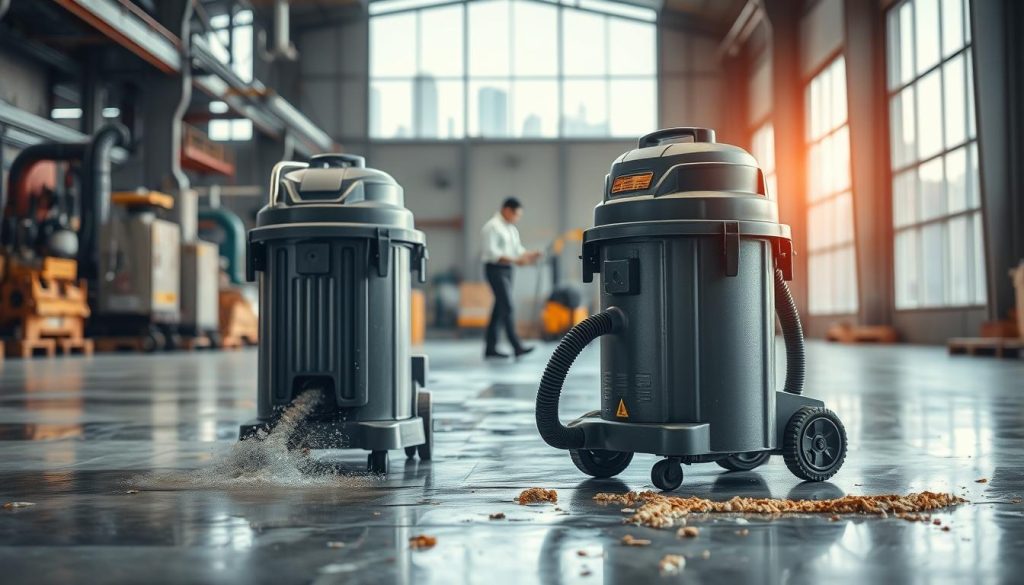
Wet dry performance means the machine lifts standing water, slurry and oil as well as dry waste with minimal adjustment. The CIMAR JB Series and Nilfisk V60 show how one unit can cover wash‑downs and everyday sweeping tasks.
High suction and airflow for demanding floors
We look at measurable figures: the V60 offers about 99 CFM airflow and 117 ft water lift. Strong suction and steady airflow matter on rough concrete, epoxy aisles and loading bays where debris is heavier.
Capacity, noise, mobility and maintenance
Tanks from 30L to 100L reduce emptying stops for cleaners. Noise targets around 75–80 dB suit customer areas. Practical touches — stable caster wheels, ergonomic handles and basic rinsing routines — speed use and cut maintenance time.
How our vacuum cleaner systems compare across key specifications and features
We compare key specs so buyers can match machine performance to real cleaning tasks on Singapore floors. Our framework highlights the factors that change outcomes on-site, not just marketing claims.
Industrial‑grade motor and power consumption balance
Choose power for the task: the Nilfisk V60 (1,000 W) suits light commercial zones. For heavy duty bays, the CIMAR JB range (1.2–3.6 kW) gives extra torque and steady suction without frequent stall.
Filtration and exhaust control options
Multi‑stage filtration handles coarse dust and fine residues; optional secondary HEPA stages (for example VT60CR) further reduce motor carbon dust escaping the exhaust.
Practical design details that improve speed on site
Look for long hoses, stable caster wheels, on‑board tool storage and accessory kits. These features cut transit time and speed edge cleaning.
Corded reliability and reach
For continuous operation we favour corded products. A 30 ft cord and sealed designs mean fewer interruptions between sockets and reliable airflow for sustained cleaning work.
- Compare tank size to reduce emptying stops.
- Check maintenance access for quick filter and basin cleaning.
- Match accessories to floor types to keep speed high.
Conclusion
A well‑specified machine brings measurable gains: better dust capture, steadier exhaust air and faster workflows across busy Singapore floors.
Match the filter and filtration approach to the site’s dust profile. Then confirm wet/dry needs, suction levels and tank capacity to suit your floor area and shift patterns.
If your priority is cleaner air and less allergen blow‑back, water‑based capture with multi‑stage protection is a strong direction. Practical features that make emptying and rinsing simple deliver consistent results for cleaners and teams.
Review our product guide, shortlist by filtration and capacity, and speak with us to confirm the best configuration for your site’s cleaning routine and compliance needs.

