
We aim to stabilise a fault safely and then diagnose the most likely causes. In Singapore homes we rely on these devices for allergies, haze periods and dust control, so quick, sensible action matters.
Common issues include clogged filters, restricted airflow, power faults, overheating, motor problems and unresponsive controls. Frequent overheating often triggers an automatic shut-off and can mean restricted flow or electrical stress. If you smell burning, we isolate power at the breaker immediately.
We explain what we can fix on the spot — for example, clearing vents and replacing filters — and what needs qualified service, such as repeated overheating or motor failure. Basic tools we use are a torchlight, a clean cloth and spare filters if available.
Our step-by-step flow is simple: recognise symptoms, take safety actions, check filters, vents, power and controls, then decide on professional repair or replacement. Whole-house systems linked to ducting usually need a technician sooner. Our goal is to restore safe operation without risking further damage to the unit or compromising indoor quality.
When we know our air purifier needs repair in Singapore homes
We spot early faults when rooms lose that fresh, lightweight feel and dust settles faster than before. These are practical signs that indoor air quality has dropped. We check for visible dust on shelves and vents as our first clue.
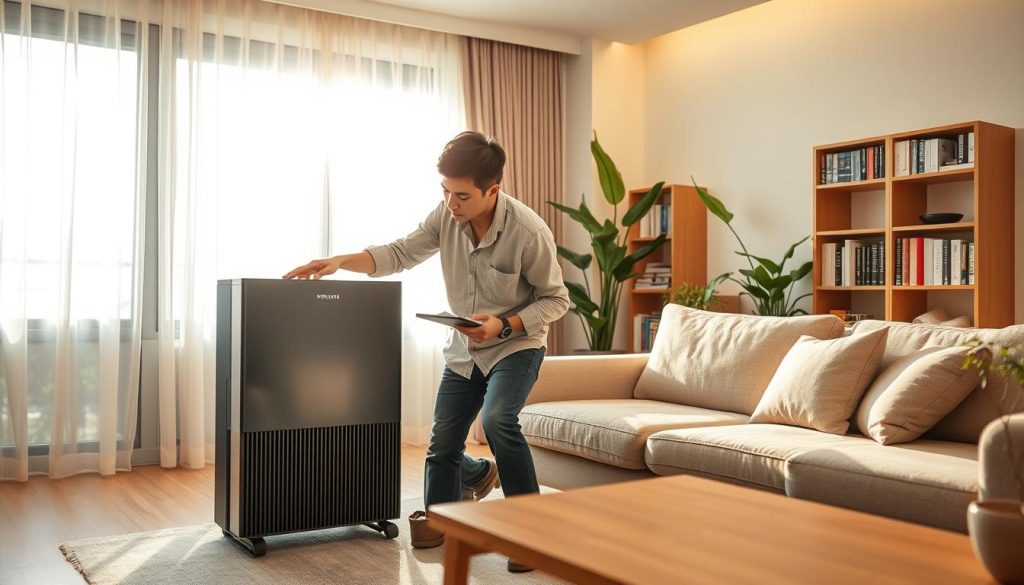
Changes in indoor air quality and more dust on surfaces
When functioning well, we notice lighter-feeling air, fewer allergy triggers and less visible dust. If dust returns quickly after cleaning, filtration is no longer effective and the unit needs attention.
Unusual noises, odours, and signs of overheating
Buzzing, clicking or rattling point to fan or motor strain or debris inside the housing. Musty smells may suggest trapped pollutants or mould, while a burning smell can indicate overheating or electrical stress.
Higher energy bills and what they can signal
Rising electricity use often means restricted airflow from clogged filters. The unit runs longer and draws more power to maintain performance. Whole-home systems can show reduced airflow via dusty vents rather than from the device itself.
| Observed sign | Likely cause | Action we take |
|---|---|---|
| Rapid dust build-up | Clogged filter or poor seal | Inspect and replace filter |
| Unusual noises | Fan/motor strain or loose parts | Check fan housing; call technician if needed |
| Musty or burning odour | Trapped pollutants or overheating | Isolate power if burning smell; clean for musty |
| Higher bills, longer run times | Restricted airflow reducing performance | Clear vents and assess system efficiency |
Deciding next steps: we weigh whether this is simple maintenance, such as filter or vent cleaning, or a more serious problem that needs urgent service.
Air purifier emergency repair: immediate safety steps before we troubleshoot
When a unit shows signs of overheating or electrical strain, our first action is to secure the area and prevent further harm.
- Stop operation: if the unit feels unusually hot, shuts down, or smells electrical, we switch it off and unplug it at once.
- Allow cool-down time: do not touch hot surfaces. Let the device rest so heat-related damage does not worsen.
- Check clearance: move curtains, furniture or objects that block ventilation so heat can dissipate safely.
When to switch off and let it cool down
We turn the unit off immediately if heat builds quickly or run times grow much longer than usual.
Repeated short testing can cause further internal damage, so we avoid switching it on repeatedly.
If we smell burning: isolate power at the breaker
A burning smell is a serious sign. We stop using the unit and isolate the circuit at the breaker if there is any doubt about electrical stress.
We visually inspect for melted plastic, scorch marks or a discoloured plug area and keep the unit disconnected if anything looks abnormal.
Decision rule: if the smell or heat returns after cool-down, we cease DIY action and plan professional service. Meanwhile, we ventilate the room when outdoor conditions allow and avoid activities that add dust or particulates. For safe cleaning techniques and to reduce future faults, see our cleaning guide.
Troubleshooting the most common air purifier problems step by step
A stepwise approach helps us isolate the cause while keeping the unit safe to handle.
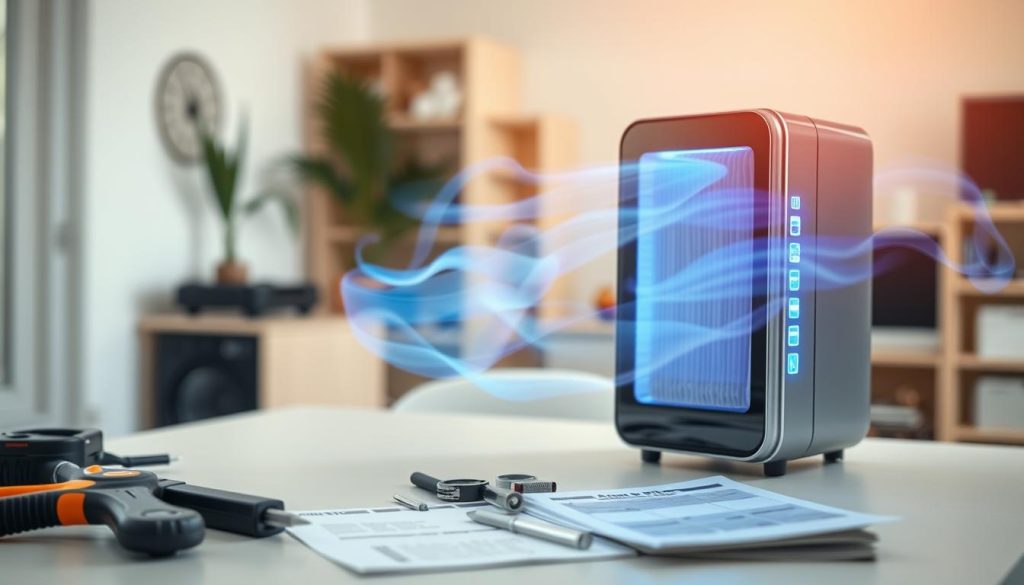
Checking filters for clogs and correct fitting
We remove and inspect filters for heavy dust, dampness, tears or incorrect seating. Replace per manufacturer guidance, typically every 3–6 months depending on conditions in Singapore.
Restoring airflow by clearing vents
We vacuum intake and exhaust grills and remove debris. Give the unit clear space so airflow returns and performance improves.
Quick power and control checks
We test a known-good socket, check the plug for burn marks and inspect the cable for frays. Damaged cords mean stop use and only replace with approved parts.
For unresponsive controls we confirm covers latch correctly and gently clean touch surfaces to remove dust or moisture that can block sensors.
Listening for motor faults and managing heat
Buzzing, clicking or weak output point to fan or motor stress. If overheating repeats after filters and vents are cleared, we stop DIY work and seek professional service.
For model-specific guidance see Dyson troubleshooting tips.
When we stop DIY and call a technician for air purifier repair
If routine checks do not restore normal function, we must decide when to end DIY work and call a qualified technician.
Clear thresholds to stop DIY
Stop DIY if you detect a burning smell, repeated overheating, visible cord or socket damage, persistent power interruptions, or controls that remain unresponsive after cleaning.
Why a qualified technician matters
A trained technician protects safety and indoor air quality. They handle electrical and internal-component faults without increasing fire risk or causing further damage.
Repair versus replacement and what professionals do
We assess the unit’s age, manufacturer guidance, availability of parts and recurring faults to decide on repair or replacement. If the motor or circuit board fails, replacement is often more economical than repeated repairs.
| Assessment factor | What we check | Outcome |
|---|---|---|
| Age & manufacturer guidance | Service history, part availability | Repair or replacement |
| Component health | Motor, board, cord | Recommend replacement if failing |
| Performance & cost | Airflow, noise, operating temp | Service to restore performance or advise replacement |
Professional services include electrical testing, fan and airflow checks, temperature verification and filter inspection to restore stable quality and extend lifespan. For routine prevention, check filters monthly, keep vents clear, manage humidity, avoid kitchen grease and set reminders for scheduled maintenance.
Conclusion
In closing, rapid recognition and calm action are what prevent small faults becoming worse.
Recognise warning signs early, prioritise safety, then follow a clear troubleshooting order: check filters, restore airflow, and confirm power and controls.
Keep core performance levers strong: clean filters regularly, keep vents unobstructed and use a reliable power source. These steps cut recurring problems and extend service life.
Seek professional help for key red flags—burning smell, repeated overheating, persistent unresponsive controls, or odd noises with weak airflow. Such issues need qualified attention rather than DIY fixes.
We favour a maintenance-first approach. Routine checks and timely filter replacement reduce breakdowns and keep the air purifier working safely and effectively in Singapore homes.

