

We bring a compact, practical guide for homes and small businesses across Singapore. Our picks focus on real-life use in HDB flats, condos and landed houses.
When we say water absorbing, we mean rapid spill response without reaching for extra cloths or a mop. These machines handle liquids and solids so you can finish a task in one pass.
Expect trade-offs: wet dry models are often heavier and louder than standard units. Still, they consolidate chores and save us time when pets or young children cause frequent mess.
We cover stick washer vacuums for daily floor care and larger wet dry vacuum formats for tougher messes. Our recommendations weigh cleaning results, comfort, upkeep and value so readers can shortlist quickly.
By the end, you will know which vacuum cleaner suits your floors, household routines and budget in Singapore.
Why wet and dry vacuum cleaners are a smart buy in Singapore homes and small businesses
Singapore households and small businesses often need a single tool that handles spills, grit and pet hair fast. A wet dry model reduces the stops and starts of traditional cleaning, so we finish tasks in less time.
Faster clean-ups for spills, pet mess and everyday dust
Quick response matters when kids spill drinks or pets leave fur and stains. A wet dry unit lets us pick up liquid and dust in a single pass. That saves precious time and lowers the risk of stains setting.
One machine for hard floors, rugs and multi-surface cleaning
We switch between tiles, vinyl, marble and low rugs without rebuilding a cleaning kit. This multi-surface flexibility suits compact flats and small cafés where storage is tight.
When a wet/dry solution beats a dry unit plus mop
Compared with blotting then vacuuming, a wet dry vacuum streamlines the workflow. For small businesses such as clinics and studios, it improves safety and hygiene without buying industrial gear.
- Who benefits most: busy households, pet owners and space-limited users.
- Key gains: reduced turnaround time and consistent results.
| Scenario | Typical mess | Wet dry advantage | Best outcome |
|---|---|---|---|
| Kitchen spill | Liquid + crumbs | Single-pass pickup | Faster cleaning, less residue |
| Entryway | Sand and dust | Handles grit and dry debris | Cleaner floors, less tracking |
| Pet area | Fur and damp spots | Collects fur and extracts moisture | Hygienic, odour-reduced space |
What “water absorbing” really means: wet/dry vacuum vs floor washer vs dry vacuum
We begin with a simple product definition so readers can buy with confidence. In product terms, “water absorbing” means the unit can safely pick up liquids and store them in a dedicated dirty-water tank system, not route them through a dry-only dust path.
Wet/dry vacuum basics
Wet dry vacuums use targeted floor nozzles to lift spills and solids into a separate dirty container. Many include a float mechanism that stops suction when the tank fills. That prevents damage and makes emptying tidier.
Stick-style washers vs drum wet/dry units
Stick-style washer models combine suction and a small clean tank for everyday floor washing. They suit flats and quick maintenance.
By contrast, drum wet/dry units offer larger tank capacity and stronger pickup. We recommend them for renovations, patios or workshops where heavier liquid events occur.
How dry-only machines differ
A dry vacuum cleaner is designed for dust and dry debris only. Using a dry-only unit on spills risks motor damage and poor results. Separation of clean and dirty tanks also stops dirty liquid being redeposited and keeps hygiene standards higher.
- Buy for frequency: choose a stick for daily spills, a drum for large cleanups.
- Consider storage and floor type: cordless stick models save space; drum units give capacity and power.
- For more creative uses and tips, see our short guide on unusual tasks with these machines: unusual uses for wet/dry units.
How we tested and shortlisted these wet dry vacuum models for Singapore
We designed trials to show how each model performs on spills, tracked grit and fine dust in small Singapore residences.
Real-life scenarios we used
Our checklist mirrored daily events: coffee or juice spills, bathroom puddles, kitchen splashes, tracked-in sand and pet hair. Each trial ran on tiles, vinyl and low-pile rugs to reflect common floors in HDB flats and condos.
What we measured
We tested suction both on dry debris and on wet patches. Rather than only noting specs, we timed how fast the head cleared liquid without leaving streaks. That gave a clearer view of real-world suction power.
Tank volume and emptying ease were checked next. We judged whether a model could clean a typical flat without frequent stops. Filter design was assessed for fine dust capture and allergy control.
Comfort and value
Noise, manoeuvrability and weight matter in compact homes. We recorded comfort for short sessions and longer jobs. Finally, we weighed genuine performance features against marketing extras to identify strong price-to-performance picks.
| Test area | Key metric | Why it matters |
|---|---|---|
| Kitchen spills | Suction speed & tank handling | Quick clearing and tidy emptying reduce downtime |
| Fine dust corners | Filter type (standard vs HEPA) | Captures haze-season particles and allergens |
| Pet zone | Brush design & manoeuvrability | Removes fur and damp spots without heavy lifting |
What to look out for before buying a wet dry vacuum in Singapore
Choosing the right model comes down to a handful of specs that affect performance, maintenance and storage.
Tank capacity: clean water tank vs dirty water tank
Look at both tank sizes. A larger clean water tank reduces refill stops, while a bigger dirty water tank means fewer empty cycles.
Trade-off: bigger tanks add bulk and weight, which affects manoeuvrability and storage.
Suction and suction power metrics
Manufacturers list Pa or Air Watts. Pa is common on washer-style heads; Air Watts is used on some cordless systems.
What matters: real-world suction on wet patches and nozzle contact with floors often beats headline numbers.
Filter system for fine dust and allergens
Standard filters suit routine jobs. Choose HEPA if you need to trap fine dust and allergens for health reasons.
Noise, corded vs cordless and useful accessories
Quieter operation matters in HDB flats. Check decibel ratings and ergonomics for longer sessions.
Corded machines give unlimited run time and reach, while cordless models trade runtime and charge time for portability.
Accessories we value: edge nozzles, anti-hair brush heads and extension wands that reach skirting boards.
Weight, manoeuvrability and flat-folding design
Choose a design that lays flat for under-bed and sofa access. Lightweight handling reduces fatigue and speeds jobs.
| Buying factor | What to check | Typical spec | Why it matters |
|---|---|---|---|
| Tank size | Clean water vs dirty tank litres | 0.5–3 L clean / 1–5 L dirty | More capacity = fewer stops; affects weight |
| Suction | Pa or Air Watts & nozzle seal | 2,000–20,000 Pa / 100–140 AW | Determines pickup on wet patches and grit |
| Filter | Standard vs HEPA | Foam / HEPA H13 | HEPA captures fine dust and allergens |
| Portability | Weight, fold-flat height, corded/cordless | 3–8 kg; 180° fold; battery 30–60 min | Ease of storage, access under furniture |
Quick checklist: match tank size to flat size, favour HEPA if allergy-prone, prioritise real suction at the head, and pick accessories that reach edges. Shortlist two machines and compare runtime, design and filter type before buying.
Best overall water absorbing vacuum cleaner for most households
Our top pick combines smart sensing, strong pickup and easy handling for multi-room jobs. It performs well in flats where spills, pet hair and daily dust appear in quick succession.

Tineco Floor One Switch S7 Stretch: smart iLoop sensing and near-wall cleaning
Key specs: 1,000ml clean water tank, 720ml dirty tank; 22,000 Pa suction power; 4.7kg weight; runtime up to 50 minutes (washer) and 70 minutes (vacuum cleaner); 4.5 hours charge.
Who it suits
Families and mixed-mess homes that need a single device for spill response and routine floor care will appreciate the S7 Stretch.
Why we pick it: the iLoop technology adjusts suction and flow so the head neither soaks nor skims. The dual-side brush runs within about 0.5cm of walls for neater skirting edges.
- Switches from washer to stick format with tools for dust and crevices.
- LCD gives a clear prompt when the floor is clean, helping consistent results.
- Tank sizes suit a typical Singapore flat without constant stops.
| Feature | Value | Benefit |
|---|---|---|
| Suction power | 22,000 Pa | Strong pickup on wet and dry patches |
| Tanks | 1,000ml / 720ml | Fewer refills and empties for multi-room jobs |
| Edge cleaning | ~0.5cm reach | Cleaner skirting and tight kitchens |
For purchase details and official specs see the Tineco Floor One Switch S7 Stretch.
Best for stubborn stains and oil spills with hot water mopping
When routine mopping fails on oily spills, a hot-water head can lift residue more reliably. For greasy kitchen patches and sauce splatters we value thermal action combined with strong suction.
Dreame H15 Pro Heat: 85°C hot water channelled to the brush for deeper cleaning
Key specs: 800ml clean tank, 650ml dirty tank; 22,000 Pa suction power; hot-water mopping at 85°C; 6kg weight; runtime up to 70 minutes (normal) and 25 minutes in hot mode.
Why it works: The heated channel delivers near-boiling liquid to the brush. Heat breaks down oil and sticky residues faster than cold passes. In our tests this reduced repeat mopping on kitchen stains.
Trade-offs to consider: weight and suitability on wooden floors
The unit is cordless and folds flat with auto-traction wheels for manoeuvring under cabinets. Its triple-edge reach improves results at skirting and tight edges.
At 6kg it is heavier than many stick models, and hot cleaning may stress moisture-sensitive wooden floors. We recommend this model for heavy cooking households that prioritise deep-clean performance over the lightest handling.
Best wet/dry vacuum for pet hair and tracked-in dirt
Homes with pets need gear that clears fur, paw marks and the grit tracked in after walks.
Bissell CrossWave X7 Cordless Pet Pro targets fur and stains with a dedicated Turbo Pet mode. That mode raises suction and uses a solution-assisted pass to lift spots rather than smear them.
Turbo Pet mode for fur and stains
How it helps: stronger pickup plus brush action and cleaning solution removes embedded grime. For quick after-walk touch-ups the boosted setting clears tracked-in dirt and visible dust fast.
Best surfaces: hard floors and rugs
This model performs best on tiles, vinyl and low-pile rugs in living rooms where shedding concentrates. It balances gentle cleaning with enough grunt for matted fur.
- Key specs: up to 20,000 Pa suction; 820ml clean / 420ml dirty tanks; 4.8kg weight; ~30-minute runtime; 4-hour charge.
- Maintenance: expect more frequent emptying and brush checks to prevent odour and hair build-up.
- Compared with other products, dedicated pet modes can beat larger tanks when fur removal is the priority.
| Feature | Value | Benefit |
|---|---|---|
| Suction | Up to 20,000 Pa | Strong pickup for fur and tracked-in dirt |
| Tanks | 820ml / 420ml | Good for short sessions; needs emptying after heavy pet use |
| Runtime | ~30 minutes | Enough for a living-room touch-up or single-floor clean |
Best budget-friendly wet dry vacuum for everyday spills
For buyers on a budget, a machine that handles spills and routine dust with no frills is often the best choice.
Simplus Cordless: strong suction for the price and decent runtime
Specs: 500ml clean tank, 550ml dirty tank; suction power 21,000 Pa; 4.4kg weight; up to 50 minutes runtime; 4.5 hours charge.
We present Simplus as our value pick for readers who want wet dry convenience without premium pricing.
Space-saving handling: 180° fold and wider brush head
The 6.5cm brush head and 180° flat-folding design help reach skirting boards and under low furniture in compact flats.
Its 21,000 Pa suction delivers reliable pickup on tiled and vinyl floor areas. That matters for quick spill response and light debris.
“Strong core performance and simple upkeep make this model a good first buy for small households.”
- Battery practicality: ~50 minutes is enough for routine passes; expect a 4.5-hour recharge cycle.
- Best fit: first-time wet dry buyers and smaller homes.
- Trade-offs: fewer smart sensors and premium finishes, but solid cleaning fundamentals.
| Feature | Value | Benefit |
|---|---|---|
| Suction power | 21,000 Pa | Effective on common spills and dust |
| Tanks | 500ml / 550ml | Compact for short sessions; easy emptying |
| Design | 180° fold, 6.5cm brush | Access to corners and low areas |
Most manoeuvrable pick for quick daily cleaning sessions
Daily touch-ups need tools we will actually use — portable, nimble and quick to deploy. The Narwal S20 Pro is built for short runs and tight spaces, balancing light weight with capable wet dry performance.
Narwal S20 Pro: lightweight build with triple-sided edge cleaning
Key advantage: at 4.27kg the S20 Pro is easy to lift and steer around kitchen cabinets and narrow corridors. Its triple-sided edge cleaning reaches skirting lines and tight toilet edges that often collect tracked-in dirt in Singapore homes.
Why that matters: edge coverage reduces repeat passes and keeps high-traffic zones neater with minimal effort.
AI Dirt Sense: adjusting cleaning intensity across multiple modes
The unit uses AI Dirt Sense technology to raise or lower effort automatically. Light dust gets a gentle pass while stubborn patches trigger stronger action. That saves battery and avoids overworking delicate floors.
Five cleaning modes and a hot cleaning option let us choose performance for fragile laminate or for messier kitchen spots.
| Spec | Value | Benefit |
|---|---|---|
| Clean / dirty tanks | 790ml / 720ml | Enough for short multi-room runs |
| Suction power | 20,000 Pa | Good one-pass pickup on common spills and grit |
| Weight / runtime | 4.27kg / up to 60 min | Portable and practical for daily use |
Our recommendation: we suggest the Narwal S20 Pro for busy households that prioritise manoeuvrability and consistent daily upkeep over maximum tank capacity. Its design and smart modes mean we are more likely to use it often, keeping floors tidy with minimal fuss.
Best for odour control and hygiene-conscious homes
Hygiene-conscious households value machines that cut odours and limit bacterial build-up, not just pick up visible mess. For this reason we spotlight a model that blends targeted cleaning with antimicrobial design.
Shark HydroVac WD210SM: antimicrobial brush roller design
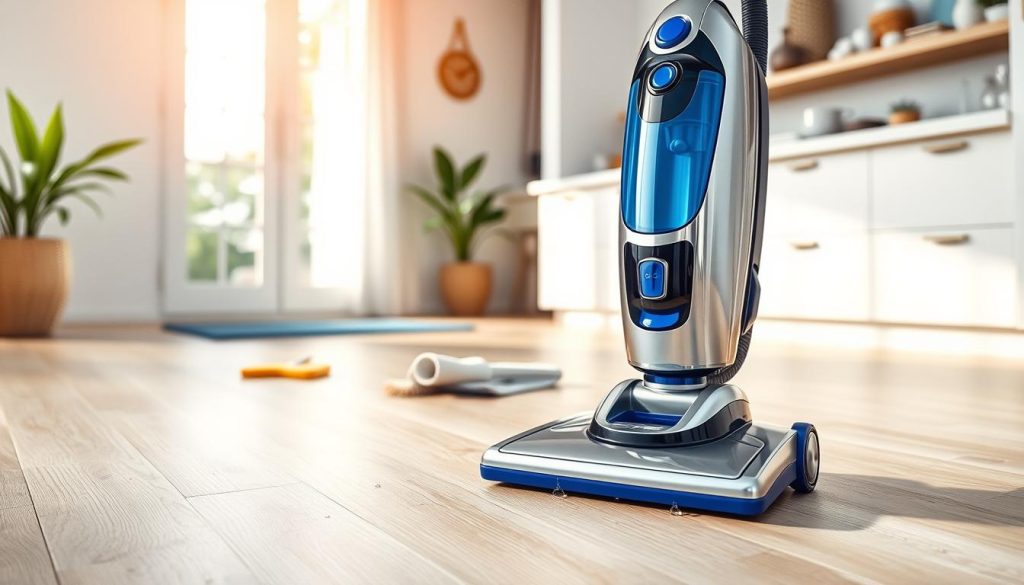
What stands out: the Shark HydroVac WD210SM uses antimicrobial brush rollers to reduce bacterial accumulation and keep smells at bay between sessions. The design suits families, flats with pets, and small commercial spaces where hygiene matters.
Practical notes: Specs include a 500ml clean / 360ml dirty tank, 2,700 Pa suction, 3.9kg weight and up to 30 minutes runtime with a 4-hour charge. The lower stated suction means this unit is best for routine mixed debris and light spills rather than heavy-duty extraction.
- Ideal for everyday dust, small spills and mixed debris across tiles, vinyl and low rugs.
- The tank system suits frequent, short sessions rather than marathon cleans.
- What to watch: regular emptying and brush care remain important to keep odour control effective despite antimicrobial components.
| Feature | Value | Benefit |
|---|---|---|
| Suction | 2,700 Pa | Good for routine picks on common floors |
| Tanks | 500ml / 360ml | Compact for short, frequent cleaning |
| Hygiene | Antimicrobial rollers | Reduces bacterial build-up and lingering smells |
Dyson wet and dry vacuum cleaners in Singapore: which Submarine model fits your needs
For those who value engineered suction and refined filtration, Dyson’s Submarine models offer a clear upgrade path. We summarise how each option matches common Singapore homes, focusing on handling, runtime and filter performance.
Dyson V12s Origin Submarine: lightweight handling with Root Cyclone technology
Why choose it: at 2.2kg this model is the lightest Submarine option. It delivers 130 Air Watts of suction power and uses Root Cyclone design for consistent pickup.
Tank sizes suit short multi-room runs and everyday spills without adding bulk.
Dyson V12s Detect Slim Submarine: HEPA filtration and Fluffy Optic visibility
Why choose it: 140 Air Watts, an upgraded HEPA filter and the Fluffy Optic head reveal fine dust the eye misses. It weighs 3.1kg and keeps runtime at up to 60 minutes.
Dyson Digital Slim Submarine: compact design with shorter runtime
The Digital Slim prioritises compact design and storage. Expect a shorter runtime (up to 40 minutes) but the same premium build and manoeuvrability.
Why Dyson costs more: R&D, cyclonic suction and premium build
We note the price premium reflects heavy R&D, cyclonic engineering and refined materials. For allergy-aware homes or those who prioritise design and filter quality, Dyson products justify the cost.
Electrolux wet and dry vacuum cleaners: drum vs cordless stick for different environments
Electrolux splits its portfolio into robust drum models and nimble stick options to suit varied use cases in Singapore.
Drum wet/dry vacuums: large capacity, blower function and robust attachments
Drum formats target garages, renovations and workshop-style cleaning where volume and power matter.
They offer bigger tanks, corded runtime and a blower function for quick clearing. A wider accessory ecosystem and sturdy nozzles make heavy-duty tasks faster.
Stick wet/dry cleaners: integrated vacuuming and mopping for daily floor care
Stick models suit flats and condos. They pair cordless convenience with an integrated mopping system and lighter handling.
Smart dirt detection and self-cleaning cycles reduce upkeep and make daily passes straightforward.
Featured options and buying cues
Notable Electrolux models include the Flexio Power Z823 (budget 3-in-1 for wet dry/blow), the 800 3-in-1 Cordless EFW81713 (premium cordless 3-in-1) and the UltimateHome 700 EFW71711 (hygiene-focused with antibacterial tanks).
| Format | Best for | Standout feature |
|---|---|---|
| Drum | Workshops, renovations | Large tank & blower function |
| Stick | Daily floors in flats | Integrated mopping & cordless use |
| All | Singapore homes | TriAction nozzle, microfilter, self-clean options |
Prices locally span from entry level to premium. We recommend comparing TriAction nozzle claims, antibacterial tank function, and the overall system before purchase. Buying from the official store often adds free delivery and 0% instalment options that can matter for higher-end models.
Value alternatives worth considering: Dibea wet/dry vacuums for home use
If you want decent tank sizes and simple upkeep, Dibea models deserve a look. We present two cost-conscious options that balance capacity and useful features for everyday home spills and dust.
Dibea H8 — lower-maintenance option
Why it stands out: the H8 adds built-in self-cleaning and a 600ml dirty tank to reduce trips to the sink. That lowers routine maintenance and makes short sessions tidier.
Key specs: 500ml clean water tank, 600ml dirty tank; 13,000 Pa suction power; 3.7kg; runtime up to 38 minutes (auto) / 30 minutes (high); charge ~4.5 hours. Best used on wood, marble and ceramic tiles.
Dibea HC26 — the bigger wet-focus option
Why choose it: larger tanks and reach make the HC26 more suited to longer runs and wetter mess. It has a longer handle for better reach in larger rooms.
Key specs: 700ml clean / 700ml dirty tanks; manufacturer claim of 146,000 Pa suction; 3.85kg; runtime up to 38 minutes; charge ~4.5 hours; handle 568mm vs 538mm on H8.
We caution readers to read suction claims with care. Rather than fixating on numbers, check actual pickup on spills, streak control and how easy emptying is. Those outcomes matter most in daily use.
- Who should consider Dibea: budget-conscious households that want wet dry capacity, practical tank sizes and simpler maintenance routines.
| Model | Clean / Dirty tanks | Suction | Best use |
|---|---|---|---|
| Dibea H8 | 500ml / 600ml | 13,000 Pa | Routine spills, wood/marble/tiles, low upkeep |
| Dibea HC26 | 700ml / 700ml | Claimed 146,000 Pa | Larger rooms, wetter mess, longer reach |
| Buying tip | Compare tank size & self-clean features | Focus on real pickup, not only specs | Choose by room size and maintenance preference |
Using wet dry vacuums safely and effectively on Singapore floor types
A clear approach helps us protect finishes while getting spills cleared fast. We outline simple techniques for common surfaces so results look clean, not streaky.
Tiles, marble and vinyl: preventing streaks and residue
On tiles and vinyl, use a steady, single pass and avoid over-wetting. Let the nozzle contact the floor and keep motion slow enough to collect liquid in the dirty tank.
For marble, minimise residue by using a gentle mode and a final dry pass. That reduces slip risk and keeps shine intact.
Wood and laminate: manage moisture and choose gentler modes
We avoid heavy saturation on wood and laminate. Use low-flow settings and shorter passes. Never use hot modes on sensitive planks.
If a spill soaks in, consider specialised drying rather than repeated wet passes.
Rugs and carpeted areas: when extraction helps — and when it doesn’t
Surface liquid on rugs benefits from prompt extraction to stop staining and smells. For deeper odour or grime, a dedicated carpet spray-extraction system is better than a quick pass.
“Our priority is fast, safe spill removal matched to the floor type and the machine’s capabilities.”
| Floor type | Recommended mode | Safety note |
|---|---|---|
| Tiles / Vinyl | Medium flow, steady pass | Reduce streaking with a dry final pass |
| Marble | Gentle mode, low moisture | Avoid hot cleaning; dry promptly |
| Wood / Laminate | Lowest flow, short passes | Prevent swelling; air-dry after use |
| Rugs / Carpets | Quick extraction for surface liquid | Use carpet extractor for deep stains |
Safety tips: pick up spills quickly to lower slip risk and keep electrical sockets clear. Check the device manual before using on chemicals or oils; not every system is approved for those liquids.
Maintenance checklist: keeping suction power, filters and tanks performing over time
A simple care routine keeps suction power steady and reduces the common issues we see: bad smells, streaks and weaker pickup. Small habits make the device ready for quick use and extend its working life.
Emptying dirty water cleanly and preventing smells
Empty the dirty tank after each session. Use a drain hose or tilt function where provided so waste goes straight to a sink.
Professional units often include a float shut-off in the system. That prevents overfilling and keeps motors safe.
Filter care for fine dust and allergens
Rinse foam and pre-filters, then air-dry completely before reinstalling. HEPA and advanced filters need gentler handling and occasional replacement to trap fine dust effectively.
Brush roller cleaning and self-clean cycles
Remove hair and sludge from the roller after heavy use. Run the self-clean cycle as the manufacturer recommends to flush residue and cut odour build-up.
Battery care and charging habits for cordless models
Top up charge after use rather than fully depleting the battery each time. Store the unit in a cool, dry spot so it’s ready when we need quick touch-ups.
“Regular checks are the difference between a tool that performs like new and one that loses grip on dust and spills.”
| Task | Frequency | Benefit |
|---|---|---|
| Empty dirty tank | After every use | Prevents odour and sludge |
| Rinse filters | Bi-weekly / replace HEPA per manual | Maintains fine dust capture |
| Clean brush roller | Weekly or after pet use | Stops hair wrap and improves pickup |
| Run self-clean | Monthly or after heavy soiling | Flushes residue; reduces smells |
| Battery top-up | After each use; store charged | Ready for quick use and longer life |
Outcome: a little maintenance saves us time and keeps these vacuums performing like the day we bought them.
Where to buy in Singapore and what to compare before you check out
C. Deciding where to buy often changes ownership experience in Singapore. Official brand stores, Lazada, Shopee and Amazon are all options, but they differ in delivery, instalments and warranty handling.
Official stores vs marketplaces and warranty notes
Official brand stores usually give clearer warranty terms, easier repairs and perks like free delivery or 0% instalments (Electrolux often lists these benefits). That gives us confidence for after-sales support.
Marketplaces can offer aggressive pricing, bundles and fast promos. Check seller ratings, local return windows and whether the warranty is valid locally or only via the marketplace seller.
Which specs to confirm before checkout
Focus on runtime and charge time, tank sizes, edge cleaning reach and included accessories. These specs affect daily convenience more than headline power numbers.
Also confirm availability of consumables such as filters and brush rollers locally. If spares are scarce, maintenance costs rise quickly.
Match a model to your space
For compact HDB flats favour compact models with good edge cleaning and smaller tanks to save storage space.
Condos benefit from balanced runtime and moderate tank capacity for mixed floors. Landed homes and small commercial sites need larger tanks and stronger sustained power for longer runs.
“Shortlist two candidates, then decide by floor type, frequency of wet mess and how often you’ll realistically use the machine.”
| Buying route | What to verify | Best for |
|---|---|---|
| Official brand store | Local warranty, service centres, instalment plans | Long-term support and straightforward repairs |
| Marketplaces (Lazada/Shopee/Amazon) | Seller rating, return policy, bundle contents | Promos, lower upfront price, bundled consumables |
| Specialist retailers | Demo availability, spares stock, expert advice | Hands-on testing and tailored recommendations |
Our buying tactic: compare two shortlisted models across runtime, tank size, edge reach and spare-part availability. Then weigh upfront cost against likely maintenance and performance per dollar. That choice helps us avoid regrets after checkout.
Conclusion
Wrapping up, we focus on practical trade-offs so buyers in Singapore choose the best-performing machine for their space.
For everyday cleaning that handles both dust and liquid spills, a wet dry solution beats keeping separate tools. Prioritise real-world suction, sensible tank size (clean water and dirty capacity), and a filter that meets your allergy needs. Check nozzle reach and accessories to suit skirting and tight corners.
Our top picks cover different needs: overall, hot-water deep clean, pet-focused, budget, manoeuvrable, hygiene and premium Dyson options. Shortlist two models, compare warranty and consumables availability in Singapore, then buy from the seller that offers the best after-sales support. With the right wet dry vacuum system you get cleaner floors, less residue and faster results in less time.

