
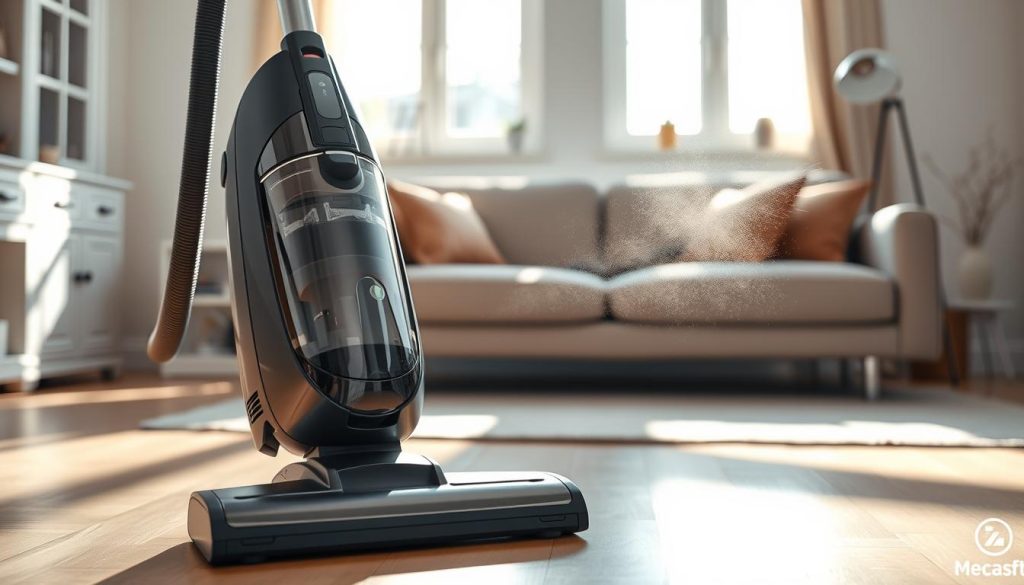
We begin with a clear aim: to help Singapore readers shortlist a machine that reduces irritants in humid flats. Most household allergens — pollen, pet dander and fine particles — can be reduced with an effective vacuum. Not every model manages disposal or capture equally well.
Our roundup focuses on measurable results: strong pickup, low emissions and hygienic emptying that cuts direct contact. We preview top picks across key categories and explain why sealed systems, filtration and brush-roll design matter for mattresses and upholstery.
In short, this guide is a practical commercial resource. We compare real models, give concise reviews and outline the main decision factors so you can make a confident choice for your home cleaning routine in Singapore.
Why dust mites trigger allergies in Singapore homes and how the right vacuum helps
We see household particles as more than surface grime; they are a mix of fine dust, pet dander and pollen that build rapidly in humid Singapore flats. These irritants lodge deep in soft furnishings and release tiny fragments during everyday movement or cleaning. That behaviour raises symptoms for sensitive family members and reduces indoor air quality.
Dust, dander and pollen: what we’re actually trying to remove
Fine dust and pollen tracked in from outside sit alongside pet dander and micro-debris. Those smaller particles are the main drivers of respiratory reactions, not just the visible fluff.
Carpets, upholstery and mattresses as allergen reservoirs
Soft textiles act like sponges. Particles work into fibres and stay until disturbed — when we sit, make the bed or walk across carpets. That means cleaning must target deep layers, not only surface pickup.
What “cleaner air” means after vacuuming
Cleaner air is practical: fewer airborne particles after cleaning, less lingering smell of stale dust and lower irritation for occupants. To achieve this we need strong suction, effective filtration and low-emission design so that vacuuming reduces exposure rather than temporarily increasing it.
- Humid interiors and air-conditioning speed allergen build-up in bedrooms and living areas.
- Mattresses and upholstery release particles whenever they are used.
- Visible dust is only part of the problem; fine particles matter most for symptoms.
What to look for in the best vacuum for dust mite allergies
We focus on results you can measure at home: reduced airborne particles, low emissions and reliable capture of fragments released from textiles. Good filtration and a sealed design keep the air in the room cleaner after we finish cleaning.
HEPA filter and whole‑machine filtration
HEPA filter labels matter, but the claim alone is not enough. We check whether the filter is part of a sealed airflow path so trapped particles cannot escape through gaps or the bin area.
Low‑emissions design
Low emissions are essential for allergy management. A unit that leaks air or vents near the intake can reintroduce fine particles into the room and undo the cleaning effect.
“A strong filter must sit inside a sealed system to actually reduce airborne particles.”
Suction, airflow and sealed systems
We look at sustained suction and steady airflow, not just peak numbers. Consistent performance when the bin fills or on thick carpet is what keeps fibres and micro‑debris moving into the dust chamber.
Brush roll, floors and hair pickup
Brush design should match common Singapore floors: soft brush rolls for carpet, gentle heads for hard floors and tangle‑resistant paths for hair and pet hair.
Helpful attachments
Crevice tools, upholstery heads and motorised tools make a practical difference. They help us reach skirting, sofas and mattress seams where particles accumulate.
- Look for sealed bags or hygienic emptying if you want minimal contact when disposing of debris.
- Match features to your home type so you pay only for performance you will use.
Bagged vs bagless vacuums for allergies: which is more hygienic?
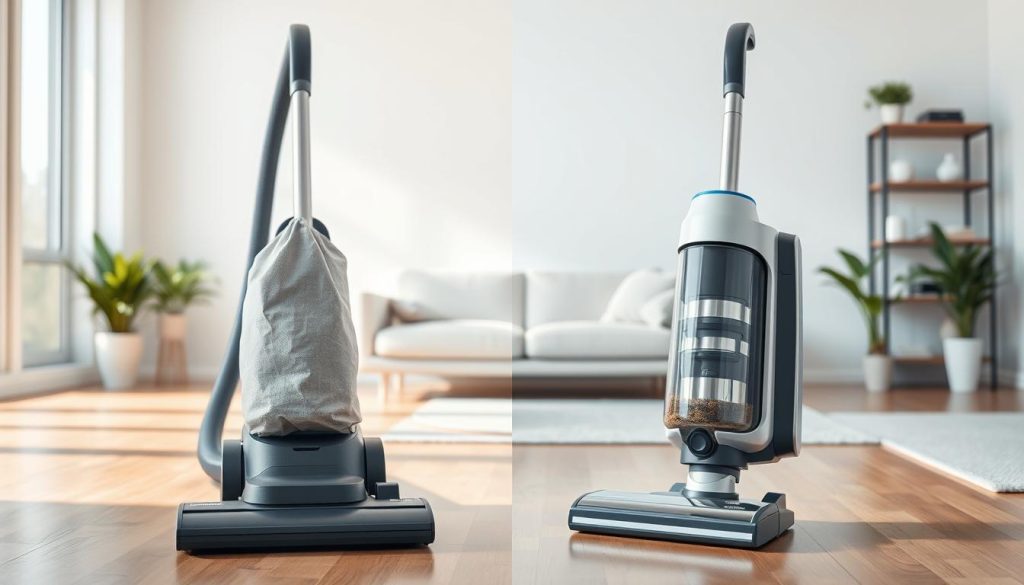
Disposal method is one of the simplest choices that affects household exposure during maintenance. We compare sealed bag designs with clear-bin models to show how each affects contact with collected material.
Why sealed bags reduce direct contact
Bagged units trap debris inside a replaceable bag. When we remove the bag, the contents stay contained. That cuts handling and keeps airborne fragments lower in small Singapore flats with limited ventilation.
Safer emptying with a clear bin
Bagless designs can work for people with an allergy history if emptied carefully.
- Empty outdoors if possible, and move slowly to avoid a puff of particles.
- Hold the bin upright, open the lid gently and avoid shaking the container.
- Wipe the rim and replace washable parts promptly to limit re‑release of allergens.
Costs, filters and practical time trade-offs
Bagged models add ongoing bag costs but reduce cleaning time spent on protective steps. Bagless units save on consumables but need periodic filter washing or replacement and more frequent emptying.
“Bag choice is a practical trade‑off between convenience, consumable costs and how much contact you accept during disposal.”
How we evaluate vacuums for allergen control
Our methods combine lab instruments and typical home trials to show how units behave under use. We aim to link clear, repeatable tests to everyday cleaning outcomes in Singapore flats.
Emissions testing: measuring what gets released back into the air
We force wood flour into the intake and run a laser spectrometer to measure particles expelled during operation. This shows whether a machine vents fine fragments back into the room.
Airflow and suction testing at different fill levels
Airflow is recorded with a pressure gauge at empty, 100g and 200g fill levels. We compare suction stability to see if performance drops as bins or bags fill.
Real-world effectiveness on carpet, hard floors and tight corners
Surface trials use standardised debris and timed passes on carpet and bare floors. Edge and skirting tests check pickup where dust builds in compact rooms and under furniture.
Maneuverability, portability and under-furniture cleaning
We score reach, turning radius and head height so units can access under beds and sofas. Good manoeuvrability reduces cleaning time and missed dirt in tight Singapore layouts.
Ease of emptying and allergen contact during maintenance
Emptying, bag changes and filter cleaning are assessed for exposure risk. We combine these results with reliability and satisfaction data from 115,656 non-robotic units (2014–2024).
“Tests should show what a machine releases as well as what it collects.”
- Why emissions matter: what leaves the cleaner can undo a cleaning session.
- Why multi-level tests matter: consistent suction at different fill levels ensures steady pickup.
- Why real-room trials matter: corners, skirting and under-furniture are where allergens hide.
Best overall for allergy sufferers: Sebo Felix Premium
We chose the Sebo Felix Premium because it balanced strong capture with practical use in compact Singapore homes. In our real‑home testing it cleared sand, soil, dried mud, dog hair, cat hair, cupcake crumbs and coffee grounds with steady results.
Why we like it: strong performance on dust, fur and everyday debris
Performance stayed consistent across carpet and hard floors. The cleaner left rooms feeling and smelling fresher, a useful sign that airborne particles dropped after cleaning.
Manoeuvrability stood out. It reclines far enough to reach under beds, its rubber wheels run quietly, and it handles hair and pet hair without frequent snags.
Bagged design benefits for keeping allergens sealed
The sealed bag traps dirt and debris securely before and after disposal. That reduces contact during maintenance and limits re‑release of allergens into the room air.
Note: some accessories are sold separately, so budget for tools if you need specialised heads for sofas or tight gaps.
Best value upright with allergen filtration: Bissell MultiClean Allergen Rewind
We found a mid-priced upright that balances strong pickup with practical features for everyday Singapore homes.
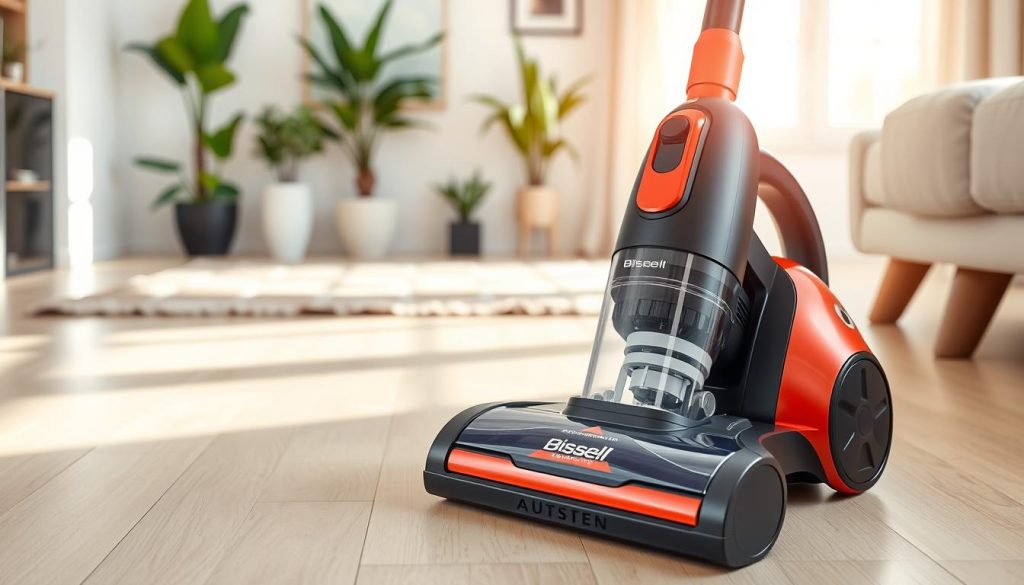
The Bissell MultiClean Allergen Rewind delivers steady power and a sealed HEPA filter that captures and seals fine particles, pet hair and common allergens. It deep cleans well on carpet and handles tangled hair with fewer clogs.
Standout features that matter in use
LED headlights reveal hidden debris under sofas and in dim corners. That makes cleaning more thorough and reduces missed fragments that can re‑irritate sensitive occupants.
The automatic cord rewind speeds set‑up and storage. That small convenience encourages more frequent whole‑room cleaning, which improves overall allergen control in compact flats.
Tools and handling notes
- Pet TurboEraser upholstery tool — excellent for sofas and fabric chairs where dander collects.
- Crevice/dusting brush combo — useful between cushions and along skirting boards.
- Strong suction on carpet; can feel awkward to steer on slick floors, so match use to your surfaces.
| Feature | Why it helps | Practical note |
|---|---|---|
| HEPA-style filter | Captures fine particles and pet hair | Replace per manufacturer schedule |
| LED headlights | Expose hidden debris | Useful under furniture and in shadows |
| Cord rewind | Simplifies storage and reuse | Speeds frequent cleaning |
| Pet TurboEraser | Targets upholstery hair and dander | Handy for sofas and car seats |
In short, this Bissell is our value pick for HDB flats with rugs, carpet and tiles. It pairs affordable pricing with the features we want to cut airborne irritants and keep routine cleaning simple.
Best bagged vacuum for minimal dust contact: Kenmore Intuition
We recommend the Kenmore Intuition when reducing contact at disposal is the priority. It is an upright, bagged design built to make bin changes low‑mess and low‑contact in compact Singapore homes.
Hands-free bag release and hair-removing roller
Hands-free bag release is the headline benefit: press a button and the bag drops into the outer bin without you touching the contents. That simple action cuts exposure to airborne fragments at the moment most people worry about.
The brush features a hair‑removing roller that reduces tangles. Less wrap means steadier pickup on carpets and fewer stops to clear the head. That helps maintain suction and shortens cleaning time.
Who it suits in Singapore flats and family homes
We see this model working well in HDB flats and small houses where storage is limited and quick, hygienic emptying matters.
Families who clean often will value the low-contact routine. It suits tile and hard floors plus area rugs and handles regular weekly deep cleans and quick touch-ups.
“A hands-free bag drop lowers the single biggest contact risk during maintenance.”
- What to expect: lightweight handling and simple emptying, but ongoing cost from replacement bags.
- Pet owners: the included pet tool is useful, though not as powerful as premium pet attachments; you may wish to supplement it.
- Choice note: this machine trades slightly higher running costs for easier, cleaner maintenance.
Best cordless stick vacuum for quick daily cleaning: Levoit LVAC-200
We recommend the Levoit LVAC-200 when quick, frequent passes matter in compact Singapore homes. It weighs just 3.2 lb and is easy to lift between rooms.
Five-stage filtration and lightweight handling for hard floors
The five-stage system captures particles down to 0.3 microns, supporting cleaner indoor air after routine cleaning. This multi-layer filter design helps reduce re‑release during use.
Its low mass and narrow head make it ideal on hard floors and tiled living spaces. The unit converts to a handheld, so we can reach shelves, upholstery and stairs with the same tool.
Battery life expectations for spot cleans vs whole-home jobs
Levoit states up to 30 minutes; our testers reported runs to about 45 minutes on low power. That means short spot cleans and daily maintenance are straightforward.
For whole-home deep cleans, we still rely on larger uprights with stronger seals and longer run times.
| Feature | Practical effect | When it shines |
|---|---|---|
| Weight (3.2 lb) | Less fatigue, faster tuck-away | Daily spot cleans on hard floors |
| Five-stage HEPA filter | Traps fine particles to 0.3 μm | Routine removal of airborne fragments |
| Handheld conversion | Access to upholstery and shelves | Tight areas and stairs |
| Battery (30–45 min) | Good for short sessions | High-traffic zones; small flats |
“Lightweight handling and true multi-stage filtration make quick passes effective at reducing airborne fragments after cleaning.”
Best tech-forward cordless choice: Tineco Pure One Station
We tested the Tineco Pure One Station to see whether modern cordless tech actually shortens tidy‑up time in tight Singapore flats. The unit felt light to carry and straightforward to assemble.
What our tests showed
In timed trials the Tineco picked up 99.8% of debris in one minute. Noise levels stayed low enough for normal conversation, which helps in shared living spaces.
Usability notes
The wand is very lightweight and the front light makes fine dust and fibres visible along edges. It struggles a little with tight corners and very small pieces such as orzo, so some particles can remain where skirting meets floor.
Docking and convenience
The free‑standing charging station does not need wall mounting, which suits compact flats and short storage spaces. The trigger control is intuitive and the unit is quick to grab for a spot clean.
Smart extras and price
Wi-Fi and AI voice add modern convenience but limited direct benefit to cleaning outcomes. This model carries a premium price in Singapore; we recommend it if daily cordless performance, low noise and convenience matter more than saving on cost.
“99.8% pickup in one minute makes quick passes meaningful in busy homes.”
| Attribute | Why it matters | Practical note |
|---|---|---|
| One‑minute pickup | Fast removal of tracked debris | Good for daily spot cleans |
| Low noise | Less disruption in shared rooms | Allows cleaning during conversation |
| Free‑standing dock | No drilling; saves wall space | Better for rental flats |
Conclusion
We wrap up by matching features to real Singapore homes and everyday routines.
Prioritise low emissions, strong filtration and careful maintenance. Choose machines whose sealed airflow and genuine HEPA media limit airborne release and make emptying low‑contact.
If minimal contact matters, pick a bagged upright. If daily spot cleans on tiles and wood win, a stick or stick vacuum is smarter. For convenience and low noise, a premium cordless fits the bill.
Our reviews favour Sebo Felix, Bissell, Kenmore, Levoit and Tineco as fits for different jobs. Use the right head, keep the hepa filter fresh and vacuum mattresses and upholstery regularly.
Read the science‑led notes on vacuum hepa if you want deeper detail.

