
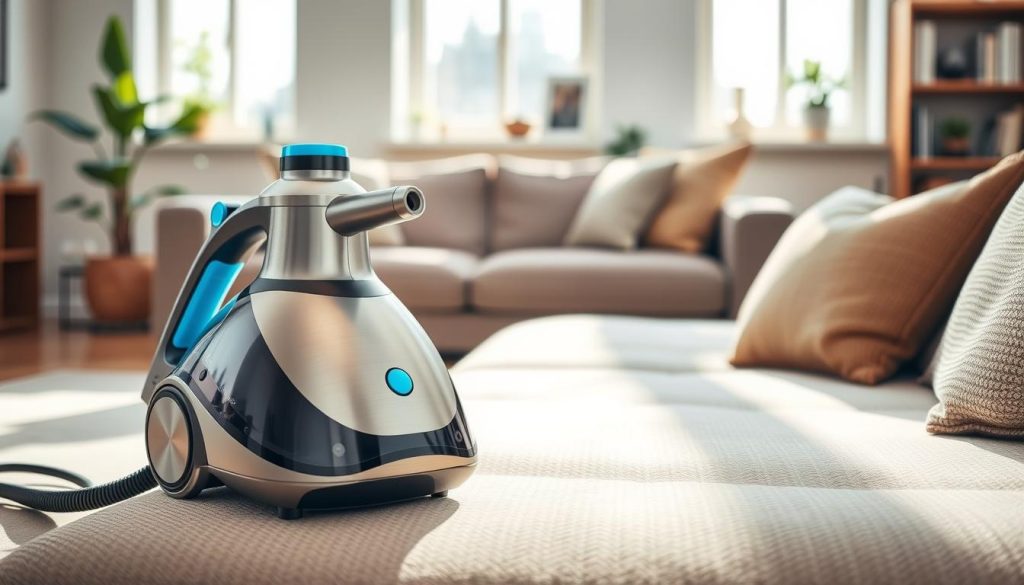
We introduce what this tool does in practical terms and why it matters in Singapore homes. Steam cleaning pairs hot vapour with suction to loosen dirt and lift it away, leaving less damp than many wet methods.
In this guide we set clear expectations: fresher upholstery, reduced odours and visible fabric improvement without harsh chemicals. We will explain safety checks, the right attachments and simple prep steps so you get reliable results.
We also show when a quick refresh will do, and when we should recommend deeper extraction to target fibre-level grime and reduce drying time. Our method rests on one rule: controlled heat, steady movement and immediate moisture recovery.
Before we begin, we always follow label guidance and test a hidden spot. That small check protects fabric from damage and keeps stains from setting further during cleaning.
Why we clean sofas regularly in Singapore homes
In Singapore, sofas need frequent attention because daily living, humidity and snacking all add up fast. Small spills and body oils collect on the surface and turn fresh marks into stubborn stains if left too long.
We loosen stubborn dirt so it can be lifted out, rather than rubbed deeper. Using controlled heat and extraction helps break bonds in the fabric and removes debris without harsh chemicals.
We also target dust and dust mite matter, which build up in air-conditioned rooms. Removing this grime improves indoor air comfort and reduces allergy triggers.
- Routine care keeps pet hair and odour under control and prevents emergency deep cleans.
- The same approach works on mattresses and car seats, where crumbs and oils collect.
- Regular, thorough cleaning extends the life of upholstered furniture and keeps it looking presentable.
“Fresh marks are usually easier to remove than set-in stains.”
Before we start: check fabric safety, labels, and test a hidden spot
Before we power up, we check labels and fabric type to avoid any costly mistakes. Reading the care tag tells us whether a water-based method is safe or if we must pause and seek professional help.

Understanding common upholstery codes
We read the label and translate codes quickly. W means water safe. S means solvent only—no water. SW accepts both solvent and water. X requires professional attention; water will damage the material.
When heat and moisture are not ideal
We avoid steam cleaning on leather, velvet and sensitive microfibre. Heat or moisture can dull finishes, change texture or distort fibres. If you own leather upholstered furniture, select a specialist method instead.
Quick colourfast and temperature checks
We perform a hidden-spot test. Apply minimal steam briefly at low temperature and blot with a white cloth. Watch for colour transfer or shine. If the material reacts, stop immediately and follow appliance instructions.
When in doubt, consult a trusted guide such as how to clean fabric before proceeding.
Tools and attachments we rely on for thorough cleaning
Our kit decisions begin with the question: surface refresh or deep fibre rescue? That choice guides which machine and nozzle we pick and how we set the tank and filters.
Comparing machine types
Steam cleaner is best for quick spot removal using heat and a detail nozzle. A combined steam vacuum cleaner pairs heat with suction for faster drying. When stains recur or odours linger, we prefer a spray extraction cleaner — water and approved detergent are sprayed, then recovered for true fibre-level results.
Choosing the right nozzle
We keep three go-to tools: a detail nozzle for targeted marks, an upholstery tool for broad passes, and a turbo upholstery nozzle to lift hair and crumbs during dry runs. The correct nozzle focuses output, reduces over-wetting and improves extraction efficiency.
Tank, filters and water
Only fill the tank with clean water and approved detergent when using spray extraction. Distilled or boiled water helps avoid lime spots. We avoid unapproved additives that clog. Clean filters regularly — blocked filters cut suction and leave extra moisture in fabric.
“Right tools, right settings: less moisture, faster drying, better results.”
Prep work that makes steam cleaning more effective
A careful dry pass changes the outcome: loose debris stays out of the fibres and stains respond better.
Vacuum cleaner first
We begin with a quick, methodical pass using a vacuum cleaner fitted with an upholstery tool. This prevents crumbs and dust being pushed deeper when moisture arrives.
Target high-collection zones
We focus on seams, creases, armrests and cushion edges where dirt and pet hair collect. Repeated slow strokes pick up hair that clings to the weave.
- Top-to-bottom approach: work downhill so loosened particles do not fall onto cleaned areas.
- Attachment choice: use a turbo upholstery nozzle where available to lift embedded hair and fine dust.
- Hidden checks: look under removable cushions and along the backrest base to remove trapped crumbs and odour-causing debris.
| Area | Tool | Why it matters |
|---|---|---|
| Seams & creases | Detail nozzle / turbo upholstery nozzle | Removes trapped dirt and hair before wet cleaning |
| Armrests & edges | Upholstery brush | Clears oils and crumbs to prevent smearing |
| Under cushions | Crevice tool | Eliminates hidden debris that causes odour |
“A clean surface lets heat and extraction target stains, not mud and loose fibres.”
How we use a steam vacuum cleaner for sofa: step-by-step method
We walk through a clear, step-by-step method to loosen marks, lift debris and limit dampness on upholstery. First, set the machine by the manufacturer’s instructions and choose the lowest effective output so fabric does not get soaked.
Section work and movement
We clean one seat panel at a time and overlap passes lightly. Smooth, steady strokes reduce the risk of over-wetting an area. Avoid lingering; pausing in one spot is what soaks fibres and causes uneven drying.
Nozzle angle and microfibre technique
Hold the detail nozzle at an angle and place a microfibre cloth beside the target. Brief bursts push the mark into the cloth rather than deeper into the weave. Replace the cloth as it collects soil.
Escalation and switching to extraction
If stubborn stains persist, we repeat short passes and reassess the fabric. Stop if colour or texture alters. When staining is widespread or odour remains, we switch to spray extraction to rinse and recover moisture at fibre level.
“Use the least wetting option that works; extraction shortens drying time and gives deeper results.”
| Step | Action | Why it matters |
|---|---|---|
| Set low output | Choose lowest effective steam setting | Minimises water left in fabric |
| Work in sections | One seat panel at a time | Better control of moisture and drying |
| Angle + cloth | Angled nozzle + microfibre | Pushes stain into cloth, not deeper |
| Switch to extraction | Use spray extraction when needed | Rinses fibres and shortens drying time |
Targeted stain and odour tactics we use alongside steam
Quick, targeted action often decides whether a mark becomes a permanent stain or disappears. We separate stain removal from general cleaning so we treat the mark correctly and avoid over-wetting the area.
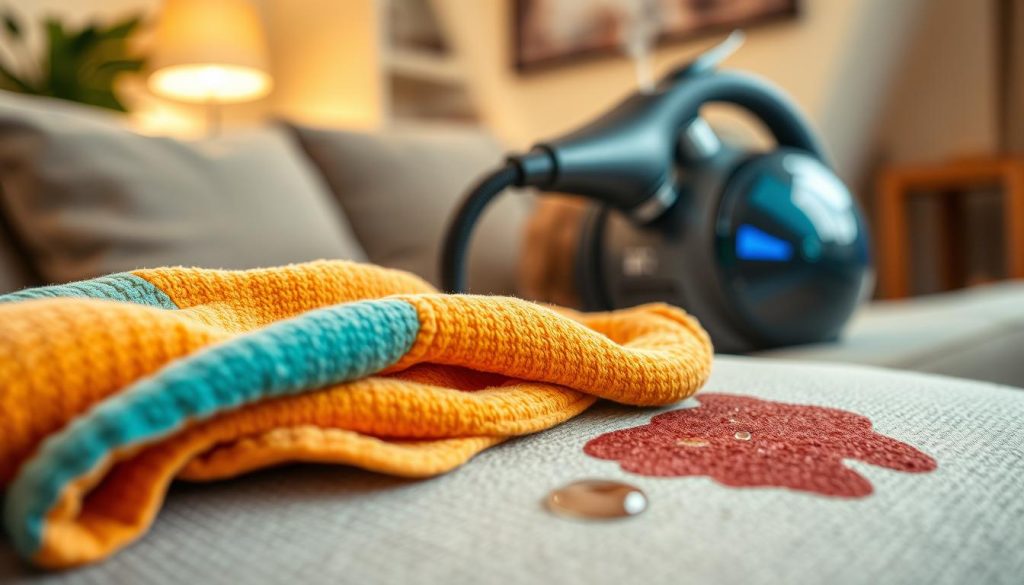
Act fast on wet spills
Blot immediately with a clean, dry cloth. Never rub; rubbing spreads liquid and pushes dirt deeper. About 90% of marks are water‑soluble—test a hidden spot with a white cloth and lukewarm water before using stronger products.
Set-in marks and rinsing
For stubborn stains we apply a universal stain remover to a colour‑fast cloth, then dab the mark. After lifting soil, rinse residue from the fibres using a spray extraction method so detergent and loosened dirt are pulled out, not left behind.
Household remedies and greasy areas
- Bicarbonate of soda for coffee and red wine: leave overnight, then vacuum.
- Mineral water plus salt (or cornflour) absorbs fresh wine spills; blot and lift.
- Grease: warm water with mild soap, work from the edge inward, then clear residues with clean water.
“Treat the spot, then rinse thoroughly; extraction is the surest final step.”
These same tips apply to fabric seats and car seats, where a targeted approach and an extraction cleaner often give the quickest recovery and shortest drying time.
Drying, aftercare, and maintenance to keep upholstery cleaner for longer
We treat drying as an active stage that completes the cleaning process and protects upholstery from trapped odour and dust. Good airflow and low residual moisture shorten drying time and reduce the chance of mould in humid Singapore homes.
Making drying time safer
Open windows or run fans to move air across the fabric. Keep cushions off the couch where possible so both sides get airflow.
We wait until the fabric feels fully dry before returning throws or cushions. Then we perform a light vacuuming pass the next day to lift dried particles and re‑fluff fibres.
Preventing water marks when extracting
When using spray extraction, wet linked fabric areas evenly. Matching moisture across connected panels avoids tide marks and uneven shading as the furniture dries.
Optional protection and long-term care
Once fully dry, we may apply a textile impregnator to slow future absorption of spills. This step reduces emergency spot cleaning and keeps the fabric looking consistent between deep cleans.
“Manage drying as part of the clean — less moisture now means fewer problems later.”
| Action | Why it matters | Timing |
|---|---|---|
| Ventilate well | Speeds drying and reduces odour | During and after cleaning |
| Even wetting of connected areas | Prevents water marks and shading | At extraction stage |
| Follow-up vacuuming | Lifts dried soil and restores texture | Next day |
| Textile impregnator | Reduces future staining | After full dryness |
To learn more about deep extraction technique and timings, see our practical guide on how to clean a sofa with a carpet.
Conclusion
We distil the safest workflow so you can protect fabric and get reliable results. Check the fabric code, test a hidden spot, then do a dry pass with a vacuum cleaner before any wet work.
Use a steam cleaner at low output and keep movement steady. When deep removal is needed, switch to extraction so loosened dirt and residues are recovered quickly.
Act fast on marks: blot, test with a little water, then rinse residues to stop stains spreading. After cleaning, ventilate well and vacuum again once dry.
These principles also apply to car seats and other fabric seats. Small, regular maintenance saves time and keeps furniture looking newer — a few simple tips that make a big difference.

