

We set out to answer the key questions Singapore households face when choosing a floor machine.
Which device handles tiles, vinyl and laminate best? How quickly can spills be dealt with, and how soon will floors be ready to walk on? We focus on performance, drying time and simple upkeep.
Our roundup explains three common types: a dedicated hard-floor washer, a dry device with a mop fitting, and robot mop models from makers such as iRobot and Philips. Each suits a different flat size and routine.
We also weigh practical limits for HDB living: tight storage, brief cleaning windows after meals, and muddy footprints on rainy days.
Expect clear trade-offs on hygiene (tank separation), capacity, brush upkeep, battery life and docking ease. Our aim is to recommend value options available locally, with price, warranty and retailer access in mind.
Who this wet-dry guide is for in Singapore homes
We define typical Singapore use cases for single-step floor care. Our focus is on flats where quick, repeatable routines matter more than heavy-duty scrubbing.
Hard floors in HDB flats and condos
We see the biggest gains on hard floors such as tiles, vinyl and sealed timber. These surfaces respond well to a single pass that lifts debris and restores shine.
Small storage and tight cleaning windows in HDBs make compact units a practical choice.
Homes with kids, pets and frequent spills
Families face swift messes — milk, sauce or muddy paw prints. A device that vacuums and washes in one go cuts the time spent swapping tools.
This reduces cleanup time after meals and lowers the chance of sticky marks being left behind.
Busy households choosing manual or robot cleaning
For deeper passes, a manual unit suits targeted work. A robot vacuum mop works well for light, daily upkeep between fuller cleans.
Mixed-floor homes often need a hybrid approach or a second dry vacuums to avoid disappointment after purchase.
- Storage, noise and manoeuvrability matter most in compact flats; we address these later.
How wet and dry vacuum cleaners work
We begin by tracing the path of water and debris through these machines so readers can judge performance and hygiene quickly.
Clean water to brush roll to dirty water tank:
The typical workflow delivers clean water, sometimes mixed with detergent, onto a rotating brush roll. The roller agitates grime and loosens sticky marks. Suction then pulls the soiled liquid into a separate dirty water tank.
Why separation matters for hygiene
Keeping fresh and used liquid apart is the main advantage over a mop. We do not reapply the same dirty water across the floor. This reduces cross‑contamination and helps floors feel and smell fresher in Singapore’s humid climate.
Maintenance basics after each use
Expect to empty the dirty tank, rinse the tank and wipe the unit. Check the brush for hair and grit. Even models with a self-clean system require these steps and a short air‑drying period to avoid damp odour.
| Task | Frequency | Why it matters |
|---|---|---|
| Empty dirty tank | After each use | Prevents bacteria build-up and smells |
| Rinse brush and tank | After each use | Removes trapped grime for effective next pass |
| Inspect seals & clear hair | Weekly | Maintains suction and avoids leaks |
Wet and dry vacuum cleaner comparison criteria we used
To judge real performance we measured how models handle everyday messes and how long floors stay ready to use.
Suction and debris pick-up on hard floors
We tested suction on tiles and vinyl for fine dust, hair and food crumbs. We recorded whether debris required a second pass.
Spill handling and drying time
We timed how quickly liquids were recovered and whether the surface left streaks or a slippery film. Drying time is a key usability metric in Singapore flats.
Tank capacity and brush design
Clean-water and dirty-water volumes tell us how often we need to stop. Brush roll design and anti-tangle scrapers determine hair handling and edge performance.
Runtime, manoeuvre and extra features
We measured useful runtime in minutes rather than lab claims, and noted charge and battery life as ownership costs. Manoeuvrability under furniture, self-clean cycles, hot-air drying and noise also shaped our view of value and price.
Quick pick: best wet and dry vacuum for most Singapore homes
For most Singapore flats we choose a model that balances easy handling with strong performance on sealed floors. Our pick gives reliable cleaning results with features that reduce effort and guesswork.
Tineco Floor One S7 Pro overview
The Tineco Floor One S7 Pro pairs powerful suction with smart sensors and self-propulsion. It is designed for hard floors and aimed at weekly upkeep and spill recovery.
Key specs
- Clean tank: 0.85L
- Dirty tank: 0.72L
- Runtime: Up to 40 minutes; 4 hours to charge
Why we like it
Auto Mode sensors adjust power to visible dirt, so we do not guess at settings. Multiple modes (Ultra/Max/Suction) let us switch from light cleaning to heavier wet messes without swapping tools.
Self-propulsion reduces wrist strain on longer runs, while voice prompts and an LCD keep the session straightforward.
Trade-offs
The unit is for hard floors only. Expect to empty and rinse the dirty tank frequently—often after each use—and set aside a spot for the roller and tanks to dry. With that routine, the floor one pro delivers fast, predictable cleaning for most flats in Singapore.
Runner-up with longer battery life and lie-flat reach
Long battery runs and a low-profile head make a real difference when reaching under beds and sofas. We position the Roborock F25 Ace as our runner-up when longer battery life and reach under low furniture are priorities in compact Singapore homes.
Roborock F25 Ace overview
The F25 Ace delivers up to 60 minutes runtime on a single charge (6h30 to recharge). Its lie-flat design and power-assisted wheels let the head slide beneath low furniture for thorough dust pickup on hard floors.
Dock, roller and hygiene system
The dock offers either hot or room-temperature roller wash, followed by hot-air drying. This system reduces odour risk in humid conditions and makes maintenance easier.
Who it’s best for
- Ideal for smaller bedrooms and sofas with low clearance.
- Automatic detergent dispenser helps with stubborn marks on sealed floor surfaces.
- Informative display and app controls make day-to-day tuning simple.
| Feature | Spec | Benefit |
|---|---|---|
| Runtime | Up to 60 minutes | Longer sessions for larger flats or careful passes |
| Lie-flat reach | Zero-clearance head | Access under low furniture for hidden dust |
| Dock wash & dry | Hot / room-temp wash + hot-air dry | Keeps roller hygienic and reduces damp odour |
| Limit | Not for carpets or rugs | Best for sealed hard floors; mixed homes may need a separate unit |
Best budget wet-dry option for everyday spills
For quick spills and fast touch-ups, the Shark HydroVac Cordless gives us a sensible mix of price and practicality.
Shark HydroVac Cordless overview
We note a 0.5L tank and up to 25 minutes runtime with a four-hour charge. The unit is a true cordless option for small flats and short jobs.
Where it fits in our homes
This model is best on hard floors and will freshen low-pile carpets when used carefully. It suits quick post-meal work and light maintenance rather than deep cleaning sessions.
How the modes work
The default setting requires technique: we push to vacuum forward and pull to wash backward. Freshen mode mops lightly both ways for fast, even passes.
Maintenance realities
The dirty water tank needs emptying after each use. The brush roll may require removal and up to 24 hours to dry, which adds to upkeep time.
- Pros: affordable, compact, versatile for quick spills.
- Cons: fiddly maintenance and bulkier storage than some premium designs.
We position the HydroVac as the budget-minded pick for frequent touch-ups. If you want a deeper guide to options at different price points, see our roundup at best wet‑dry picks.
Best for mixed flooring: powerful dry vacuum with a mop head
We find that a strong dry vacuum paired with a mop head suits flats that mix rugs and sealed surfaces. This approach lets us treat carpets with full suction, then switch to a light wash for tiles and vinyl without a second bulky unit.
Dyson V15s Detect Submarine overview
The Dyson V15s Detect Submarine pairs a 0.77L bin for dust with a 0.3L water tank for mopping. Runtime goes up to 60 minutes and the charge time is about 4h30. The model’s design focuses on powerful suction for hair and fine dust, with a compact mop head for quick wet passes.
Why it works for homes with both carpets and hard floors
We vacuum carpets first using the main head to remove ingrained dust and debris. Then we swap to the mop module to pick up surface marks on hard floors.
High suction is the main draw: it outperforms most dedicated floor washers on rugs while still offering basic washing where needed.
Watch-outs and practical tips
The dirty water tank on the Submarine is not sealed and can spill when removing the head. This affects daily usability in small flats.
- Prepare a tray or use the sink before detaching the mop head.
- Move slowly and avoid lifting the head above clean flooring to stop drips.
- Empty the dirty water tank promptly to reduce odour risk.
| Aspect | Spec | Practical note |
|---|---|---|
| Bin / tank | 0.77L bin, 0.3L water tank | Good dust capacity; small water volume needs frequent refills |
| Runtime | Up to 60 minutes | Long enough for most flats; charge ~4h30 |
| Key benefit | Suction-led cleaning | Excellent for carpets; mop head handles light floor marks |
Best hands-off option: robot vacuum mop for light daily cleans
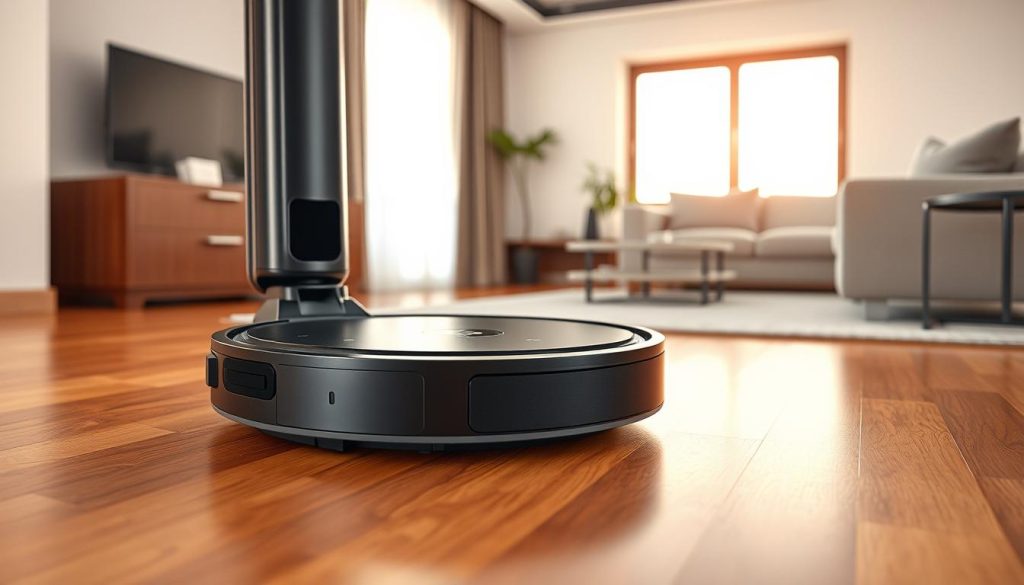
We find the Roborock Qrevo Curv excellent for routine upkeep in busy Singapore homes. It keeps a steady baseline of clean with little input from owners, which suits tight schedules and small storage spaces.
Roborock Qrevo Curv overview
The Qrevo Curv combines two rotating pads with carpet-lift behaviour to handle mixed floors. Its design prioritises low-effort daily cleaning rather than heavy scrubbing of set-in stains.
Mopping system: rotating pads with edge reach and carpet lifting
Rotating pads increase surface contact and remove more light grime than static cloths. Edge-reaching behaviour helps the unit follow skirting and reach tight corners.
Carpet lifting keeps damp pads off rugs and prevents wet streaks on soft surfaces, making the unit useful in flats that mix tiled areas with small carpets.
Dock automation: dust emptying, water refill, detergent dispensing, pad wash and dry
The dock automates the parts we usually avoid: it empties dust into a 2.7L bin, refills clean water, dispenses detergent and washes plus dries the pads.
The robot uses a 2.4L clean tank and a 2.4L dirty tank so it runs longer between interventions. Those sizes cut down on routine chores for daily upkeep.
Realistic expectations
We recommend this class when you want consistent maintenance. The unit performs well at keeping surfaces tidy, removing dust and light marks.
However, it is not a substitute for a manual machine when handling fresh spills, sticky messes or dried stains. For those jobs we still advise a targeted pass with a stronger machine.
Best for greasy kitchens: hot-water or steam cleaning performance
Greasy kitchen floors demand more than a quick cold-water pass to remove cooking oils and baked-on residues. Heat changes how oils behave, so machines that deliver higher temperatures often lift grime in a single pass.
Dreame H15 Pro Heat — ThermoRinse hot-water roller cleaning
We favour the Dreame H15 Pro Heat when frequent frying leaves an oily film. Its ThermoRinse system uses hot water at about 85°C at the roller to break down kitchen grease.
The self-clean base can flush internal paths with up to 100°C water. That reduces odour and makes maintenance simpler. Anti-tangle scrapers and a lie-flat design help withEdge-to-edge passes and hair build-up.
Tineco Floor One S9 Artist Steam — high-temperature steam for stubborn stains
The tineco floor S9 Artist Steam takes a steam-first approach. Its 140°C boiler delivers roughly 99°C at floor level and combines 22kPa suction with a FlashDry 85°C air cycle to dry the roller in five minutes.
This unit suits occasional deep resets where sticky spots need softening before we work the surface. The anti-tangle system and lay-flat head help with hair and food debris near benches.
“High heat often lets the roller lift greasy films that cold passes simply smear.”
| Model | Heat method | Runtime | Hygiene feature |
|---|---|---|---|
| Dreame H15 Pro Heat | Hot water ~85°C (ThermoRinse) | Up to 70 mins | Self-clean base to 100°C; anti-tangle scraper |
| Tineco Floor One S9 Artist Steam | Steam ~99°C at floor | Up to 75 mins | FlashDry 85°C air drying; anti-tangle system |
- Practical tip: Pick hot-water for daily greasy cooking. Choose steam for deep, occasional stain lifting.
- Expect slightly heavier units and larger docks with these features; noise and weight rise with added systems.
Best for larger homes: runtime and coverage that reduce mid-clean charging
A longer single charge changes how we tackle big flats: fewer interruptions, steadier progress.
Why minutes matter: In larger Singapore homes, stopping mid-clean to recharge is the main frustration. Extra runtime lets us work room by room with fewer breaks, so a single session covers more floor area.
Roborock F25 Ace — up to 60 minutes
Sixty minutes provides solid coverage for medium‑sized condos. Its lie‑flat reach helps under low furniture, so less repositioning is needed during a long run.
Dreame H15 Pro Heat — up to 70 minutes
Seventy minutes is useful for bigger layouts and greasy kitchens. The hot‑water action reduces rework, letting a longer pass tackle oilier areas without extra time spent on spot cleaning.
Tineco Floor One S9 Artist Steam — up to 75 minutes
At seventy‑five minutes, the model suits very large flats and maisonettes. Steam performance aids deep cleaning on sealed surfaces during an extended session.
Practical trade-offs: Longer runtime often means a heavier unit or bigger battery, so weigh stamina against storage and manoeuvrability. Also factor in charge time and dock convenience so the machine is ready for quick spills.
| Model | Runtime (minutes) | Practical coverage | Best for |
|---|---|---|---|
| Roborock F25 Ace | 60 | Most medium condos; single-pass room-by-room | Lie-flat reach under furniture |
| Dreame H15 Pro Heat | 70 | Larger flats with greasy kitchens | Hot-water grease cutting |
| Tineco Floor One S9 Artist Steam | 75 | Very large homes and open layouts | Steam-led deep cleaning |
Our pick: choose based on lifestyle. Prioritise lie‑flat reach for low-clearance rooms, hot‑water for kitchens, or steam if deep cleaning sealed floors is common. Plan for battery life, storage and larger water handling during long sessions.
Best for tight spaces: manoeuvrability, weight and storage in Singapore flats
Narrow walkways and small utility spaces mean a clever design often beats raw tank size for everyday usability. We focus on how units turn, where they sit, and which features matter in flats with limited storage.
Self-propelled movement and power-assisted wheels
Self-propelled heads and assisted wheels cut the effort of pushing. We find these features reduce strain on frequent quick cleans.
Less pushing means we are more likely to keep floors tidy in narrow dining and corridor spaces. The power assist helps when manoeuvring around table legs and chairs.
Lie-flat heads for low-clearance furniture
Lie-flat heads reach under beds, sofas and TV consoles with ease. That solves the common problem of trapped hair and dust near skirting boards.
Choose models with a slim head if edge reach matters more than tank volume.
Bulky docks versus simple freestanding storage
Bulky docks add automation: roller washing, hot-air drying and detergent dosing. They reduce maintenance but need more floor space.
Freestanding units have a smaller footprint and fit into utility nooks or bathroom corners. A cordless option often stores upright in a cupboard.
- Store the machine near a utility area or bathroom for easy rinsing and to avoid drips across floors.
- In tight layouts, ease of turning and edge reach usually beats larger tanks because we clean little and often.
| Aspect | Bulky dock | Freestanding storage |
|---|---|---|
| Footprint | Large; needs dedicated space | Small; fits a utility cupboard |
| Maintenance | Automated roller wash and dry | Manual rinsing and air-dry |
| Daily use | Lower hands-on time | Quicker to tuck away between uses |
| Best for | Homes that favour automation over space | Flats prioritising compact storage |
Practical tip: prioritise manoeuvrability over big tanks in HDBs. For a guide to alternative routines that avoid bulky setups, see our note on how to clean the floor without a.
Hard floors versus carpets: choosing the right wet-dry type
Not every machine suits every surface; the right pick depends on whether tiles or rugs dominate your home. We usually choose by the dominant floor type first, then by features that match daily routines. Below we outline three clear paths so buyers in Singapore can decide quickly.
Dedicated hard-floor cleaners: why they beat basic mops on tiles
Dedicated hard-floor units excel on tiles and sealed surfaces because they deliver continuous clean water, extract most soiled liquid into a separate tank, and dry faster after a pass. That means fewer streaks and less slip risk in high‑humidity conditions.
Limit: these machines are not suitable for carpets; they are purpose-built for sealed floors only.
Hybrid dry vacuum with a mop head: a sensible choice for mixed homes
For flats that mix rugs with tiled living areas, a hybrid dry vacuum with a mop head often makes sense. We can vacuum carpets first, then swap to a light mop module for surface marks.
Trade-offs: hybrids usually have smaller water tanks and gentler scrubbing action. Expect useful versatility but not the deep wash you get from a dedicated floor unit.
Robot vacuum mops: routine upkeep, not deep scrubbing
Robot vacuum mops are ideal for daily dust control and gentle floor cleaning. They keep floors looking tidy between manual sessions and work well on sealed surfaces.
Bear in mind: robots handle vacuuming and light mopping, but they struggle with fresh spills and set‑in stains. Use them as a low-effort maintenance tool rather than the sole method for heavy messes.
- Rule of thumb: pick by dominant surface — go dedicated for mostly hard floors, choose a hybrid for mixed carpets and tiles, or add a robot for daily upkeep.
Clean and dirty water system: what to check before we buy
We treat the clean dirty water arrangement as a core usability spec. It determines how often we stop mid‑session, how hygienic the process feels, and whether daily upkeep becomes a chore or a quick routine.
Tank volumes and refill/empty cadence
Tank size maps directly to real use. Small tanks such as the Dyson V15s Submarine’s 0.3L mean frequent refills and emptying during a single clean. Mid packs like the Tineco S7 Pro (0.85L/0.72L) suit typical HDB flats. Large docks such as the Roborock Qrevo Curv’s 2.4L/2.4L cut down interventions for bigger homes.
Seals, leak risk and hygienic emptying
Inspect openings and seals before buying. Wide pour spouts, splash guards and removable filters make emptying neater. We flag unsealed dirty water handling as a spill risk when detaching heads — an issue with some hybrid designs.
Detergent dosing and automatic dispensers
Consistent dosing reduces streaks and lingering smell. Automatic dispensers (found on the F25 Ace and Qrevo Curv dock) deliver measured detergent so we do not guess at concentrations. Manual dosing is fine, but it needs care to avoid residue build-up.
Practical checklist for Singapore use:
- Choose larger tanks for bigger flats or long sessions.
- Prefer wide openings, splash control and removable screens for hygienic emptying.
- Prioritise sealed dirty-water paths if you cannot rinse tanks easily at home.
- Consider automatic dosing if you want consistent results and less fuss.
For a deeper buying guide on safe handling and models we tested, see our recommended resources at consumer guide.
Brush roll and roller design: hair, grime and edge performance
Roller geometry and material determine if grime lifts cleanly or spreads into streaks on sealed surfaces. That detail drives real satisfaction: a well‑made brush roll picks up hair and dust without wrapping, while a soft roller can lift oily dirt more gently.
Anti-tangle scrapers and pet-hair considerations
We value anti‑tangle scrapers for homes with pets or long hair. Models such as the Tineco S9 Artist Steam and Dreame H15 Pro Heat use these to reduce snarls and keep the brush spinning longer.
Edge-to-edge cleaning and close-to-wall coverage
Edge-to-edge means the head reaches close to skirting without a follow-up cloth. Good roller placement and a narrow head reduce missed strips of dust at the wall.
Self-clean cycles versus manual rinsing and drying
Many docks, for example the Roborock F25 Ace, run rinse cycles then hot‑air dry to cut smell risk. By contrast, the Shark HydroVac’s roller may need removal and up to 24 hours to air‑dry.
Practical rule: if we dislike handling dirty rollers, prioritise models with dock drying; if we need a smaller footprint, accept more manual care. This choice affects daily upkeep more than raw suction figures.
Battery life and charging: what “minutes of runtime” mean in real use
Headline minutes are a useful guide, but they rarely match the task in hand. We treat stated figures as a starting point rather than a guarantee.
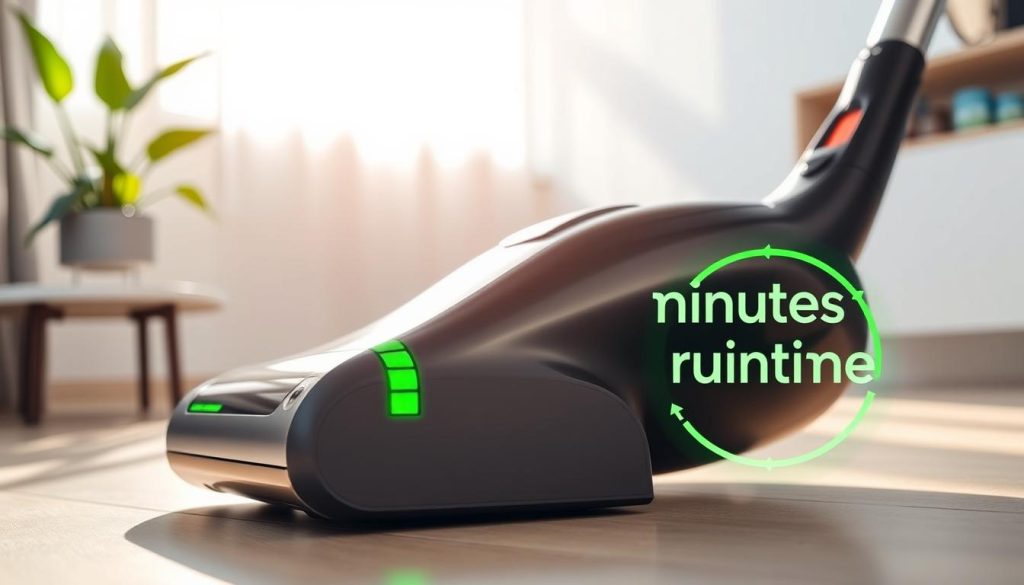
Auto modes versus Max/Turbo drain
Auto modes conserve energy by lowering suction when floors are clean. Switch to Max or Turbo and the same battery halves its usable minutes quickly.
Charge times and how docks change the experience
Consider charge time with runtime. The Tineco S7 Pro runs up to 40 minutes and charges in about 4 hours. The Roborock F25 Ace gives roughly 60 minutes but needs ~6h30 to top up.
The Dyson V15s reaches 60 minutes (~4h30 charge) while the Shark HydroVac manages about 25 minutes with ~4 hours to recharge. Docks that combine charging with roller wash make it easy to leave units ready for the next session.
When a swappable battery makes sense for Singapore homes
Swap packs are useful for larger flats, multi‑storey homes or when a long uninterrupted pass is needed. For short cleaning windows before work or after meals, prioritise usable runtime in Auto, a neat dock and quick recharge features.
Price and value in Singapore: what we get at each tier
Price often tells only part of the story; ownership effort shapes real value in Singapore homes. We tie cost to how often you refill water, empty the dirty tank, clean the roller and manage odour.
Budget picks for occasional cleaning
Budget models suit light dust, small spills and short sessions. Expect smaller tanks, shorter battery life and more manual roller drying.
They score well on price but add time for upkeep. If you have mainly hard floors and small rooms, a compact model can be sensible value.
Mid-range options with better self-cleaning
Mid-tier units balance suction, usable minutes and automated rinse cycles. These models reduce hands‑on time and often include better brush designs and larger tanks.
For most flats this hits the sweet spot between price and routine effort.
Premium models with advanced docks
Premium systems add hot‑water or steam, smart sensors and docks that wash and air‑dry rollers. They cost more up front but cut maintenance and improve hygiene.
Practical tip: match the model to your floors. Homes with carpets often gain more from a powerful dry unit with a mop head, while mainly hard floors favour dedicated floor washers. Also check local warranty support, retailer service and consumable costs before you decide on price versus long‑term value.
Conclusion
Here we sum up the models that best reduce fuss while keeping sealed floors looking their best.
Our pick for most Singapore homes is the tineco floor one. It delivers reliable hard floors results with a clear, repeatable cleaning routine that balances suction, water use and roller hygiene.
The runner‑up suits those who need longer battery life, lie‑flat reach and a dock that cares for the roller between sessions.
Budget buyers get convenience at lower cost but expect more frequent tank emptying and longer brush roll drying. For mixed floors, a strong dry unit with a mop head beats a single-purpose washer when carpets matter.
Use a robot vacuum mop for light daily upkeep; reserve manual passes for real spills and stuck-on dirt.
Buying checklist: match machine to flooring, tank size to home, brush roll to hair levels, and dock/battery setup to your routine. This guide is our practical wet and dry vacuum cleaner comparison for Singapore readers.

