

We begin by defining what that persistent aroma really is. It is a mix of natural oils, saliva, dander, damp spots and dirt tracked inside. In Singapore flats with air-conditioning and closed windows, this blend builds up fast and can become hard to notice for those who live there every day.
We set realistic expectations: a quick win comes from fresh airflow and targeted cleaning, while full removal takes work on fabrics, floors and any hidden accident areas. Our step order is clear — air first, remove hair and dirt, deodorise, treat accidents, then launder pet bedding and soft furnishings.
We favour a neutral result. The aim is a home that smells like nothing, not one masked by heavy fragrances. We will reference HEPA filtration, strong vacuuming routines, baking soda, vinegar solutions, enzymatic cleaners and occasional steam cleaning so readers can prepare and act promptly.
Finally, we frame this as prevention as much as removal. Consistent routines beat one-off deep cleans and stop odours returning after the first clean.
Why our homes trap dog smell, pet odours and dander
Understanding why our flats hold on to pet smells helps us target the real problems. In Singapore’s humid environment, natural secretions and trapped fibres make odours linger longer than we expect.
Biology explains most sources. Natural skin oils, saliva on toys and sofas, waxy ear build-up and sweat through paw pads all contribute. These secretions carry scent molecules that cling to fabric and air.
Hotspots matter. Carpets, upholstery, bedding and cosy corners where pets curl up collect the most dander and fur. Regular cleaning of these areas gives bigger gains than random scrubbing.
Dander and loose fur act like a transport system. They bind with dust and sink deep into fibres, embedding smells that simple surface cleaning will miss.
We can become nose-blind to familiar odours. Step outside and return or ask a friend for a quick check. Often the lingering issue is everyday build-up plus one hidden culprit — a missed accident spot, a musty bed or a clogged filter.
- Airflow for airborne scent
- Strong vacuuming for hair and dander
- Spot treatment and laundry for recontamination
How to get rid of dog smell in house quickly with fresh air and cleaner airflow
Fresh air is the fastest reset we can give a flat that feels stuffy and stale. A short, strategic airing removes trapped particles and makes the space easier to clean.
Ventilate first: opening windows and doors
Open windows and doors for short bursts in the cooler parts of the day. In Singapore, we aim for early morning or late evening to avoid heat while moving stale air out.
Pair this with a fan to create a cross-breeze. This step pushes out odours and lowers the load on any purifier we use.
HEPA filters: what they trap and why changes matter
HEPA stands for high-efficiency particulate air. These filters capture dander, pollen and fine dust that carry scent molecules.
Clean filters work; clogged ones recirculate musty air. Replace or wash according to the manufacturer, and check HVAC filters as well.
Air purifier basics for pet households
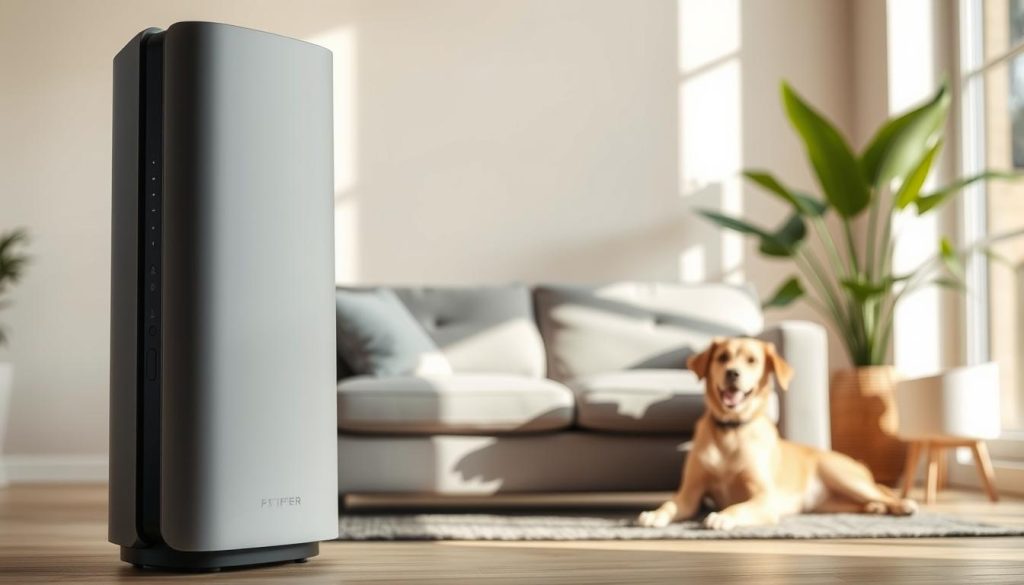
Choose a purifier sized for the room, with a true HEPA element and clear replacement costs in Singapore. Place units away from walls and corners for best flow.
| Feature | Why it matters | Practical note |
|---|---|---|
| Room coverage | Ensures adequate air changes | Match purifier CADR with room size |
| True HEPA | Removes dander and fine dust | Look for certified HEPA ratings |
| Replacement filters | Affects long-term costs and effectiveness | Check availability in local shops |
We must remember that purifiers and airflow help, but removing the source—hair, bedding and accidents—remains essential. For guidance on cleaning fabrics and carpets, see our clean carpet guidance.
Vacuum, sweep and mop the right way to remove hair and odour-causing dirt
A steady, targeted cleaning routine cuts fur and trapped odours before they settle into fabrics. We begin by prioritising high-traffic areas where paws and fur collect fastest. A clear order saves us time and effort.
Vacuum everything: rugs, curtains, furniture, floors and busy zones
Experts stress “vacuum, vacuum again.” We run our vacuum over carpets, rugs, curtains, sofa crevices and under cushions. Don’t forget skirting lines and doorways — these areas hide surprising amounts of hair.
Use strong filtration and keep filters clean
Choose a model with true HEPA or strong filtration. This prevents fine dander from blowing back into the room. We clean or change filters on schedule so suction and performance remain consistent.
Fast daily resets: sweep, then mop finished floors
For busy households, a quick sweep gathers loose hair. Follow with a mop on finished floors to lift the fine residue that leaves a stale scent.
Entryway tactics that cut tracked-in grime
We place durable door mats and keep a small paw-wipe station by the door. A brief wipe after rainy walks reduces damp dirt and helps keep carpets and floors fresher.
- Daily: brief sweep and mop of main circulation areas.
- Weekly: full vacuum of carpets, furniture and curtains.
- Monthly: check and replace vacuum filters.
Deodorise carpets, furniture and upholstery without damaging surfaces
A careful, material-by-material approach keeps fabrics and leather safe while removing odour. We select gentle, proven treatments that match each surface and climate in Singapore flats.
Baking soda for carpets
Sprinkle baking soda generously over the carpet. Brush it in with a stiff brush so the soda reaches fibres.
Leave it for at least a few hours, ideally overnight, then vacuum slowly and thoroughly. This simple baking step absorbs trapped smells without chemicals.
Vinegar and water solution for hard surfaces
Mix vinegar and water in a 1:1 solution. Apply lightly, let it dwell 5–10 minutes, then blot or wipe dry.
We avoid over-wetting as trapped moisture breeds odour in humid weather.
Upholstery, leather and steam
Where covers are removable, wash them regularly and add washable throws to high-contact areas.
For leather and delicate fabrics we wipe with a damp cloth and a mild solution, avoiding saturation.
When smells are deep-set, a portable upholstery steam cleaner at high temperature can sanitise fibres. Dry thoroughly after steaming.
“We treat each material with methods that remove scent without causing harm.”
| Surface | Best treatment | Quick note |
|---|---|---|
| Carpet | Baking soda; brush in, long dwell, vacuum | Works well on rugs and heavy-traffic areas |
| Hard floors | Vinegar + water solution; wipe and dry | Safe if not overused on sealed surfaces |
| Upholstery & leather | Removable covers, spot clean, light wipe-down | Steam only for sturdy fabrics; air-dry in shaded area |
For extra guidance on fabric cleaning and practical tips, see our trusted resource cleaning guide.
Handle accidents and stubborn spots before they become permanent odours
Accidents need fast, calm attention to stop lasting odours and stains. We act in a clear order so the problem does not spread across carpets and fabrics.
Blot, don’t scrub
Blot with clean, dry towels and work from the outside in. Scrubbing pushes liquids deeper and widens the stained area.
Enzymatic cleaners and dwell time
Enzymatic solutions break down the compounds that create persistent odour. We follow the product instructions and allow adequate dwell time; rushing this process often causes smells to return.
Use a blacklight to find hidden stains
A UV torch reveals old urine stains that glow yellow‑green on carpets and near baseboards. This helps us target stubborn spots we might otherwise miss.
Hard‑to‑shift areas
Skirting boards, lower walls and cosy corners hold fur and grime. We wipe these areas with controlled moisture, then air them well.
| Area | Immediate action | Follow-up |
|---|---|---|
| Carpets | Blot outside→in; apply enzymatic cleaner | Allow dwell time; vacuum when dry |
| Baseboards & walls | Wipe with damp cloth; mild cleaner | Dry and inspect for staining |
| Cosy corners | Lift bedding, clean surfaces | Air and repeat if odours persist |
“Test any new product on an inconspicuous patch first to avoid discolouration or damage.”
Keep pet items and laundry from reintroducing smells
We treat the pet kit and laundry as front‑line defence. If bedding and blankets stay dirty, the whole flat will smell again within days.

Wash bedding, blankets and soft toys on a clear plan. Prioritise covers that are machine‑washable and set a weekly or fortnightly cycle for heavy use items.
Make washable covers the norm
Choose beds with removable covers and wash at the hottest safe temperature listed. This removes saliva, dander and the bulk of lingering odour.
Don’t forget accessories and hard toys
Collars, leashes, bowls and plastic toys can harbour bacteria and stale scent. Wipe bowls with hot water and mild detergent, and soak non‑electronic toys periodically.
Protect the machine and use vinegar
Trapped fur in a drum can make clean textiles smell musty. Run a cleaning cycle with vinegar and hot water once a month to clear residues.
Vinegar in the softener compartment reduces odour on laundry. Skip scented dryer sheets, which can leave a residue that attracts dust.
Optional: sprinkle a little soda into heavily soiled bedding before washing for a fabric‑safe boost.
Conclusion
Clear steps and steady upkeep are the real route to a scent-free living space. For a fast result on how to get rid of dog smell in house quickly, start with moving air, then remove hair and dander, deodorise fabrics and treat any accident areas properly.
We keep the source-first rule: purifiers and sprays help, but the home stays fresh when we clean carpets, furniture, beds and favourite corners that hold fur and pet odours.
Our simple Singapore rhythm: daily quick resets (airing, a fast vacuum or sweep), plus one weekly deeper clean that includes filter checks, baking soda on rugs and a thorough vacuum. Maintain filters and the vacuum — poor filtration lets stale air come back fast.
Checklist recap: ventilate, remove hair, treat spots, deodorise, check filters. This approach is pet-friendly, surface-safe and realistic for busy owners who want a home that smells like nothing.

