

We want clarity before we spend. This guide sets clear expectations for what a combined machine will do for typical Singapore homes.
Many models pick up solid debris such as dust or hair and handle liquid spills too. They tend to be heavier and louder because of stronger motors. For some floor types, a dedicated unit still works better.
We outline key buyer questions: our floor types, common spills, storage limits in HDBs and condos, plus whether a single tool saves effort without extra fuss.
Next, we separate true floor washers from modular setups — a robust dry unit with a wet head. This helps us choose the right category before brand comparison.
By the end, we aim to shortlist a durable machine, weigh trade-offs like weight, upkeep, noise, battery life, and surface fit, then spend wisely for the way we clean.
Is wet and dry vacuum cleaner good for Singapore homes?
We look at practicality rather than hype. In many flats with tiled or vinyl surfaces, a single device that vacuums then mops can save us real time and effort. It suits kitchens, dining zones and entryways where quick recovery from food messes matters.
When an all-in-one makes sense for us
Quick nightly resets: If we face frequent food or drink spills, kids’ messes or pet accidents, the two‑in‑one route cuts a chore into one pass. Many models are self‑propelling, which lowers physical effort.
Hard floors only: For sealed surfaces such as tile or vinyl, combined units deliver fast coverage and reduce mop bucket trips. This is where we reclaim time each week.
When separate tools work better
Mixed surfaces: If our home uses rugs or carpet across several rooms, we should keep a strong dry unit for those areas. A mid‑range dry plus a simple mop can beat a single pricey device on overall value.
- Space limits: cordless models help with storage, but watch battery life and charging location.
- Budget logic: weigh price against how often the unit will earn its keep.
- Decision rules we’ll use later: floor coverage, mess frequency, storage and price‑to‑usefulness.
What a wet and dry vacuum cleaner actually does
We expect a clear sequence: the device sprays fresh solution, scrubs with a roller, then suctions the soiled liquid into a separate reservoir.
Vacuuming dust and debris while mopping in a single pass
In one pass, we lift loose dust and crumbs while the roller agitates stains. The brush loosens grime; suction pulls solids and liquid away so the floor finishes less damp than with a mop.
How clean water tank and dirty water tank systems keep water separate
Most models use a clean water tank that feeds fresh solution to the head. A separate dirty water tank collects used liquid so we never mop with grey water.
This separation lets us see how much grime the unit removes and makes disposal straightforward.
Self-propelling designs and why they reduce effort on hard floors
Many units have powered wheels that ease forward movement on hard floors. That reduces push force and helps when the device is heavier than our usual models.
We will judge models later by tanks, roller, suction path and how solids and liquids separate within the system. For a quick primer, see a concise feature roundup in this wet-dry features.
The biggest advantages we see in wet dry vacuum cleaners
A single machine that vacuums then mops can shave routine chores into one quick pass. That saves us significant time on hard floors, especially in entryways and kitchens where messes happen often.
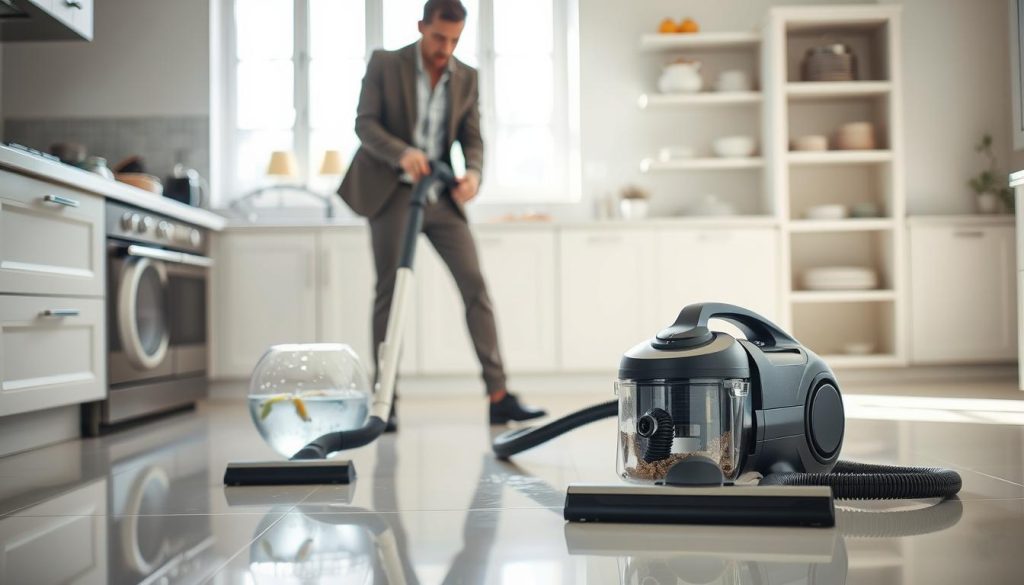
Faster cleaning time on hard floors by combining vacuum and mopping
Combining tasks reduces overall cleaning sessions. We vacuum loose dirt first, then the roller applies a wet pass and the unit suctions the soiled solution away. This single sweep cuts repeat work and shortens time spent per session.
Handling spills and sticky messes without reaching for a bucket
For quick spot work, a targeted pass removes spills and sticky patches without extra kit. The separate tanks keep fresh solution apart from dirty water, so we don’t reapply grime.
Why they’re popular for households with children or pets
Homes with kids or pets benefit from stronger suction modes and specific settings for hair and tracked-in dirt. The wet pass lifts paw marks and light odours better than dry pickup alone.
Edge cleaning and getting closer to walls and skirting boards
“Look for dual-side rollers or edge-focused heads to collect crumbs at walls.”
Good edge features matter in small flats. Units that reach close to skirting boards reduce hidden buildup and make weekly maintenance quicker.
The downsides to consider before we buy
We must balance benefits with honest limits so we pick something that suits our space and routine.
Heft, bulk and noise
Compared with a standard dry vacuum, many combined units are heavier and bulkier. That matters if we have stairs, narrow corridors or tight storage.
More powerful motors raise the noise level during use. If we live in a flat with close neighbours, choose quieter cleaning windows.
Maintenance reality
Regular care is part of ownership. We empty the dirty water tank after each session and rinse the water tank paths to prevent odour.
We also clear hair from the roller and let parts dry. Self-clean cycles help but do not remove all manual tasks.
Cordless runtime and battery facts
Cordless runtimes vary widely — often 20–60 minutes depending on mode. Advertised minutes assume steady running; frequent stops or boost modes cut effective runtime.
We should check battery life figures against our home size before choosing a cordless model.
Surface limits
Many designs target sealed hard floors only. If our home has rugs or carpet we will likely keep a strong dry vacuum for those areas.
| Downside | What it means | Practical tip | When it matters |
|---|---|---|---|
| Heavier unit | Harder to carry up stairs | Test lift weight in store | Multi-floor flats |
| Tank maintenance | Empty dirty water, rinse tanks | Schedule rinse after each use | Frequent spills |
| Limited runtime | 20–60 minutes on battery | Plan sessions by minutes available | Large homes |
| Surface limits | Best for sealed floors | Keep a separate dry vacuum for rugs | Mixed floor types |
These downsides act as decision filters rather than deal-breakers. If we buy with eyes open, we can match a model’s design to our home and habits. For carpet cleaning advice that pairs with a hybrid unit, see our guide on using a carpet cleaner.
Hard floors, rugs and carpet: choosing the right type for our floors
Choosing between specialised floor washers, multi-surface systems and robot combos depends on our home layout and cleaning habits.
Dedicated floor washers for sealed tiles, vinyl and laminate
Dedicated floor washers perform best on sealed tiles and vinyl. These surfaces tolerate controlled water use and frequent mopping.
We get stronger scrubbing action, higher water flow control and efficient suction to remove soiled liquid. That makes them ideal for kitchens and entryways common in Singapore flats.
Multi-surface options that can handle rugs and low-pile carpet
Some multi-surface models, such as CrossWave-style designs, combine a brush head, solution feed and suction. They work on sealed floors and low-pile rugs.
These models offer flexible settings for fibre mode or hard-floor mode. They are convenient for mixed rooms but may not match a separate dry unit for deep carpet cleaning.
Why robot + mopping suits light maintenance, not scrubby spills
Robot mop systems shine at daily dust picks and light mopping. They save time for routine tasks.
However, they lack strong suction-plus-scrub for sticky spillages or dried mess. For heavy accidents we keep a dry unit or a stronger floor washer on hand.
- Keep a dry vacuum: If our home has rugs, a separate dry unit remains essential for deep pile care.
- Match by mix: Flats with mostly sealed floors benefit from a dedicated washer; mixed-floor homes suit multi-surface models.
| Type | Best for | Strength | Limit |
|---|---|---|---|
| Dedicated floor washer | Sealed tiles, vinyl, laminate | Strong scrubbing, controlled water | Not for rugs or deep carpet |
| Multi-surface model | Hard floors + low-pile rugs | Versatile settings, single-pass cleaning | Moderate carpet performance |
| Robot + mop | Daily dust, light mopping | Hands-free, time-saving | Poor for sticky spills, limited suction |
Key specs that matter when comparing models
Key numbers on spec sheets predict how a machine performs in our flats more than glossy photos. Read specs to match a model to our layout, spill types and storage limits.
Tank volume and water tank trade-offs
Tank size affects how often we stop to refill or empty. Larger volume means fewer interruptions but more bulk to lift and store.
Practical tip: For small flats, a 500–1,000ml clean water capacity often balances runtime with manageable weight.
Suction power and Pa ratings
Higher Pa ratings help pull debris and reclaim soiled liquid from rollers. Still, high Pa won’t turn a floor washer into a deep‑pile carpet tool.
We look for 20,000–22,000 Pa in stronger floor washers; lower figures suit quick spot work.
Filter system and HEPA for allergens
If anyone in our home has allergies, choose a model with a robust filter system and HEPA where the dry module handles dust. HEPA is less critical for pure mopping heads.
Noise level, cordless vs corded and brush design
Power often raises noise level. If we clean early mornings, check dB figures or test in store.
Cordless models give easier manoeuvre and faster start-ups; corded units offer steady power without runtime limits. Consider claimed minutes of runtime and realistic battery life for your sessions.
Brush and roller design matters for maintenance. Look for tangle‑resistant brush bars and antimicrobial rollers to cut odour and hair buildup.
Cleaning modes that match daily use
Modes such as auto/detection, max, suction‑only and pet turbo let us adapt power to the mess. Auto mode saves minutes; max helps with stubborn stains; suction‑only dries floors faster after a pass.
| Spec | What to expect | Typical range | When it matters |
|---|---|---|---|
| Tank volume | How much clean water per session | 500–1,000ml | Large kitchens, frequent spills |
| Suction power (Pa) | Debris lift and water recovery | 20,000–22,000 Pa | Sticky messes, pet hair |
| Filter system | Allergen control for dry pickup | HEPA option | Allergy sufferers |
| Runtime / minutes | How long cordless models run | 30–70 minutes | Flat size, multiple rooms |
Features that are worth paying more for (and which are not)
Some high-end options earn their price by solving specific problems we actually face at home. We separate real performance upgrades from flashy extras so our purchase matches routine use in Singapore flats.
Hot water mopping for oily messes
Hot water mopping helps cut through kitchen oil and stubborn grime faster than cold passes. Models such as the Dreame H15 Pro Heat heat water to speed stain lift.
Use hot water sparingly on sensitive sealed floors. It can reduce runtime and may affect some finishes, so check manufacturer guidance before frequent use.
Steam functions: when hygienic cleaning matters
Steam adds sanitising power for heavy-duty needs, for example pet accidents or bathroom floors. Bissell CrossWave HydroSteam Pet shows how a steam mode pairs with suction.
Steam increases weight, noise and upkeep. For weekly upkeep, the extra complexity often outweighs benefit.
Smart sensors and displays that guide us
Smart sensors such as Tineco’s iLoop tell us when a floor still shows dirt. These displays save water by avoiding over-application of solution and speed sessions by switching cleaning modes automatically.
Lay-flat designs for low furniture
Flat-folding designs let us reach under sofas and consoles without moving heavy items. That practical design reduces hidden buildup in small flats.
Self-clean cycles: what they do and what they don’t
Self-clean cycles rinse rollers and internal paths. They cut manual work, but we still empty dirty water, rinse tanks and air parts to prevent odour.
- Buy for need: pay extra for hot water or sensors only if your mess profile demands them.
- Skip novelty: avoid pricey add-ons that add maintenance without real time savings.
“Choose features that match your floor types, spill frequency and long-term maintenance budget.”
Long-term value ties back to price and life expectancy. We recommend paying more only for features we will use often.
Our short list of wet and dry vacuum cleaners to compare in Singapore
Our comparison picks aim to balance real‑world runtime with tank capacity and handling. We highlight models available locally so we can judge price against daily needs.
Premium all‑rounders for hard floors
Tineco Floor One variants top this group. The Floor One Switch S7 Stretch has a 1,000ml clean water tank, 720ml dirty water tank, 22,000 Pa suction and about 50 minutes runtime. Smart sensors and dual‑side rollers help edge work despite higher prices.
Hot water options
Dreame H15 Pro Heat brings 85°C hot water for greasy kitchens. Expect 800/650ml tanks, 22,000 Pa power and shorter hot‑water minutes versus normal modes.
Pet‑focused picks
Bissell CrossWave X7 Cordless Pet Pro targets hair and sticky messes with Turbo Pet modes. Tank sizes sit around 820/420ml and runtime near 30 minutes.
Value, lightweight and modular choices
Simplus and Shark offer cheaper cordless models with sensible minutes and manageable tanks. Narwal S20 Pro and Dyson Submarine‑style systems suit mixed floors: strong dry suction plus a wet head for spot mopping.
For a quick market guide, see a local roundup at best wet‑and‑dry picks.
How we recommend choosing based on our cleaning routine and budget
We choose by routine first: quick daily resets and big weekend sessions need different kit. Start with how often we tackle spills and whether one charge gives enough minutes for our typical zones.

Small flats and HDB layouts
Priority: compact turning radius, easy storage and cordless convenience. A nimble head saves time during short spot cleans.
Family homes
We favour larger tank volume and stronger power for fast sessions. Bigger tanks cut refill stops and let us handle frequent kitchen spills without pausing.
Pet owners
Focus on hair pick-up, odour control and simple roller care. The hidden cost is the minutes we spend maintaining brush bars after each session.
Balancing prices, ongoing solution costs and long-term value
Check whether brands force proprietary solution purchases. Factor replacement rollers, filters and extra water refills into lifetime prices.
| Home type | Recommended tank | Battery life / minutes | Maintenance |
|---|---|---|---|
| Small flat | 500–800ml | 30–45 minutes | Low; quick rinse |
| Family home | 800–1,200ml | 40–60 minutes | Medium; regular rinse |
| Pet household | 800–1,000ml | 35–50 minutes | High; hair clear, filter care |
Decision rule: floor type + mess frequency + storage + maintenance tolerance + budget = our shortlist. Choose the model that earns back our time most weeks.
Conclusion
Our conclusion focuses on practical fit rather than brand hype or flashy specs.
We find a combined floor washer works best on sealed hard surfaces, for frequent spills, where one pass saves time. Choose a hybrid unit when quick resets beat separate vacuuming then mopping routines.
Many buyers get disappointed after underestimating upkeep, buying a hard‑floor model while keeping rugs, or assuming runtime will cover every room. Check maintenance needs, brush care and realistic runtime before purchase.
Buying logic: pick the type first — dedicated floor washer, modular wet head, or robot plus mop — then compare tank size, runtime, modes and edge reach. Pay extra only for hot water, steam, sensors or lay‑flat designs that solve a real routine problem.
Next step: confirm floor compatibility, verify after‑sales support and parts availability in Singapore, then buy for long‑term value not short‑term deals.

