
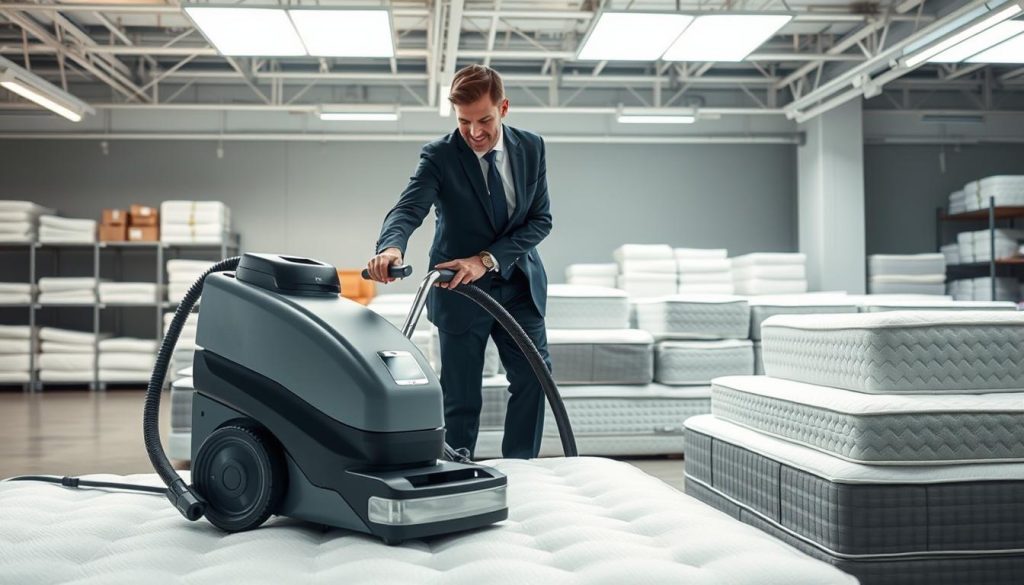
We introduce a focused roundup that aims to cut allergen load in daily living spaces. In Singapore’s warm, humid climate, dust mite control is a year‑round task, so we favour machines built for frequent use.
Our criteria emphasise strong suction, HEPA or HEPA‑level filtration, low emissions and real cleaning performance on floors and fabrics. Basic cleaners can stir allergens rather than trap them, so filtration matters as much as pickup.
We list a cordless stick, a robot that can mop, and a wet‑dry option to match lifestyle and budget. Each pick includes who it suits, its strengths and limits, and why it helps with allergies at home.
Note: This is practical, commercial guidance. We test manoeuvrability, carpet and hard‑floor pickup, emissions and suction strength to give clear, usable advice.
Why dust mites are a problem in Singapore homes
In Singapore, moisture and heat create ideal conditions for tiny allergens to thrive indoors. We often find that indoor fabrics trap particles that feed these organisms, so the issue is persistent rather than seasonal.
Where they hide
- Mattresses and bedding — prime food sources from shed skin.
- Sofas, fabric chairs and upholstery — deep fibres shield mites.
- Rugs, carpets and curtains — layers where allergens accumulate.
It is not the creatures themselves but their waste and secretions that trigger sneezing, itchy eyes and asthma. These microscopic particles become airborne during movement and worsen indoor allergies.
Why regular cleaning matters
Surface wiping misses deep fibres. A proper vacuum with good filtration reduces what becomes airborne and helps control allergen cycles in a warm, humid home.
| Hotspot | Typical hiding place | Cleaning priority |
|---|---|---|
| Mattress | Inner layers and seams | High — weekly hot washes or encasements |
| Sofa & upholstery | Under cushions and fabric weave | High — targeted vacuuming and steam where allowed |
| Rugs & carpets | Deep pile and backing | High — frequent vacuum passes with strong suction |
What to look for in a vacuum cleaner for dust mite and allergy control
Choosing the right machine makes a real difference when you want to reduce airborne allergens at home. We focus on features that limit particle release and improve deep cleaning on both carpets and bare floors.
HEPA filter versus HEPA‑level filtration
A true hepa filter captures 99.97% of 0.3µm particles. HEPA‑level claims can be useful, but they must pair with a sealed system to stop leaks. Check manufacturer tests and certifications before you rely on marketing terms.
Why suction power matters
Allergens lodge deep in carpet fibres and upholstery. Higher suction and steady airflow pull more debris free.
For robot models we look for at least 7,800Pa; handhelds and sticks need consistent airflow rather than only peak power.
Sealed systems and self‑emptying
Sealed pathways keep captured particles contained. Self‑emptying bases reduce direct contact with the bin.
“A sealed, self‑emptying base is often the point where allergy sufferers notice fewer symptoms.”
Brush roll and anti‑tangle design
Anti‑tangle brush rolls keep performance high in homes with long hair and pet shedding. Clogged rollers cut suction and scatter fibres.
Cleaner heads for carpets versus hard floors
Use a motorised brush on deep pile carpets and an adjustable head or soft roller on tiles and vinyl to avoid scattering dust.
| Feature | What to expect | Why it matters |
|---|---|---|
| Filtration | HEPA or certified HEPA‑level | Stops tiny allergens escaping |
| Suction | 7,800Pa+ for robots; strong airflow for sticks | Extracts debris from fibres |
| Design | Sealed system + anti‑tangle brush | Reduces exposure and keeps power consistent |
How we evaluate vacuums for allergens, emissions and real-world cleaning
We measure real-world performance so buyers can pick a model that keeps indoor air cleaner. Our protocol mixes lab instruments with home-style tasks. This shows how a vacuum performs when it matters: during a full clean of beds, sofas and floors.
Debris pickup on carpets and bare floors
We test debris removal on carpet and hard floors using timed passes. Tests include pet hair and loose grit to mirror Singapore homes with pets and heavy foot traffic. The Tineco Pure One Station hit 99.8% debris pickup in one minute in our trial notes, which we cite as a benchmark for quick passes.
Emissions testing and particle release
Emissions are measured with a laser spectrometer after we load wood flour into the bin. Low particle release matters because microscopic particles trigger allergies even when surfaces look clean. A sealed filter and tight airflow paths reduce airborne exposure.
Suction and airflow as bins fill
We measure airflow with a pressure gauge at empty, +100g and +200g loads. This shows how suction holds up as the bag or bin loads. Many models lose airflow with a full bag, which reduces deep cleaning performance across carpets and hard floors.
Usability: manoeuvrability, noise and reach
Real cleaning depends on ease of use. We judge easy maneuver around furniture, the ability to clean under beds and sofas, and noise levels suitable for HDB and condo living. These factors predict whether owners will clean often enough to cut allergen cycles.
| Test | Method | Why it matters |
|---|---|---|
| Debris pickup | Timed passes on carpet and hard floors with hair/grit | Shows real removal of allergen carriers |
| Emissions | Laser spectrometer after wood‑flour loading | Detects particle release into room air |
| Suction retention | Airflow gauge at three fill levels | Reveals performance drop as bin/bag fills |
| Usability | Manoeuvre, under‑bed reach, noise measurement | Predicts cleaning frequency and coverage |
Best vacuums for dust mites
We present a compact shortlist to help match a machine to your routine. Each model balances filtration, suction and real‑world usability so you can reduce allergens without overhauling cleaning habits.
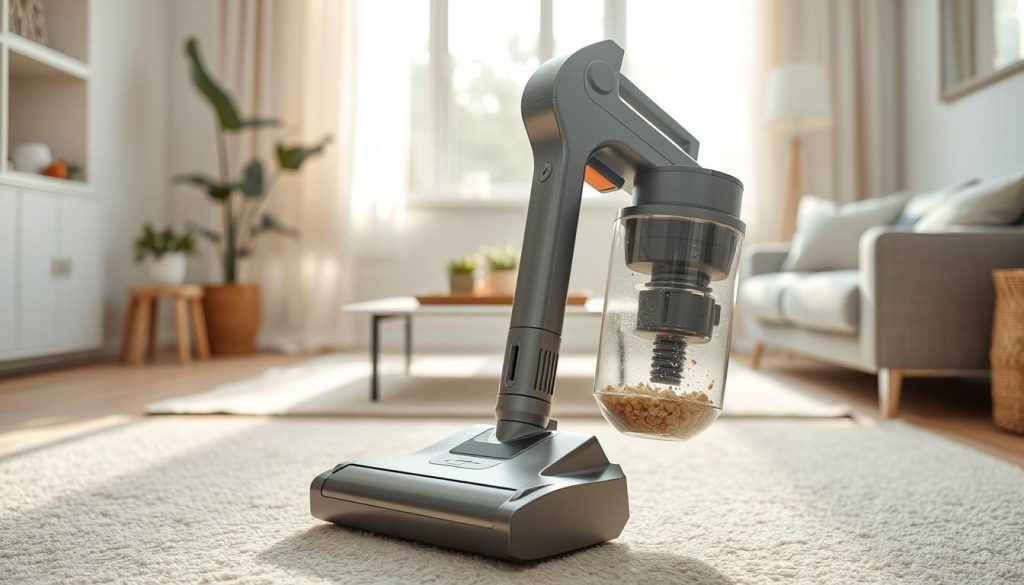
Best cordless stick vacuum for everyday allergen control: Tineco Pure One Station
Why choose it: Lightweight stick vacuum with a freestanding station and a front light that eases quick passes.
Testing showed 99.8% debris pickup in one minute. It is quiet, has Wi‑Fi and AI voice. It struggles slightly with corners and the tiniest particles.
Best robot vacuum and mop for deep hygiene: Narwal Freo Z Ultra
Why choose it: Hybrid robot with 12,000Pa suction, dual mop pressure and a 75°C self‑washing base to cut cross‑contamination.
Best balance of power and intelligence: Narwal Freo X Ultra
Why choose it: 8,200Pa suction with DirtSense™ adjustments and a quiet 53dB profile. Suits mixed floors and overnight runs.
Best value for allergy-conscious homes: Narwal Freo X Plus
Why choose it: 7,800Pa, zero‑tangling brush and seven‑week dust storage for sealed handling of hair and dander.
Best wet-dry option for targeted dust and debris: Narwal S20 Pro
Why choose it: Up to 20,000Pa, antibacterial filter rated >99.9%, auto solution dispensing and intelligent drying for focused sessions and under‑bed reach.
Tip: For mattress and upholstery care, see our guide to using a wet‑dry unit on bedding here.
Tineco Pure One Station cordless vacuum cleaner review
We tested the Tineco Pure One Station to see whether convenience and filtration meet real cleaning needs.
Allergen‑reducing performance: In our timed trial the unit achieved 99.8% debris pickup in one minute. That level of removal reduces what gets re‑circulated when people walk, sit on sofas or change bedding. For allergy sufferers this translates to fewer airborne triggers during routine passes.
Noise and comfort
The machine runs quietly enough for normal conversation in another room. It is very lightweight and easy to manoeuvre, so frequent cleaning is less of a chore in Singapore flats.
Design highlights
Key touches that aid real cleaning include a freestanding charging station (no wall mount needed), a front light that reveals fine dust, and a trigger control that gives on‑demand power when you need it.
Smart features and limits
Wi‑Fi connectivity and AI voice are useful for monitoring and guided maintenance rather than gimmicks. The suction and brush do well on typical traffic lanes but struggle in tight corners and with very small particles such as tiny pasta grains.
Value check
This model sits at a premium point versus similarly featured cordless stick options. We recommend it to households that value low noise, smart monitoring and fast pickup. Those who need deep corner or micro‑particle cleaning should plan a secondary tool or specialised head.
Narwal Freo Z Ultra robot vacuum mop for dust mites and deep hygiene
Daily automated cleaning can cut allergen build‑up before it becomes a problem in high‑traffic homes. The Narwal Freo Z Ultra pairs strong cleaning routines with features aimed at reducing cross‑contamination across rooms.
12,000Pa suction and dual mop pressure
The model’s 12,000Pa suction helps lift embedded dust and allergens from carpets and rugs where they hide. Dual mop pressure (12N at 180RPM) gives controlled scrubbing on hard floors while avoiding excess dampness.
Smarter hotspot cleaning
Dual AI camera recognition identifies obstacles and targets heavily soiled zones. This reduces missed areas and lowers the need for manual follow‑ups.
High‑temperature self‑washing station
The base washes mop pads at up to 75°C. This reduces residue transfer and the chance of spreading allergen fragments room to room.
“A set‑and‑forget robot is often the best way to keep daily allergen load manageable.”
We recommend this model for busy households and families in Singapore who want scheduled cleaning with minimal fuss. Learn more about this model on the Narwal product page: Narwal Freo Z Ultra details.
Narwal Freo X Ultra for multi-surface homes with carpets and hard floors
We position the Freo X Ultra as a balanced robot for Singapore flats that mix carpets and tiles. It blends targeted power with intelligence so you need fewer manual follow‑ups.
8,200Pa suction with DirtSense™ adjustments for high-dust zones
8,200Pa suction gives the model steady extraction on entryways and pet corners. DirtSense™ boosts effort where sensors detect heavier dirt, concentrating cleaning where it matters.
Auto mop lift to protect carpets and avoid moisture build-up
The auto mop lift keeps the mop off carpets and rugs. This reduces damp spots that can invite musty smells and helps keep carpets dry in Singapore’s humid climate.
Whisper‑quiet cleaning for overnight runs
At around 53dB the Freo X Ultra runs quietly enough for night schedules. We find overnight cycles make daily upkeep habitual rather than occasional.
Filtration note: Expect HEPA‑level filtration within a sealed pathway to limit particle release and keep room air calmer during operation.
| Feature | What it does | Why it helps |
|---|---|---|
| Suction (8,200Pa) | Steady lift on mixed surfaces | Extracts embedded dirt from carpets and floors |
| DirtSense™ | Auto boost on dusty zones | Focuses cleaning on high-traffic areas |
| Auto mop lift | Keeps mop off rugs | Prevents moisture buildup and mustiness |
| Noise (53dB) | Quiet overnight runs | Encourages daily scheduled cleaning |
Choose the Freo X Ultra if you want strong suction and smart routines without paying for the most advanced docking station. It suits households with pets, mixed floors and a need for practical features at a sensible level.
Narwal Freo X Plus for pet hair, carpets and sealed dust handling
Pet owners need machines that manage hair and dander without frequent upkeep.
We recommend the Freo X Plus when homes combine shedding animals and soft furnishings. The model pairs practical suction with an anti‑tangle system to keep performance steady.
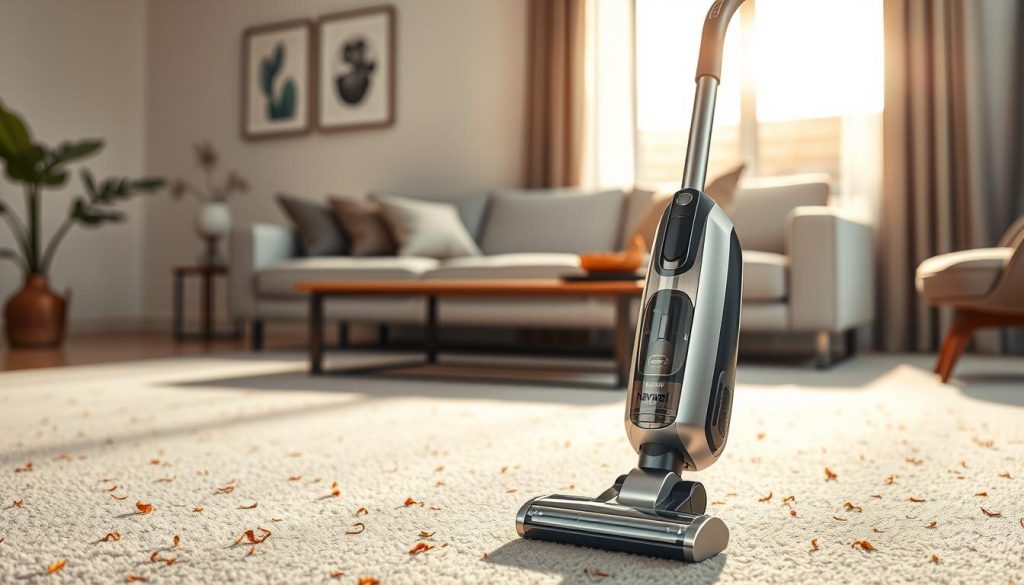
7,800Pa suction and zero‑tangling brush
7,800Pa suction offers reliable extraction from rugs and carpeted bedrooms. It pulls hair and embedded particles from fibres without overworking the motor.
The zero‑tangling brush reduces hair wrap so the brush keeps turning and suction remains consistent. That means fewer manual clean‑ups and less time touching hair and dander.
Smart carpet detection with mop lift
Smart sensors detect carpets and raise the mop up to 12mm. This prevents wetting rugs and helps avoid the humidity that can worsen allergen cycles.
Keeping rugs dry in Singapore’s climate is a simple way to reduce risk and keep floors hygienic.
Seven‑week sealed dust storage
The self‑emptying bag holds debris for up to seven weeks and seals it away. Fewer emptying events lower exposure to airborne allergens and reduce handling of the internal bag.
| Feature | Spec | Benefit |
|---|---|---|
| Suction | 7,800Pa | Deep extraction from carpets and mixed floors |
| Brush | Zero‑tangling system | Less maintenance; steady cleaning performance |
| Carpet detection | Auto mop lift to 12mm | Prevents moisture on rugs and reduces mustiness |
| Dust storage | Seven‑week sealed bag | Fewer empty cycles; lower allergen exposure |
“For pet households, sealed containment and anti‑tangle design matter as much as raw suction.”
We see this model as a solid value option for owners who need strong pet hair handling, sealed containment and daily, hassle‑free cleaning.
Narwal S20 Pro vacuum mop for powerful suction and allergy-focused filtration
When floor grime and fine particles build up along skirting boards, a high‑power vacuum mop makes a measurable difference. The Narwal S20 Pro pairs raw sucking ability with smart sensors so routine cleaning hits both visible debris and hidden allergens.
Up to 20,000Pa suction with AI DirtSense™ for deep cleaning
Up to 20,000Pa suction pulls grit from crevices and along skirting boards where settled particles hide. AI DirtSense™ automatically ramps power when heavier dirt is detected, so we get consistent results without switching modes.
Antibacterial filter designed to lock in dust particles
The S20 Pro uses an antibacterial filter rated >99.9% to absorb and lock particles. For households managing allergies this sealed approach reduces what returns to room air during operation.
Auto solution dispensing and intelligent drying to reduce dampness
Automatic solution dispensing meters liquid to avoid puddles. Intelligent drying follows mop cycles to keep hard floors dry, which helps prevent microbial growth in Singapore’s humid climate.
Fold-flat design for under-bed and tight-area cleaning
The 180° fold-flat chassis reaches under beds and low furniture. That access lets us remove long-ignored debris in tight areas where allergens gather.
Tip: Learn more about the S20 Pro and its pro-level features on the official product page: Narwal S20 Pro details.
Robot vacuum and mop vs cordless stick vs handheld vacuum for dust mites
Different cleaning types suit different routines. We help you match a machine to how you live so allergen cycles are interrupted more often.
When automated daily cleaning makes the most sense
Robotic units with strong suction, HEPA or antibacterial filtration, mapping and sealed self‑emptying reduce hands‑on contact and keep rooms on a schedule.
They work best in busy Singapore homes where regular maintenance prevents build‑up. Automatic mop washing and drying cut cross‑room transfer of particles.
When a cordless stick wins quick whole‑home passes
A stick vacuum is ideal for fast, whole‑home passes. Its manoeuvrability suits stairs, corners and quick resets after meals.
Choose a model with steady airflow and a brush suited to both carpet and hard floors to avoid scattering fine particles.
When a handheld is best for bedding, sofas and spot cleaning
Handheld units shine at targeted work on mattresses, upholstery and tight crevices. They let us attack allergen hotspots between washes.
For homes with pets and hair, we recommend a mixed approach: automated daily runs, a stick for whole‑home upkeep and a handheld for soft furnishings.
“Consistency beats occasional deep cleans when humidity keeps particles cycling.”
How to reduce dust mites beyond vacuuming
Cleaning alone will not solve allergy cycles. We recommend a simple, repeatable plan that lowers allergens and keeps indoor air calmer.
Cleaning frequency
Target high-risk areas — bedsides, mattresses, sofas, rugs and curtain edges — 2–3 times a week. Short, focused passes beat an infrequent deep clean.
Humidity control
Keep indoor humidity under 60%, ideally below 50%. Lower humidity makes the home less hospitable to mites and cuts allergen persistence.
Bedding routine
Wash bedding in hot water where fabric allows and change sheets regularly. Sun-drying adds heat exposure that helps reduce allergen levels.
Targeted treatments
Freeze soft toys overnight, then launder or wipe them. Use heat on washable items as needed to reduce live organisms without harsh chemicals.
Anti‑mite bedding
Choose tightly woven covers and physical barrier products rather than sprays. A sealed approach reduces contact with allergens when we change a bag or empty a filter.
- Practical programme: frequent cleaning of hotspots, humidity control, hot washes and targeted freezing.
- Filtration link: HEPA or HEPA‑level filters and sealed dust handling cut the amount of allergens released during maintenance.
“Consistent, small actions around bedding and humidity give the biggest reduction in household allergens.”
Conclusion
We finish by helping you turn specs into a repeatable cleaning plan that keeps indoor air calmer and protects the home.
Decision frame: prioritise strong suction, a sealed pathway and a credible hepa filter over marketing claims. These elements cut allergens that would otherwise recirculate during use.
Pick a robot vacuum mop for set‑and‑forget daily cleaning, a cordless stick for fast whole‑home passes, and a handheld vacuum for mattresses and upholstery hotspots.
Singapore’s humidity makes consistency essential. Short, regular cleaning beats sporadic deep cleans. Shortlist by floor type and routine, then choose the model — including a pro‑tier option if you need extra filtration or longer runtime — that balances performance, upkeep and budget.

