
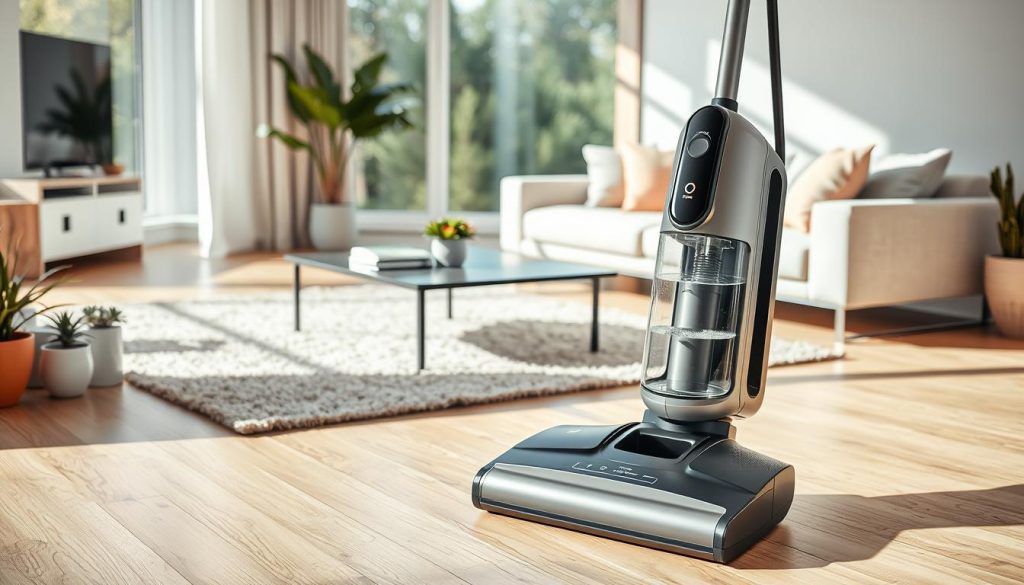
We open by defining what a “best water based vacuum cleaner in budget” means for shoppers in Singapore who want solid performance without premium price tags.
Our aim is clear: set realistic expectations for what these machines can and cannot do. We explain trade-offs across suction, battery life, tank design and running costs.
Our shortlist covers wet-dry mop models for spills, dry options for pet hair and dust, and compact handhelds for cars and quick touch-ups. We highlight who each pick suits and the key specs that matter in real use.
Throughout, we focus on practical points for HDBs and condos: storage, maintenance burden and edge performance. Expect a quick shortlist first, then clear reasons for each choice and buyer guidance to match floors and lifestyle.
Why water-based and wet dry vacuums make sense for Singapore homes
Living in a humid tropical climate changes what we value from a cleaning appliance.
We find that a wet dry approach suits many HDB flats and condos because hard floors are common and humidity exaggerates stickiness. Spilled kopi, soup drips and wet footprints dry into stains faster here, and a device that uses water to lift grime can cut odours and tackiness in one pass.
Practical workflow changes matter. Using a clean water tank and a dirty water tank means we fill, rinse and empty. That takes more steps than emptying a dust bin, but it often removes sticky residues that a dry-only unit leaves behind.
When to use which tool: a wet dry vacuum mop can replace a mop-and-bucket routine on tiled or vinyl floors. For bedrooms, rugs and quick dust runs, a dry unit still wins for speed and weight.
- Wet dry units handle liquid spills and solids in one pass.
- They are often heavier and louder due to motors and tanks.
- In compact layouts, they reduce total cleaning steps when used regularly.
How we chose and compared these vacuums in 2025
To judge real-world performance we translated technical specs into household outcomes. We focused on the metrics and design choices that matter for HDBs and condos: suction numbers, tank layout, battery life, and upkeep routines.
Suction power benchmarks
We explain Pa, kPa and Air Watts and show what they mean on tiled and vinyl floors. High Pa helps with crumbs and fur; Air Watts describe airflow efficiency. We looked for consistent suction under load, not just peak claims.
Tank sizing for small-to-mid flats
Dual-tank setups keep a clean water tank separate from the dirty water reservoir. That design reduces cross-contamination and makes rinsing simpler for compact homes.
Battery life and run coverage
We measured real runtimes and charge time, and noted how coverage per run maps to room count. Cordless models with swappable battery cells scored higher for flexibility.
Weight, noise and maintenance
We checked carry weight, noise levels, and storage footprint. Maintenance tests covered filter washing, brush de-tangling and the value of self-clean docks for odour control.
For further context, you can compare local value picks and features we weighed.
Best water based vacuum cleaner in budget: quick shortlist
To help readers decide fast, we present three concise picks that cover common Singapore households. Each entry notes the key specs and who will benefit most.
Simplus Cordless Wet-Dry Vacuum Cleaner
Why we like it: 21,000 Pa suction and a 50-minute runtime make this an everyday workhorse for tiled flats. The dual 500 ml and 550 ml tanks keep clean and dirty water separate for hygiene.
Who it suits: small-to-mid flats that need a practical vacuum mop with a low-profile 180° fold for tight spaces.
Airbot Supersonics Pro Cordless Vacuum Cleaner
Why we like it: Up to 25,000 Pa, laser dust detection and E13 HEPA filtration give clear under-bed visibility and strong dust pickup.
Who it suits: pet owners and households focused on dry dust removal and allergen control.
Dibea HC26 5-in-1
Why we like it: Dual 700 ml tanks, ~42-minute Auto runtime and a self-clean dock reduce post-clean chores.
Who it suits: mostly hard-floor homes that prefer a dock-led maintenance routine.
“Our shortlist gives a quick route to buy or pass — full breakdowns follow with trade-offs on capacity, weight and upkeep.”
- Quick take: choose by cleaning mode, home size and desired upkeep.
- Simplus for balanced wet-dry performance.
- Airbot for dry dust and pet hair visibility.
- Dibea for docked floor washing and low post-clean fuss.
Best budget wet dry vacuum mop for everyday messes
For everyday spills and dust, a single tool that washes and suctions saves time. We find the Simplus Cordless model hits the sweet spot for most Singapore flats.
Simplus Cordless: key specs and what they mean for you
Performance: 21,000 Pa suction translates to fewer repeat passes on tiles and vinyl. This level of suction power handles crumbs and damp debris with less effort.
Dual-tank hygiene and practical capacity
The unit uses a 500 ml clean water tank and a 550 ml dirty water reservoir. Keeping clean water separate from dirty water stops re-depositing grime and lowers odour risks.
- Water tank sizes: 500/550 ml suits quick kitchen runs and living-room touch-ups; full-home cleans may need a refill.
- Dirty water: contained removal makes disposal simple and cleaner.
Reach, head design and daily use
Its 180° flat-folding head improves access to corners and under low furniture. The low-profile head helps around table legs and sofa fronts.
Weighing about 4.4 kg and cordless, it trades a bit of heft for true mobility between rooms.
Battery life supports a 50-minute run; full charge takes ~4.5 hours. Plan charges if you clean daily and want the unit always ready.
Best value dry vacuum for dust, pet hair, and routine cleaning
For bedrooms and tight spaces, a dry stick delivers faster turnarounds and less fuss. Many Singapore flats prefer a lightweight, cordless option for daily upkeep. A dry vacuum is easier to store and quicker to prep than a wet system.
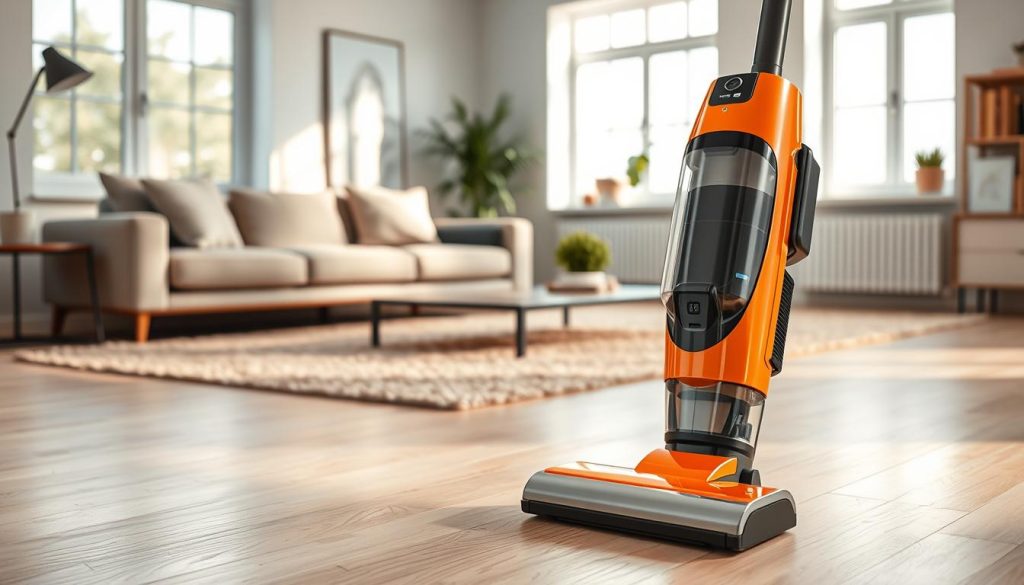
Airbot Supersonics Pro
Highlights: up to 25,000 Pa suction, laser dust detection and E13 HEPA filtration. The washable 0.8 L dust cup suits frequent use, while Eco mode runs ~45 minutes and Boost gives short high-power bursts.
Why it stands out: laser detection helps us find fine dirt under beds and in corners. E13 HEPA is sensible for allergy-prone homes that want better dust containment during routine cleaning.
Xiaomi Vacuum Cleaner G20
Highlights: 25 kPa suction, up to 60 minutes in standard mode and a 600 ml bin. Predictable run time reduces emptying stops for larger flat clean-ups.
Why choose it: steady battery life and a practical dust bin make it a reliable option for scheduled weekly runs and longer sessions across several rooms.
Morries 2-in-1 Cordless Stick
Highlights: 20 kPa suction, up to 60 minutes runtime and a detachable battery for easier replacement or spare charging. Multi-level filtration captures fine particles down to 0.3 microns.
Why it fits value buyers: the detachable battery extends usable life and gives charging flexibility if you own more than one battery.
- Practical note: brush design matters for pets and long hair — expect to clear the roller regularly to keep suction stable.
- Use Eco for routine coverage and Boost for short, stubborn spots: headline suction and real battery life do not always align.
- For most small flats, a cordless stick offers speed, storage ease, and lower fuss compared with tank systems.
“Light, fast and focused — dry sticks keep daily dust and pet hair under control with minimal maintenance.”
Best for hard floors when you want true vacuum-and-wash convenience
When we want a single tool that truly vacuums and washes sealed floors, workflow matters more than headline numbers.
The Philips AquaTrio Cordless (XW9465/11) is a 3-in-1 system that feels premium in daily use.
Philips AquaTrio Cordless: what it does for floors
Three modes let us switch between dry suction, vacuum-and-wash, and handheld cleaning for sofas or tight spots. This versatility suits homes with mostly hard floors and mixed surfaces.
AquaSpin brushes spin at 4,000 RPM to agitate sticky residue. In practice, the fast brush action lifts grime and reduces repeat passes on sealed tiles.
“PowerCyclone Aqua keeps fresh water flowing while locking dirty water away, which helps hygiene and lowers odour risk.”
PowerCyclone Aqua separates dirty water into a sealed tank so we do not re-deposit grime. The Auto-Clean routine saves time by rinsing the brush module after use.
| Spec | Value | Practical note |
|---|---|---|
| Run time | 45 min (90 with extra battery) | Good for most flats; optional second battery for full flats |
| Coverage | Up to 185 m² | Covers large living areas in one session |
| Weight | ~4.2 kg | Manoeuvrable but heavier than a basic stick |
| Maintenance | Auto-Clean + sealed tank | Lower post-clean chores and less contact with dirty water |
Overall, we view the AquaTrio as the true vacuum-and-wash convenience pick when daily cleaning needs to be fast, hygienic and low-fuss.
Best budget wet dry vacuum for pet-friendly homes
Homes with animals need machines that manage hair, damp messes and odour control together. For many Singapore flats, a single tool that lifts fur and rinses paw marks speeds chores and cuts lingering smells.
Bissell CrossWave X7 Cordless Pet Pro earns a place here for its Turbo Pet mode and true multi-surface cleaning. The mode boosts suction and solution flow so fur and tracked dirt lift from tiles and low-pile rugs without repeated passes.
Bissell’s multi-surface approach
Multi-surface means an easy mode switch for sealed floors and softer rugs. We advise against over-wetting delicate textiles and to use the soft setting for area rugs to avoid damage.
Anti-tangle, roller and brush realities
Good anti-tangle designs reduce hair wrap, but manual checks remain necessary. Look for a removable roller and simple brush clips so you can pull out fur quickly and keep suction steady.
- Why pets change priorities: fur volume, paw grime and occasional accidents need wet dry versatility.
- How suction and wash pair: suction lifts hair while the cleaning solution removes fine grime rather than smearing it.
- Hygiene tip: empty the dirty tank straight after use and rinse parts to prevent pet odours.
“Turbo Pet mode and a tangle-aware roller make the CrossWave X7 a practical pet specialist for many homes.”
Best for hygiene-focused cleaning with hot water or steam
For households that prioritise hygiene, heat and steam bring measurable advantages to floor care.
Dreame H15 Pro Heat pairs up to 22,000 Pa suction with a mop roller heated to ~85°C. The hot roller breaks down oily kitchen messes faster and helps reduce lingering smells.
Its base also runs a self-clean and dry cycle using near-100°C water and offers up to ~70 minutes runtime. That mix of suction power and heated rinse is useful for weekly deep cleans.
Tineco Floor One S9 Artist Steam
Tineco’s design uses a 140°C boiler and delivers roughly 99°C at the floor while combining steam with active suction. Anti-tangle features and a self-clean dock cut maintenance time and protect suction consistency.
“Hot treatments are hygiene upgrades for homes that cook often or have crawling children.”
When to choose heat or steam: pay more if you face frequent greasy spills or need stronger sanitising. Skip it if your home sees mostly dry debris, is largely carpeted, or you value ultra-light devices and minimal dock footprint.
- Care tip: avoid high-heat modes on delicate timber; use gentler settings and spot-test finishes.
- Practical note: both models balance suction and thermal power, so check battery life and modes for your cleaning routine.
Best for edges, corners, and cleaning under furniture
The real test for a floor device is how well it handles edges and low gaps. Dust gathers along skirtings and beneath low TV consoles in many Singapore flats. Good edge performance reduces follow-up wipe-backs and speeds the whole cleaning job.
Dreame H15 Pro Heat: GapFree edge coverage and 180° lie-flat head
Dreame offers GapFree edge coverage (0 mm front gap) and a 180° lie-flat head. That design lets the head sit flush to skirting boards and slide under low sofas. The result is fewer missed lines and steadier suction at the wall.
Simplus: low-profile 180° design for under-sofa passes
Simplus uses a 180° flat-folding head aimed at hard-to-reach corners and low-clearance zones. It makes furniture moves unnecessary for routine cleans and keeps floors looking consistent.
“Edge coverage and a flexible head are the features that save time and reduce manual touch-ups.”
| Model | Edge reach | Practical note |
|---|---|---|
| Dreame H15 Pro Heat | 0 mm GapFree | Close-to-wall cleaning; strong contact when flat |
| Simplus Cordless | Minimal front gap | Low-profile head; good for tight corners |
| What to test at home | Clearance & swivel | Check if head still picks debris when flat |
Quick tip: measure clearance, check swivel smoothness, and try a short pass flat to confirm suction holds. For carpet-edge care, see our guide on clean carpet edges effectively.
Best battery life when you want fewer charging breaks
Battery endurance often dictates whether a device becomes part of a routine or sits in a cupboard. Short runs cause interruptions, half-cleaned rooms and a tendency to skip chores. We prioritise real runtime over headline specs when judging cordless floor tools for Singapore flats.
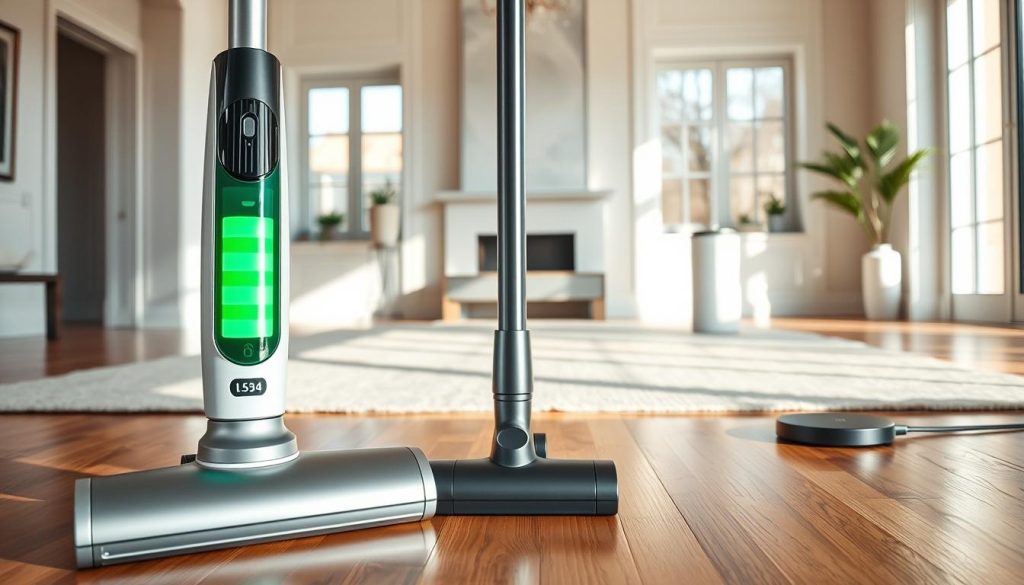
Samsung Bespoke Jet AI Ultra: long runs for large homes
Samsung Bespoke Jet AI Ultra delivers up to 160 minutes total using dual swappable battery packs and an auto-empty All‑in‑One Clean Station. That makes it a benchmark for larger flats or deep weekly sessions where one charge should cover multiple rooms.
Budget reality check: what long runtime means lower down the range
Quoted time is often measured in low-power modes. High power drains cells much faster, so effective coverage depends on your cleaning strategy.
- Plan zones: split your flat into sections you can finish per charge.
- Practical habit: keep a spare battery if supported and charge after each run.
- Use power sparingly: reserve high power for stubborn spots, not whole-room passes.
“Paying for battery endurance can be more impactful than chasing headline suction alone.”
Best for quick jobs, cars, and spot cleaning
For quick tidy-ups and car interiors, a compact handheld often beats larger machines for sheer convenience. Handhelds make small tasks frictionless and keep daily cleaning regular.
Eufy Clean HomeVac H20: compact with car-focused attachments
Why we pick it: at ~40 AW and ~30 minutes runtime, the HomeVac H20 is light (~0.65 kg) and built for tight spaces. Its slim crevice tool and brush reach seat rails, door pockets and footwells with ease.
Bosch GAS 18V-1: rugged handheld option
Why consider it: the Bosch is a durable option (~1.3 kg) for tougher chores. Note the 18V battery and charger may be sold separately, which affects total price and compatibility if you already own Bosch batteries.
Black+Decker 16V MAX Dustbuster: low-cost grab-and-go
Why it fits: a simple, affordable way to handle crumbs and dry debris. The 600 ml bin and washable parts keep upkeep easy and quick.
- What to check: bin size, filter washing ease and whether the unit can stand or mount neatly in a small flat.
- System tip: pair a handheld with a stick or a floor washer to cover entire-home cleaning without compromise.
“Our handheld picks make short jobs faster and keep cars tidy with minimal fuss.”
Water tank and filter care that keeps suction power consistent
Small upkeep steps make a big difference to how long a unit keeps strong suction. We explain a simple routine that prevents the usual drop in pickup and avoids musty smells in Singapore’s humid climate.
Emptying and rinsing tips
Empty dirty water immediately after use. Letting dirty water sit breeds bacteria and odour. Rinse the dirty water compartment, then wipe seals dry to protect rubbers.
Rinse the clean water tank before storage and allow it to dry upright. This prevents cross‑contamination and keeps parts smelling fresh.
Brush roller upkeep
Check the brush and roller after every few runs. Anti‑tangle features cut hair wrap but do not remove long strands. Remove clogs manually to keep the roller turning freely and to protect suction.
HEPA and washable filter routines
Wash washable filters monthly or when indicator lights appear. Let filters dry fully—at least 24 hours—before reinstalling. Damp filters reduce airflow and make odours worse.
“Most loss of suction traces back to tank or filter neglect; routine care saves time and keeps performance steady.”
| Issue | Likely cause | Quick fix |
|---|---|---|
| Reduced suction | Clogged filter or full dirty water | Empty tank, wash filter, check roller |
| Streaky floors | Dirty water not changed or soiled clean water | Flush both tanks and refill clean water |
| Odd noises | Brush jam or debris in head | Remove roller and clear hair/dirt |
What “budget” really means in Singapore: price points and where to buy
We map local price bands so shoppers can set realistic expectations for product features and running costs. Singapore availability and common retail channels shape what value looks like for flats and HDBs.
Lower price band: value dry options and handhelds
Lower-tier models cover simple dry sticks and handhelds. Expect modest suction, a small bin, and easy maintenance.
These options suit quick jobs and small flats. They have fewer moving parts and lower upkeep costs, which keeps long‑term spend down.
Mid price band: wet dry mops with dual tanks and self-cleaning
In the mid band, wet dry units become genuinely convenient. Dual tanks, better seals and occasional self‑clean docks start to appear as standard features.
Higher cost here usually pays for battery capacity, a self‑clean routine, or a heated rinse system. That drives reliability and reduces hands‑on maintenance.
Where we see these models sold locally
Common channels include Shopee, Lazada, Courts, FairPrice and official brand stores. Prices vary by promo and warranty terms, so we always compare total cost with aftersales support.
“Check for local spare parts, warranty coverage and included extras such as spare rollers or filters before you buy.”
| Price band | Typical product | Key buying tip |
|---|---|---|
| Lower | Dry sticks / handhelds | Look for easy filter wash and spare parts |
| Mid | Wet dry mop with dual water tank | Prioritise sealed tanks and self-clean docks |
| Higher | Docked systems / steam combos | Check battery life and service network |
Smart buying advice: watch bundle value, local plug compatibility and how easy consumables are to replace. Price is only one part of the ownership equation; warranty and returns matter for motorised vacuums.
Choosing the right option for your floors, lifestyle, and cleaning mode
Match your cleaning kit to daily habits and floor types, not headline specs. We start by mapping how you clean, where dirt gathers and what you can store.
Hard floors versus rugs: which head and brush type matters most
Low‑profile heads and soft rollers suit sealed surfaces like tile and vinyl. They lift grime without scratching or leaving streaks.
For rugs, a motorised brush with deeper agitation works better. Use a switchable head if you alternate between surfaces.
Small flats versus larger homes: tank size, weight, and run time trade-offs
Smaller flats favour lighter units with quick deploy times and moderate tank sizes to save storage space. Shorter charge cycles are fine if you clean often.
Larger homes benefit from bigger tanks and longer battery life so you refill less and cover more area per run. Expect extra weight and a larger footprint.
Pets and kids: prioritising cleaning modes, hygiene features, and ease of use
Prioritise sealed tanks, simple dirty‑water removal and strong filtration for odour control and hygiene. Anti‑tangle brush designs reduce maintenance and keep suction steady.
- Two‑device option: handheld for quick crumbs plus a weekly wet/dry wash for deep cleaning.
- Choose models with easy filter access to speed maintenance and extend life.
“Pick the option that fits how you live; convenience beats raw specs for everyday upkeep.”
Conclusion
Before you buy, match device strengths to the types of mess you face most often. ,
For most flats we recommend one wet dry pick for hard floors, a value dry option for routine dust, and a floor-washer alternative where deeper washing is needed.
Key priorities are simple: pick suction that suits debris, battery life that covers your floor area, and a sealed water tank design that fits your upkeep routine.
Wet dry models shine on sealed floors and daily spills. Dry vacuums stay faster for quick tidies and car or sofa work.
Practical next steps: choose one model from our shortlist, confirm weight and storage fit, then buy from a reputable Singapore retailer with clear warranty support. We find that the device you will use weekly keeps your home noticeably cleaner.

