

Yes — provided the model is designed for liquids. We open with a clear answer for Singapore households: wet or wet‑dry machines pick up liquid safely, while standard dry machines must not be used.
This short guide sets expectations. We cover safe set‑up, the right tools, step‑by‑step technique and post‑use care so the unit stays reliable.
We draw a line between small spills, like a tipped drink, and larger incidents such as a burst pipe or minor flooding. Speed matters in our humid climate to reduce odour and mould risk.
Our advice targets readers comparing models, weighing a wet‑dry upgrade, or dealing with a recent spill at home. Safety is central: electricity plus liquid is the hazard, so we stress correct machine choice, dry cords and unplugging before any maintenance.
Later sections explain why most machines and liquid do not mix, our wet‑dry method, and when these units are especially useful in Singapore homes. We base guidance on recognised manufacturer notes (Nilfisk) and expert commentary on sealed tanks, insulated motors and water‑resistant components.
Rule of thumb: if a machine is not explicitly rated for liquids, do not use it for spills.
Why most vacuum cleaners and water don’t mix
Mixing moisture and standard machines often leads to faults and hazards. Standard dry vacuum models are built for dust and debris, not soaked spills. Moisture may reach electrical parts and cause short circuits or irreversible damage.

Dry vacuum units use paper bags or fine filters that block dust but not liquid. If liquid enters, filters clog, motors risk shorting and the unit may become unsafe to operate.
Dry vacuum vs wet dry: what’s safe for liquids
Wet dry models are rated for liquids. They use sealed tanks, water-resistant components and insulated motors. These features stop fluids from reaching sensitive parts and keep suction reliable when handling spills.
“Wet dry vacuums funnel liquids into a sealed tank and separate solids using specialised filters.”
How wet vacuums handle spills
- Liquids are drawn by suction into a sealed receptacle.
- Water-resistant parts and insulated motors reduce ingress and short risk.
- Special filters or foam covers prevent liquid from reaching the motor.
Liquids that are safe — and those to avoid
Acceptable household liquids: clean tap water and non-corrosive spills such as coffee, juice and soda. These are common messes after meals or near balconies in Singapore.
Forbidden liquids: petrol, bleach, solvents and other flammable or corrosive substances. These can damage the unit or create fire and health hazards, so they must never go into any wet dry vacuum.
Wet dry vacuums have limited tank capacity and grow heavier as they fill. For larger incidents we recommend periodic emptying and safe disposal. For guidance on correct use and safety steps, consult our practical guide on proper wet-dry operation: how to use a wet-dry model.
Can you clean up water with a vacuum cleaner safely: our wet dry method
A quick, methodical approach limits damage and stops odour growth after a spill.
Make sure the unit is a wet dry model and set for liquid use. Check tank capacity versus the size of the spill so we avoid overfilling.
Prepare the machine
Remove any dust bag and examine the filter. Replace or fit the wet-use filter specified by the manufacturer.
Choose the right attachment
Use a wide floor nozzle for broad spills on hard floors. Fit a narrow nozzle or hose end for corners, grout lines and buckets.
Vacuuming technique
Work slowly in overlapping passes on hard floors to maximise suction. For carpets, take steady pulls and repeat until the motor sound stabilises.
Monitor and stop
Watch the tank level. Many models have a float shut-off; stop when suction drops to protect the motor.
Emptying and reset
Switch off and unplug before emptying. Dispose of liquid responsibly, rinse the tank with soap and let filters dry fully before using for dry debris.
| Task | Recommended tool | Key check |
|---|---|---|
| Broad hard-floor spill | Floor nozzle | Tank capacity & suction |
| Corners and thresholds | Hose + narrow nozzle | Seal nozzle flat to surface |
| Carpeted areas | Controlled passes with floor head | Listen for motor sound change |
| Large leaks | Repeated tank emptying | Plan for multiple steps |
“Remove dust bags before any liquid pick-up and keep electrical connections dry.”
Safety reminder: unplug before maintenance and keep cords dry to avoid hazards in our humid climate.
When a wet dry vacuum is the best tool in Singapore homes
Small leaks and tracked-in puddles are everyday issues in many local homes. For quick removal and less damage, a wet dry model often outperforms standard machines.
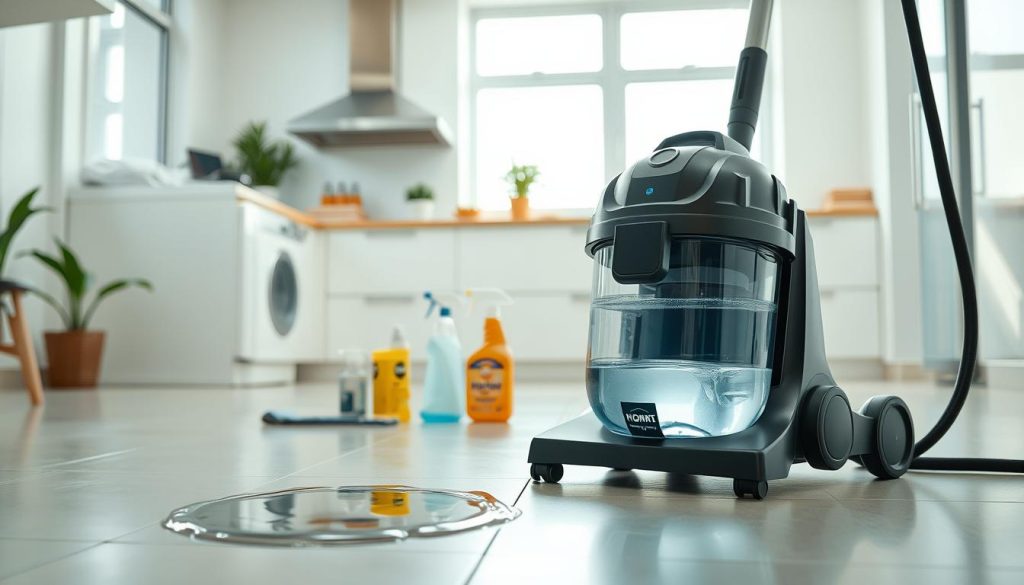
Everyday spills and small leaks: acting quickly to reduce damage
Fast suction shortens the time liquid sits on floors. That helps limit swelling, staining and lingering odour in laminate or vinyl areas.
We advise checking tank size before tackling a spill so the unit does not overfill. Stop when the float triggers and empty safely.
Beyond water: mixed debris, DIY dust and outdoor puddles
Wet dry vacuums handle non-corrosive liquids plus solids in one pass. They are useful after DIY chores for fine dust, sawdust and plaster fragments.
For balcony puddles, patio runoff or muddy footprints, many robust models also offer blower modes and outdoor use. They are heavier when full, so plan storage and movement in flats.
- Top factors: tank capacity, ease of switching modes, available attachments and ease of cleaning.
- Consider weight when filled and whether the product suits compact homes.
Safety note: suitable only for non-flammable, non-corrosive liquids. For further guidance on product selection see our wet and dry vacuum guide, or read about handling paint debris on carpet at paint off carpet.
Conclusion
We close by restating the safe, practical steps that protect machines and homes after spills.
Core answer: only a wet dry unit should handle liquids. Use a model rated for this task, avoid flammable or corrosive fluids and watch tank capacity and float shut‑off at all times.
Follow a simple flow: prepare the unit, remove any dry‑use inserts, fit the correct nozzle, work in slow passes, then stop to empty, rinse and dry components thoroughly.
Aftercare matters. Cleaning the tank and drying filters prevents odour and keeps performance steady for future jobs.
If shopping for machines, compare tank size, included tools, ease of switching modes and store‑ability for Singapore homes. Sign up to our newsletter for ongoing product advice and related content.

