
We open with why a rechargeable wet and dry vacuum cleaner makes sense for homes in Singapore. Daily life here brings fine dust, food scraps and the odd spill. Families with kids or pets will find cordless freedom especially handy.
By “rechargeable” we mean cordless use, limited runtime and the need for a good battery. That matters for HDB flats and landed houses where run-time and charging cycles shape real cleaning sessions.
Our product roundup compares models by real-use performance, practical design and total ownership. We test how well each unit handles mixed messes on floors, carpets and quick spot clean jobs.
We preview a shortlist, deeper reviews and a focused Dyson section for buyers after premium engineering. We also set expectations on trade-offs—weight, tank size, noise and routine maintenance—so readers can choose what suits their daily cleaning.
Why we’re recommending wet and dry vacuum cleaners for Singapore homes
Singapore homes need tools that cope with both tracked grit and sudden spills without fuss. We recommend units that combine dry pickup with liquid handling so you do fewer tool swaps during a quick tidy.
Everyday messes they’re built for: debris, dust and spills
These two-mode machines easily get rid of debris, dust and spills from entryways, kitchens and dining areas. Fine dust from outside, crumbs after meals and wet footprints after rain are common here.
- Pick up grit, crumbs and pet hair in one pass.
- Remove liquid messes without changing tools.
- Ideal for quick resets after meals or rainy entries.
Who benefits most: families with children, pet owners, and busy households
We find families with children and pet owners gain the most time back. Sticky food, fur and occasional accidents are simpler to manage with a single machine.
Busy households value fewer steps: one device for spot spills and weekly deep washes. Storage limits in HDB flats also make compact dual-use models appealing.
Wet/dry vs robot vacuum: where each fits in our routine
Robot vacuum units automate daily dust control, while a hands-on wet dry unit tackles heavier soiling and spills. We use both: scheduled runs for dust and a manual pass for stains and high-traffic zones.
- Robot for maintenance-style cleaning.
- Wet dry unit for spot work and deep cleans.
What a wet and dry vacuum cleaner is and how it works
We break down the main parts and functions that let one machine handle both fluids and dust. In plain terms, this is a tool made to pick up loose dirt while also lifting spills without harm to the unit. It combines mechanical suction with measured water flow for deeper cleaning on hard surfaces.
How liquids and solids are handled in one system
Most models use a dual-tank arrangement: one fresh water tank and a separate dirty water tank. This separation protects the motor and makes disposal cleaner and more hygienic.
The unit sprays controlled water or solution while a brush and strong suction lift grime into the dirty tank. Solids and liquids enter the same recovery path but remain separated by the tank design.
Why these machines are heavier, louder and bulkier
To manage both tasks, manufacturers fit bigger motors and higher suction power. That extra power improves cleaning but also adds weight and noise.
Expect greater bulk from the extra water tank and wet-cleaning components, which affects manoeuvrability in tight HDB corridors. Hard floors are the ideal surface, while rugs and soft upholstery vary by model and tool set.
- Filter: captures fine dust during dry cycles to avoid recirculation.
- Tank care: empty the dirty tank after use; rinse the clean tank regularly.
- Modes: lower power settings cut noise for flats; boost modes raise suction for stubborn stains.
How we choose the best rechargeable wet and dry vacuum cleaner
We judge models by how well they handle real messes in typical Singapore homes. Our checklist weighs capacity, ease of use and lasting performance so readers can decide quickly.
Tank capacity and separation
Capacity matters: larger clean water tank means fewer refills, while a generous dirty water tank limits trips to the sink.
We give priority to designs that keep clean water isolated from waste for hygiene and steady performance.
Suction power, power levels and runtime
We test suction power on dust, rice-like debris and sticky spills. Multiple power levels or automatic adjustment help balance noise, run time and extraction.
Runtime claims are checked against modes and surface type; we note charging time and value a clear battery level indicator for planning sessions.
Filtration, weight, brush and modes
HEPA filter options get higher marks for allergy-prone homes. We also assess weight, brush design for edge cleaning, and smart dirt recognition where fitted.
Maintenance and hygiene
Self-cleaning systems, easy brush removal and rinseable tanks reduce odours and upkeep. For filter care, see our guide to clean a vacuum filter.
| Feature | Why it matters | What we test |
|---|---|---|
| Tank capacity | Less refilling, fewer stops | Clean vs dirty tank litres and seal quality |
| Suction power | Performance on varied dirt | Pa levels, multiple power levels, auto mode |
| Filtration | Allergen control | Filter type, HEPA rating, maintenance ease |
| Ergonomics | Use in narrow flats | Weight, brush head reach, edge cleaning |
Our top picks at a glance: best wet dry vacuum cleaner models available now
Below is a compact shortlist that helps busy buyers pick the right model fast.
Overall best: Tineco Floor One Switch S7 Stretch
Why it wins: smart sensors, strong suction power and versatile design make it the most balanced product for mixed floors and spills. It handles long sessions and large tanks well for family homes.
Best for pet hair: Bissell CrossWave X7 Cordless Pet Pro
Why it wins: tuned brushes and cleaning solution support remove fur and tracked-in dirt with fewer passes. Ideal for pet owners who need targeted performance on hard floors and low-pile rugs.
Best budget: Simplus Cordless Wet-Dry Vacuum Cleaner
Why it wins: solid suction power and long cordless runtime at a lower price. It gives good capacity and run time for quick cleans without flagship cost.
Most manoeuvrable: Narwal S20 Pro
Why it wins: compact design, excellent edge reach and light weight for apartments with many corners and furniture lines. Great when manoeuvrability matters more than tank capacity.
What to buy if…
- Tiles and vinyl: Tineco or Bissell for extraction and solution support.
- Kids and frequent spills: Tineco for larger capacity and smarter water control.
- Pets: Bissell for brush and fur handling.
- Small flats with tight furniture: Narwal for reach and low weight.
- Budget-focused shoppers: Simplus for runtime and value.
| Model | Clean/Dirty tank (ml) | Runtime (minutes) | Approx weight (kg) |
|---|---|---|---|
| Tineco Floor One Switch S7 Stretch | 1000 / 720 | 50–70 | 3.5 |
| Bissell CrossWave X7 Cordless Pet Pro | 820 / 420 | 30 | 3.8 |
| Simplus Cordless Wet-Dry | 500 / 550 | 50 | 3.2 |
| Narwal S20 Pro | 790 / 720 | 60 | 2.9 |
For a longer, hands-on comparison and to see where a shop model may still make sense, we recommend the shop-vac comparison for context and alternate use cases in garages or heavy-duty cleaning.
Tineco Floor One Switch S7 Stretch review: smart cleaning with flexible design
The S7 Stretch balances automation and a convertible layout for real-world use in Singapore homes. It has a 1,000ml clean water tank and a 720ml dirty water tank, with suction power up to 22,000 Pa.
| Spec | Value |
|---|---|
| Clean water tank | 1,000ml |
| Dirty water | 720ml |
| Suction | Up to 22,000 Pa |
| Runtime | 50 minutes (washer) / 70 minutes (stick) — minutes |
Smart iLoop sensing
iLoop sensing auto-adjusts suction and water flow based on visible dirt. That reduces over-wetting and keeps runs efficient.
Edge cleaning and lay-flat reach
The dual-side brush gets within about 0.5cm of skirting lines, so dust along edges on hard floors is easier to remove. The lay-flat reach helps under low furniture.
Switchable system and ownership notes
You can convert the unit into a stick vacuum for quick dry pickups. At about 4.7kg it offers solid build and useful capacity, though some may prefer lighter handling for tight flats.
Practical details: charge time is 4.5 hours, routine emptying of the tank and brush care keep performance steady. Overall, the S7 Stretch is our top pick for its smart features and flexible system.
Bissell CrossWave X7 Cordless Pet Pro review: built for fur, stains, and rugs
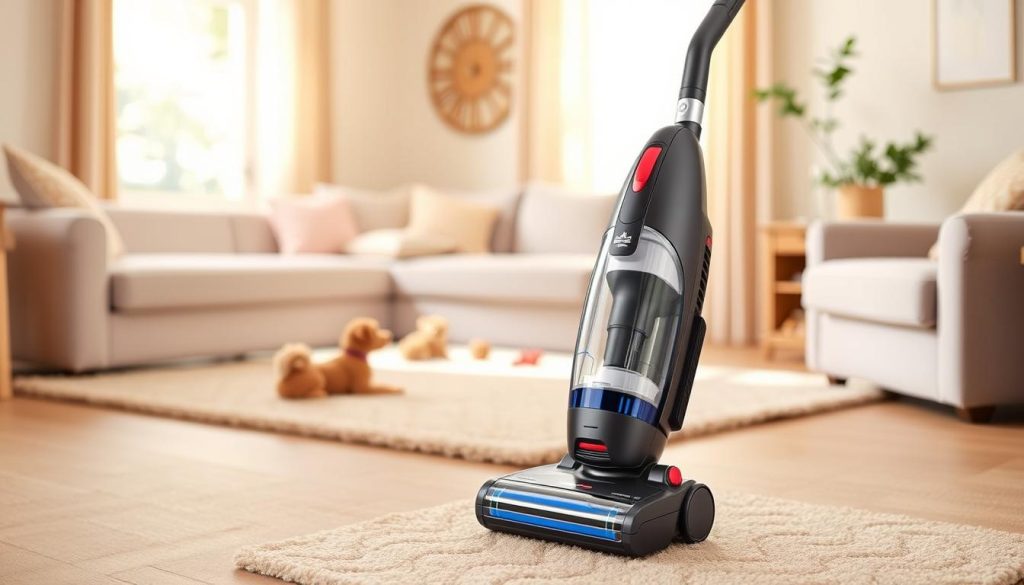
We position the CrossWave X7 Cordless Pet Pro as our best-for-pet-hair pick. It is designed for fur, tracked-in debris and the occasional stain that pets bring into Singapore homes.
Key specs
Core figures: 820ml clean tank, 420ml dirty water tank, up to 20,000 Pa suction power, and up to 30 minutes runtime. Charge time is about 4 hours and the unit weighs roughly 4.8kg.
Turbo Pet mode and cleaning solution
Turbo Pet mode boosts brush speed and extraction for stubborn stains. Pairing the unit with Bissell’s cleaning solution improves stain lift compared with plain water.
Where it performs best
The CrossWave X7 excels on hard floors for hair pickup and quick cleans. It will refresh low-pile rugs but requires care to avoid excess moisture on thicker fibres.
| Feature | Why it matters | What to expect |
|---|---|---|
| Clean tank | Capacity limits refills | 820ml — good for short to medium sessions |
| Dirty tank | Emptying frequency | 420ml — expect frequent emptying with heavy pet use |
| Suction power | Extraction and debris lift | Up to 20,000 Pa — strong for hard floors |
| Runtime | Session planning | Up to 30 minutes — suitable for spot cleans |
Handling notes: at about 4.8kg the unit feels substantial. We recommend it for households that value brush performance and solution-assisted stain removal over featherlight portability.
Maintenance tip: empty the dirty tank after pet sessions and rinse promptly to reduce odour and keep suction consistent.
Simplus Cordless Wet-Dry Vacuum Cleaner review: value-focused cordless cleaning
The Simplus model aims to deliver the key functions most households actually use, without premium extras. It concentrates on core performance: suction, usable tank layout and reach for tight Singapore flats.
Key specs buyers check first
We list the headline numbers for quick comparison. The clean water tank is 500ml while the dirty water capacity is 550ml. Suction power measures 21,000 Pa and the run time reaches up to 50 minutes.
Design and brush reach
The 6.5cm brush head helps pick debris along skirting and narrow paths. The 180° flat-folding neck is useful for reaching under sofas, TV consoles and beds where dust hides.
Practical trade-offs and notes
Why it earns the budget slot: strong extraction, sensible capacity and decent manoeuvrability at a lower price point. Expect simpler materials and slightly louder operation than flagship products.
| Feature | Value | What it means |
|---|---|---|
| Clean tank | 500ml | Good for short to medium sessions |
| Dirty tank | 550ml | Large enough to avoid frequent emptying for small flats |
| Suction power | 21,000 Pa | Strong extraction on hard floors |
| Run time | Up to 50 minutes | Adequate for whole-flat quick cleans |
- Charge time: 4.5 hours; weight: 4.4kg.
- Rinse the dirty tank after wet messes to prevent odour and maintain suction.
- Best for first-time buyers, smaller flats and frequent spot cleaning.
Narwal S20 Pro review: lightweight handling with AI Dirt Sense
We found the Narwal S20 Pro stands out for nimble handling and an AI system that tailors cleaning intensity. It feels light to push while still offering strong extraction for everyday messes.
Key specs at a glance
Core figures: 790ml clean water tank, 720ml dirty water tank, 20,000 Pa suction power and up to 60 minutes runtime. Charge time is a faster 3.5 hours and weight is about 4.27kg.
Edge reach and manoeuvrability
The triple-sided edge cleaning and flat-folding neck make skirting lines and tight corners easy to tackle. Turning radius is short, which helps around furniture and in narrow HDB corridors.
Modes, AI and hot water support
AI Dirt Sense adjusts intensity so we rarely change modes in high-traffic zones. Five cleaning modes cover quick maintenance to deeper scrubs, and hot water mopping helps lift greasy kitchen spills—use with care on sensitive floors.
“A nimble design that still delivers serious suction when we need it.”
| Spec | Value | Why it matters |
|---|---|---|
| Clean/Dirty tank | 790ml / 720ml | Good capacity for medium sessions |
| Suction power | 20,000 Pa | Strong extraction on hard floors |
| Runtime / Charge time | Up to 60 minutes / 3.5 hours | Long session time and quick recharge |
| Weight | 4.27kg | Comfortable handling and reach |
Dyson rechargeable wet and dry options in Singapore: what we’d buy and why
For buyers who value refined engineering and reliable filtration, Dyson offers several stick options that blend light handling with strong suction. The Submarine head turns a cordless stick into a hard-floor washing system while keeping dry pickup quick.
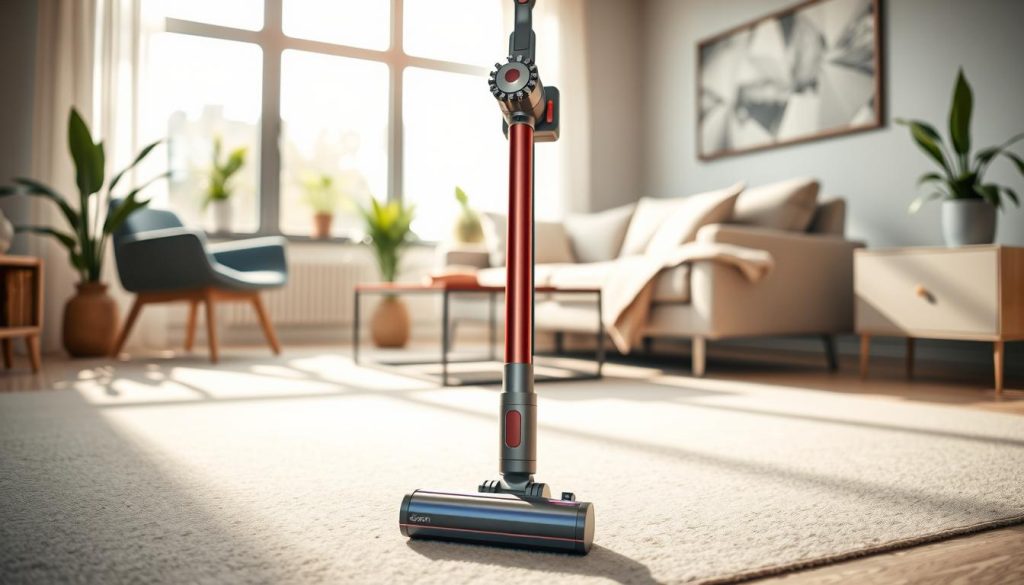
The Dyson V12s Origin Submarine
Spec highlights: 130 Air Watts, 300ml clean water tank, 360ml dirty water, weight 2.2kg, up to 60 minutes runtime (charge ~3.5 hours).
Who it suits: smaller homes and those who prize low weight for quick, regular cleaning sessions.
The Dyson V12s Detect Slim Submarine
Upgrades: 140 Air Watts, HEPA filter and the Fluffy Optic head for illuminated dust detection.
Same run time as the Origin but better filtration for fine particles and improved dry performance on hidden dust.
Dyson Digital Slim Submarine
Design trade-off: a slimmer build with around 40 minutes run time, aimed at buyers who want the lightest handling and accept a shorter session length.
Why Dyson costs more: sustained R&D, cyclonic suction engineering, refined cordless design and advanced filtration raise manufacturing cost yet deliver consistent performance for allergy‑conscious homes.
| Model | Air Watts | Clean/Dirty (ml) | Weight (kg) | Runtime (minutes) |
|---|---|---|---|---|
| V12s Origin Submarine | 130 | 300 / 360 | 2.2 | Up to 60 |
| V12s Detect Slim Submarine | 140 | 300 / 360 | 3.1 | Up to 60 |
| Digital Slim Submarine | — | — | — | ≈40 |
Singapore buying notes: check authorised delivery for warranty support, confirm accessory availability and prefer official retailers over parallel imports for reliable service.
Conclusion
To conclude, focus on what you actually clean most often and which features save you time.
Choose the model that fits your floors, typical messes and weekly cleaning time. Check tank capacity and clean/dirty separation first. Then verify suction power, runtime and whether a cordless layout suits your home.
Filter type matters for allergy-prone households; prefer HEPA-rated filtration systems where dust is frequent. Also factor in weight, brush care and how often you will rinse tanks—these shape daily satisfaction.
Our quick decision path: Tineco for a balanced smart all‑rounder; Bissell for pets; Simplus for value; Narwal for nimble edge work; Dyson for premium engineering. Finally, confirm current pricing, bundled accessories and delivery timelines in Singapore before you buy.

