
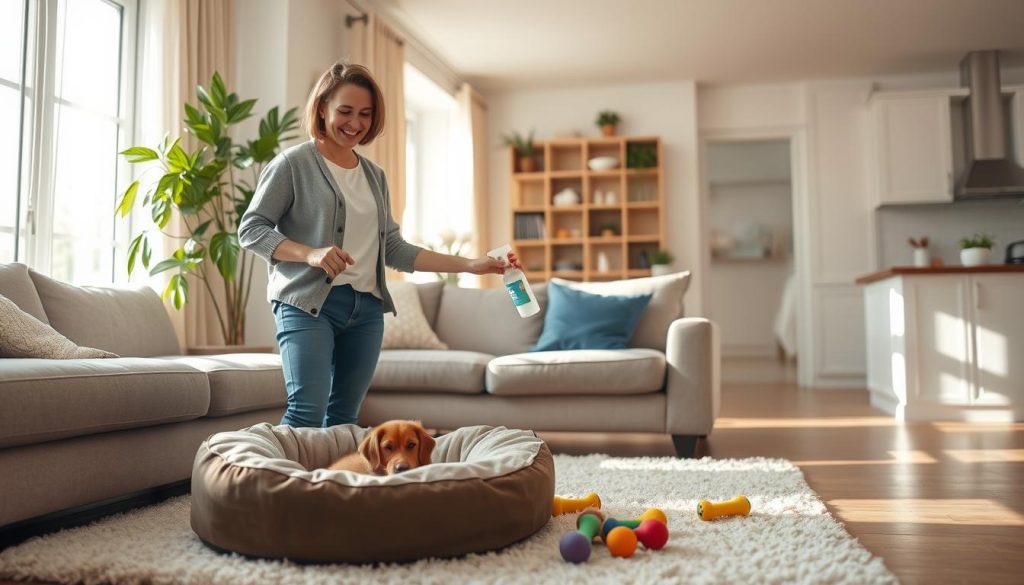
We introduce what makes persistent pet odours so hard to shift in Singapore flats. Organic matter such as faeces, urine and natural oils can sink into carpet backing, upholstery foam and grout. Once our noses adapt, guests often notice before we do.
This guide sets clear expectations: we aim to neutralise odours at source, not mask them with fragrance. We outline why smells linger, what to do after an accident, room‑by‑room methods, prevention routines and when a foul stool may signal a health issue.
We clarify the difference between a surface clean and a deep clean and signpost key tools: gloves, paper towels, cloths, enzyme cleaner, bicarbonate, vacuum, extraction machine and an air purifier. Keep pets away from wet products and ventilate rooms. Test cleaners on a hidden patch.
Outcome: with prompt removal, proper drying and good air exchange, our home should smell fresh again rather than cycle through recurring odours.
Why dog poop odour lingers indoors in Singapore homes
Persistent odour often comes from microscopic residue and active bacterial breakdown locked into fabrics, carpets and soft furniture. Visible waste may be gone, yet tiny particles remain inside fibres and seams.
What’s really causing the smell
Organic residue plus bacteria is the main culprit. Faecal matter and body fluids sink into layereds of upholstery and carpet. Microbes feed on that material and keep producing odour until the source is removed.
Why soft furnishings hold odours longer
Absorbent layers — underlay, foam and fabric — trap waste. Tiles and vinyl do not absorb, so they lose scent faster. Liquids can wick beyond the visible mark, reaching backing and subfloor.
How humidity and poor ventilation worsen retention
Singapore’s warm, humid air slows drying and helps bacteria thrive. Closed rooms, limited ventilation and rainy spells make smells feel “stuck” rather than fading.
“Stop spread, then neutralise and break down residue rather than masking it.”
- Quick check: fresh spot, old stain, mixed waste, or multiple affected areas?
- Next steps: remove solids, prevent spread, then treat at source — see our carpet cleaning guide.
How to get rid of dog poop smell in house fast after an accident
A clear, stepwise clean in the first ten minutes makes the biggest difference to lingering odour.
Immediate clean-up: remove solids, blot safely, and stop the spread
Put on gloves, lift solids, then blot from the outside in. We must not rub; rubbing pushes residue deeper into carpet and upholstery and enlarges the affected area.

Neutralise with baking soda without damaging fibres
Sprinkle a light dusting of baking soda across the spot after blotting. Leave for several hours or overnight, then vacuum thoroughly.
Always test on a hidden patch first and keep pets away from large amounts of baking soda.
Use enzyme-based cleaners to break down organic matter
Enzyme cleaners break down faeces and urine rather than masking odor. We recommend Simple Solution Extreme Pet Stain and Odor Remover, Resolve Urine Destroyer or Rocco & Roxie for targeted results.
Apply with a spray bottle for even coverage, allow dwell time per label, then blot with a clean cloth.
Hot water, steam and extraction
Escalate when smells return after surface cleaning, or for thick carpet and deep-set messes. Hot water extraction or steam can pull residue from underlay, but ensure full drying afterwards.
“Contain, break down, and dry thoroughly — that sequence prevents repeat odours.”
Drying properly
Use fans, open windows where possible and a dehumidifier if available. Keep pets off the area until fully dry to avoid bacterial regrowth and repeated accidents.
Room-by-room cleaning methods for carpets, sofas, and hard floors
A practical, room-by-room plan helps us remove stubborn odours from carpets, upholstery and hard floors. We start with a carpet-first approach and move outward to furniture and surfaces.
Carpet and rugs
Vacuum and collect residue before any wet treatment. Spot treat small areas with an enzyme solution, working in sections to avoid over-wetting.
For deep-set problems, use warm water steaming plus extraction. The warm water and suction pull odour trapped deep in fibres. Allow full drying and consider a second pass if any smells remain.
Upholstery and beds
Vacuum crevices and under cushions. Sprinkle baking soda evenly across fabric, leave overnight, then vacuum to remove odour-holding particles.
Remove covers where possible. Pre-treat stains and launder on the warmest safe cycle, then dry completely in Singapore’s humid climate to prevent musty smells returning.
Hard floors
Sweep first so we do not smear residue. Mop with a pet-safe cleaning solution and ensure surfaces dry quickly.
A diluted vinegar and water mix can deodorise, but avoid if it seems to encourage repeat accidents. Choose pet-safe options when unsure.
Walls, skirting boards and hidden edges
Check splashes on walls, skirting boards and furniture legs. These spots often keep a room smelling “off.” Clean edges under rugs and at doorways where urine or poop can wick and hide.
“Treat the unseen edges and recheck after drying — a follow-up smell test at 12–24 hours confirms success.”
For detailed extraction steps on carpet care, see our recommended guide: carpet cleaning guide.
Stop the odour coming back with better routines and air control
A few daily habits and the right air control make the biggest difference for fresh‑smelling rooms.

Ventilation tactics that work in warm, humid weather
Cross‑ventilation helps move moist air out. Open opposite windows when the weather allows and run a ceiling or tower fan to push air towards exits.
Time airing around Singapore’s rain and haze forecasts. Brief, strong airflow is better than long, stagnant airing on humid days.
Air purifiers, passive absorption and placement
Use HEPA purifiers where our pet rests most. These reduce airborne dander and particles that hold odour and help rooms stay smelling fresh.
Activated charcoal bags work passively. Place them near beds, shoe racks and corners and refresh every 2–3 months.
Laundry, cleaning cadence and practical readiness
Wash slipcovers and blankets weekly or fortnightly. Vacuum carpets and upholstery at least weekly and empty the bin before it becomes a bacterial source.
For accident‑prone households, keep a ready kit: enzyme spray, gloves, cloths and disposable bags. Fast response stops residues from setting.
“Drying fully after baths and cleaning is as important as the product choice — damp fabrics amplify odours.”
| Solution | Where to place | Cadence |
|---|---|---|
| HEPA air purifier | Living room, near pet bed | Run daily; filter check monthly |
| Activated charcoal bags | Shoe cabinet, corners, under bed | Replace or recharge every 8–12 weeks |
| Slipcover washing | Sofas, crate liners, blankets | Weekly or fortnightly |
| DIY baking soda freshen | Carpet spot test areas | Light dust before vacuuming; spot test first |
Decide the best way forward by where the odour returns. If it recurs only on humid days, focus on drying and airflow. If one spot repeats, plan deep cleaning and pad replacement.
When the smell signals a bigger issue with your dog’s health or hygiene
Sometimes unusually foul stool points at digestion or gut imbalance rather than a missed clean. We must see cleaning as one part of the response and consider health when odour is extreme, frequent or sudden.
Diet and gut balance: why undigested food can create stronger-smelling stools
Undigested food can ferment in the gut and produce ammonia, methane and hydrogen sulphide. These gases make faeces far more offensive.
Food intolerances — for example grains, dairy, soy or additives — can irritate the gut and change bacterial balance. Overgrowth of harmful bacteria increases odour compounds.
When we should call our vet
Check with a professional if there is sudden extreme odour, persistent diarrhoea, vomiting, constipation, blood or mucus, or marked lethargy. These are red flags and need prompt attention.
- Bring a fresh stool sample when possible.
- Do not change diets or add supplements without veterinary advice.
- In multi‑pet homes (including cats), overlapping waste can hide the true source — identify which pet is affected.
“If cleaning does not reduce odour or symptoms develop, a vet visit is the safest next step.”
For further reading on medical reasons behind strong pet odour, see this brief guide: medical causes of pet smell.
Conclusion
Prompt action paired with targeted treatments prevents small incidents from becoming lasting problems.
We must remove residue, apply enzyme cleaners that break down organic matter, then dry fully. Without those steps, odors will return despite surface cleaning.
Follow the sequence: quick clean-up, enzyme treatment, deep extraction where needed, and airflow management suited to Singapore’s humidity. Carpets and upholstery usually need most attention; hard floors and edges stop mystery lingering.
Keep a simple routine: weekly vacuuming, wash covers regularly, and run a HEPA purifier or place charcoal bags near sleeping areas. These measures keep our rooms consistently fresh for family and guests.
If poop or stool seems unusually foul or changes suddenly, we consult a vet rather than repeating cleans that may miss an underlying health issue.

