
We set out to help Singapore households choose the right machine for everyday messes. The city’s mix of fine dust, tiled floors and occasional spills calls for a versatile solution.
In plain terms, a wet-dry unit handles dust, picks up liquids and, in some models, washes hard floors in one pass. That makes it practical for HDB flats, condos, pet homes and busy families.
Our roundup checks suction, tank design, filtration, edge reach, noise, weight and ease of maintenance. We also test cordless floor washers, hybrid sticks and heavy-duty drum units from Tineco, Bissell, Narwal, Simplus, Shark, Dyson, Electrolux and Kärcher.
We explain which pick suits each need so you can shortlist fast. Prices and bundles shift often, so we judge value by performance, accessories and durability—not price alone.
Why we recommend a wet and dry vacuum in Singapore homes right now
For busy households, one tool that handles quick messes is a real time-saver. We find the combined design lets families manage spills, pet mishaps and everyday dust with less fuss.
Fast clean-ups for spills, kids, and pets
When a drink is tipped or a pet makes a mess, fast action stops sticky floors and lingering smells. A single unit picks up solids and liquids, so we avoid a long, two-step routine of sweeping then mopping.
One machine for dust, dirt, and liquids across the home
From tiled kitchens to carpeted lounges, the device moves between tasks. It copes with dust on shelves, dirt at the entryway and liquid spills in bathrooms and patios.
Where wet-dry models outperform a regular dry vacuum cleaner
Compared with a dry vacuum, a hybrid is more versatile around pet bowls, rainy entrances and kitchen tiles. Trade-offs include extra weight, louder motors and bigger storage needs—important in HDB flats and condos.
| Use case | Regular dry vacuum | Wet dry option |
|---|---|---|
| Kitchen spills | Poor — risk with liquids | Excellent — picks up liquids and crumbs |
| Pet areas | Good for fur, not for accidents | Great — handles fur, odour control |
| Entryways after rain | Limited — damp patches cause issues | Reliable — clears water, grit and dust |
What a wet and dry vacuum cleaner is and how it works
These machines combine a motorised suction path with sealed tanks to manage solids and liquids safely.
Dry pickup versus liquid collection: what changes inside
In dry mode air travels through a single suction route and passes a filter that traps fine dust. The dust sits in a bin or bag, leaving the motor protected.
For liquid pickup the airflow path is altered and the device routes fluids into a sealed tank. This prevents moisture reaching the motor and avoids damage to the system. Good designs add a second filter or mesh to stop splash-back and block coarse debris.
Drum units compared with cordless stick floor washers
Drum models are workshop-style. They have larger tanks, blower functions and are best for heavy tasks. Stick floor washers are compact, cordless and made for daily hard-floor passes.
Electrolux lists two main formats in their range, while Kärcher highlights improved filters that let users empty dirt with no-contact handling.
| Format | Best use | Maintenance |
|---|---|---|
| Drum units | Renovation, garage, large spills | Large tank, filter cleaning after heavy use |
| Cordless sticks | Daily living areas, quick mopping passes | Separate clean/dirty water, frequent emptying |
| Hybrid models | Multi-surface homes with pets | Regular rinsing to avoid odour |
Bottom line: wet dry designs trade single-task excellence for versatility. They handle solids and liquids well, but check how each model manages water, filters and ongoing hygiene before you buy.
Wet and dry shampoo vacuum cleaner: what to look for before you buy
Choosing a model is about matching real-life needs, not chasing the biggest number on a spec sheet.
Suction power and real-world performance
Check labelled suction power, but test how the unit lifts fine dust and clears grit from skirting edges.
Pascal (Pa) and Air Watts are useful guides, yet real-world pick-up beats raw figures. Models such as Tineco and Simplus advertise 21–22,000 Pa; we judge them by how they perform on tile and low-pile rugs.
Tank capacity and container design for clean and dirty water
Larger capacity covers more area but adds bulk for storage. Separate clean and dirty containers make refills and emptying more hygienic.
Look for a container shape that drains with no splash and a secure lid to avoid spills during transfer.
Filter systems for fine dust and allergens
Prefer HEPA-style or multi-stage microfilter arrangements if allergies are a concern.
Filters should be easy to remove and rinse. A clogged filter reduces power and harms long-term performance.
Corded or cordless: reach, run time, and charging time
Corded units give steady power; cordless models offer freedom but check true runtime on normal and turbo modes.
Many cordless picks charge in about 3.5–4.5 hours; confirm the advertised run time reflects typical use.
Nozzle and brush design
Edge-focussed nozzles and low-profile brush heads reach skirting and under furniture more effectively.
Choose brushes that switch between hard floors and rugs without needing extra tools.
Noise, weight, manoeuvrability and accessories
In Singapore flats, light units and a tight turning radius matter. Test lifting weight for short flights of stairs.
Useful accessories — crevice tools, upholstery heads and onboard storage — increase daily convenience and reduce setup time.
| Feature | What to check | Why it matters |
|---|---|---|
| Suction power | Pa / Air Watts, real pickup tests | Affects hair, grit and fine dust removal |
| Tank capacity | Litres, separate clean/dirty container | Fewer refills; cleaner emptying |
| Filter | HEPA / microfilter, washable | Controls allergens; preserves power |
| Nozzle & brush | Edge roller, lay-flat head | Better corner cleaning and under-furniture reach |
Wet-dry vacuum types we consider for different cleaning needs
We group machines by use to make choice simple for Singapore homes and workshops. This helps match a product to the task, not to brand hype.
Heavy-duty drum models for garages, workshops, and renovations
Drum units suit renovation sites and workshops. They have large tanks, corded motors and strong suction for rubble, shards and big spills.
Electrolux and Kärcher drum formats often include blower function and onboard storage for accessories. Use these for coarse debris where a compact stick product would fail.
Everyday stick cleaners for hard floors and quick passes
Cordless stick products are ideal for daily living spaces. They combine vacuum plus mop heads for footprint marks, food splatter and routine dust.
Look for smart dirt detection and self-cleaning features if you want low maintenance between uses.
Multi-function models with blower function for outdoor debris
Some models add blowing to their list of functions. That helps clear patios, service yards and leaves before a final suction pass.
Tip: pick wide floor heads for lounges and tight crevice tools for cars and garages to avoid mismatch between a tool and the job.
Our short list of top wet and dry vacuum cleaners
We chose five compact products that match common Singapore needs: strong suction, manageable tank volume and fuss-free design.
Best overall smart floor washer: Tineco Floor One Switch S7 Stretch
Why buy: 22,000 Pa suction power, 1,000ml clean / 720ml dirty capacity and iLoop auto-adjusts suction and water for efficient passes.
Best for pet hair and odours: Bissell CrossWave X7 Cordless Pet Pro
Why buy: Pet-focused product with Turbo Pet mode, up to 20,000 Pa and a dedicated cleaning solution for stubborn spots and smells.
Most manoeuvrable option: Narwal S20 Pro
Why buy: Triple-sided edge reach, hot-water mopping, AI Dirt Sense and a 790ml/720ml tank split that eases refills.
Best value cordless pick: Simplus Cordless Wet-Dry Vacuum Cleaner
Why buy: Balanced suction (21,000 Pa), 500ml/550ml volume and a low-profile 6.5cm brush head for tight spaces at an accessible price.
Worth considering for antimicrobial design: Shark HydroVac WD210SM
Why buy: Antimicrobial brush rollers reduce odour risk in humid climates despite lower suction power (2,700 Pa); useful where hygiene matters most.
Quick note: price varies by retailer. We recommend judging total value by capacity, runtime, accessories and long-term maintenance rather than headline price alone.
Electrolux wet and dry vacuum cleaners we rate highly
Electrolux offers models that balance strong suction, hygiene features and easy upkeep for everyday use.
Flexio Power Z823
The Flexio Power Z823 gives notable power for the price with a 1,600W motor. It works as a 3-in-1 unit for solids, liquids and blowing tasks. Onboard accessories and 360° manoeuvrability make it handy for flats and cars.
Electrolux 800 EFW81713
This premium model pairs an advanced inverter motor with a detachable hand unit for spot jobs. The TriAction nozzle claims 99% debris pick-up while smart dirt detection and a self-cleaning routine cut hands‑on time.
Built for hygiene, this model offers 99% debris pick-up plus antibacterial water tanks that state 99.9% bacteria elimination. A self-cleaning nozzle and faster floor drying suit homes with children or pets.
Why Electrolux stands out
Across the range we note consistent microfilter technology, TriAction nozzle design and useful self-clean functions. These features reduce upkeep while keeping fine dust under control.
| Model | Key features | Best for |
|---|---|---|
| Flexio Power Z823 | 1,600W motor, 3‑in‑1 function, onboard accessories | Budget versatility; cars and quick home tasks |
| Electrolux 800 EFW81713 | Inverter motor, TriAction nozzle, detachable hand unit, self-clean | Premium integrated cleaning and low maintenance |
| UltimateHome 700 EFW71711 | 99% debris pick-up, antibacterial tanks, quick drying | Hygiene-focused households |
Buying tips: Electrolux Singapore offers free delivery, 0% instalment plans and promotions up to 47% off. We recommend timing purchases to capture these perks so price reflects true value.
Kärcher wet and dry vacuums for workshops, cars, and outdoor mess
Kärcher’s WD series suits jobs that need brute strength and fine control in equal measure. We find these models ideal for Singapore garages, patios and vehicle bays where debris ranges from rubble to fine dust.
Why the WD range works for coarse and fine dirt
The WD lineup handles coarse rubble and fine dust without swapping machines. High-efficiency motors give strong suction while using less energy, so heavy tasks stay efficient.
Accessory-led cleaning for tight spaces
Accessories make the difference. Crevice nozzles reach between car seats, shaped brushes lift textured mats, and wide heads clear entrances fast.
On-device storage keeps hoses and accessories tidy in small homes, so set-up time is short.
Convenience features and durable design
Kärcher’s filters let us empty containers with minimal contact. That matters after damp debris and renovation work.
Some models include a blower function and a built-in outlet for power tools, which adds real convenience on the job.
Choose container size and cord length to match car bays or corridors; a too-small container means extra stops during a big clean.
“For heavy use, the WD range offers lifetime build quality that pays off over years of projects.”
Dyson wet and dry options in Singapore: what we think you’re paying for
We set expectations clearly: Dyson’s Submarine line charges a premium for engineering, cyclonic suction and advanced filter systems rather than simply larger tanks.
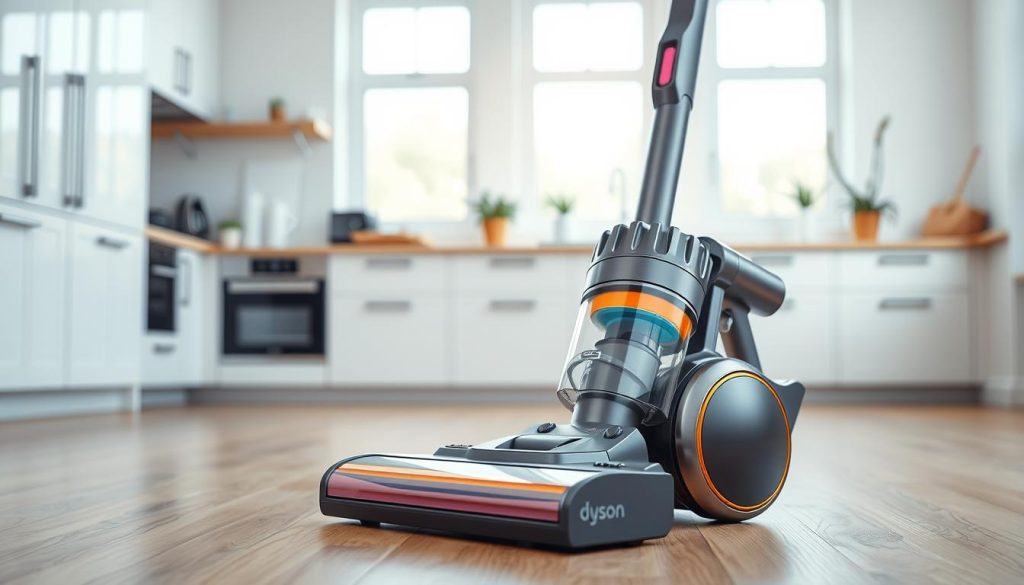
V12s Origin Submarine: lightweight daily handling
Specs: 130 Air Watts, 2.2kg, up to 60 min runtime, 3.5h charge. Tanks: 300ml clean / 360ml dirty.
The Origin excels in easy manoeuvre and multi-surface cleaning for condos. Its light weight helps on stairs and short runs.
V12s Detect Slim Submarine: filtration and visibility
Specs: 140 Air Watts, 3.1kg, HEPA filter, Fluffy Optic head, 60 min runtime, 3.5h charge, 300ml/360ml tanks.
We value the HEPA filter and the optic head when allergy control and spotting fine dust matter most. The extra weight buys better particle detection.
Digital Slim Submarine: compact design trade-offs
The Digital Slim aims for a slim storage footprint. Expect about 40 minutes runtime in exchange for a sleeker design.
That trade-off is useful for small flats where storage beats long run sessions.
How Dyson differs: these models adopt a “vacuum-first” approach with a wet head option, so performance focuses on suction, materials and user experience rather than a mop-style floor washer.
- Consider home size, spill frequency and allergy sensitivity when judging price.
- If you already own a dry unit, weigh the marginal benefit before paying a premium.
“Dyson’s R&D and cyclonic engineering tend to justify the price for users who value filtration and cordless convenience.”
Head-to-head: cordless floor washers compared by performance
Performance in homes depends less on marketing lines than on real pick-up of mixed dust, hair and larger crumbs across hard floor and rug edges.
Debris pick-up claims and what they mean for daily cleaning
Labels such as Electrolux’s “99% debris pick-up” or UltimateHome 700 are useful guideposts. Yet we focus on consistent removal of mixed dirt in one pass.
Reality check: a high claim must translate to fewer repeat passes and less streaking after spills.
Smart detection and auto-adjust water and suction
Systems like Tineco iLoop and Narwal AI Dirt Sense raise the bar by auto‑adjusting suction and water flow to match soil levels.
This saves water and avoids over‑wetting while keeping suction power efficient during quick weekday clean-ups.
Edge cleaning and lay-flat reach
Edge design and a flat-folding head matter in Singapore flats where skirting collects visible dirt fast.
We value dual‑side brushes and low‑profile heads that keep brush contact at shallow angles for under‑sofa reach.
“Good sensor systems and brush design cut cleaning time and reduce repeat passes.”
- Outcome: shorter chores, less streaking, easier weekly routines.
- Tip: prioritise brush anti-tangle designs if you have pets.
Choosing the right tank volume and capacity for your floor area
Tank size influences how often we stop mid-clean and whether one pass will cover a whole flat. Match capacity to the typical job, not the biggest spec on the box.
Smaller tanks for convenience and storage
Small tanks suit compact condos and short, frequent use. They are lighter to lift and quicker to empty, making storage easier in tight kitchens and utility closets.
Examples: Simplus (500/550ml) and Dyson (300/360ml) show what “small” looks like in practice.
Larger tanks for fewer refills during whole-home cleaning
Large tanks reduce stops on big jobs. Tineco (1000/720ml) and Bissell (820/420ml) let us finish larger floors with fewer interruptions.
Balance is key: ensure clean and dirty water volumes match, otherwise a small dirty container forces an early stop even if the clean reserve remains.
- Look for: wide openings for easy rinsing.
- Prefer: splash-resistant lids and clear level markers.
“Choose by use: quick kitchen tidy versus weekend deep clean — that decision should drive capacity choice.”
Filters, hygiene, and maintenance we prioritise
Good filtration is as important as suction for long-term hygiene in Singapore flats. We judge models by how they control fine dust, handle damp parts and reduce post-clean odours. Small design choices make daily upkeep easier.
Microfilter technology and keeping fine dust under control
HEPA-style and multi-stage microfilter setups trap the tiniest particles that trigger allergies. Families with pets or high footfall benefit most.
Choose removable, washable screens so the filter keeps peak performance. Clogged parts reduce suction and spread more dust when left unchecked.
Self-cleaning functions and no-contact dirt disposal
We favour units with automated nozzle rinses and tank flushing to cut hands-on time. Electrolux’s self-clean routines are a solid example of this convenience.
Kärcher’s no-contact designs let users empty debris without touching grimy parts, which is useful after messy jobs.
Antibacterial water tanks and odour management
Antibacterial tanks and antimicrobial rollers help control smells in humid conditions. Electrolux claims 99.9% bacteria elimination on select tanks, while Shark uses antimicrobial brush rollers to limit build-up.
Even with these features, we still dry rollers, check seals and replace filters on schedule to keep the system reliable.
| Feature | Why it matters | What we recommend |
|---|---|---|
| Microfilter / HEPA | Traps fine dust and allergens | Removable, washable filter; replace as per maker schedule |
| Self-cleaning | Reduces manual maintenance | Choose models with nozzle flush and auto tank rinse |
| No-contact disposal | Keeps hands away from dirt | Prefer closed-empty designs like Kärcher |
| Antibacterial tanks | Controls odours in humid climates | Useful for family homes; still rinse and air-dry after use |
Use cases we match to the right wet-dry vacuum cleaner
Different messes need different tools; matching use to machine saves time and frustration. Below we map common Singapore scenarios to the right format so you buy for reality, not a demo.
Kitchen spills, bathrooms, and patio puddles
For quick spills and bathroom water, pick a model built for fast liquid pickup and streak control.
Choose: a stick floor washer for daily cleaning or a drum unit if large puddles are frequent.
Cars, sand, and debris in tight crevices
Car interiors need strong suction plus crevice tools and small brushes to lift sand and trapped dirt.
Accessories make the difference; we favour models with dedicated nozzles for seats and mat edges.
Renovation dust, shards, and rubble
Heavy work calls for a robust drum format. These handle coarse rubble and stubborn dust without losing power.
Tip: check filtration and tank design to avoid dust re‑entry during emptying.
Garden clean-up with blower function for leaves and twigs
A built-in blower is useful outdoors to move leaves before final pickup. It prevents clogging and speeds up the job.
“Match mess type (fine dust vs coarse rubble vs liquids) and location (indoors vs outdoors) to the right model — small changes save time.”
- Practical rule: liquids and water → models with fast pickup.
- Fine dust: prioritise microfilters.
- Coarse dirt: choose drum formats with wide inlet heads.
For workshop-grade tasks, see specialised options such as Kärcher’s range at Kärcher professional wet‑dry products.
Price guide for Singapore: what to expect and how to spot value
Finding genuine value means reading specs beyond the headline price and matching a model to your daily needs. We frame typical Singapore costs so you can tell a real deal from a marketing push.
Electrolux pricing tiers and what each level buys
Electrolux ranges we noted span budget to premium. At the lower tier you get solid basic products with decent power and onboard tools for cars and quick jobs.
Mid and premium tiers add smarter motors, longer run times, self‑cleaning routines and hygiene features. That often means better suction power, larger tanks and fewer repeat passes.
Promotions, instalments and delivery — why total cost matters
Official stores often offer free delivery, 0% instalment plans and promotions up to 47% off. These perks can make higher-priced models more affordable over time.
We recommend checking bundle contents and warranty alongside the advertised discount to judge true value.
Compare price fairly: what to weigh against the tag
Look beyond sticker price. Compare suction power, tank capacity, filtration, noise, cordless versus corded and included accessories.
Durability, service support and how a model fits your needs determine long-term cost. The best solution reduces cleaning time and friction, not just costs more.
“A sensible buy matches the product to daily use — small flats need compact tanks; pet homes need higher power and more accessories.”
Conclusion
We end on a simple point: the best pick blends reliable pickup with low fuss so it gets used, not stored. ,
Choose by use: a cordless floor‑washing model suits daily hard‑floor care; a drum option fits heavy or outdoor jobs. Our shortlist — Tineco, Bissell, Narwal, Simplus and Shark — covers those needs clearly.
Key features that shape satisfaction are consistent suction, edge cleaning performance, tank capacity, filtration quality and ease of maintenance after each use.
Shortlist two or three products, compare tanks, weight and run time, then buy when promotions appear. For a compact, cost‑effective pick to consider, see the Lura wet & dry vacuum.

