

We outline a practical, safe approach to upholstery care in Singapore homes. Modern extraction units deliver strong suction that lifts ground-in dirt without harsh scrubbing. This introduction sets realistic expectations about what a machine can achieve and when to seek professional help.
Our method uses a two-stage routine: a dry pass to remove dust and debris, followed by a controlled extraction to extract grime from fibres. We recommend soft-bristled attachments and gentle strokes to protect fabric and avoid mould or lingering odours in humid climates.
We write for families, pet owners, renters and HDB or condo residents who want reliable results. Expect routine maintenance to freshen a sofa and deep cleaning to address stubborn stains. We will preview each step so you can prepare and avoid common mistakes that harm fabric or leave marks.
Safety basics: always spot test, use compatible products and ensure thorough drying before use. If a piece is antique or the textile is fragile, we advise professional upholstery care instead of DIY extraction.
Why we should clean upholstery regularly in Singapore homes
Regular care keeps upholstery looking fresh in Singapore’s humid climate. Small jobs done often stop stains, reduce smells and make living spaces more pleasant.
Removing pet hair, dust and mites for a fresher indoor climate
We remove pet hair and loose hair before fibres trap dust and mites. This step improves air quality and lowers allergy triggers in the home.
Preventing stubborn dirt and extending the life of sofas and furniture
Frequent light cleaning prevents dirt from becoming ground-in. That reduces the chance of set stains and saves repair costs over the years come.
- Daily use, snacks and high humidity make upholstery look tired faster.
- Weekly surface care plus scheduled deep work keeps sofas and other furniture in good shape.
- Consistent habits and the right tools deliver the biggest gains without complex routines.
| Issue | Simple action | Benefit |
|---|---|---|
| Pet hair build-up | Regular brushing and light suction | Reduced odour and allergens |
| Trapped dust & mites | Weekly surface cleaning | Cleaner air, fewer reactions |
| Ground-in dirt | Periodic deep cleaning | Longer lasting furniture |
What to prepare before upholstery cleaning
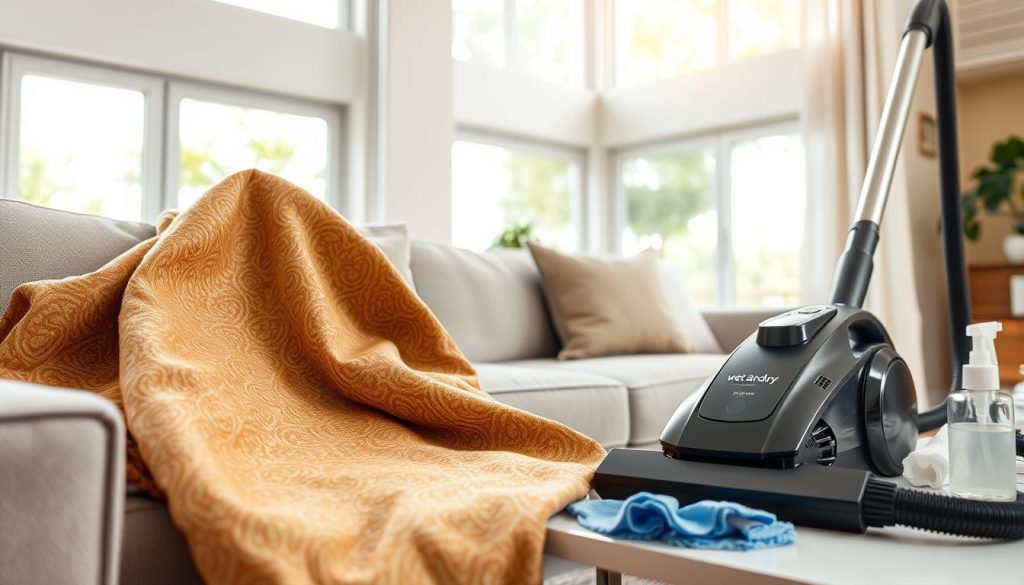
Before any extraction begins, we run a quick safety test on an out-of-sight corner of the upholstery. This checks water resistance so we do not cause rings, shrinkage or colour transfer. Ninety percent of stains are water-soluble; testing with a white cloth and lukewarm water tells us what will lift.
Essential fabric check
We dab a damp white cloth on a hidden seam. If colour transfers or the fabric puckers, we stop and choose a gentler method. If the patch stays stable, we proceed with measured water and a suitable cleaner.
Gathering tools and setting the area
- Tools: a clean upholstery nozzle, colour-fast cloths and a measured supply of water with the right cleaning product.
- Area: move side tables, unplug electronics and protect floors to avoid splashes in compact Singapore homes.
- Loose dirt: lift coarse debris by hand or brush first to prevent clogging hoses and to make extraction more effective.
Pre-check hotspots such as armrests, seat fronts and cushion edges so we can treat stains selectively instead of spreading soil. Good preparation saves time, reduces refills and cuts the risk of over-wetting by keeping the process controlled.
For a practical walkthrough, see our sofa cleaning guide for steps that match common upholstery types in Singapore.
Choosing the right attachments and settings for thorough cleaning
A careful selection of nozzles and settings turns routine cleaning into a reliable, thorough cleaning result.
When we choose a nozzle, we match the head to fabric type, pile height and how much hair or dust is embedded.
When to use a standard nozzle versus a turbo nozzle
A standard nozzle suits delicate weaves and light surface soil. It provides steady airflow with minimal agitation.
An air-powered turbo upholstery nozzle adds mechanical agitation plus airflow. That action lifts trapped grit, pet hair and mites from textured weaves and heavily used seat panels.
How suction strength and gentle strokes protect the surface
We use strong suction for extraction efficiency but pair it with gentle, overlapping strokes to avoid fabric distortion. Rapid or jerky passes can pull seams and mark the surface.
- Check and clean attachments before use; a gritty edge can scuff fabric.
- Reduce suction on fragile textiles and test on a hidden seam first.
- Work edges, seams and buttons slowly; these spots often trap dirt and snag easily.
- Consistent, overlapping passes give a uniform finish and cut rework time.
Tip: For guidance on safe methods for different textiles, see our short guide on how to clean fabric sofa.
Wet and dry vacuum cleaner for couch: step-by-step deep clean method
Start with coarse debris removal. We lift loose dirt, crumbs and hair with a dry pass so the next stage does not create muddy residue that is harder to extract.
Preparing the tank
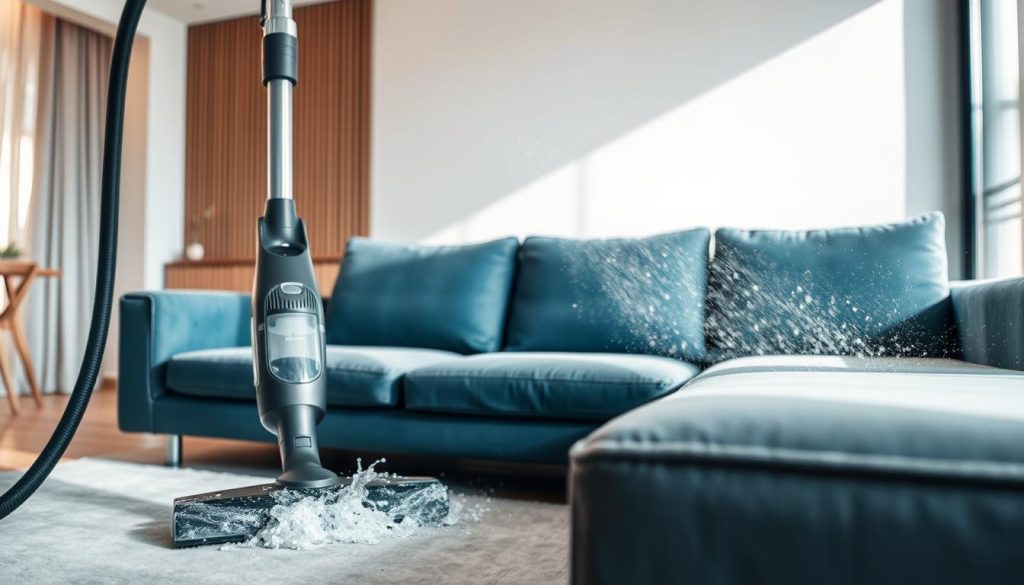
We fill the tank with clean water and add detergent at the manufacturer’s dose. Using the correct concentration prevents sticky fibres that attract more dirt later.
Spray and dwell time
Hold the spray head about 10 cm from the fabric and apply evenly. We keep coverage light and allow the solution to work for a few minutes so grime loosens from fibres.
Extracting moisture slowly
Use slow, straight, overlapping passes. Pull moisture out evenly to protect the fabric and minimise distortion.
Preventing marks and finishing
Work whole connected surfaces in one session to avoid water marks. Repeat passes until the extracted water runs clear.
Optional rinse: perform one or two clear-water passes to remove any detergent residue if the fabric feels tacky.
- Timing tip: choose a dry window or use air-conditioning and a dehumidifier to speed drying in Singapore.
- Stop when extraction is clear; that indicates the surface is clean enough and reduces repeat work.
Spot cleaning and stain care before and during extraction
Quick action often makes the difference between a removed stain and a permanent mark. We act fast, blotting spills with a clean, dry cloth and working from the outside in. Never rub; rubbing drives marks deeper into upholstery fibres.
To check if a stain is water-soluble we dab a white cloth with lukewarm water on a hidden area. If colour lifts, light water-based cleaning is safe.
Treating non-water-soluble marks
For grease or outdoor grime we spray a universal stain cleaner onto a colour-fast cloth and dab the mark patiently. Allow a few minutes of dwell time, then blot and rinse before extraction.
- Bicarbonate of soda absorbs odours; leave overnight or use as a paste for gentle lift.
- Mineral water and salt help fresh red wine spots; salt also soaks up liquid.
- Lemon or vinegar can loosen dried marks—apply briefly (about 15 minutes), then dab and rinse.
We set realistic expectations: stubborn stains may lighten rather than vanish in one session. Repeated, gentle treatment and prompt spot care reduce the need for heavy machine work and protect long-term fabric health.
See our practical cleaning guide for step-by-step advice on pre-treatment and extraction.
Drying your sofa properly to prevent odours, mould and mildew
Proper drying decides whether a post-clean sofa stays fresh or develops musty odours. In Singapore’s climate, trapped damp can cause long-term problems inside cushions if we rush this stage.
Ventilating the room and allowing ample drying time
We maximise airflow by opening windows where safe and using fans to move air across surfaces. When humidity is high, run air-conditioning or a dehumidifier to shorten the necessary drying time.
Allow several hours at minimum and, where possible, a full day before heavy use. Check deeper layers by feeling seams and cushion backs; these should be warm and dry to the touch.
Speeding up drying with controlled suction or blower function where available
When machines offer a blower or a low-moisture pass, we use controlled suction on seams, edges and cushion folds. Focused passes help pull out residual damp from pockets where moisture lingers.
Final vacuuming once fully dry for a clean finish
Once the sofa is completely dry, perform a light pass to lift any settling dust and restore fabric texture. This final step leaves a neat finish and extends time between deep cleaning sessions.
“A patient drying routine prevents odour and protects upholstery structure.”
- Quick tips: do weekly light maintenance and treat spills promptly to reduce the need for long deep cleans.
- Reassemble cushions only when every layer is dry; this avoids trapped damp and mildew risk.
| Issue | Action | Result |
|---|---|---|
| High humidity | Use AC or dehumidifier | Shorter drying time |
| Damp seams | Extra controlled suction or blower | Reduced odour risk |
| Settled dust after cleaning | Final light vacuuming next day | Clean finish and restored texture |
Common mistakes to avoid with a wet and dry vacuum on upholstery
Simple mistakes during extraction often create more work than they save. We list the pitfalls we see most often and how to prevent them in Singapore homes.
Over-wetting and trapped moisture
Over-wetting fabric traps moisture in cushions and foam. That delays drying and risks mould or mildew in humid conditions.
Keep sprays light, use measured detergent doses and perform controlled extraction passes. Check seams and cushion backs for residual damp before reassembling seats.
Wrong products or methods on delicate materials
Silk, velvet and antiques respond badly to harsh chemicals and strong suction. We avoid aggressive agents and high power on fragile fabric.
More product is not better: excess solution leaves residue that attracts dirt and makes future stains harder to remove.
Skipping maintenance and clearing the area
Our pre-flight checklist saves time: confirm filters are clean, hoses clear, tanks empty and attachments rinsed of grit. A well-kept vacuum cleaner runs cooler and extracts better.
Keep the cleaning area free of power strips, electronics and loose parts. Be cautious around recliner mechanisms and when treating car seats or other seats—respect material limits and avoid saturating foam-backed sections.
Conclusion
Finally, a few disciplined habits deliver the biggest gains in upholstery care. We prepare and test, perform a dry pass first, spray then extract methodically, treat spots with patience, and allow ample drying time.
Core success factors: controlled water use, slow overlapping passes and even wetting of connected panels to avoid marks. Repeat extraction until the returned water runs clear, then ventilate well and let the sofa dry fully.
Regular maintenance reduces deep-clean frequency and keeps fabrics smelling fresher. Choose a realistic schedule that fits your household and consult our Lura step-by-step guide for practical tips. With the right technique and a suitable machine, we can achieve professional-looking results at home without damage.

