
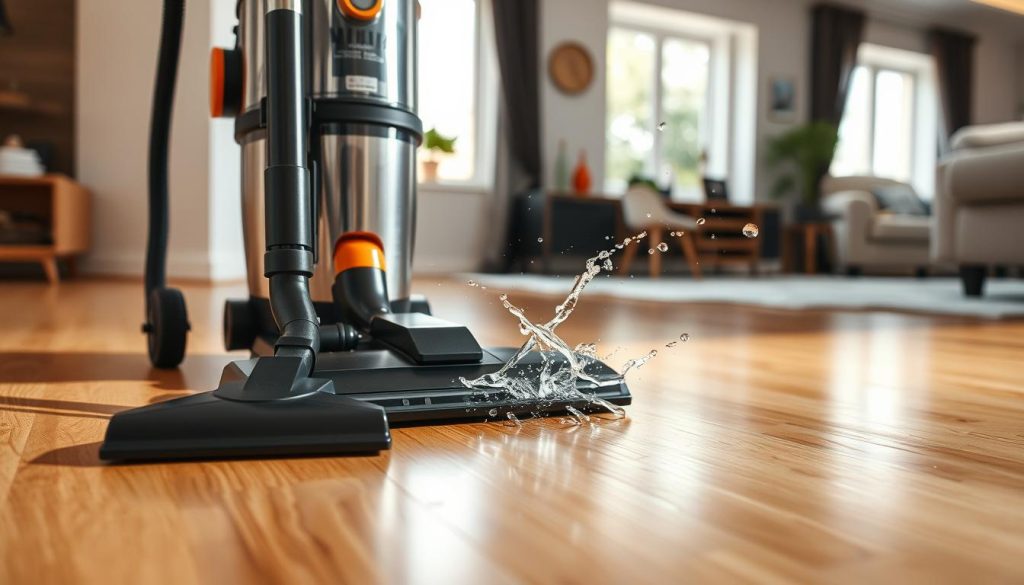
We test machines that cope with spills and daily mess in Singapore flats and family residences.
Our roundup focuses on practical performance for real-world cleaning. We prioritise units that handle wet dry situations without becoming a chore to maintain.
In each review we judge suction consistency, how the device separates dirty water, manoeuvrability around furniture and the time to finish a full floor.
We also flag trade-offs up front: greater weight, louder operation and a larger footprint. That helps you decide if the performance gain is worth it.
Terminology is clear: we explain Pa versus air watts, tanks, rollers and sensors so comparisons remain straightforward.
Finally, our Singapore angle covers availability, typical prices on Lazada and Shopee, storage tips and humidity‑related odour control to keep your space fresh.
Why wet dry vacuums are worth it for Singapore homes
In tight Singapore flats, an all‑in‑one machine saves time and cupboard space.
All‑in‑one cleaning for spills, dust, dirt and debris
We like units that pick up loose grit, food crumbs and small pools of water in a single pass. This cuts steps during quick turnovers after meals or when guests arrive.
Why they suit families with children and pet hair
Families benefit because one tool handles sticky messes and tracked‑in sand. Pet hair and shed fur are easier to collect when suction and wet pickup work together.
Trade‑offs: weight, noise and bulk versus performance
Expect stronger motor power, higher suction and better debris handling at the cost of more weight and noise. Storage can be an issue in HDB flats where a docking base may not fit.
| Advantage | Typical trade‑off | When to choose |
|---|---|---|
| Combined wet and dry pickup | Heavier unit | Regular spills, pets, kids |
| Stronger suction and motor power | Loud operation | Large debris, stubborn stains |
| Fewer tools to store | Bigger footprint | Condos with spare storage |
What a wet dry vacuum is and how it works
In simple terms, this is a single appliance that handles spilled liquid and solid debris in one pass. We explain how it differs from a standard dry vacuum and from a mop‑and‑bucket approach so you can see the time and storage benefits.
Handling liquid messes and dry vacuuming in one system
Typical layout: a clean water tank feeds a brush or roller while suction lifts water, dust and hair into a separate reservoir. That lets us mop and pick up grit without swapping tools.
How clean and dirty water tanks stay separated
Dual‑tank designs keep fresh water apart from used water. This separation matters for hygiene and stops smells from building up in Singapore’s humid climate.
- Best for fresh spills, muddy footprints and daily dust.
- Less effective on very deep pile carpets or unsealed timber.
- Typical use flow: fill the tank, choose a mode, one‑pass clean, then rinse or run the self‑clean routine.
Some models add sensors to tweak water flow and suction automatically. To read more about how these systems operate, see our detailed explainer on how wet‑dry machines work.
How we chose the best models in this roundup
We scored models against real Singapore chores to make our shortlist transparent and practical.
Suction metrics and real pickup
Numbers mean little without context. We compare Pa figures used by floor washers with Air Watts quoted by cordless sticks. That helps us translate manufacturer claims into actual dirt and water pickup.
We weigh suction power against filter type and brush design to judge real-world debris removal rather than peak numbers alone.
Runtime, charge time and usable minutes
We report usable runtime as the minutes you get in common modes, not the lowest trickle setting. Charge time factors into how convenient a unit is across multiple sessions.
Edge cleaning and head design
Low-profile, lie-flat heads and narrow width improve reach under sofas and beds in HDB flats. Edge cleaning tech matters when a unit must clear skirting boards and tight corners.
Cleaning modes, auto mode and sensors
We test preset modes and auto mode behaviour. Sensor‑led systems that adjust suction and water flow avoid overwetting while keeping pickup high.
Maintenance and odour control
Self-cleaning bases, roller rinsing and drying features reduce sticky build-up and stop smells in a humid climate. We rate how easy each water tank and filter is to empty and rinse.
Value in Singapore
Price positioning, local warranty and availability matter. We checked Lazada and Shopee listings to ensure models are stocked locally and offer sensible after‑sales support. For wider comparisons, see this best wet‑dry roundup.
Quick comparison table: our top wet and dry vacuum picks
To help you shortlist quickly, we present a compact comparison of the leading models and their core specs.
At‑a‑glance specs: tanks, suction and runtime
Key factors shown: clean and dirty water tank volumes, suction power claims, weight, minutes of runtime and simple price positioning to guide buying decisions in Singapore.
| Model | Clean / dirty water tank | Suction (Pa) | Weight (kg) | Runtime (minutes) | Design / Price |
|---|---|---|---|---|---|
| Tineco Floor One Switch S7 Stretch | 1,000ml / 720ml | 22,000 Pa | 4.7 | 50 washer / 70 vacuum | Lie‑flat, premium |
| Dreame H15 Pro Heat | 800ml / 650ml | 22,000 Pa | 6.0 | Up to 70 normal / 25 hot | Heat mode, premium |
| Narwal S20 Pro | 790ml / 720ml | 20,000 Pa | 4.27 | 60 | AI modes, mid‑range |
| Bissell CrossWave X7 Cordless Pet Pro | 820ml / 420ml | Up to 20,000 Pa | 4.8 | 30 | Pet mode, mid‑range |
| Simplus Cordless | 500ml / 550ml | 21,000 Pa | 4.4 | 50 | Budget, compact |
| Shark HydroVac WD210SM | 500ml / 360ml | 2,700 Pa | 3.9 | 30 | Value, antimicrobial rollers |
“We include tank capacities because they predict how often you stop to refill or empty during cleaning.”
- We show water tank sizes (clean and dirty) to reflect real session flow.
- Suction power is listed where brands disclose it, but numbers do not replace on‑floor testing.
- Weight and head design matter in flats; choose lighter builds with lie‑flat reach for low clearance under furniture.
Overall best smart pick: Tineco Floor One Switch S7 Stretch
Speed and consistency in everyday use guided our top pick for smart cleaning technology.
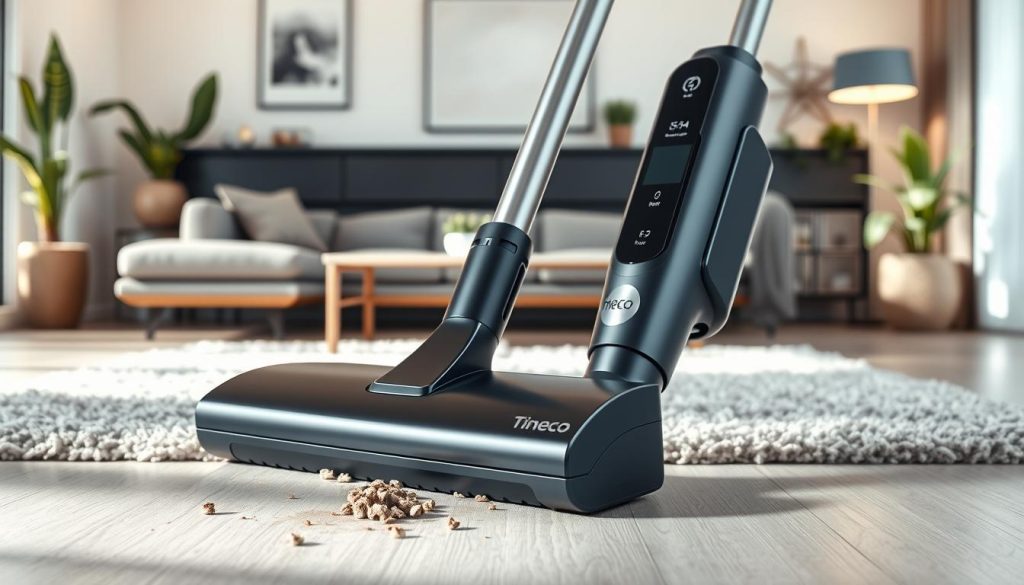
Why we chose the Tineco Floor One Switch S7 Stretch. It balances strong suction with sensor-led water control, making routine cleans quick and predictable.
The key specs matter: a 1,000ml clean water tank and a 720ml dirty water tank cut pauses during typical Singapore short cleans. Peak suction reaches 22,000 Pa, giving usable pickup on tiles and sealed timber.
The iLoop technology automatically adjusts suction and water flow to match dirt levels. That reduces overwetting and keeps sessions efficient.
Practical features that matter
The dual-side brush reaches roughly 0.5cm from the wall to improve edge cleaning. An LCD shows cleanliness status and basic prompts while docking supports a self‑clean routine.
| Feature | Spec | Benefit |
|---|---|---|
| Clean / dirty water tank | 1,000ml / 720ml | Fewer stops during quick sessions |
| Suction | 22,000 Pa | Strong pickup on hard floors |
| Runtime | 50 min (washer) / 70 min (vacuum) | Long usable minutes between charges |
“A smart system that replaces a separate mop and stick for daily messes.”
It also converts to a stick unit with attachments, so the design extends value beyond floor cleaning. For families and busy flats, the Tineco Floor One feels like a single, capable solution.
Best for hot water deep-cleaning: Dreame H15 Pro Heat
When deep grease and stubborn spills need more than a wipe, the Dreame H15 Pro Heat steps in with targeted hot‑water cleaning.
Key specs and runtime
Core figures: an 800ml clean water tank and a 650ml dirty water reservoir pair with 22,000 Pa suction power. The unit weighs about 6kg.
Runtime is up to 70 minutes in normal mode and falls to roughly 25 minutes in hot water mode. Charge time is about 4 hours.
Why hot water matters
At 85°C the h15 pro loosens greasy stains and sticky spills that cold rollers can smear. Hot water lifts oil, so fewer passes remove visible dirt and debris.
Head, edge cleaning and manoeuvrability
Triple edge cleaning and a flat‑folding head reach close to skirting and into corners without repeated repositioning.
Auto‑traction wheels help with heavier sessions, but the design feels bulky during longer cleans.
Who should avoid it
We advise against using hot modes on delicate or unsealed wooden floors. If you prefer ultra‑light kit for daily quick jobs, the heft and storage bulk may be a drawback.
| Spec | Value | Benefit |
|---|---|---|
| Clean / dirty water tank | 800ml / 650ml | Fewer refills in typical sessions |
| Suction | 22,000 Pa | Strong pickup on hard floors |
| Hot water | 85°C | Better removal of grease and oil |
| Runtime | 70 min / 25 min (hot) | Plan sessions by mode to match battery life |
“Hot‑water mopping is a real advantage where grease and set‑in marks are common.”
Most manoeuvrable option: Narwal S20 Pro
We picked this model for how effortlessly it moves through tight Singapore flats. The head steers well, turns quickly and glides under sofas so cleaning feels less like a chore.
Key specs that matter
Practical numbers: a 790ml water tank and 720ml dirty water reservoir cut refill stops. Peak suction power is 20,000 Pa. The unit weighs 4.27kg and offers up to 60 minutes runtime with a 3.5‑hour charge time.
Smart modes and adaptive sensing
The AI Dirt Sense system auto-adjusts intensity across five cleaning modes. That removes guesswork when we move from dusty corridors to spill-prone kitchen zones.
Edge reach and real-world handling
Triple-sided edge cleaning plus a lie‑flat head reaches skirting boards and under low furniture. Tight turns, effortless steering and a light design reduce fatigue during multi‑room sessions.
“A balance of handling and sensible tank sizes makes the S20 Pro ideal for ergonomics-driven users.”
Maintenance is straightforward and the sensors help manage water use to limit streaking on floors.
Best for pet hair: Bissell CrossWave X7 Cordless Pet Pro
If your household has shedding pets, pick a model that prevents hair wrap and odour while still shifting spills fast. The Bissell CrossWave X7 Cordless Pet Pro is built around that idea.
Key specs at a glance
| Spec | Value | Notes |
|---|---|---|
| Clean tank | 820ml | Longer sessions between refills |
| Dirty water tank | 420ml | Expect more emptying with heavy shedding |
| Suction | Up to 20,000 Pa | Good pickup on hard floors and low rugs |
Turbo Pet mode and mixed surfaces
Turbo Pet mode targets fur, tracked-in dirt and food stains near feeding areas. It boosts brush action and cleaning fluid to loosen hair from fibres.
We found transitions between rugs and hard floors are smooth but need a quick pass to catch embedded debris. The system handles dust and hair well if you follow the right routine.
Practical notes
The smaller dirty water capacity versus the clean tank means more trips to the sink in multi-pet households. That trade-off is common in cordless designs weighing about 4.8kg with a 30-minute runtime and a 4-hour charge.
- Tip: Use the manufacturer solution to reduce odour and residue.
- Tip: Empty the dirty water promptly to avoid smells in Singapore’s humid climate.
- Tip: Run Turbo Pet mode on feeding zones or high-shed rugs to reduce tangles.
“A well-tuned pet model must clear fur without becoming a tangled, smelly chore.”
Best budget wet dry vacuum for smaller flats: Simplus Cordless Wet-Dry Vacuum Cleaner
For budget-conscious buyers in compact flats, functionality matters more than frills. We recommend the Simplus Cordless as a practical entry point that covers everyday spills, dust and light debris without a premium price tag.
Key specs at a glance
Clean tank: 500ml. Dirty water: 550ml. The unit delivers 21,000 Pa suction power, weighs 4.4kg and offers up to 50 minutes runtime with a 4.5‑hour charge.
Design and reach
The 180° flat‑folding design and a 6.5cm brush head help get into tight edges near cabinets and skirting. That makes the model well suited to tiled and vinyl floors common in Singapore flats.
What you give up
At this price you lose advanced sensors, self‑heating or hot water mopping. Still, the strong suction and simple system handle crumbs, small spills and routine cleaning with straightforward maintenance.
“A sensible pick for first-time buyers and smaller households prioritising price over premium tech.”
Best balanced value-and-practicality choice: Shark HydroVac WD210SM
A balanced model must trade peak power for simplicity and hygienic maintenance. The Shark HydroVac WD210SM sits squarely in that middle ground: sensible specs and a low‑fuss approach make it ideal for regular upkeep in Singapore flats.
Key specs: a 500ml water tank, a 360ml dirty water receptacle and 2,700 Pa suction power. The unit weighs 3.9kg, offers about 30 minutes runtime and takes roughly 4 hours to recharge.
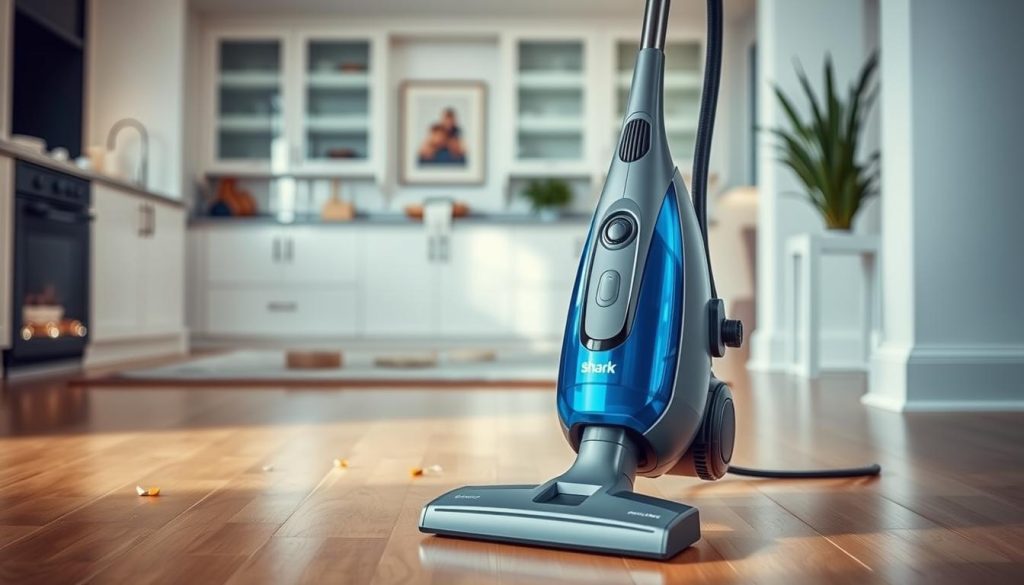
Its antimicrobial brush rollers are the standout feature. They limit bacterial build‑up and reduce odour between sessions, which matters a lot in humid climates.
Interpret the lower suction power as a signal of intent: this model handles light‑to‑medium dust, dirt and debris well, but it is not designed for heavy or embedded mess in one pass.
“Practical, hygienic and wallet‑friendly — a sensible pick for regular maintenance.”
| Spec | Value | Note |
|---|---|---|
| Clean tank | 500ml | Fewer refills during short sessions |
| Dirty water | 360ml | Best for routine upkeep, not large spills |
| Suction power | 2,700 Pa | Suited to light‑medium debris |
Overall, we recommend the HydroVac if you want dependable wet dry performance at a fair price and prefer easier odour control over peak suction. Check local Lazada and Shopee listings for price and warranty options in Singapore.
Dyson wet and dry options in Singapore: V12s Submarine range
Dyson’s Submarine range aims to blend cordless convenience with limited wet-floor capability. We outline what justifies the premium and which V12s choices suit quick touch-ups in Singapore flats.
Why the higher price
Engineering, filtration and consistent cordless performance are the chief reasons. Dyson invests heavily in R&D to squeeze more air power from compact motors and to add HEPA-level filters that trap fine dust and allergens.
V12s Origin Submarine
130 Air Watts, up to 60 minutes runtime, very light at 2.2kg. Tanks are small (300ml clean / 360ml dirty) so this model suits frequent, targeted cleaning of tiled floors and quick spills.
V12s Detect Slim Submarine
140 Air Watts, HEPA filtration and a Fluffy Optic head for better edge and flat-floor pickup. Runtime matches Origin; weight rises to 3.1kg with a slight price premium.
Digital Slim Submarine
Slimmer design trades runtime for form: roughly 40 minutes between charges. Choose this if weight and storage space matter more than long sessions.
| Model | Air Watts | Runtime (minutes) | Weight (kg) | Tank (clean/dirty ml) |
|---|---|---|---|---|
| V12s Origin Submarine | 130 | 60 | 2.2 | 300 / 360 |
| V12s Detect Slim Submarine | 140 | 60 | 3.1 | 300 / 360 |
| Digital Slim Submarine | 130 | 40 | 2.0 | 300 / 360 |
“Expect premium price points in Singapore due to advanced motor technology, HEPA-grade filtration and refined cordless feel.”
In practice, these models work best as a lightweight system for frequent maintenance. If you clean large areas at once, note the limited tank sizes and plan refill breaks.
More strong contenders to consider: Dibea H8 and Dibea HC26
If you prioritise tank capacity and simple upkeep, these two Dibea models offer sensible features at a lower price point.
Dibea H8 pairs a 500ml clean tank with a 600ml dirty water reservoir. It claims 13,000 Pa suction and runs up to 38 minutes in auto mode. A built‑in self‑cleaning system reduces post‑session maintenance and suits frequent quick cleans.
Dibea HC26 raises tank capacity to 700ml clean and 700ml dirty, and adds a longer handle reach. Runtime matches the H8 at about 38 minutes, with similar charging times. Suction figures vary by listing, so we advise checking credible reviews rather than relying on headline numbers.
- Why include these: practical features such as self‑cleaning at a budget price.
- Choose H8 if: you want a smaller, lighter unit with solid everyday suction.
- Choose HC26 if: fewer refills and extended reach matter more than compact storage.
“Pick based on how much water you use, tank needs and how often you can pause to empty.”
In our full test we will assess stability, ease of turning, battery consistency and how well each system keeps odours at bay over time.
How to match the right vacuum cleaner dry and wet for home to your flooring
We start by mapping features to actual floors in Singapore flats so you buy by fit, not hype.
Hard floors: tiles, vinyl, laminate and sealed wood need measured water use and gentle rollers. Use low water flow on sealed timber and avoid hot modes on unsealed planks. Controlled water prevents swelling, warping and streaks while removing dirt and debris efficiently.
Head reach and edge cleaning
Edge shape and brush layout matter where skirting boards and corners trap dust and grit. A narrow head or dedicated edge cleaning mode reduces repeat passes.
Choose a head that sits close to the edge without lifting. That reduces time spent on detailed touch-ups and keeps corners free of grime.
Under‑furniture clearance and lie‑flat design
Measure gaps under sofas and beds before buying. A lie‑flat design reaches further and avoids moving heavy pieces during routine cleaning.
Smaller households with lots of tracked‑in messes benefit from larger tanks and stronger suction, while flats with mostly tiles can use lighter kits that conserve water and charge time.
| Floor type | Recommended feature | Why it matters |
|---|---|---|
| Tiles / vinyl | Larger tank, strong suction | Handles spills, grit and quick sessions |
| Laminate / sealed wood | Controlled water flow, soft brush | Prevents warping and streaks |
| Frequent pet zones | Specialised brush, good edge cleaning | Reduces hair tangles and trapped debris |
| Tight flats | Lie‑flat head, light design | Reach under furniture without lifting |
“Match features to floors and messes, not just peak numbers.”
Key buying factors: what to look out for before you buy
Choosing the right machine means matching features to your routine, floor types and storage limits in Singapore flats.
Tank capacity: balancing portability versus fewer refills
Tank size determines how often you stop mid-clean. Larger tanks cut interruptions when tackling whole rooms, but add bulk and weight.
Smaller tanks suit tight storage and quick touch-ups. Consider whether you prioritise fewer stops or easier handling when carrying between floors.
Suction power: when higher power helps with bigger debris and messes
Higher suction power truly pays off when you need to lift grit, pet hair and heavy debris in one pass.
For tiled and sealed timber, stronger suction shortens cleaning time and reduces repeat strokes. For delicate surfaces, choose adjustable modes to avoid overwetting or damage.
Filter system: standard filters versus HEPA for allergens and fine dust
Standard filters capture visible dust and dirt, while HEPA filters trap fine particles and allergens.
If household air quality matters, pick a model with HEPA or multi-stage filtration to reduce airborne irritants in humid climates.
Noise level: what to expect from more powerful motors
More power usually means more noise. Think about cleaning times, neighbours and tolerance for louder operation.
Look for quoted decibel levels when quiet operation matters, or choose lower power modes during early mornings or late evenings.
Cordless versus corded: reach, convenience and typical charging times
Cordless models offer better reach and quick spot-cleaning, but battery runtime drops in high-power modes.
Corded units give steady air and continuous power without battery life worries. For cordless, check typical runtime, charge minutes and expected battery cycles.
Accessories and attachments: brushes, wands and multi-surface heads
Included tools expand real-world usefulness. Look for specialised brushes for pet hair, narrow wands for crevices, and multi-surface heads for rugs and tiles.
Good attachments reduce the need for extra purchases and improve value at the listed price.
| Factor | What to check | Practical tip |
|---|---|---|
| Tank capacity | Clean / dirty water volumes (ml) | Choose larger tanks for full-room sessions; small tanks for tight storage |
| Suction power | Peak Pa or air watts, adjustable modes | High power for grit and hair; use lower modes on sealed wood |
| Filtration | Standard vs HEPA | Pick HEPA if allergies or fine dust are concerns |
| Power source | Cordless (battery runtime) vs corded (continuous) | Cordless for reach; corded for long sessions without recharge |
“Match tank size, suction and filtration to your rooms and routines to avoid buyer’s regret.”
Maintenance and running costs: keeping performance high
How you treat the tanks, rollers and filters has more impact on long‑term performance than peak specs.
Cleaning the brush roller and preventing hair tangles
Regular brush care keeps suction steady and stops hair from wrapping the head. We remove the roller after each heavy session, trim wrapped hair, rinse the brush and let it air dry before reinstalling.
Do this every few uses to avoid clogs that spread dust and streaks across floors.
Emptying dirty water tanks and avoiding odours
Empty the dirty water tank immediately after each session. Rinse the tank, wipe seals and leave parts to dry in a ventilated spot to stop smells in humid Singapore conditions.
Self‑cleaning bases and drying features: what they actually save you
Self‑clean bases rinse rollers, flush lines and sometimes run a dry cycle. They save us time but do not replace periodic deep cleaning of filters, tanks, replacement rollers or filters. Expect running costs from replacement heads, cleaning solution and parts over years.
“Maintenance is the hidden cost: thorough care preserves performance and reduces long‑term expense.”
- Quick routine: empty dirty water, rinse tank, clean brush, air dry.
- Budget for replacement rollers and filters when comparing long‑term value.
- Choose easy‑access tank design and guided modes to reduce skipped maintenance and save time.
Conclusion
Practical performance beats headline numbers: choose a model you will use each week. Our top picks suit different households — the Tineco Floor One, the Dreame H15 Pro Heat for deep grease, the Narwal S20 Pro for manoeuvrability and the Bissell CrossWave X7 Cordless Pet Pro for shedding pets.
Match tank size, suction and runtime to your floors and mess frequency. Remember the trade-offs: these machines can be heavier, louder and need regular tank and roller care.
When shopping in Singapore, compare price across reputable listings, confirm warranty coverage and check that consumables are easy to buy locally. Prioritise models with sensible technology and simple self‑clean routines if you want fewer maintenance chores.
If you only remember three things: tank sizing, real minutes of runtime and whether the system’s sensors or self‑cleaning fit your routine.

