

We set clear expectations. This short guide explains what a good fabric cleaner for sofas can safely achieve and what it cannot. We want your sofa to look fresher without risking shrinkage, water rings or colour change.
Upholstery takes heavy daily use in a busy Singapore home. Regular care loosens dirt, removes pet hair and mites, and extends the life of sofas and armchairs.
Act on fresh spills quickly. Fresh stains are easier to lift; rubbing can push liquid deeper into fibres and make a stain worse.
Our approach favours safe, repeatable cleaning over aggressive scrubbing. We focus on four outcomes: lifting stains, reducing odours, removing dust and keeping a soft, clean fabric texture.
We will walk you through label checks, preparing tools, correct stain treatment, occasional deep cleaning, and thorough drying. If a sofa is labelled “vacuum-only” or the material is delicate, we will recommend gentler methods or professional help.
Why regular sofa cleaning matters in Singapore homes
Daily life in Singapore sends crumbs, oils and pet hair into our upholstery faster than we notice. Left unchecked, these deposits migrate deeper into fibres and attract dust, mites and odours.
We vacuum first to remove surface debris like crumbs and loose dirt. That simple step stops abrasive particles from wearing down seat fronts and armrests.
Humidity worsens trapped dust. In Singapore’s climate, hidden grime can feel stale and create musty smells unless we act regularly.
How buildup happens
- Seat fronts and armrests collect the most daily grime.
- Crevices trap crumbs; seams hold pet hair and fine dust.
- Oils from hands and food slowly darken fibres and make stains set.
Routine care saves time. Small, consistent cleaning reduces abrasive wear and makes future stains easier to remove. For more on regular maintenance benefits, see 5 reasons to consider regular sofa.
Check the care label first: upholstery cleaning codes explained
A small code on a label tells us which approach will keep upholstery safe. We never skip this step. The tag is usually beneath a seat cushion or along the base, and it guides our choice of products and tools.
Code W: when water-based cleaning is safe
Code W means we may use water-based solutions. We still control moisture to avoid over-wetting and rings.
Code S: when solvent-based cleaning is required
Code S requires solvent-based cleaning only. We ensure good ventilation and follow product directions because solvents can be harsh or flammable.
Code WS: when you can use either method
Code WS lets us use water or solvents. We pick the method based on stain type, colour-fastness and drying time.
Code X: when vacuum-only or professional cleaning is best
Code X limits us to vacuuming or professional service. Using water or solvents risks damage, distortion or rings.
- When in doubt, we choose the gentlest cleaning method and perform a spot test.
What we prepare before we clean
Before we touch a cushion, we arrange tools and solutions so the job flows smoothly. Good prep saves time, reduces risk and helps the lounge dry faster in humid Singapore conditions.
Tools that make the job easier
We keep a vacuum cleaner with an upholstery attachment and a soft brush to remove loose dust and crumbs. A handheld vacuum helps reach crevices and corners.
Microfibre cloths are our go-to; we keep a dry cloth for blotting and a damp cloth for light rinsing.
Supplies and solutions we keep on hand
Our kit includes a spray bottle with distilled water, a mild detergent or washing-up liquid, white vinegar and baking soda for odour control. These products are gentle yet effective.
We avoid bleach-based items or highly scented sprays that leave residue and attract dirt.
Spot-testing in an inconspicuous area
We always perform a spot test on a hidden area. Apply a small amount, blot gently, let it dry, then check for colour change or rings.
If there is any transfer or texture change, we stop and choose a gentler cleaner. This step protects the upholstery and keeps results predictable.
How to use a fabric cleaner for sofas: our step-by-step method
We set out a clear step-by-step routine so you can treat spills quickly and avoid long-term damage.
Vacuum first. We remove loose dust and crumbs from the whole seat, seams and under cushions. This stops dry debris turning into muddy marks during wet cleaning.
Blot spills immediately. Use a clean, dry cloth and press gently. Never rub; rubbing pushes liquid deeper and makes stains worse.
- Work from the outside of the stain inwards with small dabs to control spreading.
- Apply the product sparingly and focus on blotting, not saturating the area.
- When the mark lifts, wipe residue with a damp cloth and blot with a dry cloth to remove stickiness.
Drying matters. Ensure good airflow and patience. Do not sit on the area until fully dry to avoid compression marks and musty odours in Singapore’s humidity.
| Step | Action | Why it matters |
|---|---|---|
| 1 | Vacuum thoroughly | Prevents dirt from creating mud when wet |
| 2 | Blot with dry cloth | Lifts liquid without forcing it deeper |
| 3 | Rinse and blot | Removes detergent residue that attracts dirt |
For a full guide on machine-based approaches and alternative tools, see our related clean your couch resource.
Choosing the right cleaning method for the stain and fabric
A quick test often tells us whether a mark will respond to water or needs a different approach. This saves time and reduces the risk of spreading the stain or altering the surface. We begin with a small assessment before applying any product.
When marks are water-soluble
Many food and drink stains are water-soluble. We use a white cloth and lukewarm water to test. Dab gently and watch for colour transfer to the cloth.
If the stain lifts, we treat it as water-based and follow a gentle wet method to remove stains without over-wetting the area.
When to use a universal remover
For marks that do not move with water, we try a universal stain remover only after confirming colour-fastness.
Apply the product to a colour-fast cloth first, never directly onto the area. Dab from the stain edge inward to control spread.
Our non-rubbing rule and safe process
We never rub. Friction pushes liquid deeper and can distort fibres. Instead, we dab, lift and rotate to a clean part of the cloth, repeating until the stain reduces.
Allow a short dwell time where needed, but avoid letting any solution dry on the surface. This process keeps the cleaning method repeatable and safe in humid Singapore conditions.
| Decision point | Test | Action |
|---|---|---|
| Likely water-based stain | White cloth + lukewarm water | Dab gently; follow water-based method |
| Non-water-soluble stain | No transfer on water test | Use universal remover on colour-fast cloth; dab carefully |
| Unknown or delicate area | Spot test in hidden area | Choose gentlest method or seek professional help |
Deep cleaning upholstery with machines for a fresher finish
For heavy soiling and embedded grime, machine-assisted deep cleaning gives a thorough, even result. We choose a machine when large areas show dullness, multiple old stains, or when dirt has settled deep into fibres.
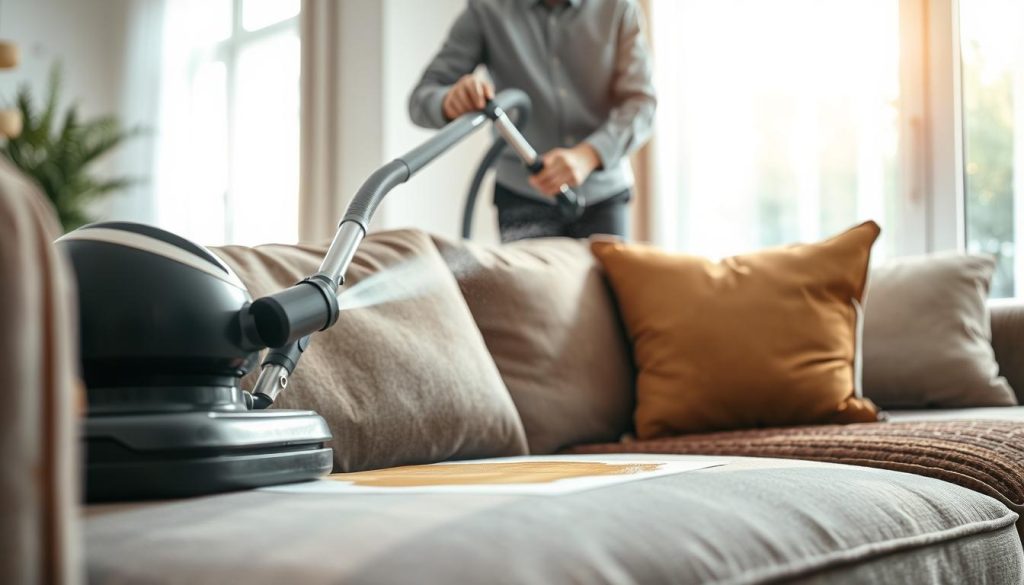
Spray extraction cleaning: how it works and when we use it
We always pre-vacuum to lift loose dust. Then we mix water and detergent as directed and set the spray head about 10 cm from the surface.
Spray evenly, allow a short dwell of a few minutes, then suction slowly to extract water and soil. We repeat passes until the extracted water runs clear.
Preventing water marks by cleaning connected areas evenly
Even coverage is essential. We clean whole seat panels and adjacent areas at the same time to avoid patchy drying lines and water marks.
If residue stays, we rinse with clear water and extract again. Once dry, we vacuum to lift fibres and restore texture.
Steam cleaning small stains safely
For isolated marks we use a steam cleaner with care. Angle the detail nozzle and hold a microfibre cloth to catch lifted soil.
Spot-test heat sensitivity first. Do not overheat delicate surfaces; short bursts and a cloth catcher reduce wet time and risk.
Ventilation and drying time in humid Singapore weather
Ventilation is non-negotiable. We plan machine work earlier in the day so airflow and fans can speed drying.
Drying time varies with humidity, cushion thickness and room airflow. Expect longer time on thick cushions; allow seating only when fully dry.
| Process | Key action | Why it matters |
|---|---|---|
| Pre-vacuum | Remove loose dust | Prevents grit turning into mud during wet cleaning |
| Spray extraction | Spray water + detergent, dwell, extract slowly | Maximises soil removal and reduces residual detergent |
| Repeat & rinse | Continue until extracted water is clear; rinse if needed | Prevents detergent build-up and streaks |
| Steam spot work | Angle nozzle; use microfibre catcher | Controls moisture and protects heat-sensitive areas |
| Car interiors | Use portable machines; focus crevices | Controlled moisture avoids mildew in tight spaces |
Household remedies we use for common sofa stains
Simple pantry items can lift many common stains when we use them correctly. We favour affordable, low-risk options and always spot-test in a hidden area first to check colour-fastness.
Bicarbonate of soda for odours and stain lifting
Sprinkle powder over the mark and leave overnight to absorb smells. Vacuum the next day. For active marks, mix 1 tbsp powder with 1 tbsp water into a paste, apply, let dry, then vacuum.
Vinegar, dish soap and water mix
Mix vinegar, dish soap and water in a 1:1:2 ratio. Apply to a clean cloth and blot gently. Rinse with a damp cloth and blot dry to avoid residue that attracts dirt.
Mineral water and salt for red wine spills
For fresh spills, pour mineral water to loosen and dab with a cloth, then cover with salt or cornflour to absorb. If the mark has dried, apply lemon juice or vinegar, wait about 15 minutes, dab and rinse.
Lemon juice and salt for dried bloodstains
Use cold water first; never warm. For dried marks, make a lemon-and-salt paste, leave about 30 minutes, then remove and rinse with cold water.
Washing-up liquid for grease marks
Use warm water and a small amount of washing-up liquid. Work from the edge inward, rinse thoroughly and blot until dry. This helps remove grease without leaving sticky residue.
Picking the best cleaner type for your sofa and lifestyle
Different households need different tools—what suits a busy family may not suit a pet home. We match products to use patterns, material codes and whether covers are removable.
Sprays for quick spot cleaning and odour control
Sprays such as Woolite INSTAclean or Method Stain & Odor Treatment work well for fast spot work. We always spot-test, dab gently and rinse to avoid residue that attracts dust.
Enzyme cleaners for pet stains and lingering smells
Enzyme products like Bissell Professional break down protein-based marks and smells. They need longer dwell time so odour molecules are fully neutralised and pets don’t return to the same spot.
Dry powders and granules for delicate fabrics
Dry granules (eg Capture) suit delicate material and strict cleaning codes. They freshen with minimal moisture, lowering the risk of rings on sensitive surfaces.
Portable upholstery machines for sofas, armrests and car seats
Portable machines such as the Bissell Little Green combine controlled spray with suction. They speed drying, lift deep grime and work well in a room or the car. Match any product to the label codes and the material before use.
After-clean care: drying, deodorising and protecting the fabric
After cleaning, how we dry and protect upholstery determines whether it stays fresh or goes musty. Leftover moisture and detergent residue are common reasons a seat re-soils or smells later. We give clear steps to avoid that outcome.
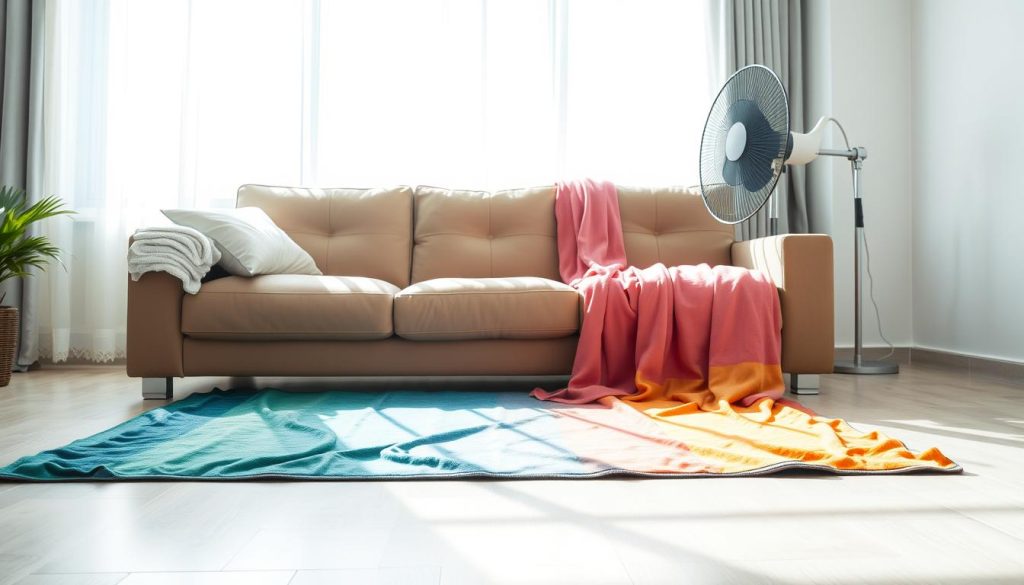
Using fans and airflow to speed up drying without heat damage
We ventilate the room, open windows where possible and run fans on low to aid drying. Avoid direct heat; hot air can shrink or set marks on delicate fabric.
Plan time so the couch can sit unused while it dries. Aim for several hours; in humid conditions this can take longer than 60 minutes and sometimes a few hours.
Vacuuming again once dry to lift fibres and remove loosened dirt
Once fully dry — including seams and cushion cores — we vacuum again. Using a vacuum cleaner with an upholstery tool removes dust and any loosened dirt and restores a soft pile.
Optional fabric protection to keep upholstery cleaner for longer
After the item is completely dry, we may apply a textile impregnator. These products help repel future stains and make clean fabric easier to maintain. We use protective products only when the surface shows no moisture or residue.
Our maintenance routine to keep fabric sofas looking new
A short, steady maintenance plan keeps your lounge seating looking sharp and lasting longer.
Weekly we vacuum with an upholstery tool and follow with a soft brush. This removes crumbs, dust and loose dirt before particles lodge into seams.
Monthly we deodorise. Sprinkle bicarbonate (baking soda) lightly, leave an hour, then vacuum thoroughly. This refreshes the room and cuts mild odours without harsh products.
Practical six‑to‑twelve‑month deep clean
Every six to twelve months we schedule a deep clean. Frequency depends on use, pets and spill history. Heavily used seating or homes with animals may need six‑monthly care; quieter homes can wait up to twelve months.
Small daily and post‑event steps
After guests, we perform a quick check: fast vacuum, look for new marks, and blot fresh spills immediately. These short steps save time later and reduce the need for strong solutions.
| Routine | Action | Benefit |
|---|---|---|
| Weekly | Vacuum + light brush | Stops dirt embedding; keeps pile even |
| Monthly | Deodorise with baking soda | Keeps smell fresh; removes light odours |
| 6–12 months | Deep clean (machine or professional) | Removes embedded grime; restores appearance |
| Ongoing | Rotate cushions; wash covers when removable | Even wear; preserves colour and shape |
Consistent care reduces harsh treatments later and keeps upholstery looking newer for longer. Small steps done often save time and cost in the long run.
Conclusion
A careful approach beats aggressive fixes: we aim to preserve colour, texture and shape while achieving a genuine clean.
Follow care codes and do a spot-test before you start. Blot spills gently — never rub — and rinse any residue to avoid re‑soiling.
Our safe path is simple: check the label, prepare tools, then use the gentlest effective method first. Vacuum, blot, treat, rinse and dry with good ventilation.
Key reminders: avoid over‑wetting and test heat or machine work first. Deep machines and steam help when used correctly, but only after a spot test and label check.
Keep to small, regular steps and these instructions will protect your sofa and upholstery while cutting future problems.

