

We present a Singapore-focused roundup of the top rated wet and dry vacuum cleaner cordless options for busy flats. Our aim is to show practical wins for everyday spills and routine cleaning, so you save time and fuss.
In this guide we give an at-a-glance comparison and clear “best for” picks. We focus on real performance, not spec-sheet claims, and note who benefits most from each model.
We compare usability, ongoing ownership such as refilling and emptying, and overall value so readers can see if the price matches their needs. Brands covered include Tineco, Dreame, Narwal, Bissell, Simplus, Dibea, Shark and Dyson.
For typical Singapore flats, cordless freedom matters for storage and quick runs. We will highlight runtime and charging time so you can choose a model that fits your home and routine.
Why cordless wet and dry vacuums are trending for Singapore homes
Cordless wet-dry machines are changing how we handle everyday spills in compact Singapore flats. They cut the friction from routine maintenance by letting us pick up liquids and solids without swapping tools.
Faster clean-ups for spills, debris and daily messes
We act quickly when a drink tips over or food drops on the floor. A single device that handles water and grit removes the need to hunt for sockets or multiple appliances.
Immediate response reduces staining and sticky build-up. That saves time later.
Why they suit homes with children and pets
Families benefit from machines that remove crumbs, fur and occasional accidents in one pass. This keeps floors hygienic with less fuss.
Pet owners find paw prints and hair easier to manage than relying on a robot vacuum alone.
Where they can be used indoors and outdoors
Common spots include kitchens, entryways and balconies. These units work across tiled floors, sealed wood and short-pile rugs.
Later sections link these daily benefits to the comparison metrics we use: tank size, runtime, edge reach and manoeuvrability.
| Use case | Typical mess | Key benefit |
|---|---|---|
| Kitchen | Spilled drinks, dropped food | Fast liquid pick-up; reduces staining |
| Entryway / Balcony | Tracked-in grit, leaves | Portable reach; no socket needed |
| Homes with pets | Fur, paw marks, occasional accidents | Hygienic floor care in one pass |
For a practical checklist used by pros, see our professional house cleaner checklist. That resource helps match daily needs to tank size, runtime and tool reach when choosing a model.
What a wet and dry vacuum is and how it differs from a dry vacuum
Here we define the machine that picks up liquids and solids in one pass, and why it matters.
How these units handle liquid and solid messes
In plain terms, a wet dry vacuum is a single system built to lift spills of water plus dust, hair and crumbs without damage to internal parts. It uses a specialised airflow path and a separate tank arrangement to stop liquids reaching filters and motors.
Trade-offs to expect: weight, noise and bulk
More suction and greater power lets the unit shift heavier debris and standing water. That extra capacity usually means a heavier, larger machine and higher noise levels during operation.
- Design change: sealed tanks and separation stages protect the motor.
- What it handles well: crumbs, pet hair, muddy footprints and small spills.
- What to expect: more maintenance — emptying, rinsing and drying tanks after use.
We recommend a wet dry vacuum only if you value all‑in‑one convenience; otherwise a classic dry vacuum plus mop may suit smaller flats better.
How we compare wet dry vacuum models in this roundup
We rate machines on practical results rather than headline specs to show how they behave in typical Singapore flats. Our checks aim to reflect real use: kitchens, balconies and homes with pets.
Suction power and real-world debris pick-up
We measure suction power by testing across fine grit, crumbs and hair clumps. We note whether suction drops as the tank fills and how power holds up over time.
Clean water tank and dirty water tank separation
Separate tanks matter for hygiene and odour control. Mixing clean water with dirty water defeats wet cleaning and shortens useful runtime.
Tank capacity and refilling frequency
We record how many rooms each water tank capacity covers before a refill. This shows the real time cost in minutes per session.
Battery life, runtime by mode and charge time
We compare stated minutes with measured runtime in eco, auto and max modes. Battery life and charge time are listed so readers can match schedules to their flats.
Edge reach, filter system and smart modes
We check lay-flat reach under furniture, HEPA options for allergen control, and intelligent sensors that adjust cleaning modes. Finally, we consider accessories, brush design and self-cleaning features that reduce ownership friction.
At-a-glance comparison of the top rated models in Singapore
We present a quick spec digest so you can shortlist models without scanning full reviews. Below is a concise spec snapshot and a short mapping of who each option suits in typical Singapore flats.
Quick specs snapshot: tank volume, suction figures, weight and minutes of runtime
| Model | Clean/Dirty tank (ml) | Suction power (Pa) | Max minutes |
|---|---|---|---|
| Tineco S7 | 1000 / 720 | — | 50-70 minutes |
| Dreame H15 Pro | 800 / 650 | 22,000 | 70 minutes |
| Narwal S20 Pro | 790 / 720 | 20,000 | 60 minutes |
| Bissell X7 | 820 / 420 | 20,000 | 30 minutes |
Who each model is best for
What the specs mean: a larger tank reduces interruptions for refill. Higher suction power helps lift heavier debris and thick hair on rugs.
Best for pet hair: Bissell X7. Best budget: Simplus. Most manoeuvrable: Narwal. Premium tech: Tineco and Dreame offer smart sensors and longer battery life.
We flag floor type: pick models with stronger suction for rugs and those with balanced tanks for hard floors. Finally, check price against runtime and maintenance features to judge value for Singapore homes.
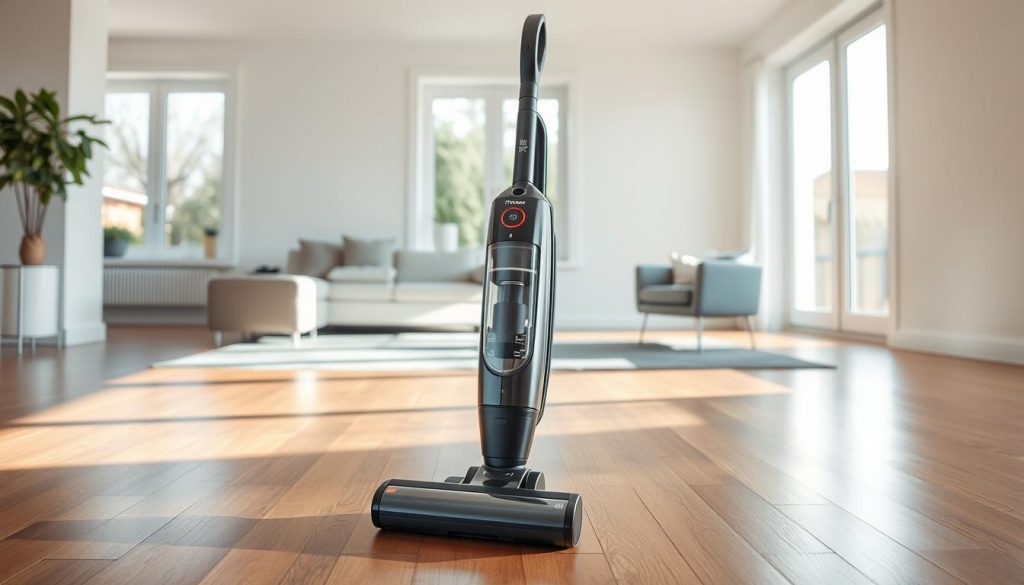
Best overall: Tineco Floor One Switch S7 Stretch
For all‑round performance in compact flats, the Tineco Floor One Switch S7 Stretch tops our list. It blends smart sensing, strong suction and a flexible system so one tool replaces several in daily use.
iLoop sensor technology for wet and dry messes
iLoop sensors detect mess type and adjust water flow and suction automatically. That reduces overwetting while still lifting dirt and residue effectively.
Dual-side brush roller for edge cleaning close to walls
The dual-side brush reaches about 0.5cm from skirtings. This edge cleaning cuts the need for extra hand work along walls and tight corners.
Switchable system: floor washer to stick vacuum
The unit converts to a stick for quick dry runs on rugs and stairs. Suited to mixed floors, it helps households that want fewer appliances.
Key specs and ownership notes
Specs: 1,000ml clean water tank, 720ml dirty water, 22,000 Pa suction, 4.7kg, up to 50–70 minutes depending on mode and use.
Large tanks reduce refill frequency but add weight. For Singapore flats, the balance of capacity and handling makes the tineco floor choice especially practical.
See the full product page: Tineco Floor One S7 Stretch.
Best for hot water cleaning: Dreame H15 Pro Heat
If stubborn oil stains are your chief concern, a model with hot water mopping is worth close attention. The Dreame H15 Pro Heat uses heated water at 85°C to loosen grease and sticky residue during a single pass.
How heated mopping improves stain removal
At 85°C the hot water helps dissolve oil and baked-on food faster. That reduces the need for hard scrubbing and speeds routine kitchen cleaning.
Design and edge reach
The unit offers triple edge cleaning and a flat-folding frame for access under furniture and tight skirtings. Auto-traction wheels aid manoeuvrability in small rooms.
Key specs and what they mean
22,000 Pa suction; 800ml clean water tank and 650ml dirty water tank; up to 70 minutes in normal mode and roughly 25 minutes in hot water mode. Charge time is about four hours.
What to consider for hard floors
We note the H15 is heavier at around 6kg and the hot setting can be harsher on timber finishes. Use lower modes and short passes on wooden floors to avoid excess moisture or heat damage.
“We recommend this model for kitchens where oil and sticky spills are frequent, but advise care on sensitive timber.”
Most manoeuvrable: Narwal S20 Pro
For small flats, true manoeuvrability means a head that pivots, not just a lower weight. The Narwal S20 Pro pairs a slim, flat-folding frame with a responsive steering angle. That lets it track furniture lines and follow corners without repeated passes.
AI Dirt Sense technology and five cleaning modes
AI Dirt Sense adjusts suction and water delivery automatically. This saves battery life by stepping up power only where needed.
Five modes cover light dust, daily mess, entryway grit, kitchen patches and deep clean. We use low for quick upkeep and high for stubborn dirt near doors.
Triple-sided edge cleaning for corners
The triple-sided brush reaches skirting and corners more effectively than single-head designs. That reduces the usual streaks left after a single pass.
Key specs and practical meaning
| Spec | Value | What it means |
|---|---|---|
| Clean water tank | 790 ml | Fewer refills for a medium flat |
| Dirty water tank | 720 ml | Balanced capacity for longer sessions |
| Suction | 20,000 Pa | Strong lift across hard floors and rugs |
| Runtime / Charge | Up to 60 minutes / 3.5 hours | Often covers a full tidy in one charge |
Note: the unit lists hot water support; buyers should confirm settings for timber floors before routine use.
For full specs and launch details see the Narwal S20 Pro release.
Best for pet hair: Bissell CrossWave X7 Cordless Pet Pro
For households with pets, a targeted model makes daily fur pickup faster and less of a chore. We recommend the Bissell CrossWave X7 Cordless Pet Pro when hair, tracked dirt and occasional sticky patches are routine.
Turbo Pet mode for hair, dirt and stubborn messes
Turbo Pet mode boosts suction and meters cleaning solution to lift fur and set-in grime. Switch to this mode for clumps of hair or sticky patches; expect shorter runtime — around 30 minutes on a full charge.
Works across hard floors and rugs
The unit handles sealed hard floors well and will cope with low-pile rugs. On deeper piles we advise spot cleaning and lower liquid use to avoid overwetting. This keeps fibre and backing in good condition.
Tank layout, solution advice and ownership notes
The 820ml clean water tank plus 420ml dirty water means fewer refills of fresh mix, but you may empty the dirty water more often during heavy pet sessions.
We suggest using Bissell-approved cleaning solution to reduce odour and help pickup. Follow manufacturer guidance to protect seals and brushes.
| Spec | Value | Notes |
|---|---|---|
| Suction | Up to 20,000 Pa | Strong for hair and grit |
| Clean / Dirty tank | 820 ml / 420 ml | Balanced for short sessions |
| Runtime | Up to 30 minutes | ~4-hour charge time |
Who should buy: ideal for “pawrents” needing a single device that tackles hair and daily messes. Who should not: those needing over 30 minutes of continuous wet dry vacuum cleaning — consider a longer runtime model instead.
Best budget pick: Simplus Cordless Wet-Dry Vacuum Cleaner
A sensible entry-level option balances good suction with straightforward controls for everyday cleaning. The Simplus model aims at households that want compact storage, reliable water tank handling and enough runtime to cover a full HDB or condo tidy without overspending.
Strong suction and practical runtime for full-home sessions
21,000 Pa suction gives this unit the lift needed for grit, hair and light spill residue. With up to 50 minutes of runtime, most one‑bed and two‑bed flats can be done in a single charge.
Charge time is about 4.5 hours. We find that this battery profile suits weekly deep tidies and daily touch‑ups.
Brush head width and 180° flat-folding for tight areas
The 6.5cm brush head fits close to skirtings and under low furniture. The 180° flat‑folding hinge lets the head slide into tight gaps along cabinet toe‑kicks and balcony thresholds.
Key specs and ownership trade-offs
Key specs: 500ml clean water tank, 550ml dirty water tank, weight ~4.4kg and simple mode selection. The balanced tank sizing is compact for storage yet large enough for routine sessions.
We note trade-offs at this price: fewer smart sensors and simpler controls. For many Singapore households this means less tech to fault and easier maintenance.
“Good suction, sensible runtime and compact tanks make the Simplus a strong starter choice for new homeowners and renters.”
| Spec | Value | What it means |
|---|---|---|
| Suction | 21,000 Pa | Strong pickup for common debris and dirt |
| Clean / Dirty tank | 500 ml / 550 ml | Balanced for short full‑home runs |
| Runtime | Up to 50 minutes | Covers one session in many flats |
Best low-maintenance option: Dibea H8
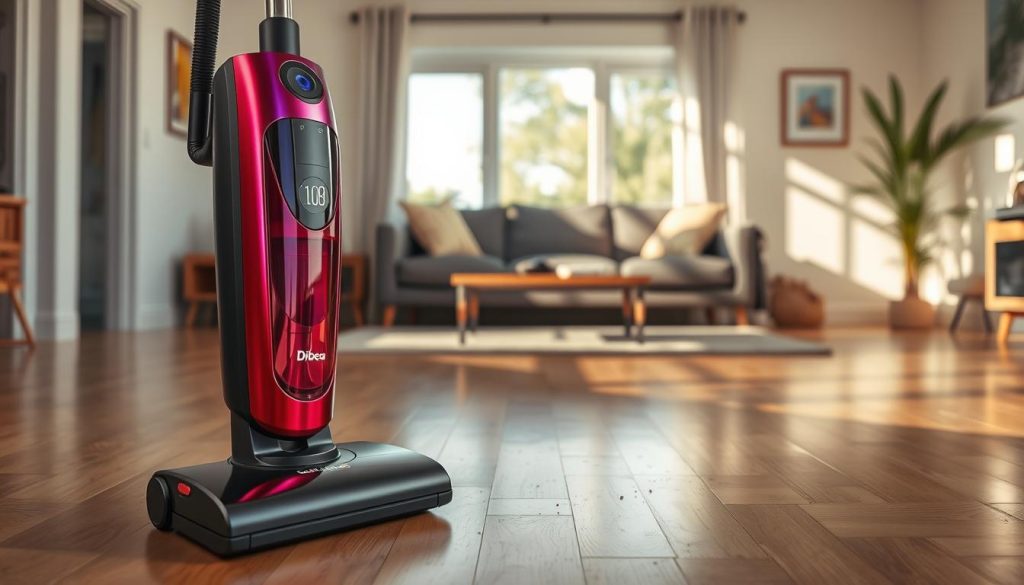
Not every household wants feature overload; many favour a reliable system that simply works with little upkeep. The Dibea H8 is aimed at buyers who prefer fewer chores after a session. It reduces post‑use faff while still delivering steady performance on common floors.
Built‑in self‑cleaning system and power adjustment
The built‑in self‑cleaning system rinses the roller paths and internal channels after use. That lowers manual maintenance; we still empty and rinse the tanks, but less brushing is needed.
Power adjustment lets us use lower power for light messes to preserve battery and step up when dirt is heavier. This saves time and extends useful minutes per charge.
Cleaning modes for wood, marble and ceramic tile floors
Multiple cleaning modes tailor water and suction to each surface. Use the gentle mode for timber, a standard mode for marble, and a higher setting for ceramic tiles. This helps protect hard floors while keeping pickup effective.
| Spec | Value | Meaning |
|---|---|---|
| Suction | 13,000 Pa | Good for daily debris |
| Clean/Dirty tank | 500 ml / 600 ml | Compact tanks for weekly runs |
| Runtime | Up to 38 minutes | Covers a typical one‑bed flat in auto mode |
Who should buy: households that value convenience and steady cleaning performance over peak suction figures. For Singapore flats where regular upkeep beats infrequent deep cleans, the Dibea H8 offers a practical, low‑maintenance system for everyday use.
Best for larger tank capacity: Dibea HC26
Larger, balanced tanks cut interruptions and make whole‑home passes far more efficient. The Dibea HC26 pairs a 700ml clean water tank with a 700ml dirty water tank to reduce stops for refills or emptying during one session.
Why balanced capacity matters
With matched tank capacity, we top up less often and avoid the common problem of a full dirty tank forcing an early stop. For bigger flats or families this design lowers total cleaning time.
Reach, handling and real use
The HC26 adds a slightly longer handle — about 568mm versus 538mm on the H8 — which helps taller users and improves reach under furniture. The unit is lighter and more manoeuvrable, so we cover rooms faster with fewer passes.
Runtime and practical notes
Expect up to 38 minutes in auto mode and roughly a 4.5‑hour charge. In practice, the larger tanks pair well with this runtime to let us finish a typical Singapore flat without repeated interruptions.
We focus on performance and ergonomics here rather than fixating on a single suction figure. For buyers who value smoother coverage and fewer stops over extra tech bells, the HC26 is a sensible price‑aware option.
Best for odour control: Shark HydroVac WD210SM
For many households, preventing lingering smells is as important as suction or runtime. The Shark HydroVac WD210SM focuses on odour resistance while keeping handling light and practical.
Antimicrobial brush rollers reduce bacterial build-up on the roller path. This helps limit smells that form when damp fibres hold dirty water after a session.
What the antimicrobial approach does
The coated brush aims to slow microbe growth rather than remove the need for care. We still recommend emptying and rinsing the tank promptly to avoid residual odour.
Key specs and trade-offs
- Clean water tank: 500ml
- Dirty water: 360ml — lighter to carry but needs more frequent emptying during heavy messes
- Runtime: up to 30 minutes; weight ~3.9kg; ~4-hour charge time
Who benefits most? Pet owners, frequent cooks and anyone sensitive to lingering smells on floors. For these groups, odour control can outweigh a longer runtime or higher price.
Practical tips: empty the dirty water tank right after use, run a quick rinse cycle, and let the brush dry between sessions to keep the system smelling fresh.
Does Dyson have a wet and dry vacuum in Singapore?
Yes — Dyson sells Submarine-style models locally that combine two-tank water handling with stick-format design. We test three main offerings: the V12s Origin Submarine, V12s Detect Slim Submarine, and Dyson Digital Slim Submarine.
Why Dyson tends to cost more
Dyson’s pricing reflects heavy R&D investment and proprietary technology. Engineers refine cyclonic suction, battery management and filtration systems. That development raises product cost but delivers sustained suction and cleaner exhaust for allergy-sensitive homes.
V12s Origin Submarine — lightweight with cyclonic suction
The V12s Origin is light at 2.2kg and uses cyclonic airflow for strong lift. It has a 300ml clean water tank and a 360ml dirty water tank.
Performance: 130 Air Watts, up to 60 minutes runtime, 3.5-hour charge. It suits small flats and frequent, short sessions.
V12s Detect Slim Submarine — HEPA focus and Fluffy Optic head
This model adds HEPA filtration and a Fluffy Optic head that reveals fine dust. It boosts lift to 140 Air Watts and weighs 3.1kg.
Specs mirror the Origin on tanks and runtime: 300ml clean, 360ml dirty, up to 60 minutes, 3.5-hour charge. Choose this version if airborne allergens matter most.
Digital Slim Submarine — lightest option, runtime trade-off
The Digital Slim is the smallest in the range. Its portability helps quick spot work but the runtime drops to about 40 minutes. Expect a balance of low weight versus shorter sessions.
“Dyson delivers refined suction, filtration and battery systems; the choice comes down to weight versus runtime and whether HEPA is a priority for your home.”
| Model | Clean tank (ml) | Dirty tank (ml) | Air Watts | Runtime (mins) |
|---|---|---|---|---|
| V12s Origin Submarine | 300 | 360 | 130 | 60 |
| V12s Detect Slim Submarine | 300 | 360 | 140 | 60 |
| Digital Slim Submarine | 300 | 360 | — | 40 |
How to choose: prefer Dyson for superior filtration and engineered suction. For longer sessions or larger flats, our earlier non-Dyson picks may give better tank size, runtime and price value.
How to choose a wet and dry vacuum cleaner cordless for your space
Pick with purpose: decide whether runtime, tank capacity or filtration will matter most in daily use. We start from your flat size and habits, then match features to those needs so the unit gets used, not shelved.
Tank capacity: match size to mess frequency
Smaller flats do well with compact tanks to save storage space. Bigger families or heavy cooks benefit from larger tank capacity to avoid constant stops.
Tip: a too-small tank forces frequent refills; a too-large tank adds bulk and weight for stair use.
Suction power and what it means
Higher Pa or Air Watts usually lifts more debris and hair from rugs. But efficiency depends on brush design and airflow; raw numbers alone do not guarantee better cleaning.
Battery: runtime, modes and charging
Compare stated minutes across modes. Eco mode extends uptime; boost mode shortens it. Consider charge time: a long recharge can disrupt weekly routines.
Edge cleaning and reach
Corners and skirting boards trap hair and dust. Look for dual-side rollers, narrow brush heads or edge channels for better results close to walls.
Hard floors vs rugs
Use gentler modes on timber to avoid overwetting. For rugs, choose machines with stronger suction and suitable brushes to lift embedded dirt without soaking fibres.
Noise level, filters and accessories
More power usually means more noise; quieter operation matters in apartments with nap times or late cleaning. HEPA filters help allergy sufferers by trapping fine particles.
Accessories — extra brushes, crevice tools and a multi-surface kit — expand usefulness and reduce the need for separate devices.
“Start with your space and cleaning habits; the best system is the one you reach for every week.”
| Consideration | What to check | Practical outcome |
|---|---|---|
| Tank capacity | Clean/dirty tank size | Fewer refills vs easier handling |
| Suction | Pa / Air Watts + brush design | Better lift on rugs and debris |
| Battery | Runtime by mode; charge time | Session coverage and scheduling |
| Filters | HEPA vs standard | Allergen control vs lower cost |
Conclusion
The best choice balances real use with upkeep. A wet dry vacuum can replace several steps in a routine, but it adds weight and storage needs. Match features to your flat, floors and cleaning time.
Our top picks suit different priorities. For an all‑round solution we favour the Tineco Floor One S7 Stretch and the tineco floor approach for balance of power, tank size and ease of use. Dyson’s V12s Origin Submarine is lighter and more manoeuvrable. The Narwal S20 Pro wins for tight turns and smart modes.
Hot water cleaning pays off for stubborn kitchen grime but can stress sensitive finishes. Prioritise edge cleaning, timely tank hygiene and measured runtime over headline specs; these decide day‑to‑day satisfaction.
Quick decision shortcut: pick by mess profile (dirt/debris vs sticky spills), floor mix (floors and rugs) and whether a robot vacuum already covers daily dust. Finally, match price to the features you will use weekly and avoid paying for unused technology.

