
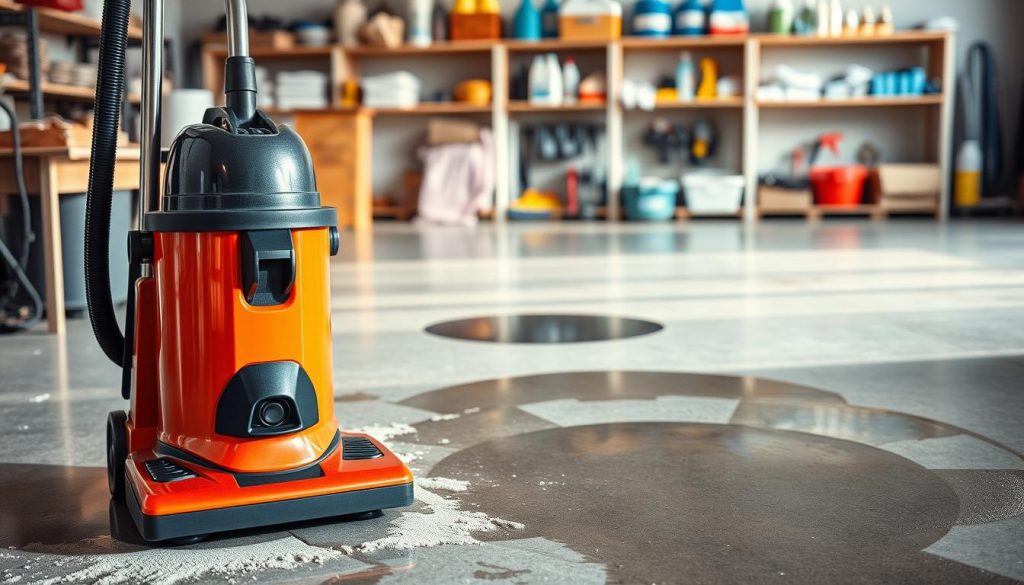
Singapore life runs fast. With around 42 hours of work a week, we need faster floor care that fits our routines. A modern wet dry vacuum offers a middle ground by tackling crumbs and spills in one pass, saving time at home.
In this guide we will set clear expectations. We explain why the wet dry approach has become a practical upgrade for busy households that want consistent results without swapping tools.
We define the everyday problems we solve: crumbs, hair and small liquid mishaps that grow into bigger chores when separate appliances are used. We also outline the features to prioritise and how to match a model to home size and habits.
Our aim is to help you shortlist the right vacuum cleaner type and avoid paying for unused functions. Terminology varies across retailers, so we clarify the common labels.
Share this with family or housemates: the best results come when everyone knows how to refill, empty and dock the unit correctly.
Why wet & dry cleaning matters in Singapore homes
Busy city life pushes us to pick appliances that save time without cutting results. With around 42 hours of work each week, quick upkeep fits our routines better than long chores.
Busy schedules and faster routines for everyday messes
We often skip a full mop after a long day. A dual-mode machine helps us finish light cleaning fast. This means crumbs and small spills get dealt with before they set.
Compact layouts, humid floors, and less storage for tools
Many flats have limited space and few cupboards. Storing fewer items keeps the home neater. Humidity and barefoot traffic also make floors feel grimy sooner, so frequent quick cleans boost comfort.
One-pass cleaning for crumbs and spills without the mop-and-bucket juggle
One pass sessions cut decision fatigue. We no longer fetch a bucket, swap heads, then return everything to storage. That simplicity increases cleaning frequency and improves hygiene.
| Everyday need | Traditional approach | Dual-mode benefit |
|---|---|---|
| Crumbs after meals | Vacuum then mop | Pick up and wash in one run |
| Small liquid spills | Grab a bucket and mop | Absorb and extract quickly |
| Storage limits | Multiple tools in cupboards | Less space used, easier access |
what is dry and wet vacuum cleaner
A true 2‑in‑1 floor machine combines suction and rinsing so solids and spills are handled in one pass.
We define this category as a combined unit that picks up crumbs, hair and light liquid mishaps while also washing the surface. It is more than a mop add‑on; the design extracts moisture instead of pushing it around.
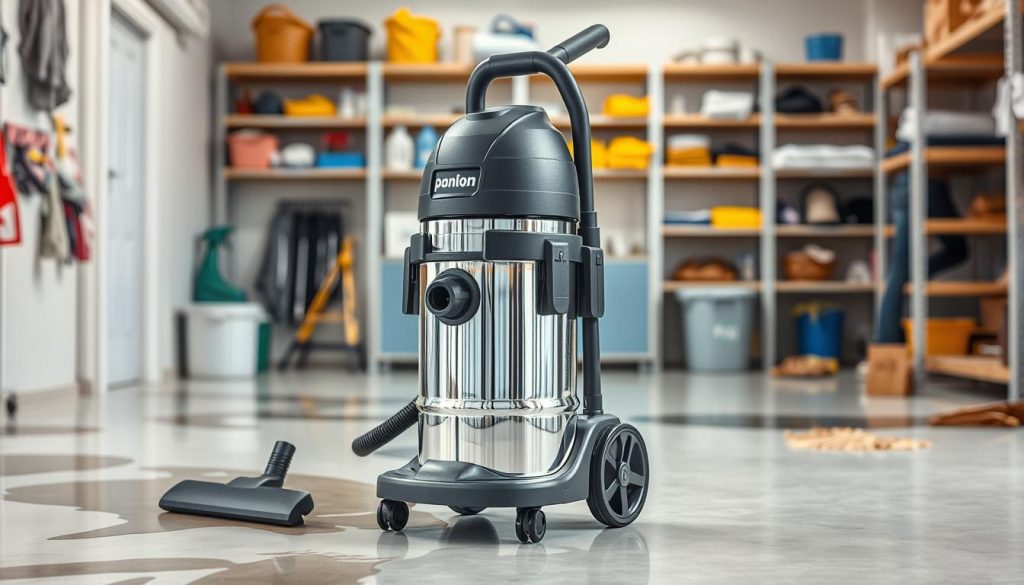
The simple definition: vacuum + floor washer in one appliance
Two actions, one route: a wet dry vacuum uses a dispensing head that lays down a measured amount of solution, scrubs with a roller, then suctions the result into a separate tank.
Key parts that make it different
- Dual tanks — one for clean water, one for dirty water so hygiene stays better.
- Brush or roller — agitation lifts sticky residue so the suction can remove it, not smear it.
- Sealed airflow system — built to handle moisture safely and protect motor life.
“A proper 2‑in‑1 removes both debris and spills without swapping tools.”
| Feature | Benefit | Best use |
|---|---|---|
| Dual tanks | Keeps rinsing solution separate from waste | Hygienic daily cleans |
| Brush/roller | Breaks grime for complete pickup | Sticky kitchen patches |
| Sealed airflow | Reduces moisture damage | Frequent wet runs on hard surfaces |
These machines handle crumbs, grit and hair clumps best on sealed hard floor types. For heavy dust loads we may still choose a dedicated dry unit.
How a wet dry vacuum cleaner works
A single pass does several jobs at once: dispense solution, agitate grime, then extract residue into a tank.
- Dispense — the head sprays measured clean water or a mild solution onto the floor.
- Scrub — a brush or roller agitates soiling to lift stuck-on matter.
- Extract — suction pulls water and suspended debris into the dirty tank for disposal.
Clean water versus dirty water
Separate tanks keep rinse water clean. That prevents us from re-laying used waste across the floor. It also reduces odour and cross-contamination in daily runs.
Why suction performance beats wattage alone
Suction success depends on sealed head contact, steady airflow and roller pressure as much as motor power. Good design moves more liquid per pass than raw watts alone.
Brush design, filtration and self-cleaning
Brush width, bristle softness and edge reach affect results near skirtings and chair legs. Filters and foam guards protect the motor when water enters the system.
Self-cleaning cycles flush rollers and channels at the touch of a button. This cuts odours and makes daily use simpler.
“The unit dispenses, scrubs, then suctions — all in one route.”
| Stage | Purpose | Practical benefit |
|---|---|---|
| Dispense | Apply measured clean water or solution | Controlled wetting, less over‑saturation |
| Scrub | Agitate grime with a roller or brush | Breaks residue for effective pickup |
| Extract | Suction liquid and debris into dirty tank | Faster drying, hygienic waste capture |
Safety note: avoid hot liquids. Use cool or lukewarm spills only to protect seals and the motor.
Wet dry vacuum vs dry vacuum cleaner: which do we need?
Choosing the right tool depends on our daily mess mix and how fast we expect floors to feel clean again.
When a dry unit is enough
If most dirt is loose — dust, hair and crumbs — a dedicated dry model serves well. It is usually lighter, cheaper to run and simple to maintain.
We empty a bin and care for filters; there is no tank rinsing or extra rinse steps. For bedrooms and carpeted rooms, this often covers our needs.
When the dual-action option wins
For kitchens, dining spots or households with kids and pets, a wet dry vacuum handles spills, sticky patches and greasy films in one route. It leaves hard floors nearer to dry after a single pass.
Practical trade-offs and pairing
Expect more post-use work: rinsing the dirty tank and rollers. A common smart split is a dry unit for bedrooms and a wet dry for meal areas.
“One pass that lifts solids and extracts liquids saves a mop-and-bucket return later.”
For a detailed comparison, see our guide on wet-dry vs regular units.
Where a wet dry vacuum shines in real life
Everyday spills and scattered crumbs shape where a dual-action floor tool earns its keep. We mapped common Singapore home messes to see where a one-pass machine saves time and reduces fuss.
Kitchens and dining: soup drips, coffee spills, and crumbs
After meals we face crumbs, sauce spots and coffee drips. A single pass that scrubs then extracts beats wiping then switching devices. This speeds cleaning in compact kitchens.
Pet messes: water-bowl splashes, muddy paw prints, and fur tumbleweeds
Pet zones collect water splashes, mud and clumps of hair. The dual-action unit lifts wet grit and fur at once. We spend less time chasing tumbleweeds into corners.
Entryways on rainy days: grit and wet footprints
Rain brings grit that sticks to floors. Extracting liquid rather than spreading it lowers slip risk and stops tracks from travelling through the flat.
Quick resets before guests: cleaner floors in minutes
For short-notice visits, a fast run across typical apartment floors takes only minutes. We keep a standard upright for rugs, while using this device as our daily hard-floor workhorse.
| Room | Common mess | Value |
|---|---|---|
| Kitchens | Crumbs, sauce, coffee drips | One-pass scrub and extract |
| Pet zones | Water splash, mud, hair | Combined pickup of wet and solid debris |
| Entry | Wet footprints, grit | Safer, faster reset |
What to look for when buying the best wet dry vacuum in Singapore
A focused checklist helps us match capacity, runtime and storage to real apartment life.
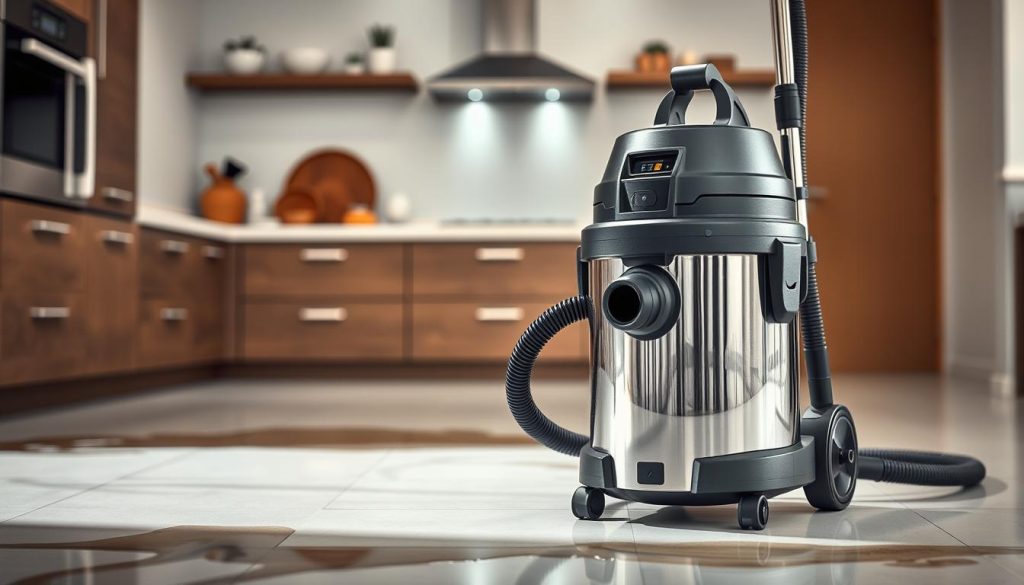
Tank capacity and weight balance
Choose roughly 500–700 ml per tank for compact flats. That size reduces refill trips while keeping unit weight manageable during use.
Runtime and charging habits
Aim for 20–30 minutes of continuous runtime. That usually covers a one‑bedroom or small two‑bed flat for a single quick clean.
Manoeuvrability and reach
Look for swivel steering, a lay‑flat head and a slim brush to get under sofas and into toe‑kicks without fuss.
Water flow control and suction
Variable flow lets us switch from light dampening for dust pickup to higher flow for sticky patches.
Consistent suction and correct brush pressure lift grime instead of leaving streaks.
Noise, hygiene and upkeep
Pick washable filters, sealed tanks and designs that cut odour while docked. Check spare part price for rollers and filters.
“Practical features beat raw power when daily use and storage matter most.”
| Feature | Why it matters | Recommended spec |
|---|---|---|
| Tank capacity | Refill frequency vs weight | 500–700 ml per tank |
| Runtime | Complete apartment runs | 20–30 minutes |
| Manoeuvrability | Ease under furniture | Swivel head, low profile |
| Maintenance | Ongoing cost and hygiene | Washable filters, affordable rollers |
Shortlist method: rank models by must‑have features (capacity, runtime, manoeuvrability, suction) then compare price and extra designs that are nice‑to‑have. This helps us pick the best wet dry option for our space without overspending.
Floor types, cleaning solutions, and safe-use tips
Floor material and moisture control decide whether a multi‑function unit gives great results or causes damage.
Best surfaces for daily runs
Tile, sealed hardwood, laminate and vinyl take well to low‑flow passes. Extraction leaves floors near dry after one run.
Surfaces we treat with caution
Avoid unsealed wood and untreated stone; they absorb water and stain. Check the manufacturer before using on rugs or unsupported carpet.
Using clean water and cleaning solution safely
Fill the tank with clean water and add only compatible cleaning solution at the recommended dilution. Too much soap causes foam and blocks channels.
“Control flow, use measured solution, then rinse tanks to keep odour and wear down.”
- Approach spills from the outer edge toward the centre for full pickup.
- Make slow passes on sticky spots, then a quick second pass if needed.
- Empty dirty water promptly, rinse the tank, and air‑dry parts before storage.
| Tip | Action | Benefit |
|---|---|---|
| Controlled flow | Lower spray setting for sealed wood | Less warp, fewer streaks |
| Clean water | Use fresh water for each run | Better pickup, less odour |
| Waste handling | Pour into sink slowly, rinse tank | Cleaner work, hygienic storage |
Safe habits extend roller life and keep floors looking better for longer.
Conclusion
Practical wins come from pairing a device to room use, storage and the time we can spare, which protects value and delivers faster results.
If our daily life includes crumbs, coffee spills or pet mishaps, a dual‑action unit makes sense. If most dirt is loose dust, a dry‑only model may serve better. For mixed needs, we can keep a compact vacuum cleaner for rugs and a scrub‑and‑extract device for hard floors.
Quick decision in 30 seconds: choose by room use, tank size, reliable suction and easy upkeep. Factor in total price — parts, filters and the weekly minutes saved. Finally, share routines with household members so emptying, rinsing and docking stay consistent for cleaner floors every day.

