
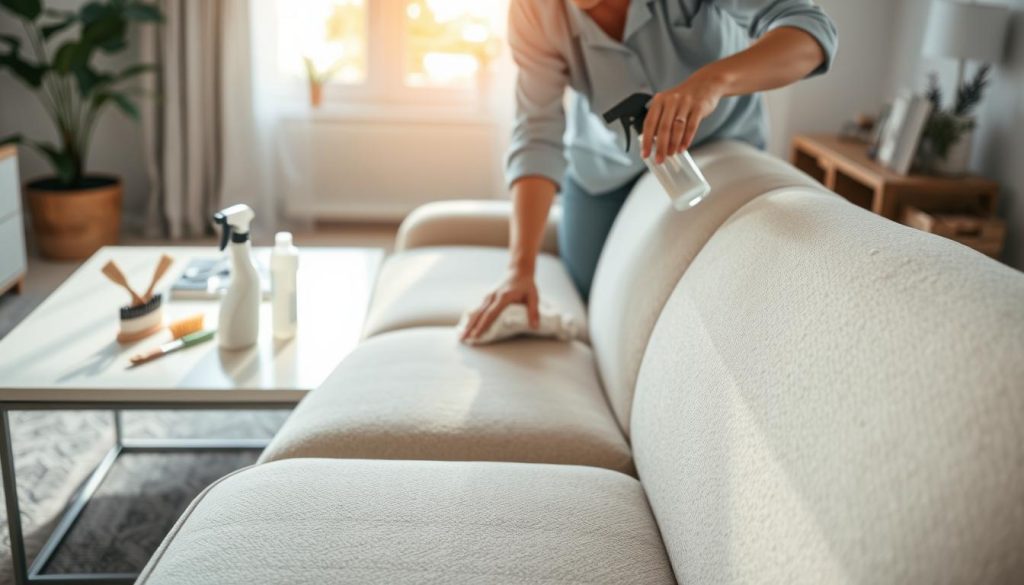
We outline a practical, gentle approach to revive soft, suede-like seating in real Singapore homes. We begin by removing dry debris, then choose the safest wet or solvent method based on the label and a small patch test.
Our process is progressive: we always start with the gentlest option to protect the fabric nap and reduce risks like water spots or colour loss. This helps avoid residue build-up and keeps your upholstery feeling fresh.
By the end you will have clear, usable instructions for a quick freshen-up and for tackling more stubborn marks. We list a simple toolkit: vacuum attachment, crevice tool, soft cloth, mild soap and, only when suitable, rubbing alcohol or a solvent.
We follow label directions and patch testing as non-negotiables. Later sections explain when high-pressure steam or bleaching agents may be risky and why gentler care is usually best for furniture longevity.
Why microfiber sofas get dingy over time in Singapore homes
Small amounts of dust and crumbs build up over weeks in tropical homes. Left unchecked, this slow accumulation makes a couch look tired even when there are no big stains.
We often find pet hair trapped in the nap and snack debris lodged in seams. Drink spills can dry into faint rings if not blotted promptly. These everyday marks sit on the surface and dull light fabrics.
Common culprits on couches
- Fine dust from urban air that layers on fibres.
- Food crumbs and grease from snacks that penetrate nap.
- Pet hair and body oils that cling and mat over time.
Why some spills behave differently
The dense weave of this fabric makes many liquids bead up, which gives us time to blot rather than soak. This barrier often makes routine cleaning easier than for suede or linen.
Exception: oil-based stains such as grease or makeup can bind to fibres and darken patches. These need solvent methods rather than water alone.
| Mess type | Typical behaviour | Best immediate step |
|---|---|---|
| Dust & dirt | Forms a dull film on surface | Vacuum or lint-roll to lift |
| Water-based spills | Often beads up if acted on fast | Blot; avoid rubbing |
| Grease / oil stains | Penetrates fibres and darkens | Use solvent-safe method after testing |
Quick tips: remove loose debris first, blot spills immediately, and match your method to the stain type for the best results.
Check the cleaning code tag before we clean microfiber upholstery
Before we touch a stain, we look for the label that tells us the proper care code. Locating the tag protects the fabric and avoids costly mistakes.
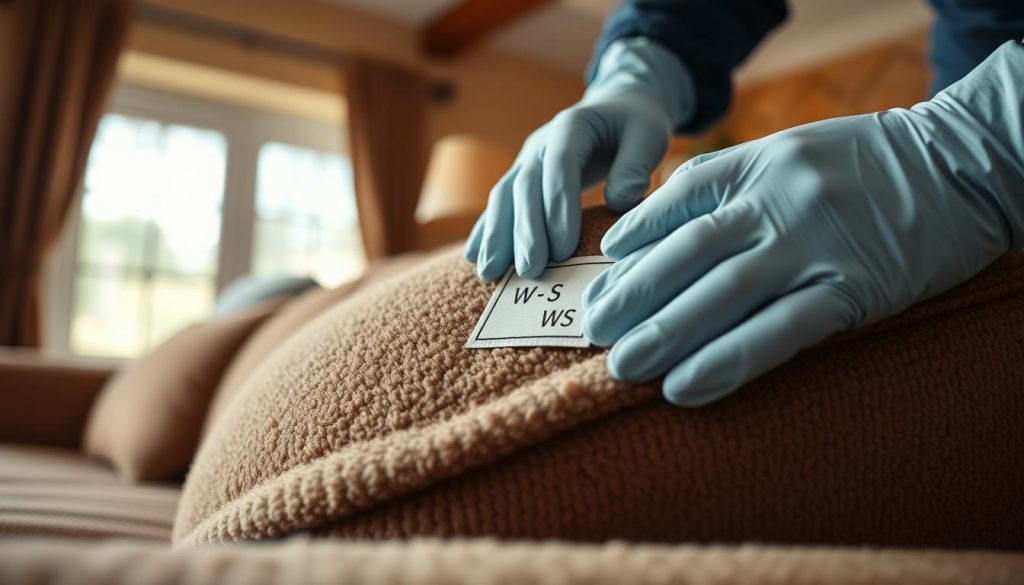
Where to look: check under-seat cushions, along the underside of the frame and near the base where manufacturers place the care label. If cushions are removable, the tag is often stitched to the cushion seam.
What the codes mean and how we act
W = use water-based solutions only. S = solvent-only; no water. W/S = water or solvent are acceptable. X = vacuum or light brushing only.
“Start with the least aggressive option; test small areas before expanding.”
We connect each code to a real decision: water for W, solvent for S, or dry methods for X. If a tag is missing or unreadable, we treat the item as delicate and begin with dry methods and spot tests.
| Code | Allowed method | Immediate step | Risk if ignored |
|---|---|---|---|
| W | Water-based cleaners | Blot with mild soap solution | Watermarks or dye run |
| S | Solvent (no water) | Patch-test alcohol or solvent | Fabric hardening or staining |
| W/S | Water or solvent | Choose gentlest first; patch-test | Colour shift if misused |
| X | Vacuum / brush only | Remove dry debris; avoid liquids | Permanent damage from liquids |
Prep the sofa for a proper clean
We always start prep by removing loose grit to avoid smearing when we treat stains. A thorough dry pass makes later steps safer and more effective. Prep is where most results come from.
Lift dirt, dust and hair with the right tool
We vacuum the entire couch using an upholstery attachment. Work the back, arms, skirt and both sides of each cushion to lift embedded dust and hair.
Work seams, buttons and hidden areas
Use a crevice tool to reach seams, piping, buttons and the area under cushions where crumbs collect. Remove cushions and vacuum underneath; this prevents odour and stops grit from becoming mud during wet work.
Quick refresh between deep cleans
For fast upkeep in Singapore flats, a weekly vacuum pass helps reduce dullness. Between sessions we run a lint roller over the surface or use a clean microfiber cloth dry to gather fine dust.
“When dry debris is gone, stain work is more controlled and uses less product.”
Microfiber sofa cleaning with water-based methods for W and W/S fabrics
When a tag allows water, we use a measured, low-moisture approach to treat marks safely. This method is only for W or W/S coded fabric; water can permanently mark S-coded upholstery.
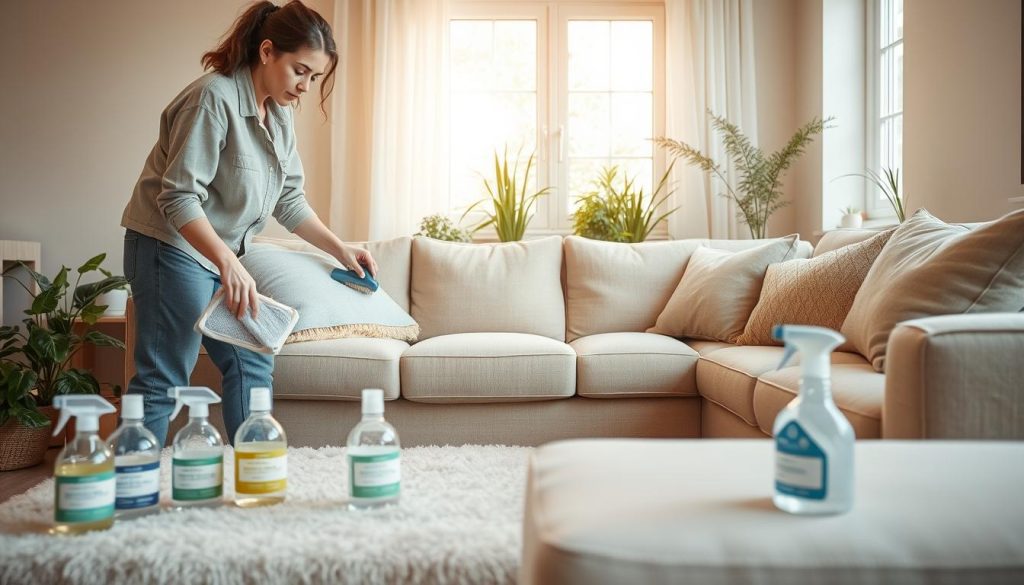
Mixing a gentle solution
We make a DIY mix: ¼ teaspoon mild dish soap in 1 cup warm water. Use a small amount of soap so the solution rinses easily.
Test a hidden area first
Always patch-test in an out-of-sight area. Check for colour loss, pile change or water spotting before you treat visible panels.
Blotting and gentle agitation
For a stain, blot from the outside in with a wrung cloth to prevent spread. Keep pressure light to protect the nap.
Gently agitate with a soft-bristled brush or a microfiber cloth to lift soil, then blot up loosened grime rather than scrubbing.
Optional wipe-down and finishing tips
To reduce residue, dab with a clean, slightly damp cloth and blot dry with a second cloth. Work in small areas and never saturate the fabric or foam.
“Dampen, wring and blot — control the moisture and test first.”
| Step | Action | Why it matters |
|---|---|---|
| Mix | ¼ tsp soap + 1 cup warm water | Small dose avoids residue |
| Test | Hidden area for 10 minutes | Prevents surprises like colour loss |
| Treat | Blot outside→in; gentle brush | Keeps stain from spreading |
| Finish | Damp-wipe and blot dry | Reduces soap residue and spots |
Note: removable covers may be machine-washable—follow label instructions and avoid fabric softener to keep fit and texture.
Solvent-safe stain removal for S-coded microfiber
When the care tag reads S, we do not use water. Instead, we apply solvent methods that dry quickly and keep pile texture intact.
Using rubbing alcohol correctly for spot cleaning and fast drying
We pour rubbing alcohol onto a clean cloth, never directly onto the fabric. Dab the spot gently and repeat with a fresh cloth until the mark lightens.
Blot, don’t scrub: avoiding damage to the fabric nap
Blotting prevents abrasion. Rubbing roughens the nap and can leave a permanent patchy area. Work from the outside in and check the area as it dries.
When a dedicated solvent-based upholstery cleaner is the safer choice
For oily or widespread stains, or when the manufacturer names a product, we use a dedicated solvent cleaner such as a dry-clean fluid. Patch-test first, ensure ventilation and keep solvents away from flames.
“Work in small sections and re-check after drying; set stains may need professional extraction.”
For extra guidance on methods and tools, see our notes on professional approaches: how to clean microfiber upholstery and a practical write-up on treating large areas: how to clean microfiber couch.
Deep clean options for a more thorough refresh
If light methods fail to remove ingrained grime, a targeted deep clean can restore pile and colour without replacing upholstery. We reserve this for overall dinginess, recurring stains or embedded dirt that resurfaces after spot treatment.
When a portable extraction cleaner helps
For water‑safe fabrics we use a portable extraction cleaner such as a BISSELL Little Green. The machine dispenses a measured solution, agitates with a brush head, then vacuums dirty water into a tank.
Key steps: work in small panels, make controlled passes, and avoid soaking cushions. Over‑wetting causes watermarks and slow drying in humid Singapore conditions.
Steam: gentle surface refresh versus risky pressure
Light steam from a handheld garment steamer can lift surface marks and revive pile when used sparingly. High‑pressure steam or prolonged heat, however, can distort fibres or set stains.
Decision rules: if the tag is S or X, skip water extraction and stick to solvent or dry methods. For W or W/S fabrics, proceed with extraction or gentle steam and always patch‑test first.
“Allow ample drying time after any deep clean; damp cushions breed odour and damage fabric over time.”
For a practical guide on using a carpet/extraction approach, see our walk‑through on deep clean with an extraction unit.
Drying, deodorising and sanitising after cleaning
After we finish spot work, drying and deodorising are the steps that decide the final look and smell of the couch. Give treated panels time to dry fully before reuse to avoid water lines, sticky residue and musty odours.
Air drying thoroughly to prevent marks and lingering damp smells
We blot excess moisture with a clean cloth to cut down drying time. Then we let the fabric air dry—ideally overnight—so fibres settle and any remaining residue evaporates.
Speeding up drying time with airflow at home
To speed drying, we place fans near the couch and open windows when the weather permits. In humid Singapore conditions, increased airflow matters more than heat. Avoid sitting on damp cushions until they feel completely dry.
Finishing with a fabric-safe sanitising spray and odour control tips
Once dry, we may apply a fabric-safe sanitising spray such as Tide Antibacterial Fabric Spray on water‑safe fabrics to reduce bacteria and freshen the piece sparingly.
For day-to-day odour control, a light dusting of baking soda left for an hour then vacuumed off or a measured mist of Febreze FABRIC works well. Always check for residue; if the area feels stiff, we brush the nap gently and re‑blot with minimal water where the care code allows.
“Drying comes first; deodorising only after the couch is fully dry.”
For step‑by‑step care on tougher stains and follow-up tips, see our how to clean a microfiber couch.
Conclusion
Good habits, swift action and the right code-based choices save time and expense. We check the cleaning code on the tag first, remove dry debris, then choose water or solvent methods based on the code.
Start with the gentlest method. Test solutions in a hidden area, blot stains — don’t scrub — and vacuum thoroughly before any wet work.
Allow full air drying in Singapore’s humidity; use fans and airflow to avoid damp odour. Regular vacuuming and quick spot care mean fewer deep interventions and a longer-lasting couch.
Follow these simple instructions and the code on the tag to keep fabric looking its best.

