

We offer professional mattress steam cleaning singapore designed to sanitise and refresh your bed without DIY guesswork.
Our service focuses on hygiene, allergen reduction and odour neutralisation. We set clear expectations: stain results vary by type and age, while visible freshness and reduced dust mite load are typical outcomes.
We use trained staff and industry-grade equipment that suit local humidity and drying realities. Prices vary depending on size and method, and we provide transparent quotes so you know the scope before booking.
Professional here means a structured process, material-safe methods for common beds, and guidance on cleaning needs by household type. We aim to improve bedroom air comfort and help you enjoy fresher sleep night after night.
Mattress steam cleaning singapore for a healthier sleep environment
Even when your bed looks spotless, invisible allergens can undermine a good night’s rest. We focus on what lies beneath the surface so you can breathe easier and wake without irritation.
What you can’t see in a “clean-looking” mattress
Surface tidiness is not whole-house hygiene. Deep layers often hold dust, dust mites and microscopic debris that regular vacuuming misses.
Why Singapore’s humidity makes deep cleaning more important
Warm, humid conditions slow drying and can encourage musty odours and mould if moisture stays trapped.
“Persistent damp can increase microbial growth and worsen allergy symptoms.”
Who benefits most from professional mattress cleaning
We recommend professional treatment for allergy-prone adults, children, households with frequent colds, and anyone who wakes congested or itchy.
- Measurable outcomes: less sneezing and wheezing, fewer musty smells, and cleaner bedroom air around the bed.
- We reduce common triggers such as mites and bacteria while advising medical concerns be raised with healthcare professionals.
Why professional mattress cleaning matters in Singapore homes
Routine upkeep rarely reaches the layers where most allergens hide, so professional attention matters.
Vacuuming alone isn’t enough for dust mites and embedded allergens. A domestic vacuum removes surface dust but leaves dust mites, their droppings and deep-seated particles inside the layers. These trapped irritants keep affecting sensitive sleepers night after night.
DIY sprays, lingering odours and slow drying risks
Many DIY products mask smells rather than removing their source. Sprays can leave residues, cause patchy marks and add strong scents that irritate some household members.
Humidity slows drying time. Excess moisture can sit inside layers and raise the risk of musty odours or mould growth, especially in poorly ventilated flats.
How deep cleaning supports better bedroom air quality
Professional deep cleaning targets what home methods miss. We use controlled moisture, targeted heat and optional extraction to lift and remove loosened dirt, residues and allergens.
Fewer airborne particles mean less disturbance around the bed and cleaner air while you sleep. Choosing the right cleaning service aligns cleaning needs—odours, allergies, stains—with methods that match each issue.
| Common Problem | Home Method | Professional Approach |
|---|---|---|
| Embedded dust mites | Vacuuming (surface) | HEPA vacuum + deep extraction |
| Lingering odours | DIY sprays | Neutralising at source with non-toxic solutions |
| Slow drying in humid weather | Air drying, fans | Controlled moisture, powerful extraction and quick-dry guidance |
Hidden hazards within your bed
Layers inside a bed trap tiny particles and organic matter that worsen air quality over time.
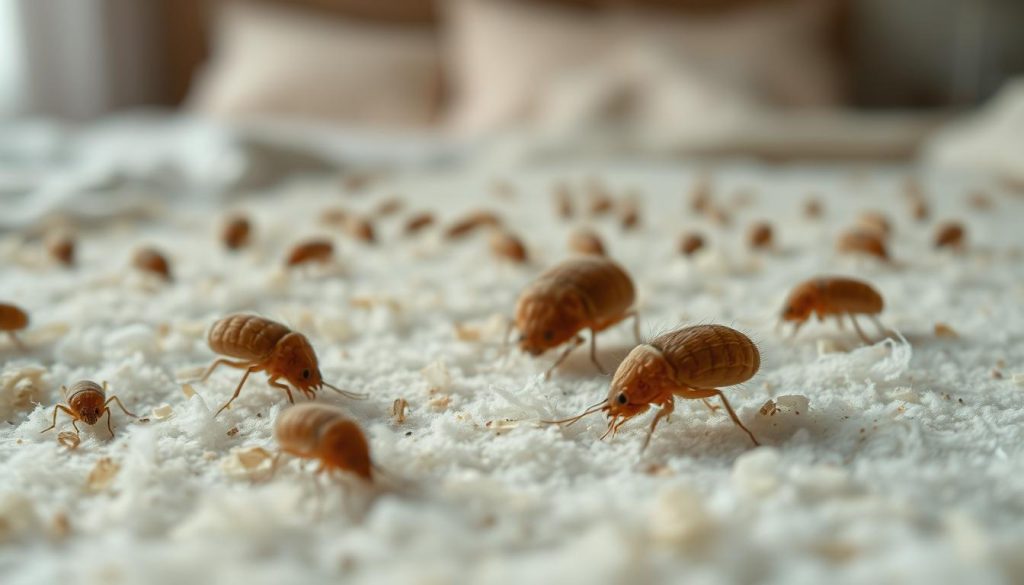
Dust mites and their waste
Dust mites and their faeces settle deep in fibres. These tiny organisms and the fine dust they leave can trigger allergic responses and make breathing uncomfortable.
Bacteria, germs and respiratory irritants
Body contact and trapped moisture encourage bacterial growth. We see microbes form in warm, poorly ventilated areas and add to respiratory irritation.
Sweat, body oils and shed skin
Sweat and skin flakes provide a steady food source for mites. Over time this mix attracts more dirt and can cause lingering odours if left untreated.
Mould, spores and airborne allergens
Warm, humid conditions can allow mould and fungal spores to develop. Poor ventilation raises the risk of musty smells and hygiene concerns.
Pets, pollen and everyday debris
Pets, pollen, renovation dust and tracked-in dirt all add to the particle load. Recognising these common contributors helps us plan effective mattress cleaning.
| Hidden Hazard | Common Source | Why it matters |
|---|---|---|
| Dust mites | Shed skin, dust | Allergy trigger; affects sleep quality |
| Bacteria & germs | Body contact, moisture | Respiratory and skin irritation |
| Mould spores | Humidity, poor ventilation | Musty odours; health concerns |
| Pets & pollen | Pets on bed, open windows | Adds dander and external particles |
Health risks a dirty mattress can contribute to
Accumulated particles and biological matter at the bed level can quietly affect breathing, skin comfort and rest. We review common effects that such soiling can contribute to rather than claim as direct diagnoses.
Allergic reactions, rhinitis, asthma flare-ups and wheezing
Allergies linked to dust and dust mites can cause sneezing, runny nose and watery eyes. In some households this mix can worsen rhinitis-type congestion and trigger asthma flare-ups or wheeze while asleep.
Skin irritation, eczema and rashes linked to allergens and bacteria
Contact with residues, sweat and microbes can aggravate sensitive skin. We see how bacteria and allergens may inflame eczema-prone areas and cause itchy rashes.
Coughing, sinus discomfort and disrupted sleep quality
When fibres release dust and mites, irritants become airborne and can irritate the throat or sinuses. This can lead to coughing, sinus discomfort and more night-time awakenings.
- Measurable effects we report: increased sneezing and congestion, more coughing fits, and skin flare-ups after prolonged exposure.
- Regular professional mattress cleaning supports cleaner air and reduces airborne triggers at the bed level.
“Keeping sleep surfaces hygienic is a practical step to reduce common triggers and improve sleep comfort.”
Our mattress cleaning services and what we remove
Our technicians target the hidden build-up that makes a sleeping surface feel stale, even after a fresh sheet.
We define clear deliverables: we remove dust particles, reduce common allergens and tackle the film of body residues that causes poor overnight air quality.
Allergens and fine particles
We use HEPA vacuums and targeted extraction to lift dust and particles from accessible layers.
This reduces airborne triggers and improves bedroom air.
Stains from sweat, spills and food residue
We treat sweat marks and fresh spills with suitable, non-toxic solutions.
Older or set-in stains may lighten rather than vanish; we give honest expectations up front.
Odours at the source
We neutralise odours by removing embedded residues and microbial causes rather than masking them with perfumes.
Dust mites, bacteria and microbes
High-temperature steam supports hygiene by reducing mites and killing bacteria in reachable layers.
“A targeted service can refresh your sleeping surface and give you cleaner air around the bed.”
- Safe solutions: we favour eco-friendly, non-toxic products for homes with children and sensitive sleepers.
- Value outcomes: fresher air, reduced odours and greater confidence in bedroom hygiene.
Our mattress steam cleaning process
We walk you through each step so you know what to expect and why each action matters.
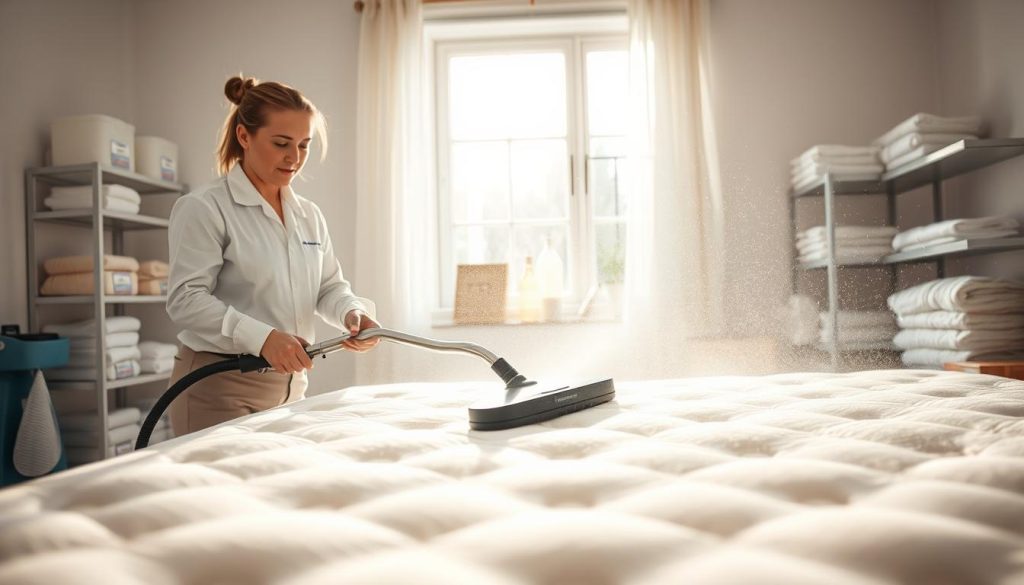
Inspection and assessment
We begin with a brief inspection to note fabric type, staining, high-contact zones and odours. This helps our team choose safe, effective solutions.
UV vacuum with HEPA filtration
Next we apply a UV dust-mite vacuum that uses HEPA-grade filters to capture fine dust and mites. Doctors often recommend HEPA for reducing allergens.
High-temperature sanitisation and extraction
We then use controlled high-temperature steam for deep sanitisation and follow with extraction to remove loosened dirt and moisture. This extraction step shortens drying time and improves results.
Deodorising and drying guidance
We finish with a mild, non-toxic odour neutraliser rather than heavy fragrances. Typical appointments take around 1–2 hours depending on size and condition.
Drying time: ventilate the room, run fans or AC, and avoid remaking the bed until fully dry to prevent musty odours and speed up the process.
Choosing the right method for your cleaning needs
Different wear patterns and household needs call for tailored approaches, not one fixed solution. We assess use, fabric and ventilation before recommending a method.
Chemical-free steam cleaning for hygiene and allergen control
Chemical-free steam suits homes prioritising hygiene and allergen reduction. It sanitises reachable layers and reduces odour without strong additives.
Deep cleaning and extraction for heavy soiling
Deep cleaning and extraction remove embedded dirt and sweat build-up. This method fits severe soiling and recurring smells where a surface approach won’t suffice.
Dry mattress cleaning for low-moisture requirements
When moisture is a concern—certain foams or poor ventilation—we recommend low-moisture dry methods. They refresh with minimal damp and faster turnaround.
Optional protective treatments for ongoing freshness
Protective add-ons such as antimicrobial sprays can extend freshness. They support hygiene but do not replace routine care or periodic deep work.
| Need | Recommended method | Best for |
|---|---|---|
| Hygiene & allergens | Chemical-free steam | Allergy-prone households |
| Heavy soiling | Deep cleaning & extraction | Set-in stains, sweat build-up |
| Low-moisture requirement | Dry cleaning | Foam, quick turnaround |
We guide you to the right choice based on real use and mattress cleaning needs, ensuring our professional mattress service matches your expectations.
Mattress types we clean across Singapore
Not all sleeping surfaces react the same to moisture, heat or spot treatment. We assess each design so we use methods that protect structure and improve hygiene.
Memory foam and latex with low-moisture care
For memory foam and latex we favour low-moisture methods. This preserves comfort layers while reducing odour, bacteria and dust build-up.
Spring and pocket coil designs
Springs trap sweat and loose dirt deeper in the core. Controlled high-temperature sanitisation plus targeted extraction refreshes coils while cutting drying time.
Pillow-top and hybrid models
These need layer-specific attention. We treat the plush top gently and avoid over-wetting internal layers to protect resilience and limit stains.
Quilted, knitted and fabric covers
We use mild agents and spot techniques that protect the weave and lift visible marks without harming fibres.
Protectors and removable covers
To complete a full refresh we also offer removal and separate cleaning of protectors and covers so residual odours do not return to the bed.
“Material matters: a tailored approach gives the best, safest result.”
How often to book mattress deep cleaning in Singapore
A practical maintenance timetable balances hygiene needs with budget and realistic household routines. We offer clear guidelines so you can choose a schedule that fits daily use, ventilation and any sensitivity in your home.
General household guidance and annual maintenance
Baseline: many households book professional mattress deep cleaning once every 12 months for routine upkeep. This suits average use with no persistent odour or allergy issues.
Homes with children, pets or higher footfall
For families with children or pets, we recommend every six months. Higher contact and spills speed up soiling and add dander and dust.
Allergy-prone households and more frequent schedules
Where allergies or respiratory symptoms persist, some providers advise monthly to bi-monthly visits. We tailor a plan based on your symptoms and exposure.
Why research commonly recommends cleaning every three to six months
Hot, humid weather increases moisture, odour and microbial risk. Many local studies and service providers therefore suggest a three–six month cycle for busy homes or where ventilation is limited.
- We weigh factors such as hours used per day, AC use and open windows.
- High-traffic rooms: aim for 3–6 months to control dust mites and dust build-up.
- Hotels/serviced apartments: often follow a 3-month cycle for guest readiness.
| Household type | Suggested interval | Why |
|---|---|---|
| Average household | 12 months | Routine maintenance; balanced hygiene and cost |
| Children & pets | 6 months | Higher spills, dander and dirt load |
| High footfall / shared rooms | 3–6 months | Controls dust, dust mites and odours |
| Allergy-prone | 1–2 months | Reduces triggers; personalised schedules advised |
“Choose an interval that matches how often the bed is used each day and how well the room dries after treatment.”
Transparent pricing and what affects the cost
We present a clear pricing guide so you can compare options and choose a suitable service without surprises. Below we set out typical ranges, the main cost drivers and how to get a firm quote quickly.
Typical price ranges by size and method
Indicative guide (market sample): pricing follows bed size and method, with UV+steam at the lower end and deep shampoo with steam at the higher end.
What commonly influences final charges
Severity of stains, overall dirt load and choice of method change the required work. Set-in stain treatment or a mattress deep cleaning with extraction is costlier than a basic sanitise pass.
Access matters too. Tight bedroom layouts, bunk beds, headboards or limited lift access add set-up time for our team and can alter the quote.
How to get an accurate quote
Send mattress size, clear photos of stains and the fabric label. Tell us about odours, allergy concerns or recent renovation dust. These details let us recommend the best, most cost-effective solution and confirm pricing before we start.
We commit to transparent pricing principles: size-based ranges, clear inclusions, and no surprise add-ons without your approval. For more context on typical rates, see a helpful market example here: how much to wash a mattress.
Conclusion
An informed service plan matches method to material and household habits for lasting results. Professional mattress cleaning reduces dust build-up, helps control dust mites and neutralises odours at their source. It also supports a fresher, more hygienic sleep surface in local conditions.
Choose the right method: steam for hygiene and allergen control, deep cleaning with extraction for heavy soiling, or low‑moisture options for sensitive materials.
Tell us your mattress size and share photos of any stains. We will advise the best option for your cleaning needs, drying limits and expected results. To review typical costs and schedules, see our guide on typical costs and schedules.
Book a slot with us and we will confirm process time, outcomes and care steps to protect your mattress while delivering a noticeably cleaner sleeping environment.

