
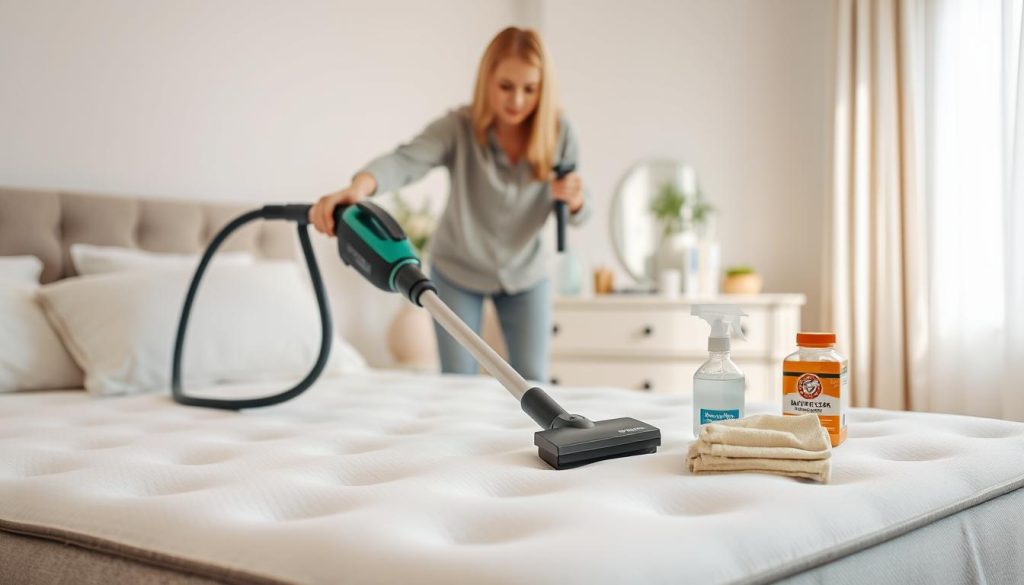
We present a concise guide on choosing a deep cleaning vacuum for mattress use in Singapore. We focus on allergy control, debris removal and practicality so you can see clear results in everyday care.
In our tests we judged suction, filtration, portability and durability. Our top picks — Jimmy BX5 Pro, UZK Bed Vacuum Cleaner, JIGOO J300 and Dyson Car + Boat — suit budget buyers and those who want cordless convenience.
We outline what real-world results look like when you tackle a mattress at home. Expect better surface cleaning, smarter allergen control via HEPA and optional UV-C or hot-air features to boost hygiene quality.
Mattress care fits into wider routines: bedding swaps, humidity control and protectors make hygiene manageable. We share product guidance and cleaning tips, but this is not medical advice for asthma or eczema; consult a clinician if you have symptoms.
Why mattress deep cleaning matters in Singapore’s humid climate
Warm nights and high humidity in Singapore accelerate what builds up inside a mattress. We see more moisture, odours and faster allergen growth than in cooler climates.
What accumulates over time
Mattresses collect sweat, dead skin, dust and food crumbs. Over months these become a source of allergens and microbial growth.
Mould and bacteria use moisture to grow. Bedding dust is the main exposure route to house dust mite allergens.
Health and sleep impact
Exposure can aggravate asthma, eczema and other respiratory sensitivities. Children and older adults are most affected.
Keeping a clean mattress helps reduce night-time symptoms and improves overall sleep quality.
Why mites persist in air-conditioned rooms
Even with air-conditioning, dust mites survive in protected fabrics because they feed on skin cells. Regular care is preventive, not just reactive.
| Contaminant | What it does | Quick action |
|---|---|---|
| Dust & lint | Triggers sneezes and irritation | Weekly brushing and airing |
| Allergens (HDMAs) | Can provoke asthma and eczema | Use protectors; periodic professional treatment |
| Mould & bacteria | Causes odour and potential infection risk | Control humidity; spot treat stains |
What vacuuming can and can’t do for a clean mattress
Routine suction keeps a bed looking tidy, but it does not reach every layer where allergens hide.

What a suction pass removes well
We find that a proper tool lifts visible surface dust, crumbs, lint and pet hair with ease. It also collects dead skin cells and dander where we lie.
Where the surface-only limit starts
Fabrics, quilting and padding trap most mite populations and many bacteria beneath the top layer. Pressure from sleepers pushes dirt and skin cells deeper over time.
- When vacuuming is enough: routine upkeep, no stains, and mild sensitivities.
- When to add methods: persistent odour, frequent allergy flares or heavy moisture.
| Benefit | What it removes | When to upgrade |
|---|---|---|
| Surface suction | Dust, crumbs, pet hair, skin cells | Routine weekly upkeep |
| Filtration | Traps fine allergens | Important for allergy sufferers |
| Mattress-specific tools | Upholstery heads, reach on bed | Better ergonomics and containment |
Practical note: if everyday debris removal is your goal, suction power and the right heads matter more than gimmicks. If allergens are the issue, prioritise good filters and regular care.
Our picks for the best deep cleaning vacuum for mattress
We tested machines across suction, filtration and usability to recommend strong, practical choices for homes in Singapore. Each model suits a different need—full reach, multi-use flexibility, budget value or cordless convenience.
Best overall: Jimmy BX5 Pro corded unit
Why we chose it: the Jimmy BX5 Pro pairs multi-stage HEPA filtration with UV-C light and a tapping brush. In our hands-on checks it showed a robust suction feel and a useful 5 m cord that eases use across larger beds.
Best for: those who want a wired solution with stronger reach and claimed 99.9% allergen reduction from UV-C.
Best multi-use option: UZK Bed Cleaner
This model targets mattresses, sofas and pet bedding. It advertises 16 kPa suction, HEPA plus UV-C, hot-air and aromatherapy capsules.
Note: user reports show variable suction in practice, so consider it if you value multi-surface versatility over single-purpose power.
Best value buy: JIGOO J300 corded unit
The JIGOO J300 is compact and simple. It bundles HEPA, UV and a hot-air mode at a lower price point.
Good choice: budget-minded households that still want core features and a straightforward bed and upholstery cleaner.
Best cordless performer: Dyson Car + Boat handheld
Dyson wins on pure cordless suction and accessory range. It has strong build quality, excellent attachments for seams and crevices and a two-year warranty.
Consider this if: manoeuvrability and quick spot work matter more than UV or heating features.
- Buying tip: choose corded units for long sessions and cordless for portability.
- Filter matters: HEPA helps with allergens; UV and hot-air add hygiene steps but are not a substitute for routine care.
- Compare uses: a multi-use cleaner can save storage and handle sofas and pet beds as well as your mattress.
For a wider model comparison and technical tests, see our round-up of the best mattress cleaner review.
How we evaluate mattress vacuums for real-world results
We measure outcomes that relate directly to allergy control, ease of use and long-term value. Our goal is to show which units give clear, repeatable results during routine upkeep in Singapore homes.

Suction power made simple
kPa stands for kilopascal and indicates suction strength. Higher kPa generally lifts more debris from high-use head and torso areas.
We verify suction with crumb and debris tests across set times to compare practical cleaning results.
Filtration that matters
HEPA filters trap at least 99.97% of airborne particles and help stop fine allergens from returning to the room.
We prioritise models with replaceable HEPA and easy access so performance stays consistent.
UV-C lights and hot-air modes
These are useful extras that may reduce mites and bacteria and speed drying. They do not replace good suction and technique.
Portability and build quality
We test weight, handle comfort, cord length and manoeuvrability over seams and edges. A well-sealed dust cup and solid plastics signal better longevity.
Practical buyers tip: a longer cord or cordless run time saves time and makes a single session more efficient.
| Feature | What we test | Why it matters |
|---|---|---|
| Suction (kPa) | Crumb lift, suction stability | Higher kPa usually equals better surface results |
| Filtration | HEPA fit, access, change frequency | Reduces airborne allergens and improves bedroom air quality |
| Extras | UV-C, hot-air modes | Supplementary hygiene; aids moisture control |
| Portability & build | Weight, cord, seal, materials | Ease of use and long-term quality |
How to vacuum your mattress properly for a deeper clean
A careful routine makes a noticeable difference to how hygienic your sleeping surface feels each week. Begin by stripping bedding and letting the bed breathe for 15–20 minutes to reduce trapped moisture and odour.
Preparation
Step: remove sheets and protectors, then set items aside. This short airing time helps with humidity in Singapore’s climate.
Technique
Use slow, overlapping passes across the whole surface. Work seams, corners, edges and the head area where skin cells gather.
Tip: use upholstery or soft-bristle tools and empty the dust bin before you start so suction stays steady.
Extend the zone
Don’t skip the bed frame, box spring and under-bed crevices. Use a crevice tool to remove dust and dirt that will otherwise re-contaminate sheets.
Deodorising
Sprinkle baking soda and leave it for 30–60 minutes. Then make a thorough pass to lift powder and trapped smells. This helps with odours but will not remove deep stains alone.
Aftercare
Air the sleep surface, rotate or flip if the maker allows, then refit clean sheets and a mattress protector. Remember to vacuum beneath the protector periodically to keep the bed fresh.
- Quick routine: strip, air 15–20 minutes, slow passes, target seams, deodorise 30–60 minutes, final pass, refit sheets.
Vacuum cleaning vs steam cleaning: choosing the right method at the right time
We compare surface upkeep and hot vapour methods so you can pick the best path for allergy control and stain removal at home.
What steam does better
High-temperature vapour (>100°C) penetrates fabric layers and kills bacteria, viruses and dust mites more effectively than a surface pass.
Professional steam services often extract loosened dirt and excess moisture. This reduces the risk of trapped damp that can harm sleep quality and long-term health.
Time, cost and frequency in practice
We recommend routine vacuum cleaning fortnightly, or weekly where allergies are frequent. Plan a steam service every 3–6 months as a reset.
When to book professional services in Singapore
Book a pro if asthma, eczema or persistent symptoms occur; after household illness; during haze or humidity spikes; or when stains and odours linger despite routine care.
| Method | Time & cost | Best use |
|---|---|---|
| Surface suction | 15–30 mins, low cost, weekly/fortnightly | Remove dust, hair and light allergens; routine upkeep |
| Steam service | 2–4 hrs with drying, moderate cost, every 3–6 months | Kill mites, sanitise, treat stains and odours; post-illness reset |
| Professional extraction | 2–5 hrs, higher cost, occasional | Max contaminant removal (up to ~99%); ideal for vulnerable households |
Practical caution: steam needs drying time in humid Singapore. We advise scheduling services on drier days or using professionals who include extraction to avoid trapped moisture.
Keeping your mattress cleaner between deep cleans
Small, consistent habits make the biggest difference to how long a bed stays fresh in Singapore. We recommend a simple weekly routine that trims dust and reduces allergens without much fuss.
Weekly bedding routine
Wash sheets weekly at 60°C. Hot water kills dust mites and lowers allergen load. Clean sheets also improve sleep and reduce odour.
Humidity control
Use a dehumidifier or set air-conditioning below 21°C to cut moisture. Lower humidity makes the room less friendly to dust mites and mould.
Protection and prevention
Use a quality mattress protector as a first barrier against sweat, dirt and pet hair. Remember to remove the protector occasionally and vacuum beneath it to clear trapped dust and dander.
Spot care and maintenance
Treat small stains promptly with a mild detergent and blotting. Rotate or flip the bed as the maker allows to even out wear and reduce moisture build-up in high-use zones.
Tip: homes with pets or allergy sufferers should increase frequency. For step-by-step guidance on cleaning mattresses, see our recommended method how to clean my mattress.
Conclusion
Our closing point is simple: choose practical tools and keep to a schedule that suits your home.
A reliable vacuum gives quick, visible results, but lasting hygiene in Singapore pairs weekly or fortnightly upkeep with periodic steam or professional services every 3–6 months.
Pick corded units with HEPA and UV features if power and filtration matter. Choose cordless models when portability and attachments save you time and effort.
Health and sleep improve when bedding and the mattress see steady care. If stains, odours, recent illness, haze or allergies persist, professional services are the most dependable solution.
For extra reading on whether routine suction helps, see this guide: should I be vacuuming my mattress.

