

We offer a practical route to restore hygiene and comfort without harming delicate layers. Our approach targets fine dust, allergens and odour-causing residues that lie beneath the cover, not just a quick wipe. This professional mattress cleaning is tailored so we avoid overwetting and slow drying.
In Singapore, people ask for fresher sleep and fewer allergy triggers. We explain what to expect on-site: assessment, targeted treatment, safe drying and a brief final check. Families, pet owners and allergy sufferers benefit from clearer air and a tidier bedroom.
Our page guides you through hazards, health impacts and why to book us. We summarise the process, the technology we use, safety measures and typical inclusions for local mattress cleaning services. If you want a reliable mattress cleaning service, we make booking simple and transparent.
Memory foam mattress deep cleaning service in Singapore for a healthier sleep
We focus on what lies beneath the cover, not just surface tidying. Over time, beds trap sweat, dust and tiny debris that regular vacuuming cannot remove. These hidden residues reduce comfort and can affect rest.
What we remove beyond the surface: dust, dirt, dead skin and bacteria
We target accumulated dust and dirt, dead skin build‑up and bacteria that cause odours and irritation. A professional approach extracts fine particles and allergens that stay embedded in foam layers.
Why this matters in Singapore’s warm, humid environment
Warmth and humidity increase sweat absorption and slow evaporation inside the bed. Trapped moisture creates an ideal environment for mites and microorganisms to persist.
“Removing trapped contaminants helps restore a fresher sleep environment and reduces night‑time irritation.”
- Prevents recurring smells and material breakdown.
- Improves sleep by reducing irritants for sensitive sleepers and families.
- Acts as preventative maintenance to prolong product life and hygiene.
| Contaminant | Impact | Our focus |
|---|---|---|
| Dust & dust mites | Allergic reactions, sneezing | High‑powered extraction |
| Dirt & debris | Material wear, odour | Targeted extraction and deodorising |
| Dead skin & bacteria | Irritation, odours | Sanitisation and drying support |
Why professional mattress cleaning beats DIY for memory foam
A rushed do-it-yourself approach can increase the risk of lingering odours and material damage.
We explain why at-home fixes often fail. Foam layers retain moisture and can take a long time to dry. Overwetting in Singapore’s humid climate raises the chance of mould and musty smells.
Reducing the risk of moisture build-up, mould and lingering odours
Our controlled process uses measured moisture, targeted extraction and drying support to limit wetness. We deodorise to neutralise odours rather than mask them.
Industrial-grade equipment vs consumer steamers
Professional equipment applies heat and extraction together so contaminants are lifted and removed, not pushed deeper. Consumer steamers often lack suction and sanitising power.
| Feature | Industrial gear | Consumer steamer |
|---|---|---|
| Extraction strength | High | Low |
| Moisture control | Measured | Variable |
| On-site time | Managed for best drying | Quick but risky |
For busy households, our professional mattress cleaning and mattress cleaning services save time and protect comfort. Choose a mattress cleaning service that prioritises safe, lasting results.
Hidden hazards within your mattress
Hidden contaminants can build up in your bed even when sheets are changed weekly. These unseen deposits affect odour, comfort and air quality over time.

Dust mites and mite waste embedded deep in the bed
Dust mites and their waste get trapped in fibres and deeper layers. For allergy-prone households, mites trigger sneezing, itchy eyes and poor sleep.
Bacteria, germs and pathogenic microorganisms
Warm, used sleeping surfaces collect sweat and oils. Bacteria and other germs can persist there and contribute to odours and irritation.
Fungi and mould from trapped sweat and humidity
Trapped moisture invites fungi and mould growth. These organisms cause musty smells and can reduce indoor air quality in humid climates like Singapore.
Pet dander, pollen and other respiratory irritants
Pet dander and pollen follow us into bed each day. These respiratory irritants can concentrate overnight and worsen breathing issues for sensitive sleepers.
Dirt, debris and stains that degrade mattress materials over time
Grit and spills abrade fibres and lead to permanent stains. Over time, dirt and staining reduce comfort and shorten a bed’s usable life.
We target both particulate build-up and hygiene concerns, not just surface appearance.
| Hazard | Effect | What we address |
|---|---|---|
| Dust mites | Allergic reactions, irritation | Allergen extraction and anti‑allergen treatment |
| Bacteria & germs | Odours, potential pathogens | Sanitisation and controlled moisture removal |
| Fungi & mould | Musty smell, air-quality issues | Drying support and antifungal measures |
| Pet dander & pollen | Respiratory irritants | HEPA filtration and thorough extraction |
| Dirt, debris & stains | Material wear, reduced comfort | Targeted stain treatment and protective care |
To learn how to keep your sleep zone fresher between visits, see our full guide on proper maintenance at how to clean your mattress properly.
Health risks a dirty bed can trigger
Nightly exposure to trapped allergens and odour-causing residues can worsen common respiratory and skin complaints. Dust and tiny particles release during movement and breathing, so symptoms often flare while you sleep.
Allergies, asthma and rhinitis flare-ups
Allergen particles and dust stirred from bedding can provoke sneezing, wheeze and nasal congestion. We see many clients whose asthma and allergic rhinitis worsen overnight.
Skin irritation, rashes and eczema discomfort
Contact with residues and bacteria left in layers can contribute to itchy skin or rashes. For sensitive skin, reducing exposure helps ease flare-ups and improves comfort.
Coughing, congestion and breathing difficulty
Airborne irritants raise the chance of coughing and blocked airways during sleep. This leads to fitful nights and breathing problems for some household members.
Disrupted sleep and next-day fatigue
Physical irritation and poor air quality reduce sleep quality. That results in daytime tiredness, slower recovery and reduced wellbeing.
Mattress cleaning is a practical step we recommend to lower exposure. Our mattress cleaning and cleaning service target dust, allergens and odour-causing bacteria so families and sufferers get measurable relief.
| Symptom | Likely cause | How we help |
|---|---|---|
| Sneezing & congestion | Dust, mite allergens | High-extraction cleaning and HEPA filtration |
| Itchy skin or rashes | Contact with residues & bacteria | Sanitisation and targeted stain treatment |
| Coughing & wheeze | Airborne particles released at night | Allergen extraction and deodorising |
“Reducing exposure in the sleep zone helps decrease symptoms and restore better sleep.”
Next, we explain why beds harbour so many allergens and what sustains them over time.
Why dust mites thrive in mattresses
Tiny organisms live where we sleep and they thrive on what we shed every night. That simple fact explains why beds become a hotspot for dust mites and related allergens.
Dead skin cells as a constant food source
Dust mites feed on dead skin we shed each night. This steady supply of dead skin makes the inner layers a reliable food source.
Warmth, humidity and limited ventilation
Warm, humid conditions create a stable environment inside a mattress. Poor airflow means trapped moisture and dust stay put.
Fast reproduction and rapid build-up
Mites reproduce quickly—often cycling every few weeks. A small population can become a heavy infestation in a short time.
Why this matters for mattress deep care: mites and fine dust settle below covers, so routine vacuuming often misses them. In Singapore’s humid climate, internal layers can stay damp and sustain growth.
We recommend regular protectors and periodic vacuuming between visits, but professional intervention handles embedded build‑up safely. Next, we outline our step‑by‑step process to remove mites, dust and residues.
Our mattress deep cleaning process
Before any treatment begins, we assess the bed so we choose the gentlest, most effective approach. This pre-inspection lets us note stains, odours and overall condition. We then confirm the safest plan with you.
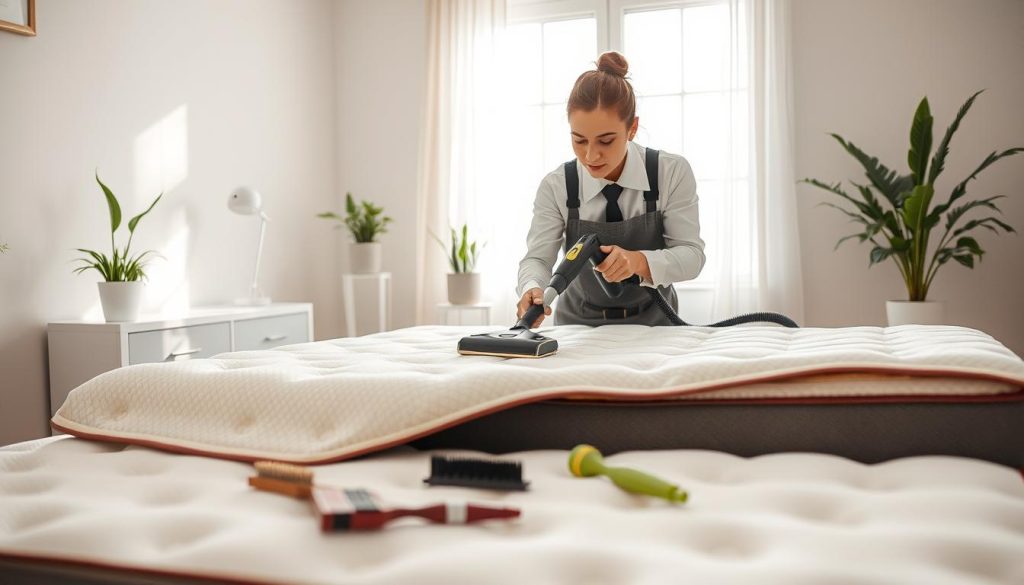
Pre-inspection and high-powered vacuuming
We start with a thorough inspection that guides the full process. Next, our team uses high-powered vacuuming with HEPA filtration to capture fine particles before any wet step.
Choosing the right method
Depending on material sensitivity and soil level, we select steam cleaning, hot water extraction or a dry-safe option. This ensures effective removal without harm.
Targeted stain treatment and deodorising
Stain spots from sweat, urine or spills receive tailored solutions and dwell times to lift marks safely. We then apply deodorising that neutralises odours rather than masking them.
Drying support and final checks
We provide blowers and fans to speed drying; on-site work typically takes a few hours, though drying can extend to the rest of the day depending on humidity. Finally, our team performs a hygiene check to confirm the result.
Want step-by-step stain guidance? See our short guide on effective stain removal at how to get stains off a mattress.
Advanced cleaning technology we use for mattress cleaning services
We pair targeted heat with powerful extraction to restore hygiene without harming layers. Our toolkit is chosen so we remove trapped dirt and allergens while keeping structure intact.
High-temperature steam cleaning for deep sanitisation
High-temperature steam loosens oils, sweat and biological residues. This method supports sanitisation and helps reduce odours without harsh chemicals.
Deep extraction to lift embedded dirt, mites and allergens
Our deep extraction phase pairs agitation with strong suction. That pulls out dust, dust mites and other debris instead of forcing them deeper into layers.
UV-C decontamination for added sanitising assurance
UV-C is offered as an added assurance step. Some providers state high-temperature approaches can “kill 99% of pathogenic microorganisms” as an industry claim. We use UV-C to complement heat and extraction where appropriate.
Anti-allergen treatment for longer-lasting allergen control
We finish with an anti-allergen treatment to neutralise residual particles. This helps households with allergies and asthma experience fewer triggers and fresher air.
“A layered approach—steam, extraction, UV-C and anti-allergen care—gives practical, lasting results.”
For professional results and clear expectations, see our recommended providers for local mattress cleaning services at mattress cleaning services.
Safe, eco-friendly cleaning service Singapore families can trust
Our approach centres on reducing chemical exposure while restoring hygiene in the sleeping area.
Chemical-free, non-toxic solutions
Chemical-free and non-toxic options for children, pets and sensitive sleepers
We use non-toxic solutions that leave minimal residue and no overwhelming scent. This helps protect babies, toddlers and pets from harsh compounds.
We also avoid strong perfumed products that mask odours instead of removing them.
Fabric-safe approach to protect structure and comfort
Our technicians select fabric-safe methods to limit wetting and avoid heat or agitation that can deform layers.
Measured moisture control and tailored tools preserve feel and support while removing allergens and odours.
| Feature | What we do | Benefit |
|---|---|---|
| Non-toxic solutions | Plant-based detergents, low-residue formulas | Safe for children and pets |
| Fabric-safe handling | Controlled moisture, gentle agitation | Protects comfort and structure |
| Aftercare guidance | Ventilation and remake timing | Faster drying, lasting hygiene |
We are a trained team offering transparent inclusions and consistent process. Families booking a cleaning service in Singapore can expect clear guidance on when to remake the bed and how to keep the sleep zone fresh between visits.
When to book a mattress cleaning service
Not all signs of wear show as stains — sometimes poorer sleep quality is the earliest warning. We advise booking when observable changes reduce comfort or health rather than waiting for a visible problem.
Signs your bed needs attention
Look for clear triggers: fresh or persistent stains, lingering odours, waking up sneezing, nasal congestion or itchy skin and rashes. If sleep feels less restorative or fatigue grows, that is also a sign.
Recommended frequency guide
For standard homes, we recommend a professional mattress cleaning every 6–12 months. For households with pets, allergy or asthma sufferers, aim for every 3–6 months. Regular checks help manage dust and allergens before they build up.
When to schedule immediately
After illness recovery, bedwetting or a spill, book as soon as possible. Moisture and residues can sink in quickly, so faster action reduces long‑term odours and makes treatment more effective.
Plan ahead: on-site work is convenient, but drying may take part of the day. Allow time when booking and ask about what each cleaning includes, typical time on site and realistic drying expectations.
Mattress cleaning Singapore pricing and what’s included
Knowing what is included removes guesswork when you compare local quoted rates. We outline typical inclusions, price bands and realistic timeframes so you book with confidence.
What a full package covers
A full mattress cleaning Singapore package usually begins with thorough vacuuming and spot assessment.
Technicians then carry out sanitising, steam or hot extraction, targeted stain treatment and deodorising to restore freshness. Add-ons may include UV-C or anti‑allergen spray for longer protection.
Typical price ranges and why costs vary
Entry-level promotions offer the most accessible pricing. Bundled options that include UV-C, steam and deep extraction are priced higher.
Price depends on mattress size, severity of soiling, chosen add-ons and whether deep extraction is required. Premium packages usually add stronger extraction and more sanitisation steps.
How long it takes — on-site time and realistic drying expectations
Expect 1–3 hours on-site per mattress for the full process. Actual drying can take several more hours and, in high humidity, sometimes up to a day.
Ask providers for clear inclusions, foam-safe methods and honest time estimates when you request a quote. We recommend booking a slot that allows for drying and avoids rushing the remake of bedding.
| Package type | Includes |
|---|---|
| Entry promo | Vacuum, basic stain lift, light deodorising |
| Standard bundle | Steam, deep extraction, UV-C option, deodorising |
| Premium care | Stronger extraction, anti-allergen treatment, extended sanitising |
“Request a quote based on size and condition, and confirm expected hours on site and drying guidance.”
Conclusion
A thorough, fabric-safe process gives noticeable relief from odours, dust and night‑time irritation. Our professional mattress cleaning restores hygiene, reduces allergen build-up and helps you enjoy better sleep in humid Singapore.
We use foam‑safe methods that avoid overwetting while lifting embedded residues. The end-to-end approach is clear: inspection, HEPA vacuuming, chosen method, stain treatment, deodorising and supported drying.
Safety matters: we apply non‑toxic, low‑residue options and careful handling so your bedding stays comfortable for family and pets. Contact our team to confirm the best method for your mattress type, get a straightforward quote and book a convenient slot.
Tip: aim for a check every 6–12 months, 3–6 months if you have pets or allergies, and book promptly after spills or illness to keep results consistent.

