
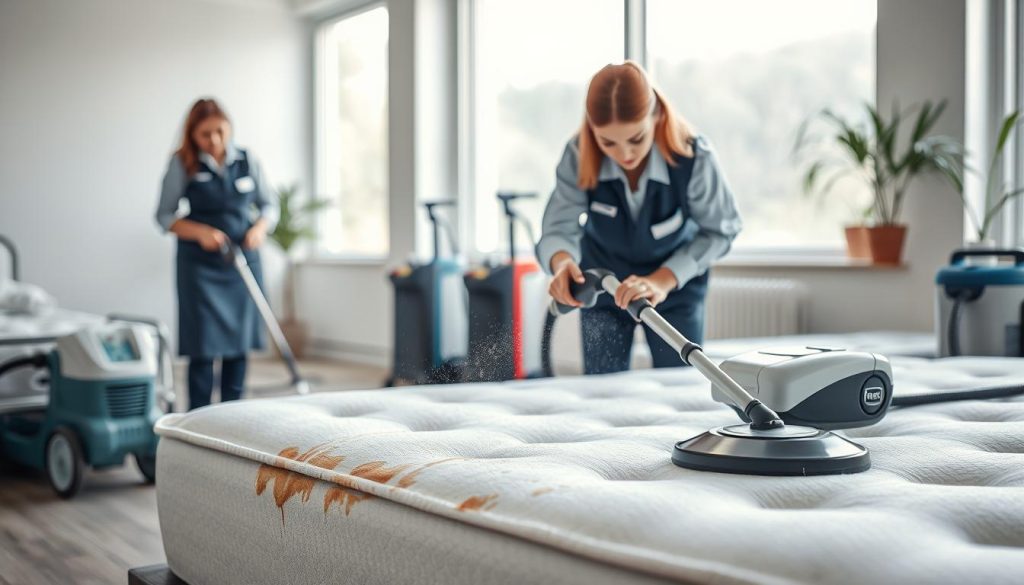
We explain why eco friendly mattress cleaning matters in Singapore, where warm nights and humidity speed up dust, sweat and odours. This guide is practical and low‑toxic. It aims to protect family safety and indoor air quality.
We set clear expectations for a simple, effective how‑to that protects mattress materials and supports better sleep. We will show preparation, spot treatment, deodorising and deeper sanitising options you can use at home.
By “eco‑friendly” we mean fewer fumes, fewer residues and less lingering moisture. We favour everyday tools — vacuum, baking soda, a mild vinegar solution and controlled peroxide — and we stress thorough drying to prevent mildew.
Throughout, we focus on real homes with babies, pets or allergy‑prone sleepers. Expect straightforward steps that use low‑toxin cleaners and proven methods to leave your bed fresh and a clean mattress ready for better sleep.
Why we prioritise an eco-friendly, low-toxic mattress cleaning routine in Singapore
Our approach limits chemical exposure to protect sensitive sleepers and indoor air quality. We choose measured steps so the bed stays comfortable and safe for everyone in the household.
How a clean mattress supports sleep, comfort and hygiene
Reduced irritants help sleep quality. Fewer allergens and less lingering odour mean fewer night‑time wakeups and less congestion.
Cleaner surfaces lower the chance of itchy skin and coughing. That improves daily wellbeing and overall health.
Why harsh chemical cleaners can be a concern
Many standard products emit VOCs and leave residues that linger in indoor air. This is a real risk in air‑conditioned Singapore homes with limited ventilation.
Fumes can irritate babies and sensitive skin. We opt for low‑toxin alternatives and careful application: light use, correct dwell time and thorough drying.
- Reduce irritants to protect nightly comfort.
- Keep bedrooms feeling fresher and more breathable.
- Avoid unnecessary chemical load while keeping high quality results.
| Concern | Risk | Our response |
|---|---|---|
| VOCs | Fumes linger in air | Choose low‑residue options; ventilate |
| Residues | Skin irritation for babies | Light application; rinse or blot |
| Moisture | Mould risk in humid climate | Minimise wetting; dry fully |
What builds up in a mattress over time in a humid climate
In Singapore’s heat and humidity, a bed often hides more than a good night’s sleep. Warm nights slow evaporation. That encourages a steady build-up of debris and biological particles inside mattress materials.
Dust mites and dust that thrive in warm, humid bedrooms
Dust mites feed on shed skin cells and multiply where it is warm and damp. These mites are tiny but common in tropical bedrooms.
Regular vacuuming of seams and surfaces helps reduce dust that collects and feeds mites.
Allergens from pets, pollen and everyday household dirt
Pets and pollen bring allergens into the bed. Hair, dander and tracked-in dirt settle in seams and edges.
Allergens can trigger night-time symptoms, so we prioritise removing dry debris before any wet treatment.
Sweat, body oils and odours trapped in bedding and materials
Sweat and body oils migrate through sheets and soak into inner layers. Over time, they cause odours and visible marks.
Bacteria and moisture-related mould risks to watch for
Poor ventilation and retained moisture create conditions for bacteria and mould growth. Damp cleaning or slow drying increases the risk.
- Quick rule: remove dry debris first, treat stains next, deodorise, then ensure full drying.
Eco friendly mattress cleaning: what it means and what we avoid
We choose gentle, proven approaches that limit chemicals and help the bed breathe. Our definition emphasises low‑toxic ingredients, minimal fumes and methods that are kind to materials and the home environment.
Non-toxic, biodegradable cleaners and reducing indoor fumes
We favour simple, biodegradable cleaners. White vinegar diluted with water, plain baking soda and controlled peroxide are our go-to solutions for many stains and odours. These options leave little residue and reduce airborne irritants.
We avoid strong bleaches, ammonia-like products and heavy synthetic fragrances because they can leave residues and irritate airways. To see safer approaches from an experienced provider, we link to safer solutions.
How we minimise moisture to prevent mould and lingering smells
- Light misting: use a spray, never soak the surface.
- Blot, don’t rub: lift stains to limit seepage into layers.
- Dry fast: ventilate and use fans to stop trapped moisture becoming a mould risk.
Our rule is “less is more”: apply, let sit, blot thoroughly and air dry. This keeps the mattress fresher and protects the indoor environment without heavy wetting or excess fumes.
What we prepare before cleaning your mattress at home
Before we reach for a spray or stain remover, good preparation sets the stage for safe, effective home care.
Supplies from a typical household
- Vacuum with an upholstery attachment for seams and edges.
- Clean cloths and sponges for blotting.
- Baking soda and white vinegar as low‑residue options.
- Hydrogen peroxide kept for targeted stains only.
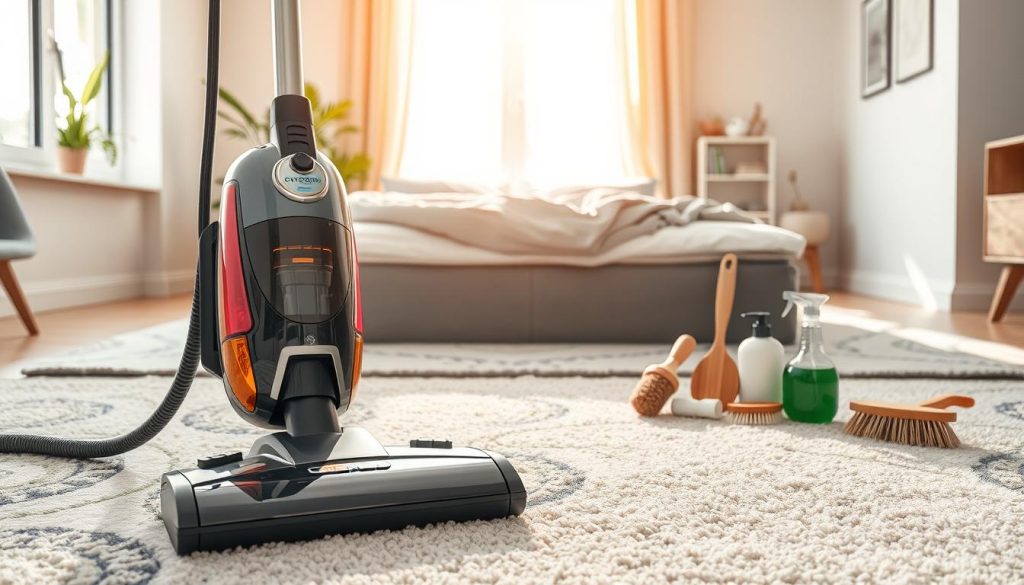
Strip the bed and check bedding
We remove all sheets, protectors and pillows and wash them promptly. This stops dust, oils and allergens returning to the bed.
While washing, we inspect the mattress protector for tears, trapped odours or moisture marks. If it no longer protects properly, we replace it.
Vacuuming the surface, seams and edges
We vacuum slowly and methodically. Start with the surface, then run the upholstery tool along seams, crevices and edges where dust collects.
Allergy-focused vacuuming: removing loose dust and allergens first reduces what gets disturbed during spot treatment.
Practical tip for Singapore flats: open a window if weather allows, or run a fan to keep airflow during the whole process.
How we spot-clean common mattress stains without harsh chemicals
Our method relies on light, precise applications so stains lift while materials stay dry. We always vacuum first to remove loose dust and prevent grinding particles into damp fibres.
Urine: vinegar and water for odour control
For urine marks we spray equal parts white vinegar and water. Let the solution sit for 10–15 minutes, then blot with a clean cloth until the cloth stops lifting moisture. Repeat blotting in short bursts and air dry with a fan.
Sweat and body oils: controlled peroxide mix
For sweat and body oils we make a small mix of hydrogen peroxide, a drop of mild detergent and water. Apply the mix to a cloth and blot the spot—do not pour. Work gently to lift discolouration and avoid excessive wetting.
Blood: cold water and gentle peroxide blotting
For fresh blood stains use cold water first. Blot with a cloth; never use hot water. If needed, follow with light peroxide blotting, using minimal amounts and immediate blotting to lift the stain.
Blotting versus scrubbing, and drying discipline
We always blot rather than scrub to avoid fibre damage and spreading the stain. Keep treatments local and brief.
- Dry thoroughly: fan and ventilate until the area is no longer cool or damp to the touch.
- Avoid soaking: excess moisture raises the risk of bacteria and mould in Singapore’s climate.
For more detailed steps on stubborn stains, see our practical guide: how to get mattress stains out.
Deodorising with baking soda for a fresher, cleaner mattress
We rely on simple powders like baking soda to quietly lift odours and absorb light moisture between washes.
Why it works: baking soda naturally neutralises smells and helps draw out small amounts of moisture that cause stale odours.
How long we let it sit and how we apply it
We sprinkle an even layer across the surface, paying extra attention to the hip and torso zones where odours linger most.
We usually let sit for at least 30–60 minutes. For stronger smells or humid Singapore nights, we let it sit longer or overnight to extend dwell time.
Thorough vacuuming so no powder remains
After the allotted time we vacuum the whole surface, moving slowly across seams and edges so no soda residue hides in crevices.
Before remaking the bed, we run a hand over the surface to ensure it feels clean and not gritty.
Optional scent and when we skip it
For a light scent, we sometimes add a drop of essential oil to the powder’s mix before sprinkling. We skip oils in homes with babies, asthma or scent sensitivities.
Use this as a safe between‑deep‑cleans solution to keep a clean mattress smelling fresh without heavy products. For more tips on deodorising, see our practical guide: deodorising solutions.
Vinegar, lemon juice and other natural solutions for everyday cleaning
Natural acids and simple household mixes give us gentle options for routine upkeep and light stain response.
When white vinegar works best as a mild, low‑residue cleaner
White vinegar diluted with water is ideal for small affected areas and light organic odours. We mix one part vinegar to one part water and apply it to a cloth, not directly to the surface.
Apply with a light mist, blot promptly and air the area until fully dry. This limits wetting while reducing residue.
Using lemon juice as a natural disinfectant and stain remover
Lemon juice can lift light stains and leaves a fresh scent in musty rooms. We use it sparingly on spots, blotting gently and testing a hidden patch first.
“Natural does not mean careless — technique and drying matter most.”
- Best for quick refreshes and mild odour control.
- Always patch‑test to protect delicate materials in Singapore’s humid environment.
- Keep contact brief, blot, then ventilate thoroughly.
Steam cleaning for a deeper sanitise and dust mite reset
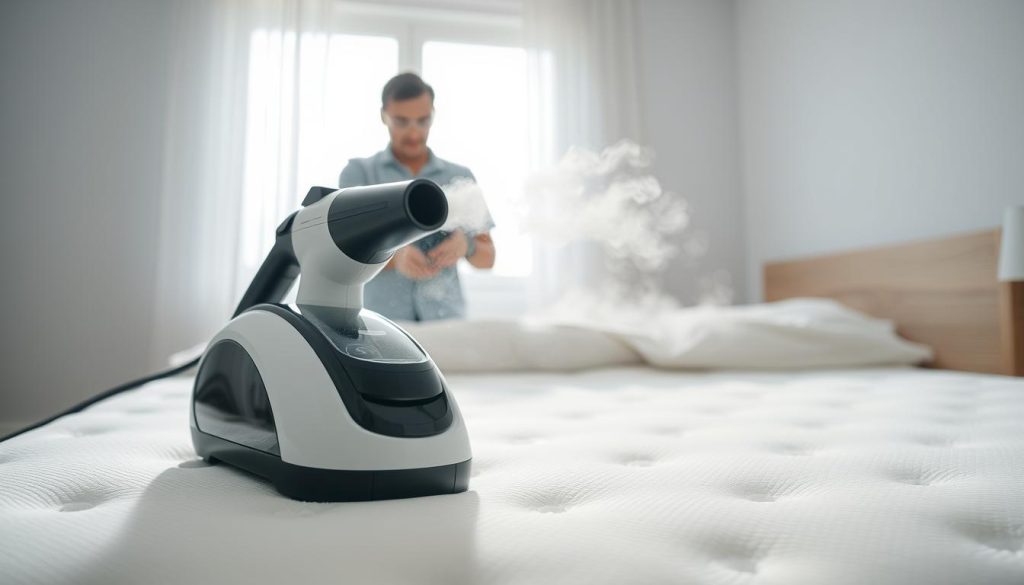
Steam delivers targeted heat that sanitises deep fibres without adding detergents or residues. It is an effective method to reduce bacteria and lower allergen levels while avoiding chemical cleaners.
How steam helps
How heat tackles bacteria and allergens without chemical cleaners
High-temperature vapour kills many bacteria and helps unsettle trapped allergens. It also weakens mite populations by applying sustained heat to the surface and seams.
We view steam as a sanitising step, not a substitute for routine care. It works best after dry debris is removed and spot treatments are done.
Best practice to prevent excess moisture and ensure we dry completely
Follow a safe sequence: vacuum first, then steam in slow, even passes. Avoid lingering on one spot to reduce moisture buildup.
- Sequence: vacuum thoroughly; steam with steady passes; ventilate immediately.
- Drying: run fans, use air‑conditioning dehumidify mode if available, and keep the room ventilated until the surface feels warm and dry.
- Manufacturer care: always check the mattress type—some materials tolerate vapour better than others.
Dry completely before remaking the bed. In Singapore’s humid air, trapped damp will encourage mould and musty odours. Ensuring the mattress is fully dry is non-negotiable for safe, lasting results.
Sunlight and ventilation as nature’s disinfectants in Singapore homes
Sunlight and steady airflow are simple allies in keeping a bed fresh in humid Singapore homes. Direct UV exposure supports odour control and helps reduce bacteria on and near the surface.
How UV exposure supports odour control and reduces microbes
We use sunlight as a natural disinfectant. UV rays can weaken surface micro-organisms and lessen musty smells.
Choose a bright, dry window area, balcony or well-ventilated spot. Avoid leaving the mattress where air is still or damp.
Airing out to manage moisture and prevent mould
Good airflow is essential to lower moisture and stop mould growth in a tropical environment.
- Use fans or cross-ventilation to move air around the mattress.
- Stand the mattress upright briefly to let air reach more surfaces.
- Air out after any spot work, steam or deodorising so the surface can fully air dry.
“Always ensure the mattress is cool and fully dry before you remake the bed.”
How we help your mattress stay clean for longer between deep cleans
Small, regular actions extend the life and comfort of your sleep surface. Consistent care reduces how often we need a full deep clean in Singapore’s humid climate.
Choosing and maintaining a breathable waterproof protector
We recommend a breathable waterproof cover that lets air pass while blocking liquids. Look for thin, PU‑coated fabrics that protect materials without trapping heat.
Wash the protector regularly to stop odours and oils building up. A clean cover saves the mattress and keeps sleep quality high.
Regular vacuuming and quick spot treatment
We vacuum the surface and seams weekly to remove dust, pet hair and loose dirt before it embeds.
Act on spills straight away. Quick spot treatment prevents stains setting and cuts the need for heavy products later.
Rotate to reduce uneven wear
Rotate your mattress every three months. This evens out pressure zones and limits local dirt build-up where people sit or sleep most.
Habits that limit crumbs, hair and lingering odours
- No eating in bed to prevent crumbs and spills.
- Groom pets regularly and keep their bedding clean.
- Change bedding on schedule to reduce oils and persistent odours.
| Measure | Frequency | Benefit |
|---|---|---|
| Breathable protector wash | Monthly | Stops odours; protects materials |
| Vacuum seams and surface | Weekly | Removes dust, pet hair and dirt |
| Rotate mattress | Every 3 months | Reduces uneven wear and stains |
Practical tip: small habits save time and cost. Regular care keeps quality high and limits deep cleaning needs in your home.
When we recommend professional mattress cleaning services
Professional help is sensible when issues go deeper than surface care. If odours return quickly, stains remain after spot treatment, or you spot black flecks or a musty smell, bring in experts. These are red flags that suggest contamination below the cover.
Persistent odours, severe stains and suspected mould or bacteria issues
We advise calling professionals for persistent odours, set-in stains or any sign of mould. These problems can harm health, especially for households with babies, asthma or sensitive skin.
How to choose a safer, eco-focused service and what to ask
Ask for a clear method brief. Request details on pre-vacuuming, whether they use steam or hot-water extraction, and how they control overwetting.
- Ask about cleaners: are they low‑toxic and low‑residue?
- Method: do they explain extraction and moisture control?
- Drying standards: what target dry time and steps ensure the bed is dry before use?
“Insist on measurable drying standards and a step-by-step method—this protects the sleep surface and household health.”
Conclusion
To conclude, a simple routine keeps allergens, odours and moisture risks in check without harsh products.
We recommend this sequence: remove dry debris first, treat stains with measured solutions, deodorise with baking soda and finish with targeted steam or sunlight and good ventilation.
Singapore’s humidity raises dust‑mite and mould pressure, so drying and airflow are essential to protect sleep and household health.
Small habits—using a breathable protector, vacuuming regularly, quick spot treatment and airing out—make a clean mattress achievable long term.
Next step: follow the guide for routine care, and call professionals for severe stains, persistent odours or suspected mould to safeguard family health.

