

We explain what mattress mould is and why it is a common problem in Singapore’s warm, humid climate.
By the time spots appear, spores can be entrenched because they thrive on damp, warm surfaces. We set clear expectations for safe, effective cleaning that does not harm the fabric.
This guide is for homeowners, tenants and families who notice odours or stains. We aim to remove visible contamination, reduce spores and prevent recurrence.
Successful action means lifting stains where possible, sanitising the affected area and ensuring complete drying so moisture cannot trigger regrowth.
We flag health considerations early. If infestation is deep, allergies worsen or contamination is widespread, we recommend seeking professional help.
Finally, we preview our step-by-step workflow: vacuuming, choosing the right solution, targeted scrubbing or spraying, deodorising and thorough drying.
Why mould grows on mattresses in Singapore’s high-humidity homes
In a warm, humid flat, tiny airborne spores wait for damp fibres and then spread fast across sleeping surfaces. We explain the causes so readers can make the right prevention choices later in this guide.
Warmth, moisture and airborne spores: why mould spreads fast
The basic triangle for growth is simple: heat, moisture and spores. Singapore’s high humidity keeps fabrics damp and gives spores the conditions they need.
“Control humidity and airflow to disrupt the triangle and slow colonisation.”
Everyday triggers in the bedroom: perspiration, spills and trapped damp
- Perspiration: our bodies release water overnight that soaks into layers.
- Small spills and wet items: towels or clothes left on the bed add water.
- Poor ventilation: flat bases or floor placement trap damp under the surface.
Hidden growth under sheets and on the underside of the bed
Sheets usually hide the first signs, so the problem can be advanced when spotted. We note that improving under‑bed ventilation and drying quickly is often as vital as cleaning.
How to spot mould early and assess the affected area
A quick visual check under bright light often reveals tiny dark specks or faint shadowy stains long before the issue becomes obvious.
What to look for:
- Visible spots: small black dots are common, while pink or green patches can also appear and spread.
- Stains: look for speckled or shadowy marks across the sleeping surface rather than one clean blot.
- Odour and symptoms: a persistent musty smell in the bedroom or waking with sneezing and throat irritation often signals hidden growth.
Our inspection routine is practical and quick.
- Strip bedding and expose the whole surface.
- Use strong light and work methodically across seams, corners and quilting lines.
- Lift edges and check the underside and ticking for spread into inner layers.
Assess the affected area by roughly measuring how far spots extend, whether the issue is isolated, and if the underside is involved.
“If discolouration reaches deep layers or covers large areas, professional assessment may be needed.”

| Observation | Likely cause | Immediate action | Severity |
|---|---|---|---|
| Small black spots on surface | Early colonisation on damp fibres | Inspect seams, vacuum surface | Low to moderate |
| Pink or green patches | Different species thriving in high humidity | Document spread, check underside | Moderate |
| Musty odour / allergy symptoms | Hidden growth in inner layers | Consider professional cleaning or replacement | High |
Remember to factor in recent moisture history—spills, damp bedding or poor ventilation increase the chance the problem is entrenched.
For targeted advice on removing stains safely, see our practical guide on treating mattress stains.
Health and mattress-quality risks if you delay treatment
Ignoring early signs often lets the problem move from a small patch to a room-wide issue. We must act early to protect air quality and the comfort of the sleeping surface.
Indoor air quality and respiratory irritation in a humid environment
In humid flats spores can become airborne and circulate in the air. This raises the chance of sore throat, respiratory irritation, wheezing and shortness of breath.
Those with asthma or allergies face more severe flare-ups if exposure continues over nights and weeks.
How growth affects comfort, support and lifespan
We see that contamination degrades materials and causes lasting odours. Over time, foam and fibres lose resilience and the support quality drops.
Delay often turns a surface-cleanable issue into one needing professional service or replacement. Rapid reappearance after cleaning, widespread patches or a persistent musty smell are red flags.
| Risk | Impact on health | Impact on quality |
|---|---|---|
| Airborne spores | Sore throat, wheeze, irritation | Odour spread, reduced sleep comfort |
| Hidden inner growth | Chronic exposure; asthma flare-ups | Loss of support; material breakdown |
| Recurrent contamination | Ongoing symptoms, poor indoor air | Shortened lifespan; likely replacement |
Safety and preparation before you start cleaning
We begin by securing the room and equipping ourselves so spores do not spread during cleaning. This keeps the air in the sleeping area safer and makes the task more effective.
Protective gear and ventilation to limit exposure to spores
Wear gloves and a fitted mouth mask and open windows to increase ventilation. Run a fan if you have one. We keep doors closed to contain dust and minimise spread.
What to gather before you begin
Collect a vacuum with an upholstery tool, clean cloths, a spray bottle and the chosen cleaning solution that suits fabric type. Prepare a waste bag for used cloths and change filters after use.
What to avoid and why
Avoid bleach: it can damage foam and fabrics and emits harsh fumes. Do not over-wet the surface with water or solution. Extra moisture can drive spores deeper and encourage regrowth.
“If contamination covers large areas or you have strong sensitivities, consider professional support rather than DIY work.”
| Action | Why it matters | Quick tip |
|---|---|---|
| Wear gloves & mask | Limits inhalation and contact with spores | Use N95 or equivalent |
| Ventilate room | Reduces airborne spore concentration | Open windows; run fan |
| Use upholstery vacuum tool | Removes loose spores before wet cleaning | Clean tool after use |
| Avoid bleach and soaking | Prevents material damage and added moisture | Patch-test alternatives first |
mattress mold removal: step-by-step cleaning method we use
We begin with a clear, methodical clean that targets loose spores before any liquid step.
Strip and isolate: remove bedding and any removable cover. Bag laundry and keep the sleeping surface exposed so we treat the full area.
We vacuum both sides with an upholstery tool, paying close attention to seams. Immediately empty and clean the dust canister to limit spore spread.
Choose a solution to match the fabric and stain. Apply sparingly to avoid driving moisture deeper into the core.
- For active patches, mix equal parts rubbing alcohol and warm water. Dampen a cloth (not soaking) and scrub in circular motions beyond the visible edge. Rinse lightly with a cloth wrung out in warm water.
- Alternatively, use equal parts white vinegar and water in a light spray. Allow dwell time (up to 1 hour), then blot dry rather than rubbing.
- Reserve 3% hydrogen peroxide for stubborn stains. Patch-test first, limit contact time, then blot and dry.
Sprinkle baking soda to absorb moisture and odours; leave overnight, then vacuum thoroughly. If needed, finish with an upholstery-safe disinfectant used sparingly.
“Drying is non-negotiable — use fans, open windows and sunlight where possible; wait around 24 hours after the last wet step to reduce regrowth risk.”
| Action | Why | Timing |
|---|---|---|
| Vacuum both sides | Removes loose spores and debris | Immediate; clean canister after use |
| Alcohol or vinegar | Targeted cleaning with minimal moisture | Apply sparingly; allow dwell time |
| Baking soda & dry | Deodorise, absorb moisture, prevent regrowth | Leave 8+ hours; full dry ~24 hours |
If the problem returns quickly or spreads, consider professional assistance or consult our practical guide on removing mould stains guide.
How we prevent future mould growth on your mattress
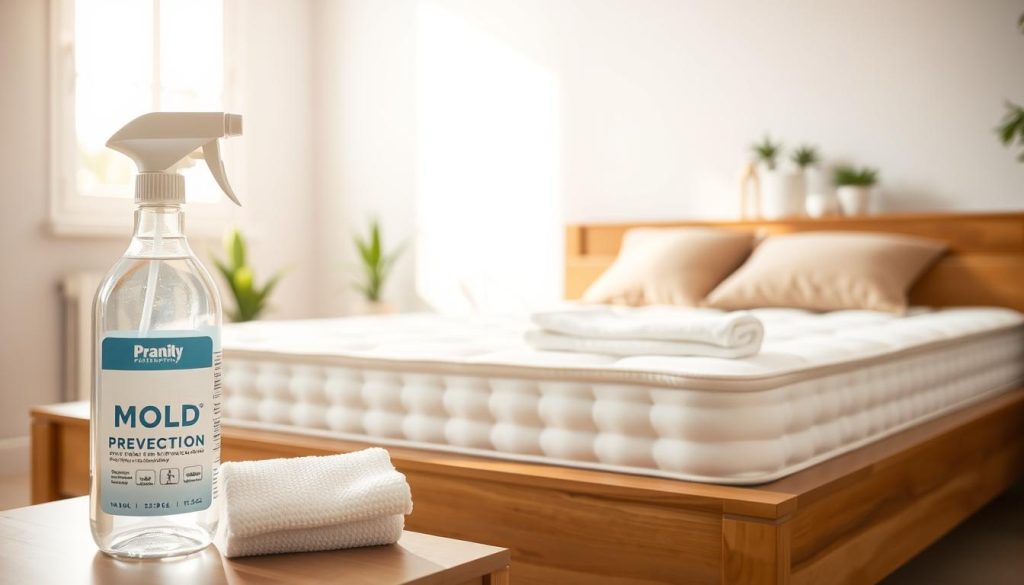
A planned, layered approach helps prevent future growth by controlling humidity, improving air movement and choosing the right materials.
Keep humidity and circulation steady
Use a dehumidifier in the bedroom and aim to keep relative humidity below about 60%. Run it during wet months and when the flat feels clammy.
We also maintain gentle air circulation. Avoid switching off all airflow when away; a timed fan or safe, low-speed setting helps stop sealed, damp conditions.
Clean air and better under-bed ventilation
An air purifier does not clean surfaces, but it reduces airborne spores and improves air quality, which can help prevent future colonisation.
Fit a slatted bed base so both sides breathe. Rotate the mattress every three months where the design allows to expose fresh surface to airflow.
Daily moisture habits and materials
- Deal with spills immediately and never put damp bedding back on.
- Use breathable, washable covers and consider latex options for long-term resistance.
| Measure | Why it helps | Tip |
|---|---|---|
| Dehumidifier | Controls humidity | Set to |
| Air purifier | Reduces spores in air | Choose HEPA filter |
| Slatted base & rotation | Improves ventilation | Rotate ~every 3 months |
If growth returns despite good airflow and humidity control, it likely signals wider home moisture issues or hidden contamination that we should investigate.
Conclusion
Prompt action and correct drying are the two simplest steps that stop small infestations turning into larger problems. This guide shows how early detection, careful cleaning and full drying curb spore growth and protect indoor air quality.
Follow our practical flow: spot-check regularly, wear protection, vacuum thoroughly, apply a suitable solution sparingly and dry completely before remaking the bed.
Do not skip drying. Sustained airflow and sunlight where possible are the most important safeguards against recurrence.
To keep issues away, manage humidity, keep steady air movement and improve under‑bed ventilation. If spots cover large areas, penetrate deep layers, cause persistent odour or trigger sensitivities, we recommend professional assessment rather than repeated DIY attempts.

