

We start by clearing up what most people mean when they ask about a regular hoover versus a wet‑and‑dry model. In simple terms, one is built for everyday dust, crumbs and hair. The other handles spills and solid messes with tanks and specialised seals for liquid pick‑up.
This short guide sets expectations for performance in Singapore homes. We explain what each type is meant to pick up, why using the wrong tool can harm motors or leave a poor result, and when a more versatile unit saves time.
Later, we will compare features such as surfaces, maintenance, storage, running costs and real‑world use. We will also show a practical buyer’s framework so you can choose the right model for your apartment or landed house.
For a few clever tasks a wet‑and‑dry model can do, see our short note on unusual uses here.
Why this choice matters for Singapore homes and busy schedules
Busy schedules turn quick resets into the most useful cleaning tool. Singaporeans work long hours — roughly 42 per week — so we often postpone chores. A tool that saves minutes each day changes how we keep our living spaces.
One-pass cleaning helps a lot. A wet dry vacuum can collect crumbs and blot spills in a single motion. That reduces tool switching and makes us more likely to tidy up straight away, not later.
Compact flats, humid weather and frequent rain mean floors show grime faster. Having a machine that handles both dust and light water stains keeps hallways, dining corners and entryways looking fresh.
Storage and manoeuvrability matter in HDBs and condos. We value units with a small footprint, simple docking and easy handling under furniture. These design points can matter as much as raw suction.
- Quick daily maintenance often beats long, infrequent cleaning sessions.
- One-pass cleaning reduces procrastination and spot build-up.
- Wet-capable cleaning helps with humid floors and rainy-day messes.
- Choose a model that fits your available space and living patterns.
To help plan a routine that suits our lives, see a comprehensive cleaning checklist that matches quick resets to weekly deep cleans.
What we mean by a dry vacuum cleaner
In our homes a regular suction unit handles the everyday mess with speed and focus. We define a dry vacuum as the everyday option built to lift loose waste into a bin or bag without handling liquids.
Best use: These units excel at clearing dust, crumbs, dirt and pet hair from carpets and hard floors. Their consistent suction gives reliable pick-up on routine spots such as entryways, dining corners and upholstery.
Filtration and health
Many models offer HEPA or sealed filters that trap fine dust and allergens. A quality dry vacuum cleaner helps households with sensitivities by reducing airborne particles during cleaning.
Common formats and tools
Typical dry vacuums include upright, canister, stick and cordless versions. Each format suits different storage and reach needs in Singapore homes.
- Crevice tool for skirting and sofa gaps
- Upholstery brush for fabric and pet hair
- Extension wand for high corners and tight areas
Limitations: These machines are not made for liquids. Using them on wet spills can cause odours, clogs and damage to motors and vacuum cleaners overall.
What a wet and dry vacuum cleaner is and how it works
A hybrid floor washer pairs a mechanical brush with suction so we can tackle crumbs and spills in one pass.
The unit dispenses clean water or a mild solution onto the floor. A rotating roller or brush agitates grime. Suction then lifts the resulting dirty water and collected debris into a dedicated tank.
Separate tanks for hygiene
Clean and dirty reservoirs stay separate. This prevents fresh water from mixing with waste, which matters in kitchens and dining areas.
Sealed airflow and safety
Designs use sealed airflow paths so the motor does not ingest moisture. That improves safety and keeps performance steady when handling liquid messes.
Self-clean cycles
Some models offer a one-button flush that rinses the roller and channels. This reduces odour and makes routine upkeep quicker.
| Feature | Compact hybrid | Heavy-duty unit |
|---|---|---|
| Tank size | Small (easy storage) | Large (fewer refills) |
| Use case | Daily spills, pet spots | Renovation, large messes |
| Maintenance | Quick rinse cycles | More parts, robust filters |
difference between dry and wet and dry vacuum cleaner
We now map practical trade-offs so you can match a machine to typical household messes and areas.
Mess types handled
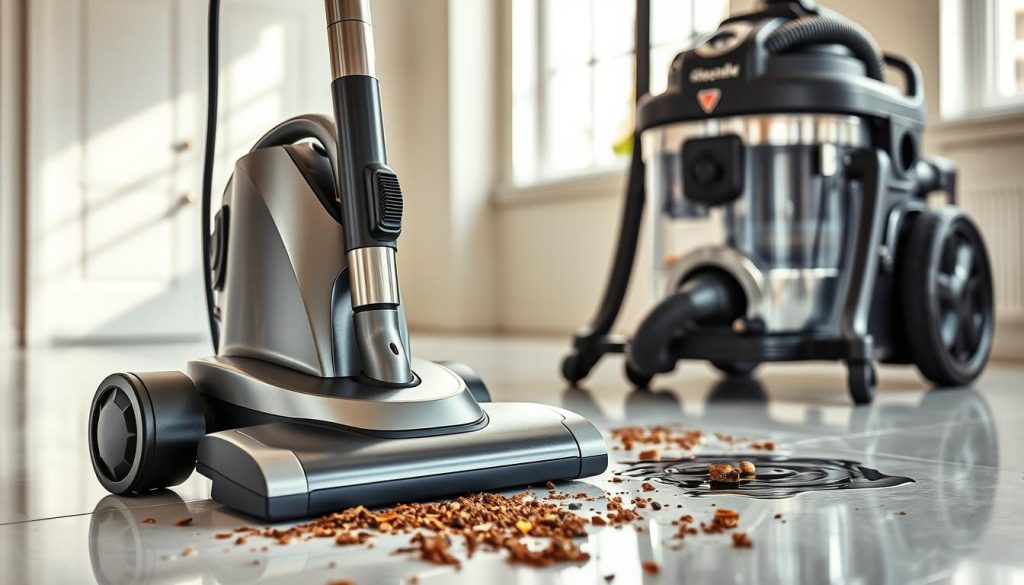
Dry vacuums are tuned for loose dust, crumbs and pet hair. They collect debris into bins or bags with focused suction and often better filtration for allergens.
Wet dry vacuums cope with mixed messes and liquid spills. Their rollers, water flow and sealed paths lift sticky residues and capture dirty water into larger tanks.
Where each performs best
For carpets and rugs we favour a dedicated dry unit. On hard floors, kitchens and bathrooms a hybrid unit gives faster, one-pass cleaning for spills and tracked-in water.
Suction power and cleaning results
Strong suction wins with fine dust and deep pile carpets. For heavy-duty clean-up, suction plus brush action and water produces better real-world results on sticky spots.
Capacity and maintenance
Dustbins and bags are quick to empty but fill faster. Larger tanks on wet-capable units mean fewer refills, yet they need rinsing, drying and odour control to stay hygienic.
Size, storage and running costs
Compact units suit small Singapore flats; larger hybrids are bulkier but more versatile. Budget for replacement rollers, filters and consumables—spares availability affects lifetime costs.
Quick summary: choose a dry option if most messes are loose and dusty; pick a wet-capable model if spills or mixed messes are frequent; select a hybrid when your cleaning needs are consistently varied.
Which vacuum cleaner should we buy for our cleaning habits?
Our cleaning habit, not specs on a box, should guide which model we buy. Start by listing typical messes and how often they appear. That makes the choice clear and keeps maintenance realistic.
When a dry vacuum is the right fit for routine cleaning
If we mainly face loose dust, crumbs and pet hair, a dry vacuum is sensible. It is light, quick to deploy and often has better filtration for allergies.
If carpets and rugs are the main surfaces, prioritise suction and a quality brush head for deep pickup.
When a wet dry vacuum suits spills and pet accidents
Choose a wet dry vacuum when spills, pet accidents or rainy footprints are frequent. It replaces mop plus bucket for many daily cleanups and reduces tool swapping.
For quick spot cleanup after meals or children’s play, a hybrid unit saves time.
Hard-floor wet units versus versatile wet dry options
Pick a wet vacuum focused on hard floors when your home is mostly tiled or timber. Opt for a wet dry model when you want flexibility across carpets and hard floors.
| Habit | Best pick | Why |
|---|---|---|
| Mostly carpets, weekly vacuum | Dry vacuum | Lightweight, strong suction, easier filtration |
| Frequent spills, pets, entryway mud | Wet dry vacuum | Handles liquids, one-pass cleanup, larger tanks |
| Mixed surfaces, tight schedule | Hybrid wet dry | Versatile for quick resets and deeper cleans |
We may pair tools: keep a dedicated dry unit for rugs and a wet-capable machine for kitchens. For upholstery care, see our sofa cleaning guide at sofa cleaning guide.
What to look for when buying a wet dry vacuum in Singapore
For city flats we want a unit that balances usable tank size with easy handling and storage.
Tank capacity trade-offs
Capacity around 500–700 ml per tank suits compact apartments. That size cuts refills while keeping the unit light enough to lift and push.
Runtime and charging
Target 20–30 minutes runtime for a single quick clean. Dock-based storage and faster charging matter more than headline runtimes for daily use.
Manoeuvrability and reach
Choose swivel steering, balanced weight and a low-profile head. These features help access under beds and sofas without awkward angles.
Adjustable water flow and hygiene
Adjustable water flow protects delicate floors and handles sticky messes when needed. Look for dual-tank separation, washable filters and one-button self-clean cycles to cut odour and maintenance.
| Need | Suggested spec | Why it matters |
|---|---|---|
| Compact flats | 600 ml clean / 450 ml dirty | Fewer refills, manageable weight |
| Daily quick cleans | 20–30 min runtime, dock | Grab-and-go readiness |
| Under-furniture reach | Low-profile head, swivel | Easier access, faster results |
Comparing key features across popular wet dry vacuums and hybrid options
We compare what shoppers actually pay for: automation, rugged build and real‑world tools that solve everyday messes. This helps us decide if a model suits busy Singapore flats or heavier tasks.
Dual‑mode and sensor‑led performance versus manual controls
Sensor systems like the Roborock F25 ACE switch modes when moisture or surface type is detected. They offer app customisation, adaptive suction and larger dual tanks for longer clean cycles.
Manual controls keep things simple and lower maintenance: fixed settings, fewer electronics and easier repairs.
Build quality for tougher jobs
Robust seals, washable HEPA and sealed airflow hint at units that cope with renovation dust, sawdust and occasional water extraction.
For heavy jobs we favour solid chassis, larger filters and reliable seals over lightweight plastics.
Real‑world use cases
- Dining: crumbs and soup drips cleared in one pass with roller plus suction.
- Pet corners: fur and small splashes handled by mixed mode.
- Entryways: tracked grit and wet footprints cleaned fast.
- Car interiors: tight tools and good suction reach crevices.
| Feature | Sensor‑led hybrid | Simple manual model |
|---|---|---|
| Tank setup | Dual‑chamber, larger capacity | Single bin, easy emptying |
| Automation | Adaptive suction, app control | Preset speeds, direct switches |
| Durability | Waterproof seals, rugged parts | Lightweight, less robust |
Conclusion
We end with a practical view: a purpose-built unit handles routine dust and simple upkeep best, while a hybrid system combines suction and water handling for mixed spills and quick one-pass tasks.
Keep hygiene front of mind. Empty and rinse dirty tanks after use, run any self-clean cycle, and air‑dry removable parts to avoid smells and keep the machine ready.
Rule of thumb for Singapore homes: if wet footprints, kitchen drips or pet accidents are frequent, a wet-capable model pays off; if most mess is loose and dusty, a dry option is enough.
Buying takeaway: shortlist by floor type, maintenance tolerance and storage. Choose the model that fits our routine and we will use it — that is the best path to a cleaner home.

