

We’ve updated our Singapore-focused roundup after fresh testing of popular and specialist options. Our aim is clear: help busy households, renters and pet owners pick the right product for everyday upkeep and quick stain emergencies.
We set realistic expectations. These sprays work best on fresh spills and common marks, and they reduce residue on most upholstery when used correctly.
What we judged as “best” combined performance, safety and practicality. We prioritised food, oily marks and tracked-in grime, and we note that Singapore’s heat can affect odour and drying time.
Later sections explain fabric type, cleaning codes and when a spray suffices or when deeper treatment is needed. Each recommendation links to a real use case so you can match a product to your sofa and stain problem.
Why a sofa cleaner spray belongs in every Singapore home
Having a targeted cleaning solution within arm’s reach keeps small marks from turning into big problems. We recommend keeping one in a cupboard near living areas so you can act fast after meals or when children and pets are around.
Fast spot-cleaning for spills, dirt and everyday stains
Act quickly. Treat fresh spills with a gentle, targeted product and a clean cloth to blot rather than rub. This stops many stains setting and avoids heavy scrubbing that wears fabric fibres.
Targeted solutions lift dirt from armrests, headrests and seat fronts—areas that darken first even when the rest of the seating looks fine. We favour a least-effort, best-impact approach: spray a small amount, wait briefly, then blot.
Upholstery care that helps extend the lifespan of fabric and leather sofas
Regular spot work reduces ground-in soils and abrasion, keeping appearance consistent across the whole piece. For leather seating, use leather-specific products rather than a standard upholstery option to avoid drying or discolouration.
- Quick spot treatment prevents deep-set marks and long drying times in humid conditions.
- Less frequent heavy cleaning preserves weave and colour.
- For full-sofa refreshes, consider a portable cleaner; for tips on a different method see our guide on how to clean a sofa with a carpet.
How we tested sofa and upholstery cleaners for real-world stain removal
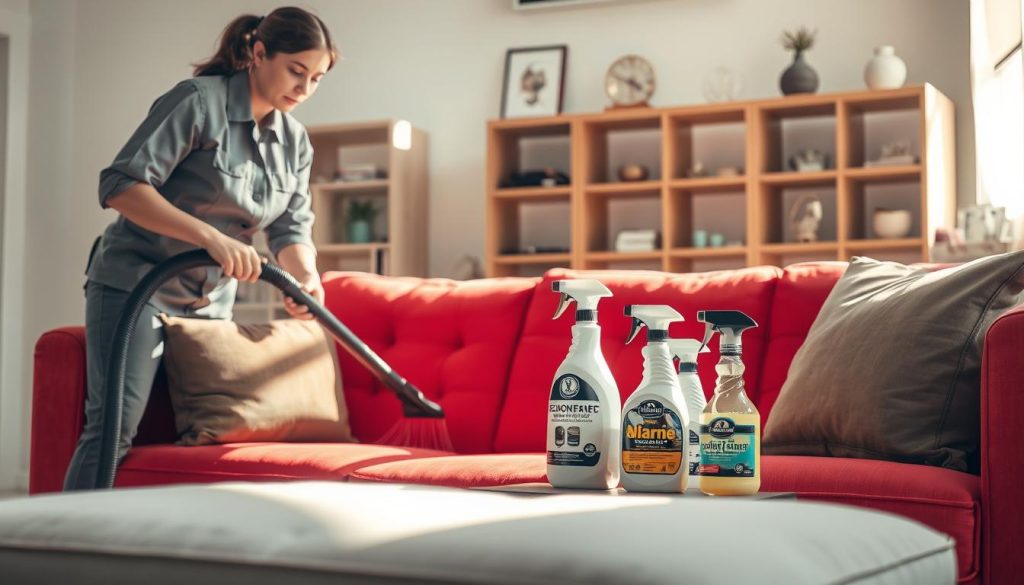
We tested each product on the marks people actually get in a busy home. That meant food splashes, greasy handprints and drink rings on common upholstery types used in Singapore.
What we looked for
We checked removal of food, oily stains, dirt and odour performance. Visual removal and smell neutralisation both mattered, since odours can linger after a stain looks gone.
Fabric safety checks
We watched for colour change, fibre roughening, watermarking and sticky residue. Any treatment that left stiffness or attracted new dirt failed our safety criteria.
Ease of use in practice
Instructions had to be clear and realistic for a living-room setting. We judged nozzle control, leak risk and whether rinsing and blotting required excessive towels.
- Practical drying was key — over-wet cushions trap odour and are unusable for hours.
- We compared products side-by-side so readers can match a solution to the fabric and the specific stain.
How to choose the right sofa cleaner spray for your fabric, stain and cleaning code
Start at the care tag — it tells you which chemistries are safe for each fabric. Read the label before any treatment so you avoid colour loss or textile damage.
Read the care tag first: Code W, S, WS and X explained
Code W = safe for water-based products. Code S = use solvent only. Code WS accepts either. Code X = no water or solvent; vacuum or pro help only.
Match the formula to the mess
Water-based and oxygen cleaners work well on coloured stains. Enzyme formulas tackle organic mess and odour. Solvent options remove grease.
“Test first on a hidden seam — that quick check prevents permanent rings.”
When to avoid sprays and safety basics
Delicate fabrics like silk or velvet and labelled X items need dry granules or professional help. Over-wetting can spread a stain and push dirt deeper.
| Care Code | Recommended Chemistry | When to avoid |
|---|---|---|
| W | Water / oxygen | Delicate silk, velvet |
| S | Solvent | Water-based products |
| WS | Water or solvent | Test for colour change |
| X | Dry clean / professional | No wet cleaning |
Practical tip: follow a strict spot-test on a hidden seam, ensure good ventilation and avoid using general leather products on leather — choose a leather-specific treatment instead.
Best sofa cleaner spray picks we recommend in Singapore right now
Here are our top picks that performed best across common Singapore stains and fabrics. We list the strength of each product and quick usage notes so you can match a solution to the mess.
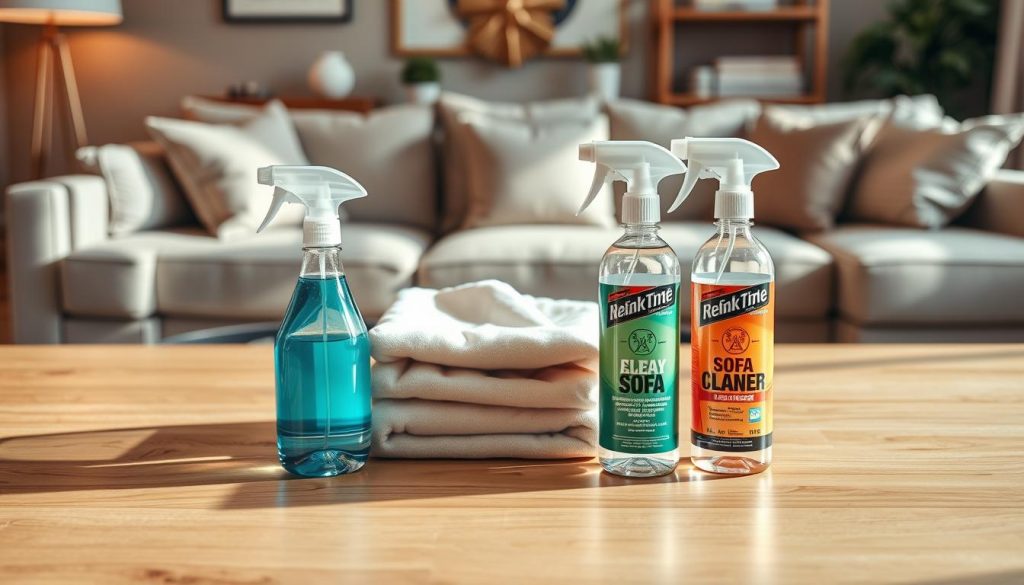
Woolite INSTAclean — fast stain and odour removal
Why buy: contains Oxy (hydrogen peroxide) for rapid colour lift and odour control. Fast action: apply, wait about one minute, then blot.
Best for W and WS fabrics. Avoid silk, velvet, vinyl and leather. Generally no extra rinsing needed.
Method Stain and Odor Treatment — plant-based option
Why buy: clear, non-sudsy formula with a Spearmint Sage scent. Spray, wait ~10 minutes, then blot and rinse if desired.
Good for households preferring greener cleaning that still handles stubborn marks on W and WS tags.
Bissell Professional — pet stains and lingering smells
Why buy: enzyme formula targets bacteria and odour at source. Use on upholstery, carpets and mattresses.
After treatment, keep the area slightly moist under a cloth for 12–72 hours to let enzymes finish the job.
Sunbrella Stain Remover — oily and outdoor cushion stains
Why buy: spray-on, dries to a white powder you vacuum or brush away. Excellent on grease, coffee and barbecue marks.
May need repeat applications for old, heavy stains.
Wine Away — red wine and other red spills
Why buy: works on contact and fades colour quickly. Non-sudsy but requires rinsing or washing after use.
Clean Care Premium — multipurpose, premium upholstery option
Why buy: non-toxic, eco-friendly and multi-surface. Spray, rub, rinse and dry leaves no residue.
Pairs well with a deodoriser or water repellent for ongoing protection.
New Fabric Cleaner (waterless foam) — budget-friendly fast jobs
Why buy: fast-drying foam uses biodegradable surfactant. Shake, spray from 10–15 cm, wait 1–2 minutes, then wipe.
Ideal for quick touch-ups on chairs, car seats and small upholstery areas when time matters.
Best alternatives when a spray isn’t enough
There are cases where a quick spot job fails — heavy soiling, old set‑in stains and deep-smell issues need stronger solutions. For larger problems we recommend moving to extraction, dry-clean style granules or specialist leather care.
Portable deep clean for full‑sofa refreshes
Bissell Little Green Multi‑Purpose Portable Carpet and Upholstery Cleaner is ideal when dirt and odour sit below the surface.
Fill the tank with water and Bissell formula, spritz the area, gently scrub with the soft brush, then vacuum the solution back into the machine. Extraction removes more moisture and grime than blotting with a cloth.
It is compact and reaches crevices, but can be loud and needs drying time. Best for W and WS code fabrics.
Dry‑clean style for delicate fabrics
Capture Carpet & Rug Dry Cleaner granules brighten and lift without water spots. Sprinkle, brush in, leave 30 minutes, then vacuum.
This low‑moisture method suits fragile fabrics and mixed care codes. For very old set‑in stains, professional upholstery cleaning may be necessary.
Leather care for seats and car interiors
Furniture Clinic Leather Care Kit delivers a two‑step clean and protect routine. The cleaner lifts grime and dye transfer while the protector restores suppleness and repels future marks.
Using leather-specific products preserves finish and makes later cleaning far easier than repurposing general products.
| Situation | Recommended option | When to choose |
|---|---|---|
| Deep dirt and odour | Bissell Little Green | Full extraction for W/WS fabrics |
| Delicate or dry‑clean code | Capture granules | Low‑moisture brightening |
| Leather surfaces | Furniture Clinic Kit | Clean, protect and maintain finish |
How we use sofa cleaner sprays for the best results
A clear, repeatable method is the quickest route from spill to spotless. Below we list the steps we follow and the simple rules that protect fabric and colour while removing stains.
Step-by-step spot cleaning
Remove solids first. Blot fresh spills with a clean cloth — never rub. Apply product evenly and respect the dwell time.
Quick‑action options like Woolite INSTAclean: apply and let sit ~1 minute, then blot. For slower formulas such as Method, spritz and wait ~10 minutes before blotting.
Rinse only when the label asks or if residue feels tacky; use minimal water and blot dry to speed drying in Singapore’s humidity.
Foam technique for waterless jobs
Shake well. Hold the can 10–15 cm from the area, spray a controlled amount, wait 1–2 minutes, then wipe off with a dry towel. This avoids over‑wetting and leaves minimal residue.
Preventing water marks and over‑wetting
Treat the whole affected area, feathering the product from the centre outwards to avoid rings. For enzyme formulas like Bissell, cover the treated section with a moist cloth for 12–72 hours to let enzymes neutralise odour.
Use fans and open windows where possible so upholstery dries fully. Avoid soaking cushions or backrests.
“Test on a hidden seam before treating visible areas.”
- Checklist: remove solids, blot don’t rub, respect dwell time, minimal rinsing, dry thoroughly.
- Avoid common mistakes: aggressive scrubbing, mixing chemicals, using too much water, skipping a hidden test.
Conclusion
The clearest path to long‑lasting seats is choosing treatment by fabric and stain type. Match products to the care tag, use controlled moisture and respect dwell time to get the best cleaning results for fabric and leather alike.
For everyday spills keep one dependable option at home, a specialist for red wine or grease, and an enzyme product when odour is an issue. If marks have sunk deep or smell persists, upgrade to a portable extractor for a full upholstery refresh.
Always test first on a hidden seam and avoid water on fabrics that forbid it. For fuller guidance on choosing the right product and method, see our practical guide on upholstery care.
Act quickly: blot with a clean cloth, use minimal water and dry the whole treated area evenly. That simple routine protects your home and keeps stains from becoming permanent.

