

We start by telling readers what to expect from a top-rated cordless wet and dry vacuum cleaner for home model. In Singapore, demand is rising because busy households need tools that handle both spills and daily dust without fuss.
We are comparing real, residential units — not industrial shop gear. Our aim is clear: show which machines save time and stop task switching. Key wins include quick spill pickup, strong suction for hair and grit, and easy tank separation.
Our tests focus on floors, tank layout, suction, runtime, edge reach and manoeuvrability. We explain who benefits most: families with kids, pet owners and those in mixed-floor HDB flats. We also note when a simpler device still meets needs.
For practical tips on carpet care and compatible solutions, see our guide on how to clean carpet with Lura.
– We define expectations and market fit for Singapore homes.
– We compare residential models with clear test criteria.
– We highlight who gets the most benefit and when simpler options suffice.
Why we’re choosing a wet dry vacuum for Singapore homes right now</h2>
Singapore living asks for fast, reliable cleaning that handles spills and grit without fuss. We prefer a single machine that saves time after meals, rainy entries and sudden spillages. This approach reduces chores and keeps living spaces ready for guests or children at short notice.
What makes wet dry cleaning ideal for spills, debris and daily messes
One‑pass cleaning is the main advantage: solids and liquids lift in a single go. That means less time swapping between a mop and a dry unit. Controlled water flow prevents over‑wetting while removing sticky residue and light dirt.
When a robot vacuum isn’t enough for wet and dry messes
Robot vacuum models handle routine dust and small particles well. They struggle with puddles, sticky stains and larger debris. We treat the robot as part of a toolkit, not a full replacement.
Trade‑offs are real: stronger motors add weight and noise. Still, for busy households with kids or pets, the one‑machine value is clear. It becomes a practical cleaning tool that answers surprise messes with speed and effectiveness.
Top picks at a glance for cordless wet and dry cleaners</h2>
Here is a quick snapshot of our top picks so you can shortlist models in under a minute. Each entry notes the key win and typical floor compatibility in Singapore flats. We focus on real benefits that save cleaning time and effort.
Overall best: Tineco Floor One Switch S7 Stretch
Why it wins: Smart iLoop sensor and dual-side edge cleaning to reach ~0.5cm from skirting. Good on hard floors and mixed surfaces. The Floor One system balances suction and water flow.
Best for pet hair: Bissell CrossWave X7 Cordless Pet Pro
Why it wins: Turbo Pet mode and dedicated solution make hair and dander removal quicker on rugs and floors.
Best budget buy: Simplus Cordless Wet-Dry Vacuum Cleaner
Why it wins: 180° flat-folding design and 6.5cm brush head for tight spots at a lower price.
Most manoeuvrable: Narwal S20 Pro
Why it wins: AI Dirt Sense, five modes and triple-sided edge cleaning make corner work efficient.
Best for hot water mopping: Dreame H15 Pro Heat
Why it wins: 85°C hot water mode handles stubborn stains, though it is heavier in overall design.
| Model | Key feature | Best use | Notes |
|---|---|---|---|
| Tineco Floor One S7 | iLoop sensor | Mixed messes | Edge cleaning, smart flow |
| Bissell CrossWave X7 | Turbo Pet mode | Pet hair | Solution included, rugs ok |
| Simplus | Flat-fold 180° | Budget, tight spaces | Low price, 6.5cm head |
| Narwal S20 Pro | AI Dirt Sense | Manoeuvrability | Triple edge clean, 5 modes |
| Dreame H15 Pro Heat | 85°C hot water | Stubborn stains | Heavier, strong hot water mode |
How we tested and compared these wet dry vacuums</h2>
We ran a set of hands‑on tests to see how each model performs on real Singapore floors. Our aim was simple: compare cleaning honesty, not marketing claims.
Hard floors, rugs and edge cleaning performance
We scored models on streaking, residue removal and how the head follows grout lines on hard floors. Each run was timed in minutes to reflect realistic use.
Rugs received a surface test to check pile lift and tangling. We graded edge cleaning by how close the brush reached skirting lines and corners.
Dry messes vs dirty water pick-up and tank separation
We separated dry messes such as crumbs and hair from wet pick-up. This highlighted machines that excel at solids but struggle with dirty water.
Tank system design was central. Dual‑tank separation earned higher marks because it kept clean water separate from dirty water and improved hygiene.
Battery life, charge time and real-world runtime
We measured battery life in real minutes across normal and boost modes. Charge time and system runtime influenced final scores for weekly cleaning routines.
| Test area | Key metric | Why it matters |
|---|---|---|
| Hard floors | Streaks, grout follow | Shows residue removal and head tracking |
| Rugs | Pile lift, tangles | Indicates gentle yet effective cleaning on textiles |
| Edges | Proximity to skirting | Determines corner and skirting line cleanliness |
| Tank system | Clean vs dirty separation | Affects hygiene and re‑deposit risk |
| Battery life | Minutes per run | Practical planning for weekly chores |
What a wet and dry vacuum cleaner is and how the dual-tank system works</h2>
Understanding how the dual-tank arrangement works helps buyers avoid messy surprises. These machines handle both liquids and solids in a single pass. Unlike a standard dry device, the system delivers clean water to the brush or pad while collecting used water separately.
Clean water tank vs dirty water tank: why it matters
The clean water tank holds fresh water and any approved cleaning solution. It feeds the roller or pad so the floor is washed, not just rubbed.
The dirty water tank collects what the head removes. Keeping the two tanks separate prevents re‑depositing grime and limits smells.
Cleaning solution compatibility and everyday upkeep
Use only recommended cleaning solution to avoid blockages or residue. Some brands suggest their own mixes to protect internal lines and seals.
- Empty dirty water after each use.
- Rinse both tanks and dry before storage.
- Run self‑clean cycles if the system offers them.
Outcome: Proper tank care means fewer streaks, better odour control and more reliable results across a full clean.
What to look out for before buying a cordless model</h2>
We focus on four practical specs so you can compare models without getting lost in marketing. Look at tank capacity, true suction power, the filter system and the accessories that matter. These decide whether a machine lives in a cupboard or on daily duty.
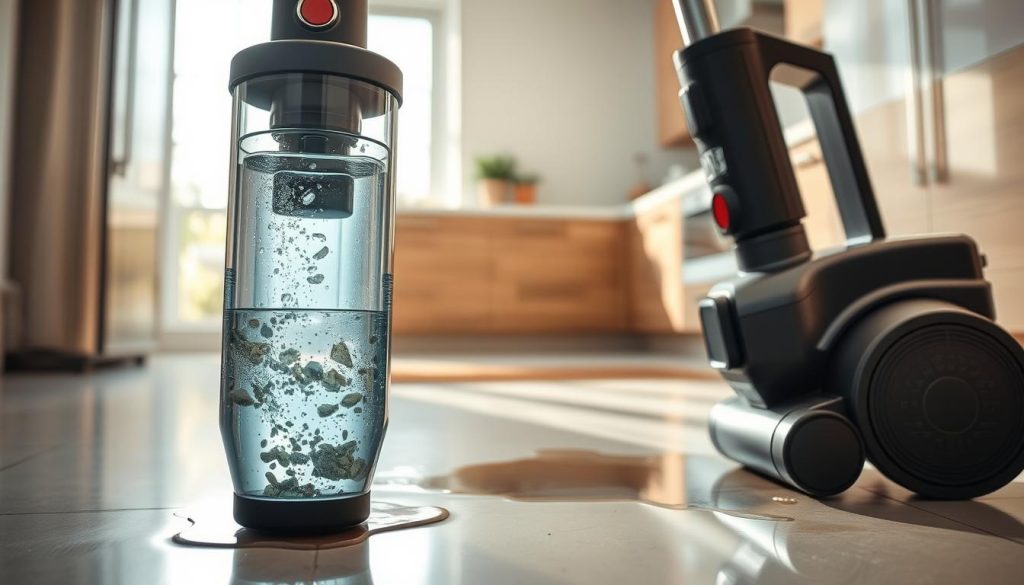
Tank capacity for HDB flats vs landed homes
Smaller tanks suit compact flats: they keep weight down and make storage easier. Larger tanks reduce refill stops on bigger floors, but add to weight and bulk.
Suction power and the trade-off with noise and weight
Higher suction power removes embedded dirt and pet hair faster. It often increases noise and overall weight, so balance cleaning needs against handling.
Filter system and when a HEPA filter helps
Standard filters work for routine dust. A HEPA-grade filter helps when occupants have allergies or when fine particles are a concern.
Cordless convenience: handling, storage and portability
Look beyond no-cable marketing. Check battery life, dock design and how the unit feels when you lift it. Good storage keeps the tool accessible so you actually use it.
Accessories and attachments that actually save time
- Useful: crevice tool, extra rollers, multi-surface heads.
- Skip: novelty add-ons that rarely leave the box.
“Practical choices beat headline specs — pick what matches your floors and routine.”
For deeper battery guidance see our battery performance notes.
Tank capacity: choosing the right clean water tank and dirty water capacity</h2>
Choosing the right tank means fewer pauses mid-clean and a better fit with our weekly routine. Tank and capacity decisions shape how long a single run lasts and how often we stop to empty or refill.
Smaller tanks for quick cleans and tight storage
Smaller clean water tanks (around 500ml) suit quick spot cleans in flats. They keep weight down and make the unit easier to lift into cupboards.
Expect to empty the dirty water tank more often — typical dirty water sizes run ~420ml in compact models.
Larger tanks for fewer refills on bigger floors
Larger clean tanks (up to 1,000ml) and dirty tanks (up to 720ml) reduce interruptions across bigger areas. That saves time when we do full flats or deal with repeated spills.
Tip: Match claimed capacity to your floor area, how wet the roller runs and kitchen grease levels. This gives a realistic idea of how many minutes you get before a refill.
- Quick guide: 500–600ml clean tanks suit short sessions; 800–1,000ml suit larger spaces.
- Handling: Bigger tanks can alter balance and feel heavier, even when specs look similar.
For deeper model comparisons, see our side-by-side review — tank capacity comparison.
Suction power explained for wet dry vacuum performance</h2>
Suction is the single spec buyers read most, but it needs context to be useful.
We explain the two common metrics so you can compare like‑for‑like. Manufacturers list Pascal (Pa) figures and Air Watts. Pa shows pressure; Air Watts mixes airflow and pressure into a single number.
Pa vs Air Watts: how to compare like-for-like
Many cordless models quote 20,000–22,000 Pa. Dyson Submarine variants list roughly 130–140 Air Watts. Use these figures as a guide, not a guarantee.
Key takeaway: higher Pa or Air Watts usually means faster pick‑up of loose debris and quicker removal of embedded dirt.
When higher suction helps with debris, pet hair and heavier dirt
More suction cuts repeat passes. It lifts grit from textured tile and helps pull pet hair from fibres.
But suction numbers alone do not tell the whole story. Brush design, roller speed and water flow in a wet dry vacuum affect real results.
“Chasing top numbers can add noise and extra weight without matching gains for small flats.”
- Worth paying for: heavy dirt at entrances, matted pet hair, large dry messes after meals.
- Not always needed: light debris in compact flats — moderate power often suffices.
We advise balancing suction power against handling and noise when choosing a unit for Singapore living. Manual machines typically feel much stronger than robot devices for spot cleaning and edge work.
Battery life and runtime: how many minutes you really get per clean</h2>
Understanding how different cleaning modes affect minutes of use helps us plan a single uninterrupted session. Manufacturers quote ideal figures, but real runtime shifts by mode, load and heating cycles.
Normal mode vs high power vs hot water
Normal mode delivers the longest runtime. Models such as the Dreame H15 Pro Heat list up to 70 minutes in standard use. The Narwal S20 Pro and Simplus also sit around 50–60 minutes.
High power cuts minutes significantly. The Bissell X7, for example, drops to ~30 minutes under heavy use. Hot water mode reduces runtime the most because the system heats water while running; Dreame falls to about 25 minutes in heat mode.
Charge time planning for weekly deep cleans
Charge time matters when you want one continuous deep clean. Expect 3.5–4.5 hours to return to full charge, depending on model. We recommend charging the night before full sessions.
Practical checklist:
- Map your rooms by minutes: bedrooms first, living areas next, kitchen last.
- Prefer normal mode for coverage; use boost only for stubborn spots.
- Look for clear indicators and steady suction as the battery nears its end.
“Plan around realistic minutes, not lab figures; sensible charge time planning saves interrupted cleans.”
| Model | Claimed runtime (normal) | Charge time |
|---|---|---|
| Dreame H15 Pro Heat | 70 minutes (normal) / 25 minutes (hot water) | 4 hours |
| Tineco S7 Stretch | 50 minutes (washer) / 70 minutes (vacuum) | 4.5 hours |
| Narwal S20 Pro | 60 minutes | 3.5 hours |
| Bissell X7 | 30 minutes | 4 hours |
| Simplus | 50 minutes | 4.5 hours |
Edge cleaning and lie-flat design: getting into corners and under furniture</h2>
Tight corners and low furniture reveal the real strength of any floor cleaning system. Small skirting gaps and sofa undersides collect dust and pet hair quickly, so edge cleaning is a practical differentiator.
Dual-side versus triple-sided reach
Dual-side brush rollers can run very close to the wall; Tineco’s design reaches about 0.5cm from the skirting with consistent results. Triple-sided heads, like the Narwal S20 Pro, add extra contact on corners and side walls.
What this means: a closer brush reduces repeat passes along skirting lines and cuts follow-up spot work.
Lie-flat, flat-fold designs and under-furniture access
Flat-folding heads let the machine lie flat and glide under low consoles and sofas. This design keeps lifts and awkward angles to a minimum in compact Singapore flats.
Lower head height and the right brush shape matter as much as claimed specs. Even top models can miss ultra-tight gaps if the brush profile is too tall.
Manoeuvrability on hard floors
We judge manoeuvrable units by swivel feel and traction assistance. A smooth head that turns easily on hard floors makes daily use faster and less tiring.
“Better edges mean fewer handheld touch-ups after a main pass.”
- Practical tip: pick a design that balances low clearance with a protective brush to avoid marks on skirting.
- Expectations: edge cleaning improves coverage but may not replace a narrow crevice tool for the tightest gaps.
Overall best cordless wet dry vacuum: Tineco Floor One Switch S7 Stretch</h2>
This model stands out because it reads the floor and adjusts itself in real time. The floor one system uses smart iLoop technology to vary suction and water flow as mess levels change. That reduces repeat passes and limits over‑wetting on tiled or timber floors.
Key specs at a glance
Clean water tank: 1,000ml. Dirty water: 720ml. Runtime: up to 50 minutes (washer) / 70 minutes (vacuum). Weight 4.7kg; suction 22,000 Pa.
Why the iLoop technology matters
The iLoop sensor detects dirt and adjusts suction and water output automatically. That smart approach saves water and battery minutes while keeping results consistent.
Edge reach and practical design
The dual-side brush roller cleans to about 0.5cm from skirting. The switchable format also becomes a stick tool, so we use one system for mixed messes and quick dry tasks.
“Smart automation, strong suction and clear LCD feedback make daily cleaning less guesswork.”
| Feature | Spec | Benefit | Why it suits Singapore flats |
|---|---|---|---|
| Clean water tank | 1,000ml | Fewer refills | Good for 3-room flats and spot spills |
| Dirty water tank | 720ml | Less topping-up | Hygienic separation reduces odour |
| Runtime | 50–70 minutes | Long sessions | Supports full-floor runs in normal mode |
| Technology | iLoop + LCD | Adaptive cleaning | Less repeat work, clear user feedback |
Best for pet hair and rugs: Bissell CrossWave X7 Cordless Pet Pro</h2>
Pet households need a tool that lifts hair, soiled paws and tracked-in grit without multiple gadgets. The Bissell CrossWave X7 Pet Pro is built with that brief in mind.
Turbo Pet mode and cleaning solution for stubborn stains
Turbo Pet mode boosts agitation and suction power to pull embedded hair from low-pile rugs and tight grout lines. Use it after heavy shedding or small accidents to reduce repeat passes.
Cleaning solution plays a key role. The branded mix breaks down oily paw marks and tracked-in dirt so the roller lifts residue rather than smearing it.
Key specs and real‑world use
Specifications matter to how we actually clean. The CrossWave X7 has an 820ml clean tank and a 420ml dirty water tank, up to 30 minutes runtime and roughly 20,000 Pa listed suction power.
That setup suits quick, frequent sessions across living areas and rugs rather than a single long deep clean. Emptying the dirty water after runs keeps odours down and performance steady.
“A practical pick for pet owners who want one unit that handles hard floors and low rugs without constant tool changes.”
| Model | Key spec | Value |
|---|---|---|
| Bissell CrossWave X7 | Clean tank | 820ml |
| Bissell CrossWave X7 | Dirty water | 420ml |
| Bissell CrossWave X7 | Runtime | Up to 30 minutes |
Best budget cordless wet-dry vacuum: Simplus Cordless Wet-Dry Vacuum Cleaner</h2>
A practical pick for small flats, Simplus balances runtime and reach while staying affordable.
Key specs: 500ml clean tank; 550ml dirty tank; 21,000 Pa suction; weight 4.4kg; up to 50 minutes runtime; 4.5 hours charge time.
What we like: the slightly larger dirty tank helps when floors are grimy after cooking or heavy foot traffic. It means fewer stops to empty when you tackle kitchens or entrances.
Design wins: a 180° flat‑folding head lets the unit lie flat and reach under low sofas and cabinets. The narrow 6.5cm brush head targets corners and tight gaps near kitchen units.
Expectation setting: at this price you won’t get advanced sensors or premium fit‑and‑finish. What you do get is a robust basic system that handles mixed spills and dust with reliable runtime.
“Great value for cost-conscious households that still want cordless convenience and useful runtime.”
| Spec | Value | Why it matters |
|---|---|---|
| Clean tank | 500ml | Good for spot cleans |
| Dirty tank | 550ml | Fewer emptying stops |
| Brush head | 6.5cm | Reaches tight corners |
Most manoeuvrable pick: Narwal S20 Pro</h2>
When we assess handling, we judge real motions: tight turns, gliding under low furniture and quick room changes. The Narwal S20 Pro earns its “most manoeuvrable” tag by making these moves feel effortless.
Key specs matter in practice. The unit has a 790ml clean tank and a 720ml dirty tank, offers up to 60 minutes runtime and lists 20,000 Pa suction. It weighs 4.27kg and reaches full charge in about 3.5 hours.
How AI Dirt Sense helps
AI Dirt Sense monitors floor conditions and raises or lowers power automatically. That saves battery on light passes and boosts intensity where mess is heavier.
Five modes and where to use them
- Quick refresh — short touch-ups in living spaces.
- Everyday clean — general passes across mixed floors.
- Heavy mess — more suction for tracked-in grit or spills.
- Edge mode — targeted runs along skirting and furniture bases.
- Custom mode — settings you pick for specific rooms.
Triple-sided edge cleaning is a practical win. It reaches closer to walls and corners, so skirting lines look cleaner without extra handheld work.
“If handling and edge finish matter more than headline power, this is a sensible pick for busy, furniture-rich flats.”
| Feature | Spec | Practical benefit |
|---|---|---|
| Clean tank | 790ml | Longer runs between refills |
| Dirty tank | 720ml | Less frequent emptying |
| Runtime | Up to 60 minutes | Supports full-room cleans in normal mode |
| Handling | Flat-folding head + triple-sided | Easier turns and better edge reach |
Best for hot water mopping: Dreame H15 Pro Heat</h2>
When oily splashes and dried sauces won’t lift, heat-assisted mopping often succeeds where cold water fails. The Dreame H15 Pro Heat is aimed at households that need stronger stain removal without extra scrubbing.
85°C hot water mopping for stubborn stains and oil spills
85°C hot water helps dissolve grease, break down cooked‑on sauces and lift oily residue from tiled kitchen floors and dining areas. In practice, this reduces repeat passes and the need for heavy chemical scrubs.
Key specs and real-world runtime
Key specs: 800ml clean tank; 650ml dirty tank; 22,000 Pa suction; weight 6kg.
The unit runs up to 70 minutes in normal mode but drops to about 25 minutes when using hot water mopping. Charge time is roughly 4 hours.
What to consider for wooden floors and heavier weight
The stronger heat and moisture can stress sensitive timber finishes. Test a small, hidden area first and avoid prolonged wet passes on raw or poorly sealed wood.
Flat‑folding design and auto‑traction wheels help manage the 6kg weight and improve under‑furniture access, but buyers should be comfortable lifting a heavier unit.
| Feature | Value | Why it matters |
|---|---|---|
| Hot water | 85°C | Breaks down grease and oily stains |
| Runtime (normal / heat) | 70 min / 25 min | Plan hot passes for small areas |
| Tanks | 800ml / 650ml | Good mid-size capacity |
“Best for buyers who prioritise deep stain removal and accept a heavier machine in exchange for hot-water performance.”
Dyson wet and dry options in Singapore: which Submarine model makes sense</h2>
Dyson’s Submarine range adapts the company’s stick-platform strengths into a combined washer and dry system. Their approach trades larger tank volumes for lightweight handling, strong cyclone suction and refined filtration. Below we outline the practical differences so you can decide if the premium makes sense for Singapore flats.
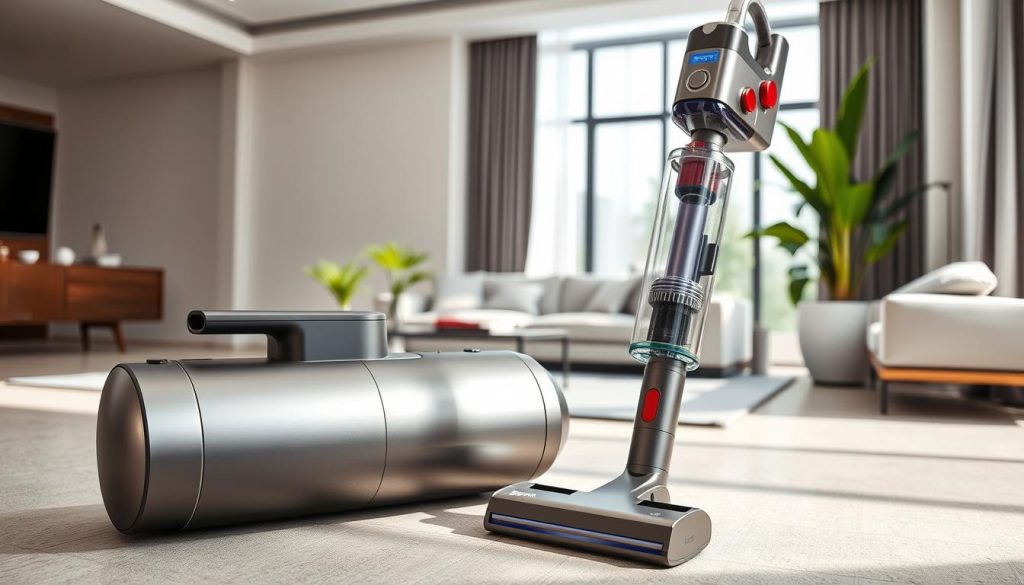
Dyson V12s Origin Submarine: lightweight design with advanced cyclone technology
Key specs: 300ml clean tank, 360ml dirty tank, 130 Air Watts suction, 2.2kg weight, ~60 minutes runtime, 3.5 hours charge.
We like the V12s Origin for its Root Cyclone technology and ultra-light feel. It suits quick, frequent cleans where lifting weight matters.
Dyson V12s Detect Slim Submarine: HEPA filter and Fluffy Optic head visibility
Key advantage: HEPA filter and Fluffy Optic head improve particle capture and show dust more clearly.
The Detect Slim boosts listed suction to 140 Air Watts and keeps the same 60-minute runtime. It is a better pick when air quality and fine dust removal are priorities.
Dyson Digital Slim Submarine: compact design and shorter runtime trade-off
The Digital Slim trades capacity and minutes for a smaller footprint. Expect about 40 minutes runtime. Choose this if storage space and a lighter carry are higher priorities than long continuous runs.
Why Dyson costs more: R&D, filtration and cordless performance
Price reflects: significant R&D, patented cyclone design, advanced filter system and a focus on consistent cordless performance.
“Dyson is worth considering when weight, filtration and refined suction matter as much as wet cleaning capability.”
- How Submarine differs: it blends stick-platform agility with limited tank size, not a full‑sized floor washer.
- Practical note: Air Watts matter when comparing to Pa-rated machines — Dyson lists high Air Watts that translate to strong real-world pick-up on hard floors and rugs.
- When it makes sense: buyers who prioritise light handling, a HEPA-grade filter system and premium design despite a higher price.
Cordless wet and dry vacuum cleaner for home: quick match guide by lifestyle and floors</h2>
We map common household routines to clear product strengths so you don’t overbuy. This fast guide helps you match features to how your family uses the space and saves cleaning time.
Homes with kids and frequent spills
Pick a model that responds quickly to messes. Prioritise larger clean and dirty tanks so you avoid constant stops.
Why it works: faster spill pickup, simple emptying and short setup mean less interruption to daily life.
Pet owners managing hair, dander and daily debris
Look for strong edge reach and brush design that lifts hair from skirting and low‑pile rugs. Filtration matters if occupants have allergies.
Focus: hair capture, reliable debris removal and easy roller maintenance to keep performance high.
Small flats prioritising storage, weight and fast cleaning
Choose compact units with a small footprint, lower weight and decent capacity for quick sessions. Good docks make storage easy and save time.
Large floor areas needing bigger tank capacity and longer runtime
We recommend bigger tanks, longer runtime and manoeuvrable heads to reduce fatigue. A balance of capacity and handling makes whole‑flat cleans realistic.
“The best pick depends on how often messes happen and how much time you want to spend maintaining the machine.”
Conclusion</h2>
Our final judgement balances everyday usefulness against specs and price. We favour a practical system that you will use often, not the model with the longest list of features.
Key points: a wet dry vacuum that pairs sensible tank size with steady suction and clear maintenance steps will serve most Singapore flats. Consider filtration, edge reach and how much water the tank holds before you commit. Dyson Submarine models justify higher cost when weight and HEPA filtration matter.
Actionable tip: pick one of our top recommendations, plan a simple upkeep routine and enjoy faster cleaning with fewer tools. Good upkeep keeps performance high and reduces long-term running cost.

