

We help households in Singapore keep sleep surfaces fresh and allergen-free. The city’s heat and humidity speed up dust, mould spores and odours, so routine cleaning matters more here than in cooler climates.
Our approach is practical and tailored. We match methods to your bed type, reduce bacteria and allergens, and explain realistic outcomes. You will notice a fresher sleep surface and fewer irritation triggers after our visit.
We are upfront about limits: deep, old stains and long-set smells may not vanish entirely. Still, our trained technicians follow a clear process and give simple aftercare tips so your results last longer.
For a quick guide on typical costs and what we remove, see our pricing note at how much it costs for mattress cleaning in. That helps you decide fast and book with confidence.
Why mattresses in Singapore need sanitisation, not just a protector
Humidity and crowded rooms mean what settles beneath the surface matters more than you think.
Singapore’s warm, moist environment lets a bed retain moisture from the air and from us. Poor ventilation traps heat and creates ideal conditions for dust mites, bacteria and mould to gain a foothold.
Even in a tidy home, everyday material builds up over time. Dead skin cells, body oils, perspiration and food crumbs collect in layers. These deposits feed microscopic pests and help odours develop.
Protectors cut surface soiling, but they do not remove what is already inside. They also cannot guarantee protection from dust mites, bed bugs or other microorganisms that live below the cover.
Regular cleaning is periodic hygiene maintenance—similar to deep-cleaning air‑con filters. We recommend treating the underlying problem so you stop waking to musty smells or irritation, and so the bedroom truly feels clean again.
- Practical note: compact rooms and limited drying options make routine maintenance more important in Singapore.
Hidden hazards we remove from your bed
Hidden contaminants in your bed can affect sleep quality more than surface dirt suggests. We target both visible marks and the microscopic irritants that cause symptoms for sensitive sleepers.
Dust mites and their waste
Humans can shed up to 10,000 million skin cells a day, and those cells feed dust mites. A female mite may lay up to 300 eggs in her lifetime, so populations grow quickly in warm, damp bedding.
We remove live mites and the faecal particles that commonly trigger allergic reactions.
Bacteria, viruses and fungal spores
Trapped moisture from sweat and poor ventilation encourages bacteria, mould and fungal spores to multiply. We address these microbial risks practically, focusing on reducing dampness and germ counts rather than alarmist claims.
Imported allergens and visible debris
Pollen, pet dander and airborne dust settle into the layers and can re-enter the room air. We also treat dirt, stains and lingering odours so the sleep surface feels and smells fresher.
Bed‑bug indicators we inspect
During inspection we look for spotting, shed skins and bite‑pattern complaints. If signs are present, we advise clear next steps; our inspection supports pest control rather than replacing it.
“Our goal is a measurably fresher, cleaner sleep surface with a reduced allergen load.”
| Hazard | Why it matters | What we target |
|---|---|---|
| Dust mites | Feed on dead skin; droppings trigger allergies | Live mites, eggs and waste particles |
| Microbes | Grow where moisture and sweat remain | Bacteria, mould and fungal spores |
| Allergens & debris | Pollen and pet dander re‑release into air | Embedded dust, pet hair, pollen and dirt |
| Stains & odours | Cause discomfort and poor sleep quality | Sweat, spills, organic stains and lingering smells |
In short, we aim to reduce allergens, dirt and germs so your bed surface is cleaner and more comfortable. A short inspection helps us tailor the cleaning plan and set realistic expectations.
Health and comfort benefits of professional mattress cleaning
A cleaner sleep surface can noticeably ease daily irritation and improve next‑day comfort. Regular care reduces the reservoir of dust, dander and micro‑debris that often causes common household complaints.
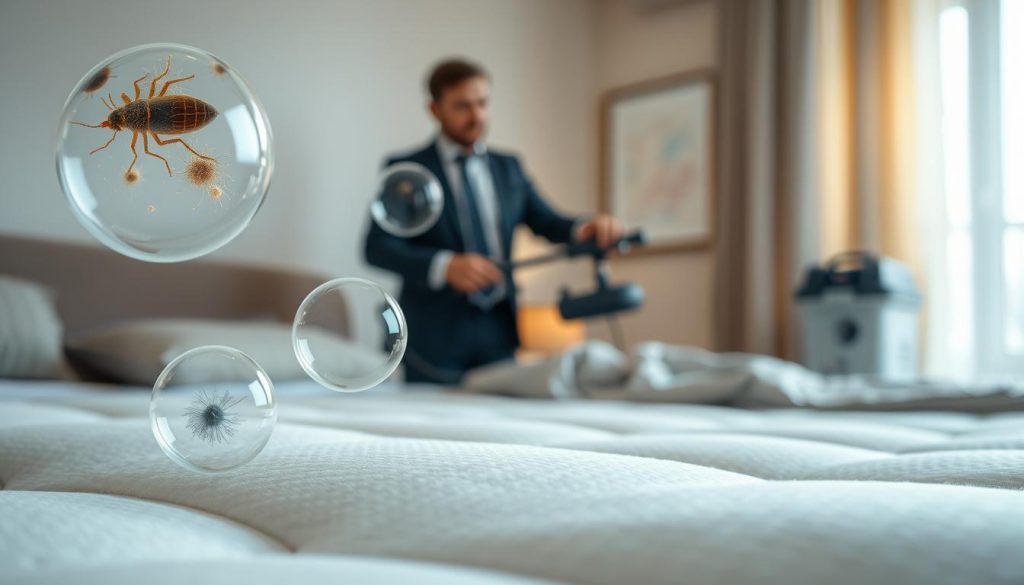
Reducing triggers linked to asthma, allergies, rhinitis, eczema and skin rashes
We connect cleaning outcomes to real symptoms people report, such as rhinitis flare‑ups, eczema discomfort and unexplained skin irritation after sleep.
We do not claim medical cures. Instead, we offer a practical step that lowers common triggers and can lessen nightly reactions for sensitive sleepers.
Supporting better sleep by addressing odours, irritation and “runny nose” mornings
Overnight exposure to dust mite waste and loose particles can cause throat irritation and a runny nose on waking.
Reducing odours improves perceived cleanliness and comfort, which helps people settle faster and stay asleep with fewer interruptions.
Improving bedroom air quality by preventing allergens becoming airborne
When bedding is moved, settled dust and allergens can re‑enter the room air. Targeted cleaning reduces that reservoir and helps keep indoor air fresher.
This is especially valuable in a humid environment like Singapore, where trapped moisture can magnify allergen growth if not managed.
“Regular, professional cleaning is a sensible hygiene step that reduces common household triggers and supports healthier sleep.”
| Issue | Common symptom | How cleaning helps |
|---|---|---|
| Dust & dust‑mite waste | Runny nose, coughing, itchy eyes | Reduces airborne particles and irritant load |
| Microbial growth | Odour, throat irritation | Lower germ counts and odour reduction |
| Pet dander & pollen | Allergies and skin flare‑ups | Removes embedded allergens from fibres |
For families and sensitive sleepers, regular professional mattress cleaning complements good ventilation and linen routines. It is a practical, non‑medical measure to improve health, sleep and overall comfort.
When to book a mattress sanitization service
A timely visit prevents small issues from turning into stubborn marks or ongoing symptoms.
Recommended schedule for Singapore
We advise a thorough cleaning every 3–6 months to stay ahead of humidity-related build‑up in Singapore. For general maintenance aim for twice a year. If you notice fresh stains or odours, book every three months.
Choose your schedule by concern
If you have visible stains, a quarterly visit gives the best chance of removal. For skin, sinus or dust‑mite allergies, we recommend monthly to once every two months until symptoms ease.
Who benefits most
Homes with young children, sensitive skin or respiratory histories see the biggest improvement. Pets, recent renovation dust, spills, illness or moving day are practical triggers to arrange a visit.
- Pick a convenient day and time when the room is free.
- Prepare the bed and clear nearby items to speed the cleaning process.
- We match the cleaning process to your needs during booking.
“Choosing the right interval keeps allergens low and problems manageable.”
Our on-site mattress cleaning process, from assessment to aftercare
We begin with a quick discussion on arrival to confirm priorities such as allergies, odours or visible stains. This helps us select the right solutions and avoid unnecessary treatment.
Consultation
We ask a few focused questions about symptoms, pets and recent events. This sets realistic expectations and guides the team on method choice.
Pre-clean inspection
We inspect for stain hotspots, lingering odours and any signs of infestation. A complimentary check for bed‑bug indicators is included and we advise next steps if needed.
Targeted preparation & stain treatment
Our team vacuums thoroughly to lift loose debris and allergens. We then treat common marks—sweat, food spills, blood and urine—while explaining likely outcomes.
Deep cleaning and aftercare
We carry out deep cleaning with the chosen method, using extraction where appropriate to remove moisture and reduce germs and bacteria. Finally, we give simple aftercare: ventilate, wait before remaking the bed and routine tips to keep results longer.
“We outline every step so you know what to expect and why each stage matters.”
| Stage | Purpose | Outcome |
|---|---|---|
| Consultation | Understand priorities | Tailored solutions |
| Inspection | Document stains and odours | Clear plan and pest advice |
| Preparation | Remove loose debris | Improved cleaning effectiveness |
| Deep cleaning | Reduce germs and bacteria | Fresher, healthier bed surface |
Learn more about our deep cleaning options at deep cleaning options.
Cleaning methods we offer for different mattresses and concerns
Different fabrics and concerns call for different approaches—here we explain the options and trade‑offs.
Dry cleaning: low‑moisture, chemical‑free refresh
What it is: A chemical‑free, minimal‑moisture method that brightens fibres and reduces surface dirt with low drying risk.
Best for: quick refreshes, delicate fibre blends and homes that need fast reuse.
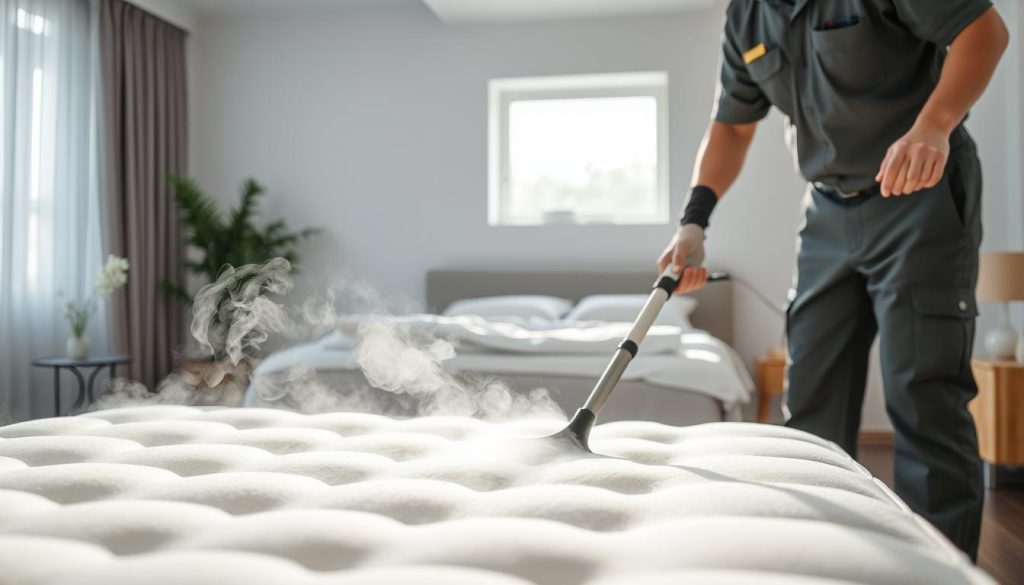
Steam options: hot vapour to loosen soil
What it is: Hot vapour that helps sanitise and loosen some surface dirt. Steam supports hygiene by reducing microbes on contact.
Realistic note: steam cleaning breaks down grime but may not remove deep embedded dirt on its own.
Deep cleaning and extraction
What it is: A combined chemical and extractor process that pulls out most dirt, stains and moisture.
Best for: natural fibres to avoid shrinkage, heavy soiling and odour reduction where a deeper clean is needed.
UV‑C: dry, fast disinfection
What it is: 100% dry, chemical‑free UV‑C light used for disinfection with no drying time required.
Benefits: suitable for all types, safe for babies and pets as described by providers, and useful for quick turnarounds.
BioShield treatment: added protection
What it is: A post‑cleaning layer to help reduce germs, bacteria and odours for longer‑lasting hygiene reassurance.
When to add it: recommended if you want extra protection after extraction or steam work.
“We present each method plainly so you can choose based on fibre, sensitivity and drying needs.”
| Method | Primary benefit | Best for |
|---|---|---|
| Dry cleaning | Low moisture; quick reuse | Delicate fibres, light dirt |
| Steam cleaning | Hot vapour sanitisation | Surface dirt, routine hygiene |
| Extraction / Deep cleaning | Removes most dirt and moisture | Natural fibres, heavy odours, deep soiling |
| UV‑C | Dry, no waiting time; ~99% claim vs germs | Guest rooms, rentals, urgent turnarounds |
| BioShield | Extended reduction of bacteria and odours | Homes seeking longer hygiene protection |
How we recommend: we select a method by fibre type, condition and your goal—whether allergy reduction, stain lift, odour control or fast drying.
Safety, suitability and results you can expect
We prioritise safe, eco-friendly approaches that protect your home and family while improving sleep surface hygiene. Our aim is to use gentle solutions that support indoor health without harsh chemicals.
Chemical-free and eco-friendly options
Where suitable, we choose dry, steam or UV‑C methods that are largely chemical-free. These options reduce wetting and speed return-to-use while keeping the room safe for daily home life.
Suitable for all types, chosen by condition
We assess fibre, age and visible damage before recommending a method. That way we treat different mattresses appropriately and avoid unnecessary wear from aggressive handling.
Typical results and realistic expectations
What we typically achieve: noticeable stain lightening, measurable odour reduction and a meaningful drop in airborne allergens on the surface.
What to expect with older marks: deeply set stains or long-standing smells can leave a faint “shadow” after cleaning. Repeat work or protective add-ons may be needed for further improvement.
- Safety-first approaches that balance hygiene and material care.
- Method choice tailored to fibre and condition, not a one-size-fits-all solution.
- Clear, honest outcomes—better odours, lighter stains and fewer allergens.
“We aim for effective cleaning that protects both sleep health and the integrity of your bedding.”
For details on tailored professional cleaning, see our professional cleaning options and how they fit Singapore homes.
Service timing, drying and how to prepare your bedroom
We give a clear expectation of how long an appointment will take so you can plan the day with confidence.
Typical duration
Most appointments run about 1–2 hours, depending on mattress size, chosen method and condition.
Multiple stains, strong odours or tight room access can extend the time needed.
Drying guidance
After wet cleaning, good ventilation speeds drying. Open windows if feasible. Run a fan or air‑conditioning to move air.
Do not remake the bed immediately; allow fibres to dry fully to avoid trapped moisture.
By contrast, UV‑C is a 100% dry option and needs no waiting time, making it useful where immediate use is required.
On‑site convenience and preparation
We work at your home to avoid off‑site transfers. This keeps disruption low and saves you time.
Quick checklist:
- Clear bedside clutter and ensure clear access to the bed.
- Remove sheets and protectors unless you prefer us to handle them.
- Provide a nearby power point for our equipment.
“We aim for punctual, low‑disruption cleaning that fits your schedule and local environment.”
| Item | Typical time | Drying need |
|---|---|---|
| Single bed, light clean | ~1 hour | Minimal (dry options available) |
| Queen/King, deep clean | 1–2 hours | Ventilation, fan or AC advised |
| Wet extraction | 1–2 hours (+airing) | Several hours to dry fully |
| UV‑C / dry methods | ~1 hour | No drying time |
Transparent booking and service standards in Singapore
Booking should be straightforward: a few clicks, a quick confirmation and a scheduled visit that fits your day.
Easy booking flow
Enter your postal code, choose a preferred date and time, pick the type of cleaning and submit your request. You then receive a confirmation with the appointment details.
This simple process saves time and reduces back-and-forth so customers in Singapore can plan with confidence.
Service quality controls
We use trained teams and checklist-based standards to protect outcomes. Our crews follow a 50-point checklist and complete consistent site procedures to maintain quality across visits.
That approach answers common questions about who attends, what they do, and how we confirm results.
What influences price
Cost varies by size and method. UV‑C, steam and extraction differ in equipment, time and results. Deeper extraction takes longer and uses heavier kit, so prices are higher.
Message us for current rates.
Final quotes may change with access, severity or add-ons. Compare these market rates to benchmark value.
Seasonal promotions and value adds
Look out for limited-time discounts and bundled inspections or complementary add-ons. These offers reduce overall spend and can include extra reassurance.
“Clear confirmation, defined scope and a reliable process help customers feel comfortable inviting our team into their home.”
For more on our approach and local options, see our anchor on mattress cleaning to compare packages and booking expectations.
Conclusion
Keeping to a 3–6 month cleaning rhythm is a straightforward way to protect household health and comfort in Singapore’s humid climate.
Regular care reduces dust mites and allergens, freshens odour and helps restore better sleep. Our practical approach improves hygiene, limits irritants and supports overall health while fitting local living conditions.
For heavier cases, consider occasional deep cleaning and closer intervals if you have allergies, stains or recent spills. These choices deliver clearer results and help prevent recurrence.
Ready to act? Book our on-site mattress cleaning service, tell us your concern, and we will recommend the most suitable method for your mattress. We aim for meaningful hygiene improvement and honest expectations about older marks and long-set smells.

