

We test gadgets with real Singapore homes in mind. Our focus is on rugs and rooms where tiles and vinyl sit next to soft flooring. We set clear expectations on what a vacuum cleaner with water for carpet can do, and where it cannot.
We compare pick-up, handling, drying and odour control. We also judge day-to-day practicality so you pick by use, not by specs alone. Maintenance matters: tanks, rinsing and drying are part of the routine.
Our review frames the core problem: finding one wet dry vacuum that handles grit and spills without replacing your dry vacuum for dust. We balance value, performance and feature-to-price fit for typical Singapore homes.
Quick preview: we list an all-rounder, a pet-focused model, a budget option and a premium pick, each optimised for real household needs. Learn practical extra uses and tips in our roundup, including some unusual hacks we tested on the road — see our note on unusual uses here.
Why we’re recommending wet and dry vacuums for Singapore homes right now
Rain, sand and humid air mean ordinary cleaning tools often fall short in our flats.
From monsoon-day footprints to everyday spills and dry messes
Footprints tracked in after a downpour, gritty sand from the beach and fine dust from construction add up fast. A wet dry unit tackles mixed messes — crumbs plus a spilled drink — in one pass.
What “vacuum + water” cleaning does better than a dry vacuum alone
Water-assisted cleaning lifts sticky residue, light stains and grime film that a dry vacuum often leaves behind. We still use a standard dry vacuum for quick daily dust and upholstery touch-ups.
- Trade-offs: wet dry units can be heavier and need tank emptying.
- Choose based on dominant mess type: dust, debris, pet hair or spills.
- In humid climates, quick drying and proper after-care cut lingering odours.
| Scenario | Best approach | Why it helps |
|---|---|---|
| Monsoon footprints | Wet dry cleaning | Removes grit and stuck-on marks in one pass |
| Daily dust & pet hair | Dry vacuum | Lightweight and quick for carpets and sofas |
| Mixed spills + crumbs | Wet dry cleaning | Combines suction and rinsing to save time |
What a wet and dry vacuum is and how it works on carpets
We define a wet dry unit in plain terms: a machine that picks up dry debris and manages liquid spills using separated pathways and tanks. This hybrid system combines suction, brush action and a rinse flow to tackle common household messes.
Clean water and dirty water tanks: why separation matters
Separated tanks stop used liquid and grime from recirculating. That reduces odour and prevents grey water being pushed back into fibres.
Using cleaning solution safely on soft fibres
Only use manufacturer-approved solution and dilute as directed. Patch-test a hidden area first to avoid residue that attracts dirt later.
Where wet cleaning stops and carpet extraction begins
Light washing lifts surface stains and sticky spills. Deep extraction is a different system; it rinses and extracts more thoroughly and runs stronger rinse/extract cycles.
- Keep passes light to avoid over-wetting in humid Singapore.
- Empty and rinse tanks after each session to maintain performance and hygiene.
- Ventilate rooms and allow rapid drying to reduce odour and mould risk.
Read our step-by-step care guide for soft floors at how to clean carpet the right.
Vacuum cleaner with water for carpet: what we look for before we buy
Our buying checklist focuses on real-world performance, not just motor ratings or glossy specs. We test how machines handle mixed messes in typical Singapore flats and score them by ease of use, drying time and maintenance.
Suction power for embedded dirt, debris and pet hair
We measure suction by how well a unit lifts embedded grit and fine debris on rugs after a single pass. Peak wattage means little if design and airflow don’t translate to real pick-up.
Brush and nozzle design for rugs, edges and corners
Head design influences results more than power alone. We check whether the brush reaches skirting lines, unhooks trapped hair and avoids scattering grit into corners.
Tank capacity for whole-home cleaning without constant refills
Bigger tanks reduce refill stops but add bulk. In small flats a lighter unit with smaller tanks can be faster to steer between furniture.
Filtration systems for fine dust and allergens
HEPA-style filters matter when users are allergy sensitive. We weigh filtration versus suction; the best balance traps dust without choking airflow.
Noise level realities in HDB flats and shared walls
We record sound during typical runs and note whether a model feels intrusive in evening cleaning. Motor and airflow design often dictate perceived loudness more than decibel claims.
- Usability checks: weight distribution, handle comfort and how easy tanks are to empty without splashes.
- Match priorities: carpets, hard floors or mixed homes—our checklist helps pick the right system for each user.
Wet dry vacuum formats we consider for different floor types
Different homes need different tools, so we map formats to typical floors. Below we explain the main options and when each one makes sense in Singapore flats.
Cordless stick option for everyday hard floors
Cordless stick units are ideal for quick touch-ups and sealed hard floors. They offer grab-and-go convenience and often pair vacuuming with light mopping.
Some models include TriAction nozzles and smart dirt detection to boost real-world pick-up on tiles and vinyl.
Drum wet and dry models for heavy-duty work
Drum formats excel on renovation dust and large spills. They have bigger capacity, stronger suction and blower options. Choose them when debris and wet messes need raw power rather than nimble handling.
Where a robot helps—and where it fails
Robots are useful for daily dust and light dirt management, especially in open-plan flats. They struggle with spills, deep grime and tight corners.
“A robot keeps daily upkeep low, but a wet dry at hand finishes the jobs robots cannot.”
- Two-device approach: robot for maintenance; wet dry device for weekly deep clean.
- Match format to floor mix and storage limits to avoid overpaying.
| Format | Best use | Strengths |
|---|---|---|
| Cordless stick | Daily hard floors | Light, quick, integrated mopping, smart nozzles |
| Drum model | Heavy spills & renovation | High capacity, strong suction, blower |
| Robot | Maintenance | Hands-off daily dusting; limited wet work |
Our top picks at a glance for carpets, hard floors and mixed homes
Below is a compact shortlist that maps each model to a common Singapore home and mess type. We organised picks by household profile so you can jump to the best match quickly.
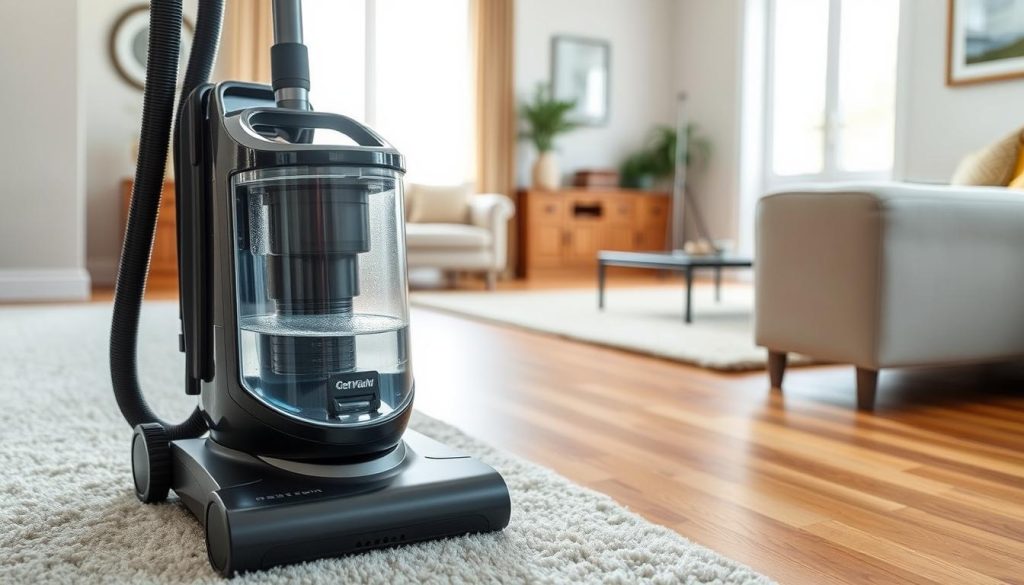
Best all-rounder for most Singapore households
Tineco Floor One Switch S7 Stretch — balanced suction, sensible tank sizes and steady handling across rugs and hard floors. This product delivers reliable cleaning without heavy maintenance.
Best for pet hair and tracked-in dirt
Bissell CrossWave X7 Cordless Pet Pro — engineered rollers and turbo pet modes that resist clogging and lift fur and grit from fibres.
Best budget buy for smaller flats
Simplus Cordless Wet-Dry — compact, easy to store and strong on basics. Good price and simpler feature set suit tight living spaces.
Best premium pick for feature lovers
Narwal S20 Pro / Electrolux EFW81713 — advanced sensing, self-clean cycles and greater automation cut daily friction. Choose this if convenience and smart features matter most.
“Match the pick to your main mess: pets, mixed floors or small-flat practicality — that guides the best choice.”
| Household type | Top pick | Key strength |
|---|---|---|
| Mixed floors (rugs + tiles) | Tineco S7 Stretch | Balanced suction, consistent results |
| Homes with pets | Bissell X7 Pet Pro | Brush design resists clogging, lifts hair |
| Small flats & tight storage | Simplus Cordless | Compact, good basic wet dry performance |
| Feature-first buyers | Narwal S20 Pro / Electrolux EFW81713 | Self-clean, sensing and automation |
Best overall wet and dry vacuum cleaner for home: Tineco Floor One Switch S7 Stretch
Our top pick blends two jobs into one, making weekly upkeep far simpler for most flats. The Tineco S7 Stretch converts from a stick to a handheld and handles dry debris and light floor washing in a single pass.
Why we like its two-in-one behaviour
It behaves like two tools in one. Switching between vacuuming and wet floor washing is quick and intuitive. That saves time and storage space in small Singapore flats.
Smart sensing that adjusts on the fly
The iLoop sensor alters suction and water flow automatically. It ups power for dry grit and eases off for wet spills, so we spend less time changing settings.
Tank size, runtime and upkeep
The unit has a 1,000ml clean water tank and a 720ml dirty tank. In practice, one fill handles most short sessions in a typical flat before a refill or emptying is needed.
- Suction: 22,000 Pa rating gives solid pick-up on fibres and tiles.
- Runtime: up to 50 minutes for washing and 70 minutes for dry runs — enough for weekly upkeep in most homes.
- Edge reach: dual-side brush rolls to ~0.5cm from skirting, which helps remove tracked-in grit.
Upkeep is straightforward. Empty both tanks after use, rinse the roller and let parts dry to reduce odour risk. Charge time is about 4.5 hours and the unit weighs 4.7kg, which balances manoeuvrability and stability.
Best for pet hair and everyday stains: Bissell CrossWave X7 Cordless Pet Pro
Homes with pets need a tool that fights fur and everyday spills without fuss. The Bissell CrossWave X7 Cordless Pet Pro targets this need with a focused set of features that suit smaller Singapore flats and busy households.
Turbo Pet mode and why it matters
Turbo Pet mode boosts brush action to tackle the mix of pet hair and dry debris that often clings to rugs and thresholds. It helps lift tracked-in grit and treats light stains from paw prints and food accidents.
Where we’d use it: rugs versus sealed hard floors
We pick this model for frequent passes on sealed hard floors where quick cleaning is most common. It also refreshes rugs at surface level, but it does not replace deep extraction for embedded grime.
| Spec | Value | Real-world note |
|---|---|---|
| Clean tank | 820ml | Good for several quick rooms before refill |
| Dirty tank | 420ml | Empty often during multi-room sessions |
| Suction / runtime | 20,000 Pa / up to 30 minutes | Turbo mode and heavy hair reduce real-world minutes |
Practical tips
- Empty the dirty tank between rooms to avoid odour and loss of suction.
- Trim long hair on the roller and use a comb to clear strands during shedding seasons.
- Use short, overlapping passes on rugs to prevent over-wetting and to keep stains from setting.
Best premium cordless with self-cleaning system: Electrolux 800 3-in-1 Wet & Dry Cordless Cleaner EFW81713
This premium cordless model aims to cut the friction out of daily upkeep by pairing an advanced inverter motor and a hands-off maintenance cycle. We chose it for convenience: tools that speed short sessions and reduce post-clean chores.
TriAction nozzle and real-world debris pick-up claims
TriAction nozzle shapes airflow to sweep edges and channel grit into the head. The manufacturer’s “99% debris pick-up” claim reads as a useful guideline rather than a guarantee in heavy soiling.
Smart dirt detection to reduce guesswork
Smart dirt detection tells us when extra passes are needed, so we do fewer unnecessary passes and save battery life.
Detachable hand unit for quick spills and soft furnishings
The detachable hand unit makes spot work on sofas and car mats straightforward. It is handy for spills where a full-size head is awkward.
What the self-cleaning cycle does (and does not)
The self-cleaning system flushes internal pathways and rinses the roller area. It cuts routine scrubbing but does not replace periodic filter checks, tank rinsing or manual inspections.
| Aspect | What it offers | Real-world note |
|---|---|---|
| Positioning | Premium cordless wet dry | Good for daily upkeep and quick spot work |
| Key features | TriAction nozzle, smart dirt sensing, self-cleaning | Designed to reduce hands-on maintenance |
| Price | varies (promotional options available) | Promos, 0% instalment and free delivery often apply |
Best for hygienic cleaning with easy maintenance: Electrolux UltimateHome 700 multi-function EFW71711
In humid Singapore flats, rapid drying and clear hygiene features matter as much as pick-up. The Electrolux UltimateHome 700 targets households that prioritise low-fuss upkeep and safer floors after mopping.
Antibacterial tanks and bacteria elimination positioning
Antibacterial tanks are designed to reduce microbial build-up in reservoirs that hold clean water and used liquid. Electrolux claims a “99.9% bacteria elimination” rating; we treat that as a helpful feature, not a substitute for good habits.
Fast floor drying for humid weather and frequent mopping
Fast drying cuts slip risk and odour in warm, humid conditions. The model’s self-cleaning nozzle and air-friendly design speed drying and reduce manual scrubbing.
- Who it’s for: families, eldercare homes and anyone who mops often and wants lower hands-on maintenance.
- Use cases: kitchen spills, bathroom splashes and daily dust plus light stains where a wet dry approach saves time.
- Price: promotional offers often apply.
| Aspect | Benefit | Note |
|---|---|---|
| Hygiene | Antibacterial tanks | Helps reduce microbes; still rinse tanks |
| Upkeep | Self-cleaning nozzle | Less manual rinsing, not a full replacement |
| Practical | Quick drying | Useful in humid Singapore flats |
Best budget Electrolux wet dry choice: Electrolux Flexio Power Wet and Dry Vacuum Cleaner Z823
The Electrolux Flexio Power Z823 is a sensible entry-level wet dry vacuum that blends three modes into one compact unit. We value practical features over premium sensors when a good value decision is the goal.
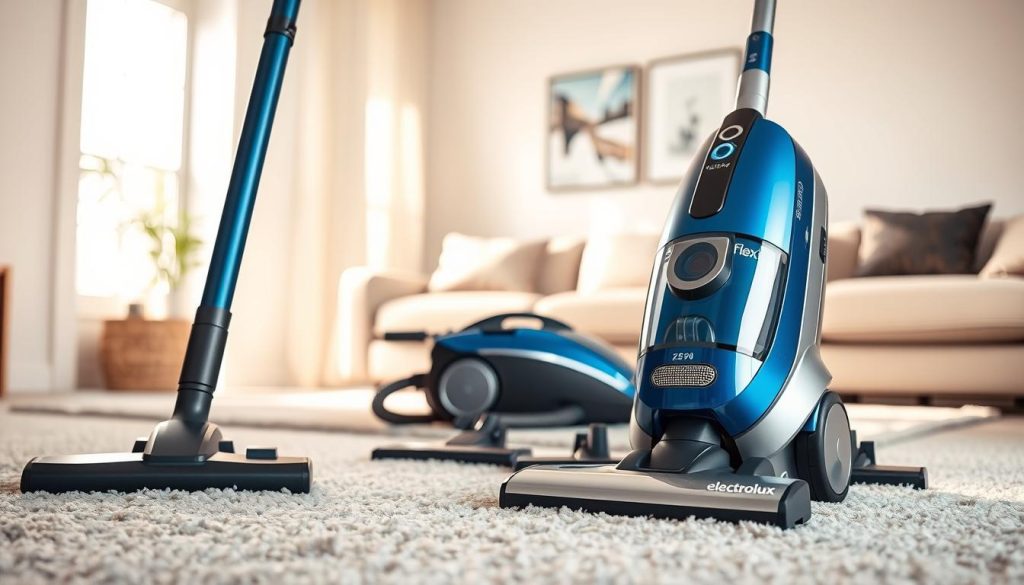
Who should consider this model
This is a smart pick if you want a single tool that handles wet pickup, dry debris and blowing tasks across mixed floors. It suits flats where occasional spills and tracked-in grit are the main issues, not heavy restoration work.
Why the blower and 360° manoeuvrability matter
Blower mode is genuinely useful on balconies, window tracks and tight corners. Loosen dust and debris first, then switch to a short dry pass for a cleaner finish.
Power, storage and daily use
- 1600W motor: offers solid perceived power, though we judge real pick-up and handling over wattage alone.
- On-board accessory storage: keeps nozzles tidy and reduces the chance tools go missing in small homes.
- 360° manoeuvrability: helps steer under furniture and along skirting without fighting a bulky unit.
This Electrolux model is a value-led choice, with promotions, free delivery and instalment plans often applying. If your priority is occasional wet pickup plus reliable dry vacuuming and simple blower use, it is a practical, budget-friendly option.
More strong alternatives we’d shortlist in Singapore
We list extra models that suit specific needs, stock changes and local promotions. These picks expand choices beyond our main four and help match features to real homes.
Dreame H15 Pro Heat — hot mopping for stubborn stains
Specs: 800ml clean / 650ml dirty, 22,000 Pa, hot mopping to 85°C, 70 minutes normal / 25 minutes hot mode, 6kg.
Why it stands out: high heat helps lift greasy stains, but we caution against using it on sensitive floor finishes that react to heat and excess moisture.
Narwal S20 Pro — manoeuvrability and AI Dirt Sense
790ml clean / 720ml dirty, 20,000 Pa, 60 minutes runtime and five modes. The AI Dirt Sense reduces over-cleaning by raising power only when extra debris is detected.
Shark HydroVac, Simplus and Dibea picks
- Shark HydroVac: antimicrobial roller, 500ml clean / 360ml dirty, 30 minutes — good where humidity speeds odour build-up.
- Simplus Cordless: 500ml clean / 550ml dirty, 21,000 Pa, 50 minutes — strong suction, flat-folding design and value-led price appeal.
- Dibea H8 & HC26: H8 offers 500/600ml and a built-in self-cleaning system; HC26 ups tanks to 700/700ml and higher listed suction for longer sessions.
“Use our checklist — tanks, runtime minutes, weight, edge reach and aftercare — to map each model to your mess profile.”
Dyson wet and dry options in Singapore: what we think you’re paying for
If you value design, filtration and cordless ergonomics, Dyson’s wet dry line deserves close inspection.
V12s Origin Submarine vs V12s Detect Slim Submarine
We tested the two V12s models by comparing spec and daily feel. The Origin Submarine lists 130 Air Watts, weighs 2.2kg and claims up to 60 minutes runtime.
The Detect Slim Submarine ups that to 140 Air Watts, adds a HEPA filter and the Fluffy Optic head, but it is heavier at 3.1kg.
Dyson Digital Slim Submarine — compact handling
The Digital Slim is aimed at storage-conscious households. It is the lightest option and offers around 40 minutes of runtime, which suits short sessions and small flats.
How to weigh price, filtration and usability versus competitors
What you pay for: engineering, refined ergonomics and advanced filtration. Smaller tanks (300ml clean / 360ml dirty) limit long wet dry runs even if minutes look generous.
Value test: choose Dyson if allergy-grade filtration, brand support and handling matter. If tank size or price is the priority, several rivals match wet dry performance at lower cost.
For a local buying overview see our best wet-and-dry guide.
Price guide and where to buy in Singapore without overpaying
Smart shopping starts with a clear local price guide and an eye on genuine promotions. We map realistic price bands so readers can spot true discounts during major sale periods.
Electrolux pricing and promotion timing
Electrolux offers its wet dry range at various price points depending on model and current promotions. Seasonal sales can shave up to 47% off, so watch festive campaigns and official store events.
What to verify in listings
Before buying, check local warranty coverage and whether included accessories match the listing. Crevice tools, mop heads and replacement rollers matter more than an advertised spec.
Confirm spare parts availability and likely costs for filters and rollers — these affect lifetime value.
Delivery, instalments and after-sales
Free delivery, reliable fulfilment and 0% instalment plans on the official Electrolux Singapore site can change the effective price. Compare the total payable amount, not just the headline figure.
Also verify the exact model variant and whether essential consumables are stocked locally months later. Bulky products are harder to transport, so good delivery options add real value.
| What to check | Why it matters | Practical tip |
|---|---|---|
| Price band | Sets realistic expectations | Use current local listings as a reference |
| Warranty & parts | Protects long-term use | Confirm local support and filter/roller availability |
| Promotions & instalments | Can lower upfront cost | Compare total payable and delivery fees |
How we maintain a wet and dry vacuum so it stays odour-free
A short post-use habit keeps machines smelling fresh and performing well. In humid Singapore, residue left in tanks or on rollers turns sour quickly. We follow a few non-negotiable steps after every session.
Emptying dirty tanks and rinsing after every session
Empty the dirty tank immediately. Letting used liquid sit breeds smell and bacteria. Rinse the tank and wipe seals; leave caps open to air-dry.
Electrolux models make this easier with simple latches and antibacterial tanks that reduce microbe build-up but do not replace rinsing.
Brush care, filters and preventing mould in humid climates
Remove hair and trapped debris from the brush after each use. Rinse away residue and let the roller dry fully before storage.
Check filters regularly: tap out dust and wash only when the manual allows. Clogged filters cut suction and worsen cleaning results.
When to run self-cleaning and when to do manual cleaning
Use a self-cleaning system for day-to-day flushing of internal paths and the roller bay. Run it after short runs and light spills.
Do manual cleaning weekly or after heavy grime: inspect seals, intake paths and edges where residue hides. Self-clean cycles help, but they do not reach creases and seals.
- Solution use: dilute cleaning solution precisely to avoid sticky residue that attracts dirt.
- Troubleshooting: grey water smell — rinse tanks and run a clean cycle; streaky floors — reduce solution strength; low suction — check filters and empty tanks.
| Routine action | How often | Benefit |
|---|---|---|
| Empty & rinse dirty tank | After every session | Stops odour and bacterial growth |
| Brush roll clean & dry | After each use / weekly deep clean | Prevents mould and hair wrap |
| Filter check and wash | Monthly or as needed | Maintains suction and traps dust |
| Run self-cleaning cycle | After short runs | Flushes internal paths; reduces hands-on rinsing |
Conclusion
Our practical rule: pick a wet dry vacuum that matches your dominant mess, floor mix and how much upkeep you will do. Aim for consistency over headline power.
We recommend the Tineco S7 Stretch as the best all-rounder, the Bissell X7 Pet Pro for pet homes, and Electrolux options when low-fuss maintenance matters. Choose by routine, not by specs alone.
Remember: a dry tool still matters for quick dust runs, while wet dry models shine on spills and light washing. Check suction consistency, tank design and how many minutes of usable runtime you get.
Watch price swings, confirm warranty and parts availability, and consider a robot for daily upkeep while a wet dry handles deeper cleaning and spill-heavy days.

