
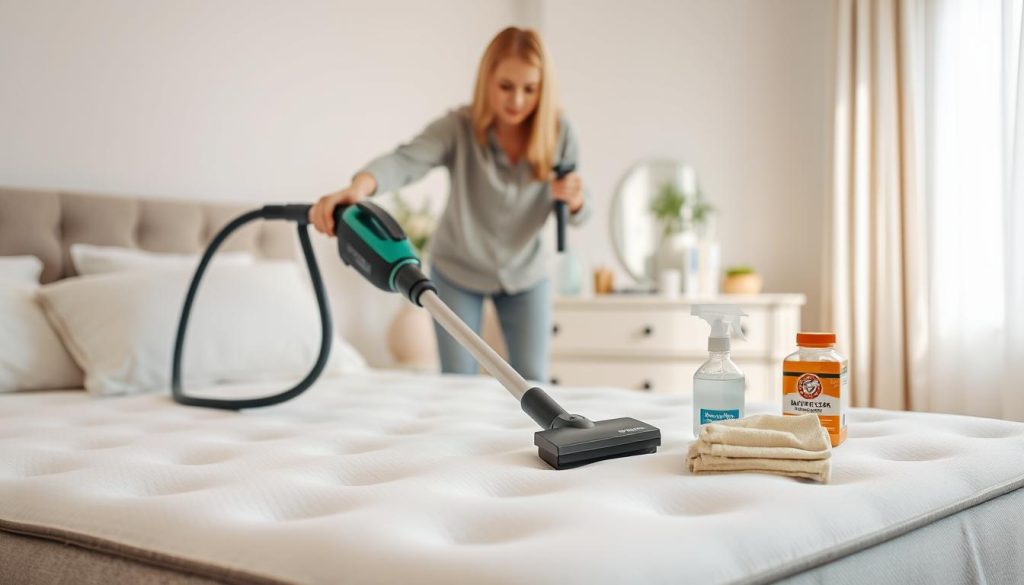
We explain what we mean by mattress cleaning tips in a real home context: simple, repeatable habits that keep the sleep surface fresher without harming materials.
Even with a protector, a mattress collects dust mites, sweat, skin flakes and general grime over time. We tidy and inspect twice a year as a baseline and deal with spills as they happen.
Keeping the bed feeling fresher helps improve rest and reduces lingering odours in fabric and foam layers. Our approach is prevention-first: routine care plus a good encasement will help keep the surface in better condition for longer.
In humid Singapore we minimise water and prioritise fast, thorough drying. Ahead we preview a clear five-step flow: prepare tools, strip bedding, vacuum, spot-treat stains, then deodorise and dry fully — with practical links to a detailed stain guide here.
Why we prioritise a clean mattress in Singapore’s humid climate
Singapore’s humidity makes a regular refresh of our sleep surface essential, not optional.
What builds up over time: dust mites, sweat residue, tracked-in dirt and dead skin quietly collect in the layers and seams.
What accumulates and why it matters
Dust mites thrive in warm, humid conditions and raise allergen levels in the bedroom. Small amounts of sweat and skin cells feed these particles, while dirt brings in extra grime from daily life.
How routine care supports a healthier bedroom
Regular attention reduces allergens and odours, and helps keep the room fresher for longer. We treat maintenance as ongoing care, not a single deep clean.
How often we act
Our baseline is to clean twice a year. This schedule balances effectiveness with practicality and leaves time for full drying.
- Pick a dry day for a thorough refresh — full airing can take up to 24 hours.
- Deal with spills immediately; delays make stains harder to remove.
- For professional support, we sometimes refer to services that can help get deep-set allergens removed safely.
Our mattress cleaning tips: tools and set-up before we start
A little planning at the outset saves us time and prevents excess moisture later.
What we gather at home: a vacuum cleaner with an upholstery attachment, baking soda, several clean white cloths and a jug of cold water for controlled rinsing.
- For spot work we choose a gentle cleaner: an enzyme cleaner for organic messes or a mild dishwashing liquid and water solution for general marks.
- We always check care instructions and any manufacturer labels before using a product; spot-test on a hidden area first.
- Our rule is simple: never soak the surface. We use small amounts, blot carefully and work in short bursts so the foam dries faster.
- Plan for drying time — up to a full day in humid weather — and arrange good ventilation or sunlight where possible.
Next steps: strip bedding, vacuum thoroughly, follow spot-clean steps, deodorise with baking soda, then allow the bed to be fully mattress dry before remaking.
How we do a regular clean without damaging the mattress surface
A gentle, methodical approach prevents small dust and dirt problems turning into major issues.
Strip the bed first: we remove all bedding and wash sheets, protectors and toppers per the fabric instructions. Hot washes can help reduce dust mites, but we follow care guidance for delicate items.
Vacuuming before any wet work
We always vacuum the surface before using any liquid. This removes dust, skin flakes and loose dirt so moisture won’t trap debris into the layers.
How we vacuum thoroughly
Make slow, overlapping passes across the whole surface, then target seams, edges and crevices. We vacuum the sides and the bed base as well, and clear the surrounding area where dust gathers.
Which attachment we use
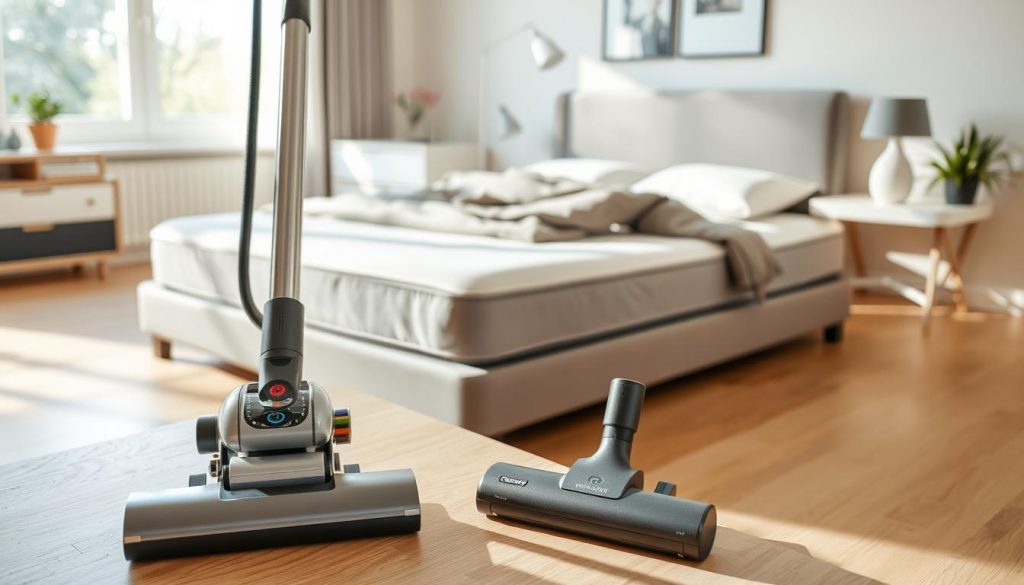
Our go-to is an upholstery attachment for broad coverage and controlled suction. Narrow nozzles work for stitched channels. We avoid the carpet turbo head because it is too aggressive and can damage upholstery-like fabric.
“Our vacuum-first routine removes the dry debris that would otherwise turn into grime when wet methods are used.”
| Tool | Best for | Why we use it |
|---|---|---|
| Upholstery attachment | Flat surfaces and quilting | Wide coverage, controlled suction |
| Narrow crevice tool | Seams and stitched channels | Accesses tight lines without abrasion |
| Soft brush head | Sides and fabric borders | Gentle on edges, lifts embedded dust |
Why it matters: a regular vacuum-first routine helps extend the life of our mattresses and keeps the bed feeling fresher between deeper treatments.
How we tackle stains while keeping the mattress dry
A swift, low-moisture approach often removes the worst of everyday marks without harm. We work in small steps, acting fast but using minimal liquid so the foam beneath dries quickly.

Our blotting method for light to moderate marks
We apply any cleaner to a clean cloth first and blot gently. We always work from the outside of the mark toward the centre.
We do not scrub or soak. Scrubbing pushes the stain deeper and extends drying time.
Cleaning solutions we rotate
For most stains we try a tiny amount of diluted dishwashing liquid in water, or diluted white vinegar for odours. For organic messes we use an upholstery or enzyme cleaner sparingly.
We use foam rather than floods and repeat patiently if needed. Start mild and only increase strength when the mark persists.
Handling blood, urine and vomit quickly and hygienically
We put on gloves, remove solids and absorb excess fluid with paper towels. Blot, don’t push, and then treat the spot with a suitable cleaner applied to a cloth.
For severe blood marks we may try 3% hydrogen peroxide carefully on a hidden area first. We make sure any hydrogen peroxide use is brief and tested for discolouration.
When we consider stronger options
For stubborn stains we mix a bicarb paste or use a targeted product, testing a small area first. With foam cores we reduce water, do shorter applications and boost airflow immediately after treatment.
Final check: the treated area should feel only lightly damp before we deodorise or leave to dry fully. For extra guidance on tougher marks we consult a specialist guide like how to get stains out.
How we deodorise, dry and freshen the bed after cleaning
Deodourising is a distinct step for us because odours can linger even when visible marks are gone. We treat this stage as a bridge between spot work and full airing.
Using baking soda to neutralise smells and absorb moisture
We sprinkle baking soda evenly across the sleep surface, focusing on seams and areas prone to sweat. The powder helps neutralise odours and draws out trace moisture.
How long we leave it on, then vacuum it off
When short on time we leave the baking soda for at least 15 minutes. For deeper odour removal we prefer longer contact — up to 24 hours — before we vacuum the powder away.
Vacuum slowly and thoroughly so no residue remains in stitching or channels; a careful pass gives a cleaner finish and reduces re-soiling.
Airing strategies we rely on
Where possible we place the item in sunlight or on a balcony for UV benefit. If outdoor airing is not practical, strong cross-ventilation and a fan work well in Singapore’s humid homes.
Drying mistakes we avoid
We never remake the bed until the surface feels fully dry. Closing windows too early or over-wetting foam layers are common errors that raise the risk of mould and mildew.
Readiness check: only when the sleep surface is fully dry and free of any cleaner-like smell do we remake the bed. Proper deodorising and drying help keep odours down between our scheduled twice-year routine.
Conclusion
A practical routine saves time and reduces the need for costly professional work. Our short sequence is easy to remember: strip and wash bedding, vacuum thoroughly, blot stains with minimal moisture, deodorise with bicarb, then dry and air completely.
We follow a twice-year rhythm and act fast on spills so marks do not set. Always check the manufacturer’s label before using any product or method to avoid damage.
Once fully dry, a good protector or encasement helps prevent future stains and can cut down on professional interventions. For more detailed stain help, see our detailed stain guide.
Consistent care keeps mattresses lasting longer and ensures a comfortable night’s sleep in Singapore’s humid climate.

