
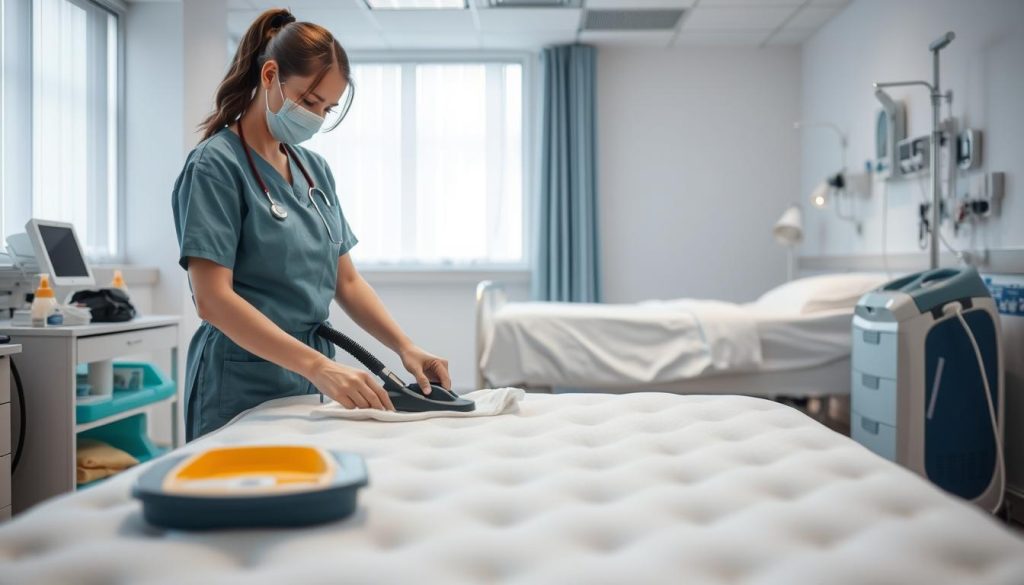
We provide a practical, Singapore-focused guide that helps carers and facilities keep patient beds safe and comfortable. Our aim is simple: reduce contamination risk, protect dignity and preserve equipment.
Safe means we limit microbes, maintain comfort and keep the bed system reliable. We treat mattress care as equally important to frame sanitisation and follow a clear order: prepare the area, clean with detergent, disinfect with a suitable product and allow full drying before reuse.
We stress that a hospital bed mattress is part of a hygiene chain that includes frame, rails, controls and wheels. This guide covers routine upkeep and steps for spills or higher-risk events, always deferring to product labels and manufacturer guidance.
Key themes we return to are correct chemical choice, adequate wetness and contact time, and avoiding damage to surfaces or electronics. This is an informational how-to, not a sales pitch, so readers can apply the steps across most beds found in Singapore care settings.
Why cleaning hospital beds and mattresses matters in Singapore care settings
We know that good upkeep of the bed prevents microbes gathering on high-touch points and in hidden crevices. Consistent work here directly supports infection prevention and lowers the chance of healthcare-associated spread.
Infection prevention and reducing healthcare-associated spread
Surfaces such as rails, controls and seams can harbour pathogens across many components. Regular attention reduces odours from bodily fluids and the risk of cross-contamination (Fonga O, 2025).
Patient comfort, dignity and psychological wellbeing
Comfort is not just cosmetic. A clean sleeping surface promotes dignity, removes unpleasant smells and supports recovery in shared Singapore homes and care facilities.
Protecting equipment longevity and day-to-day functionality
Grime can impair moving joints, brakes and rail releases. Routine work helps prevent urgent breakdowns and keeps medical equipment safe to use for transfers and repositioning.
| Risk area | Effect on patient | What we do |
|---|---|---|
| High-touch rails | Increased spread | Wipe and disinfect daily |
| Seams and zips | Odour and microbes | Inspect and clean crevices |
| Moving parts | Breakdown risk | Remove residue; test function |
| Home setting | Shared-space health risk | Use risk-based frequency |
What we prepare before we start cleaning
Preparation sets the tone for safe, effective work. We always begin by checking the manufacturer’s instructions so we only use approved products and avoid damage to surfaces or warranties.
Checking instructions and approved products
We read the product guidance for the bed and any covers. This tells us which detergents and disinfectants are acceptable for the materials and motors.
Making the area safe
We confirm the patient is moved or the bed is unoccupied. Then we clear nearby items and create room to work, especially in a home setting.
Wheels are locked and the bed is flattened so it stays still while we reach every surface.
Power safety and PPE basics
For electric hospital bed models we unplug power before wiping controls or motors and avoid excess moisture near electronics.
Disposable gloves are our baseline. We add eye or respiratory protection when strong disinfectants or splash risks are present. We arrange materials in a clean-to-dirty flow with fresh cloths, waste bag and replacement linen ready.
Tools and products we use for hospital bed and mattress hygiene
We choose tools and products that let us reach every seam and keep surfaces safe without damage. This ensures good results and limits wear to covers and frames.
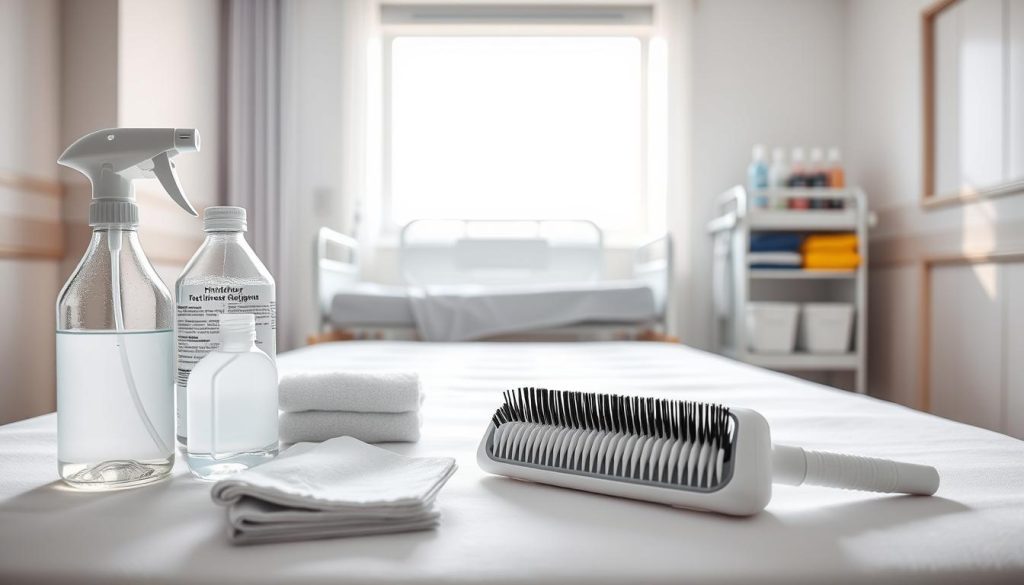
Practical wiping and access tools
We favour colour‑coded microfibre cloths, soft‑bristled brushes and extension tools for crevices. These items improve contact and reduce cross‑contamination.
Order of work and solution use
We always remove soil with a mild detergent first, then apply a hospital‑grade disinfectant. Disinfectants work best on a clean surface, so sequencing saves time and boosts efficacy.
Choosing the right disinfectant
For routine use we select quaternary ammonium products. We use hydrogen peroxide solutions where tougher pathogens or material compatibility require it.
Chemistry checks and electronics
Check pH and avoid harsh agents that harm covers or plastics; aim for pH 5–9 where applicable. For controls or motors we use distilled water on a cloth to remove residue without soaking components.
| Type | Typical use | pH guidance | Notes |
|---|---|---|---|
| Quaternary ammonium | Routine disinfection | 5–9 | Good for many materials; follow label contact time |
| Hydrogen peroxide | Higher‑risk events | ~6–8 | Effective for specific pathogens; test on a small area |
| Mild detergent | Pre‑cleaning | Neutral | Removes soil so disinfectant can work |
Hospital mattress cleaning step-by-step for routine care
Our first action is to remove sheets and any removable covers so we can inspect the true mattress surface for tears, staining or fluid ingress.
Stripping and inspection
We look closely at seams, zips and the perimeter. Damaged seams or broken zips are flagged because they can trap skin debris and moisture.
Soap and water before disinfectant
We wash the surface with a mild detergent and water to remove soil. This step ensures the disinfectant will contact the surface properly.
Applying disinfectant and contact time
We apply an even wet layer of the chosen disinfectant and respect the labelled contact time. Wiping too soon reduces efficacy and wastes time.
Targeting hidden areas and final dry
Focus on seams, zips, corners and the bed perimeter—these are common collection points. Use separate cloths for clean and dirty phases when working in a home or care facility.
Dry completely before remaking sheets and returning the patient. Check for any damp patches or residue so the clean hospital bed is ready for use.
Cleaning the hospital bed frame, rails and high-touch points
We start with the frame and rails because work begun at the top avoids dragging soil down onto finished areas. This top‑to‑bottom process reduces re‑contamination and keeps the job efficient.
High‑touch points need priority. Focus on rails, rail release levers, head and foot panels, grab points and any handles that see frequent contact.
Working top-to-bottom to prevent re-contamination
Begin at the highest surfaces and move downward in a single pass. This prevents dirty runoff from soiling surfaces we have already treated.
Controls, remotes and button crevices: wiping without liquid intrusion
Do not spray cleaners directly onto electronics. Apply product to a cloth and wipe gently.
For button crevices, use minimal moisture and repeat passes with fresh cloth sections to avoid pushing soil deeper.
Underside, cross-members, wheels and brake mechanisms
Inspect and remove dust from cross‑members, cable channels and motor housings. These areas collect debris that can affect equipment function.
Wheels and brakes deserve a visual check and light wipe. A bed that moves and locks reliably is a safer bed.
“We ensure disinfectant stays wet for the labelled contact time on hard rails and non‑electronic surfaces to achieve the intended reduction in microbes.”
Final operational check: test basic movement, rail releases and brakes before remaking the bed. Confirm surfaces are dry and no residue remains.
| Area | Action | Why it matters |
|---|---|---|
| Upper rails & head panel | Wipe with disinfectant‑damp cloth; respect contact time | High contact; reduces transfer risk |
| Controls & remotes | Wipe with low‑moisture cloth; avoid spraying | Protect electronics; maintain function |
| Underside & cross‑members | Brush and wipe; clear cable channels | Prevents dust build-up that impairs equipment |
| Wheels & brakes | Wipe, inspect and test | Ensures mobility and safety |
How we handle different hospital bed mattress types and materials
Not all sleeping systems are the same; we tailor our routine to suit the composition and any integrated equipment.
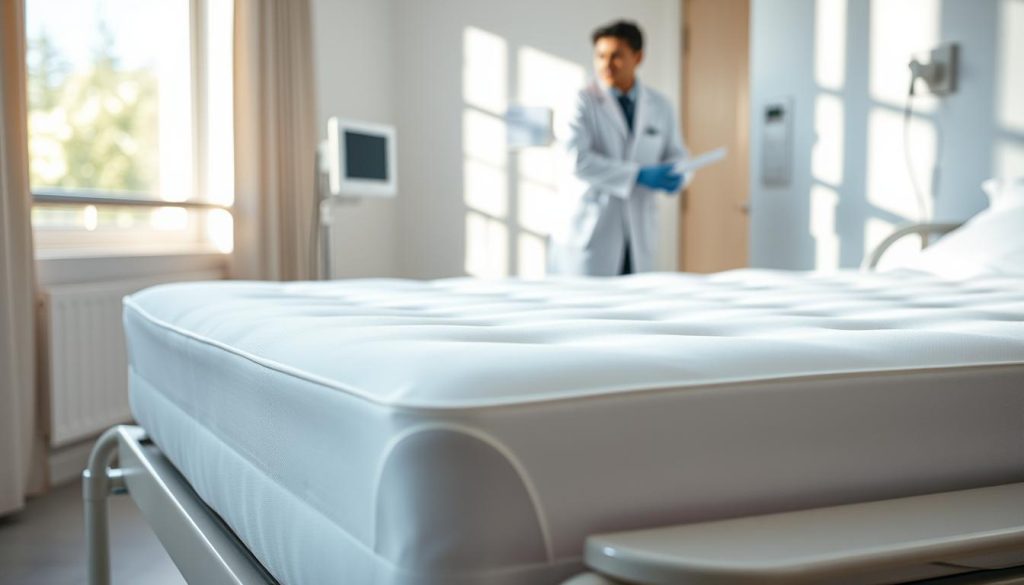
Standard therapeutic foam with vinyl outer layer
Standard foam cores with vinyl covers are common in Singapore care settings. We wipe gently with a mild detergent solution and a soft cloth to remove soil.
Avoid oversaturation. Excess moisture can seep into seams and harm the foam. We check welds and zips and allow full drying before reuse.
Air, gel and alternating pressure systems
Specialty systems contain pumps, bladders and hoses. We follow the manufacturer’s instructions for each model and protect electrical components.
Filters, hoses and pump housings need model‑specific care. If in doubt, we defer to the maker rather than risk damage.
What to avoid with foam and sensitive materials
Do not use harsh solvents, abrasive pads or unapproved disinfectants. These can crack coatings and create micro‑damage that traps contaminants.
If a cover is torn or seams are compromised, we take the item out of service or replace the component rather than trying to clean through the defect.
| Type | Typical action | Why it matters |
|---|---|---|
| Foam with vinyl cover | Gentle wipe, avoid soaking | Preserves welds and prevents ingress |
| Air/alternating systems | Follow maker instructions for pumps | Protects equipment and function |
| Gel surfaces | Use compatible disinfectants only | Prevents surface degradation |
Deep-clean routines for home hospital beds and long-term care
We set simple routines so families and carers can keep the sleeping area fresh and safe. A realistic plan helps manage Singapore’s humid environment and limits odour, mould and bacterial growth.
Linen hygiene and sheets
Wash sheets at least weekly and use the highest heat the fabric allows. Regular washing lowers skin oils and bacterial load.
Change pillowcases with sheets and use protectors that can be laundered on the same cycle.
Pillows and protectors
Wash pillows quarterly if the person often sweats or eats in bed; otherwise wash twice yearly. Replace pillows about yearly to maintain support and comfort.
Inspect protectors for tears. A damaged cover can let fluids reach the bed mattress despite appearing to protect it.
Six‑monthly deep clean
Every six months we strip the bed, vacuum the bed mattress, spot‑clean stains with soap and water or diluted hydrogen peroxide/white vinegar, blot and allow full drying. Optional baking soda can help odours; vacuum after an hour.
Protector types and checks
Water‑resistant reduces light damp, water‑repellent sheds moisture better, and waterproof gives the most barrier protection. Choose based on care needs and comfort.
| Task | Frequency | Why it matters |
|---|---|---|
| Sheets & cases | Weekly | Removes skin oils and bacteria |
| Pillows | Quarterly or twice yearly | Limits odour and allergen build‑up |
| Deep clean bed mattress | Every 6 months | Reduces mould, bacteria and smells |
| Protector checks | Monthly | Catch tears early to prevent fluid ingress |
Simple schedule: daily quick care for high‑touch areas, weekly linen cycles and periodic deep work keeps regular cleaning manageable for home care and long‑term settings.
Disinfection details that make cleaning effective
We always follow the label. Effective disinfection depends on keeping the chosen product wet and in full contact with the surface for the period the manufacturer specifies. That simple rule is the backbone of a reliable process.
Why contact time matters and how we prevent wiping too soon
Contact time is the period a disinfectant must remain wet to reach its kill claims. If the liquid dries early, the stated efficacy is lost.
To prevent wiping too soon we work in clear zones, apply product evenly and set a timer for the labelled time. We avoid polishing or buffing habits that remove wetness before the job is done.
Rinsing and residue control when instructions require it
Some products instruct rinsing after disinfection. When the label says so, we wipe the surface with a clean, damp cloth or rinse with water to remove residue.
Residue control is important in patient areas. For people with fragile skin or prolonged contact, rinsing reduces irritation risk and protects the mattress surface from chemical build‑up.
Ventilation and safe chemical handling in the patient environment
We increase airflow during and after use to disperse fumes, especially in small bedrooms or shared rooms. Open a window or run a fan where possible.
- Follow dilution instructions — never over‑concentrate a solution.
- Never mix different disinfectants or bleach with other products.
- Store solutions away from food, personal items and patient belongings.
“Disinfectants require full wet contact time per label; avoid wiping too soon.”
Our disinfection process is only as effective as our adherence to label time, contact coverage and safe drying before reuse. For more on handling soiled bedding and tough stains, see our guide on spot treatment and removal.
What we do after contamination events
After a contamination event we adopt a clear, risk‑based routine so the area is safe and the patient can return. These incidents include spills, visible soil, isolation precautions and pest reports. Such events require a stricter process than routine upkeep.
Bodily fluid spills: safe removal and staged treatment
Our sequence: don gloves and other PPE, remove bulk matter safely, then clean with a mild detergent to remove soil. Only after the surface is clean do we apply a hospital‑grade disinfectant with appropriate kill claims and the labelled contact time.
Dry completely before remaking the bed mattress to reduce odour and microbial survival (Fonga O, 2025).
Heightened pathogen concerns: choosing the right product
For MRSA or C. difficile we check label kill claims and use products with extended contact times. We confirm material compatibility so equipment and covers are not damaged.
Bed bug and pest incidents: containment and escalation
Seal linens in bags, HEPA vacuum infested zones and consider steam where the maker permits. For persistent infestations we engage licensed pest management in Singapore.
“We remove bulk material first, then apply a disinfectant that meets the required kill claims and contact time.”
Clean hospital mindset: contain contaminated items away from clean supplies, limit movement through the room, and re‑check high‑touch points and crevices before returning the area to normal use.
Common mistakes we avoid when cleaning hospital beds and mattresses
Simple mistakes often cause the majority of long‑term damage to bed systems. We list the common errors so teams and carers in Singapore can prevent them.
Using unapproved solvents, abrasive products or strong bleach
We follow the manufacturer’s instructions and never assume stronger chemicals are better. Harsh bleach or abrasives can crack coatings, weaken seams and create new places for microbes to harbour.
Over‑wetting electronics and spraying controls directly
We do not spray liquids onto control panels. Over‑saturation near motors or remotes risks faults and safety hazards. Use a damp cloth and minimise liquid near electrical parts.
Missing hidden areas and poor coverage
Hidden zones are often overlooked: underside cross‑supports, behind head/footboard joins, caster wheels, cable routes and motor housings.
- Outcome: missed zones can re‑contaminate linens and shorten equipment life.
- We adopt checklists and simple documentation so each bed clean cycle is consistent and verifiable.
| Mistake | Why it matters | Fix |
|---|---|---|
| Unapproved chemicals | Surface damage | Use label‑approved products |
| Spraying controls | Electrical faults | Wipe with low‑moisture cloth |
| Missed hidden areas | Re‑contamination | Follow a room checklist |
For stepwise guidance see our note on how to clean a hospital bed and the mattress stain guide for spot treatment tips.
Conclusion
Simple, repeatable steps protect patients, preserve equipment and reduce unexpected repairs.
We summarise the core routine: prepare safely, disconnect power before working on electrics, remove soil with detergent first, then apply a suitable disinfectant and allow full drying before reuse.
Focus on high‑touch areas and hidden crevices. These zones determine whether a bed returns to service safely, so a short checklist helps maintain standards.
We follow manufacturer guidance to protect finishes, electronics and warranty terms. Consistent daily attention plus planned deep work keeps a clean hospital outcome sustainable.
For an evidence‑based barrier option that supports infection‑prevention and protects the underlying surface, see the infection‑prevention bed barrier.

