

We explain what “water in vacuum cleaner” means and why most standard machines are dry-only by design. Regular models do not handle liquids safely; only wet/dry units use sealed parts and special filters to cut shock and motor damage.
In Singapore, humidity shortens the time for trapped moisture to cause mould and odour. We stress electrical safety, hygiene and long-term performance rather than a quick fix.
We preview typical spills—kitchen drips, bathroom overflows and balcony runoff—and outline the choice you face: keep a dry device for routine work or use a purpose-built unit for spills.
Our guide shows what not to do, when a wet/dry option suits, a safe extraction method, and quick alternatives for small messes. For a practical how-to, see our companion guide on using a wet/dry vac.
Expect: safer cleaning, less damage risk and clearer choices for the right tool for each spill.
Can you vacuum water with a regular vacuum cleaner?
Many owners assume a powerful unit can pick up liquids — that assumption risks serious damage.
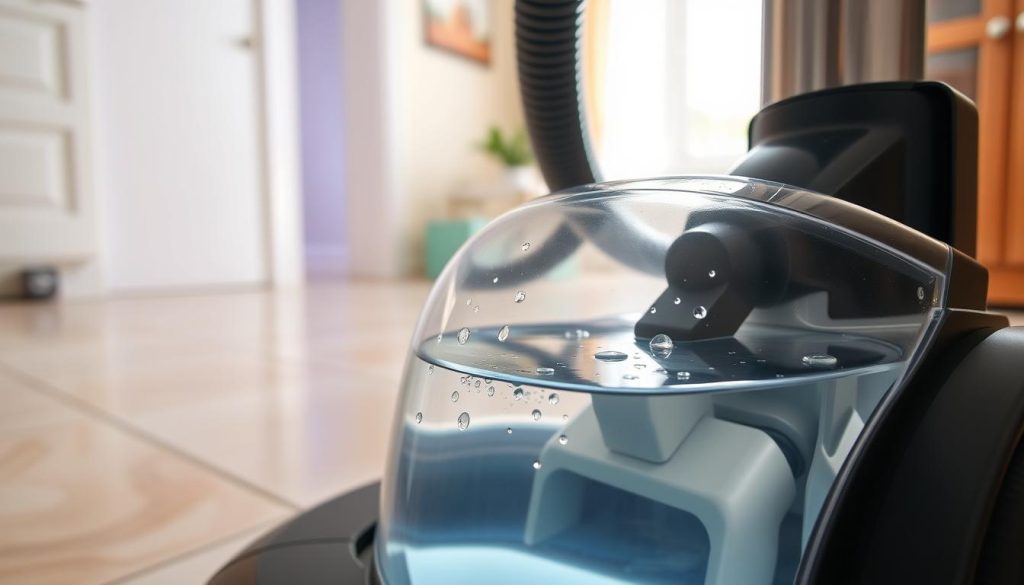
Why dry models are unsuited to liquids
Dry vacuum designs prioritise airflow and dry debris. Seals, filters and motor insulation are not waterproof.
Safety risks
Moisture near electrical parts can cause short circuits, sparks and electric shock. That danger is real on tiled floors or bare feet.
Performance and immediate faults
Liquid meeting dust and dirt forms sludge. Hoses and filters clog, suction drops and the motor strains.
Long-term damage and hygiene
Corrosion can attack wiring, the motor and circuit boards. Trapped damp fosters mould and persistent odours.
Warranty and practical check
Manufacturers often label liquid pick-up as misuse. Repairs may be denied under warranty.
- Our advice: if unsure whether your device is wet-rated, treat it as dry-only.
- Use a microfibre cloth or mop for small spills until you confirm specifications.
When water in vacuum cleaner use is appropriate
For Singapore homes, a purpose-built wet dry unit changes a spill from a hazard into a quick job.
When to choose wet mode: standing water from appliance leaks, drip floods on tiled floors, and wet messes that a mop cannot handle. These units remove liquids and dry debris safely and fast.
Choosing the right machine
Look for insulated motors, sealed airflow paths and a tank made for liquids. Filters must be specified for wet use and dry bags removed before switching modes.
- Capacity: match tank size to typical spill volume—small tanks fill fast.
- Trade-offs: wet dry models can be bulkier but offer stronger performance for spills.
- Function clarity: these differ from wash or mop devices; they extract standing spills rather than wash surfaces.
Our tip: confirm wet rating and filter requirements before use. For more detail on safe use, see our wet dry vacuum guide.
How we use a wet dry vacuum to clean up water safely
Before we touch any spill, we check that the device is truly wet-rated and ready for liquid pick-up. This quick inspection prevents electrical faults and keeps performance stable.
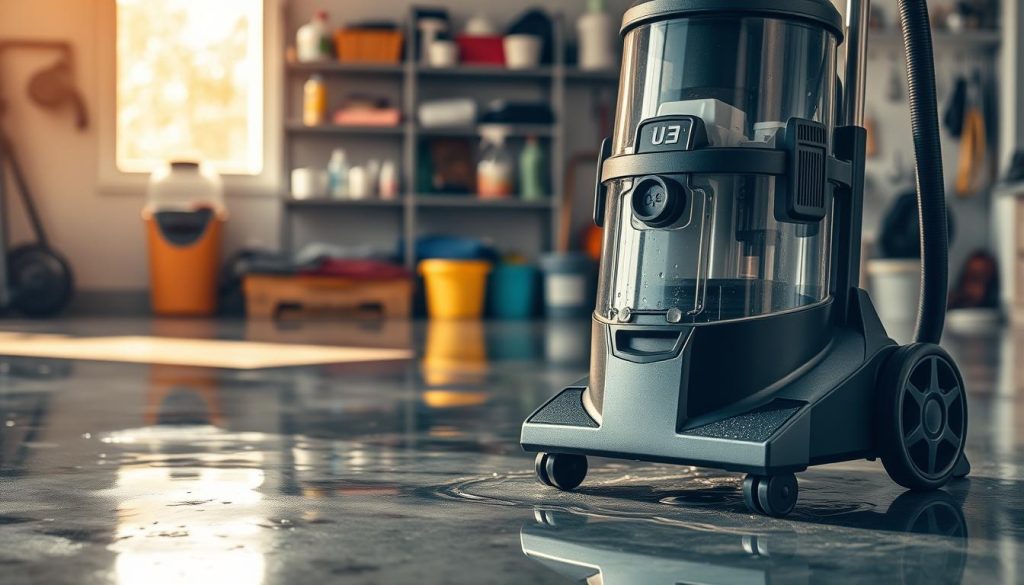
Confirm wet capability first
Check for sealed components, waterproof filters and a tank with a drain point. If any part looks dust-only, we do not proceed.
Prepare the unit
We power off, remove dry bags and swap to the wet-use filter or foam guard. The tank must seat correctly to stop leaks into the system.
Pick the right nozzle and attachments
For hard floors we use a wide floor nozzle; for carpets a specialised head helps protect fibres. Slim tools work best for skirting and tight spaces.
Vacuuming technique for best results
We work edges-to-centre with steady, overlapping passes. For larger pools we place the nozzle gently and move slowly to avoid splashing.
Know when to stop
A full tank shows as a change in motor note or a drop in suction. We stop at the first sign rather than risking damage or overflow.
Emptying and disposal
We empty wastewater to a proper drain or utility sink. We avoid pouring residues into garden beds because oils and detergents can harm plants.
Aftercare and troubleshooting
Rinse the tank and hose pathway, wipe seals and air-dry thoroughly to prevent odours and mould. If we smell burning, hear odd noises or lose power, we unplug and inspect before restarting.
Alternatives for light spills
For small damp patches we use microfibre cloths, a mop or a robot mop for damp floors — these are not suited to standing pools and larger jobs are better handled by a wet dry vacuum.
Conclusion
We keep one rule simple: never use a dry-only model to pick up standing water. For safety and lasting performance, only a wet-capable or wet dry unit should handle pooled spills.
Why this matters: first, there is an electrical hazard that can cause shock or fire. Second, corrosion and damaged electronics shorten a device’s life. Third, trapped damp invites mould and persistent odours that ruin hygiene.
If your model is not explicitly wet-rated, treat it as dry-only. Keep a microfibre cloth and mop for quick spots and consider wet dry vacuums if leaks are common. For practical tips and extra uses, see the unusual uses for wet-and-dry units.
Follow our safe process—confirm, prepare, choose the right nozzle, work controlled passes, stop at a full tank, dispose correctly and dry thoroughly—so you can handle spills confidently next time.

