

We are a specialist team focused on healthier sleep and a fresher bedroom. Our aim is clear: to deliver safe, effective cleaning services that fit city homes, from condos to landed houses.
What we do is remove dust, allergens, stains, odours and bacteria with trained staff and eco-friendly options. Most on-site visits take about one to two hours depending on bed size and method.
Our visit typically includes inspection, targeted treatment, a deep clean and sanitising, plus brief deodorising guidance. This snapshot reduces booking friction and sets realistic outcomes: clear improvement and reduced allergen load, not unrealistic guarantees.
Why choose us? We offer a consistent process, visible results and service shaped for Singapore living. We solve dust build-up, allergen exposure and visible stains so you can enjoy a cleaner, healthier home.
Enquire or book with us to inspect your bed and get transparent next steps and quality results.
Professional mattress cleaning services for healthier sleep in Singapore
We help households reduce allergens and odours for noticeably better sleep.
Why it matters: In a hot, humid environment poor ventilation lets moisture linger. That creates a warm space where dust mites, bacteria and mould can thrive.
Airborne particles trapped in bedding move into the bedroom air when sheets are disturbed. That affects comfort and may worsen allergy symptoms for sensitive sleepers.
What we remove during deep cleaning
Our professional mattress cleaning services go beyond surface vacuuming. We target what’s embedded inside layers.
- Dust and fine debris
- Embedded dirt and body soils
- Bacteria and fungal spores
- Allergens that affect air quality
“Routine deep treatments reduce risk and improve nightly comfort for families and allergy-prone individuals.”
| Issue | What we target | Benefit |
|---|---|---|
| Moisture retention | Fungal spores and bacteria | Lower odour and reduced microbial growth |
| Embedded dust | Dust mites and debris | Improved air quality and reduced allergy triggers |
| Body soils | Perspiration and oils | Fresher surface and less staining |
We frame professional services as preventative. For a practical cost overview, see our cost guide.
Why hire a mattress cleaning company singapore instead of DIY
A specialist service reaches deep layers and controls moisture in ways household tools cannot. We see many DIY attempts that improve surface look but leave allergens and damp pockets behind.
Why protectors aren’t enough: A protector reduces spills but does not stop dust mites or bed bugs from living in internal layers. Fine dust and mites pass through seams or sit under covers, keeping allergen levels high.
Why protectors don’t stop dust mites and bed bugs
Protective covers help, but they are not a full barrier. Dust mites feed on skin cells, and bed bugs hide in seams and tufts. Those issues need targeted treatment, not just a cover.
How poor ventilation creates a breeding ground
Poor airflow traps heat and moisture. That warm, damp environment helps mites, bacteria and mould thrive. Over-wetting with home machines can make this worse by slowing drying time.
- Professional equipment provides deeper agitation and stronger extraction.
- We control moisture to avoid long drying times and microbial growth.
- Targeted treatments reach stains, odours and allergen reservoirs safely.
“When DIY is fine: minor spills, light surface dust. When to call us: recurring odours, persistent allergy symptoms, or repeated stains.”
We work efficiently in your home, minimise disruption and complete most jobs within a sensible time frame. For practical booking and service details, see our professional bed cleaning.
Quick Q&A: Is it safe? Yes — we use eco options. Is it noisy? Some equipment works briefly but we keep disturbance low. Do you need to leave? Usually not; we can work around daily routines and keep the room usable shortly after the visit.
Hidden hazards in your mattress that can affect health and air quality
What looks like a clean surface can hide microscopic hazards that worsen respiratory comfort. We often find that long-term use leaves behind organic debris and tiny organisms that change bedroom air and skin comfort.
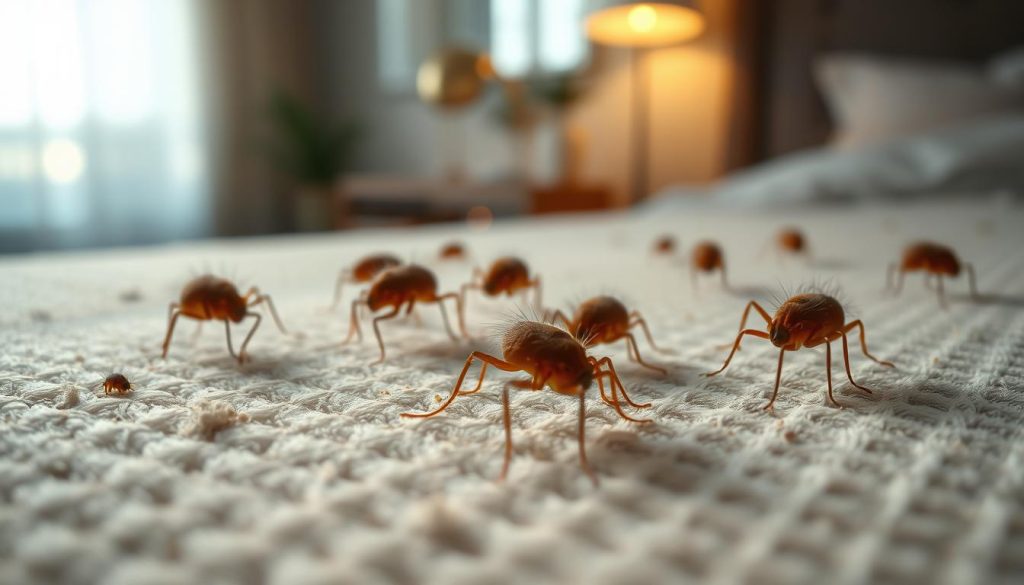
Dust mites, waste and rapid reproduction in bedding
Dust mites are a major factor. A female can lay roughly 300 eggs in her life and, unchecked, a single sleeping surface may host up to ~10 million mites.
Their waste is concentrated: mites can produce about 200 times their body weight in excrement. That material is a potent trigger for allergic reactions.
Common triggers linked to allergies, asthma and skin irritation
Particles released when a bed is moved enter room air and can cause runny nose, itchy or watery eyes, coughing and eczema flares.
For people with asthma, higher allergen levels can increase night-time symptoms and reduce sleep quality.
Build-up we routinely find: dead skin cells, perspiration, body oils and food residue
We regularly remove dead skin, sweat, body oils and food residue that feed mites and support bacterial growth.
Removal aims to lower allergen load and odour, not to promise a medical cure. That reduction helps adults, children and sensitive sleepers breathe easier.
- Invisible contamination becomes tangible when we explain common accumulations.
- Rapid mite reproduction and waste increase allergen burden over months.
- Movement releases particles that degrade air quality overnight.
“Reducing contaminants supports a cleaner sleep environment and fewer nightly irritations.”
For practical guidance on professional mattress care and outcomes, see our professional mattress cleaning.
When to book a mattress cleaning service for best results
Timing is important. We recommend a planned schedule so upkeep stays manageable and effective. In hot, humid climates, regular work helps prevent set-in marks, lingering odours and allergen build-up.
Recommended cadence:
- General maintenance: every 3 to 6 months for thorough hygiene and consistent results.
- Visible stains or recurring odours: every 3 months to prevent discolouration and set-in smell.
- Allergy-prone households or dust mites: monthly to once every 1–2 months for best relief.
Frequency also depends on use. A guest bed needs less attention than a daily bed. Pets on the bed, heavy perspiration, or poor ventilation raise the need for more frequent work. We tailor schedules to your household needs and time constraints.
Plan your visit with minimal disruption
We book around workdays and school routines. Most appointments take one to two hours and fit into laundry cycles easily.
“If you spot stains, odour or renewed allergy symptoms, contact us and we will recommend the right schedule after an on-site assessment.”
Our professional mattress cleaning methods and what each is best for
We match method to need — fabric type, stain history, odour level and household sensitivities guide our choice. Below are the main types we use and when each gives the best results.
Dry, low‑moisture sanitising
What it is: Chemical‑free, low‑moisture treatment that sanitises without long drying times.
Best for rooms where moisture control matters and for fast return-to-use. It reduces allergens and surface bacteria while keeping fabrics safe.
Steam treatment
What it is: Hot vapour disinfection that targets germs, bacteria and many allergens.
Steam kills a high proportion of microbes, but steam alone may not remove embedded dirt without extraction. Use when disinfection is the priority.
Deep cleaning with extraction
What it is: A heavy‑duty process that loosens and lifts embedded dirt and reduces odour and stains by extracting soils and moisture.
We recommend extraction for natural fibres to avoid shrinkage risk and when stain lift or deep cleaning is required.
UV‑C disinfection
What it is: 100% dry, chemical‑free UV‑C treatment that requires no drying time.
Ideal for quick turnaround and households with babies or pets. It offers strong disinfection without wetting the surface.
Protective treatments (BioShield)
What it does: An optional hygiene layer that adds ongoing protection.
Note: It supports regular care but is not a substitute for professional cleaning or deep cleaning when soils and stains are present.
“We select the method that balances safety, fabric care and the fastest path to a fresh bed.”
| Method | Best for | Key benefit |
|---|---|---|
| Dry sanitising | Quick reuse, moisture‑sensitive rooms | Low drying time, chemical‑free |
| Steam | Disinfection focus | High germ reduction |
| Extraction | Heavy soils, stains | Removes embedded dirt and odour |
| UV‑C | Fast turnaround | Dry, chemical‑free disinfection |
We tailor our process and recommend the right mix of methods for quality results. To arrange an assessment and book our services visit book our services.
Our mattress cleaning process at your home
Our team begins every visit with a careful check that guides which methods will deliver the best results. We explain the process clearly so you know what happens from arrival to completion.

Pre-clean inspection
We inspect for visible stains, odours and tell-tale signs of bed bug activity. This assessment determines which method and products we will use.
Targeted treatment and sanitisation
We start with vacuuming to remove loose dust and debris. Then we apply targeted stain treatment where needed and follow with deep sanitisation.
Deodorising and protection
We neutralise odours and reduce microbial load to make the bed fresher. Our team protects the surrounding area and handles fabrics carefully to avoid disruption.
Post-clean guidance
After drying advice and ventilation tips, we suggest simple routines to keep results longer. Regular airing, bedding rotation and prompt spot treatment help reduce mites and dust between visits.
“A transparent, step‑by‑step process delivers measurable value: better comfort, less dust exposure and a more hygienic sleep surface.”
What we can and can’t remove: stains, odours and allergy triggers
We set honest expectations about what professional work can achieve. Not every mark or smell can be erased completely. Outcomes depend on the stain type, how long it has set and whether it has reached deeper layers.
Stain removal outcomes vary. Fresh spills such as juice or sweat often respond well. Set-in dyes or deep body oils may only lighten rather than vanish. That difference shapes our recommended approach.
We tackle odour at the source by removing bacteria and organic dirt that feed smells. That reduces the need for masking sprays and gives a longer-lasting result.
How our process reduces allergens and improves air
Our methods lower dust mite allergens, pet dander and mould spores. That reduction helps bedroom air feel fresher and reduces common triggers for sensitive sleepers.
| Issue | Typical outcome | Recommended action |
|---|---|---|
| Fresh liquid stains | High chance of full removal | Immediate treatment and extraction |
| Set‑in oils or dyes | Lightening likely, full removal less certain | Targeted solvent and repeat treatment |
| Persistent odours | Significant reduction by removing sources | Sanitise, deodorise and ventilate |
| Extensive microbial or structural damage | Often beyond reasonable restoration | Consider encasement, protector or replacement |
“We match method to the fabric, stain history and household needs to deliver the best possible quality of results.”
Service timings, drying and safety for families, babies and pets
Understanding how long a job takes helps families plan naps, guests and daily routines with confidence.
Typical appointment duration and what affects time on site
Most visits last about 1–2 hours. Time depends on mattress size, level of soiling, number of stains and the selected method.
Low‑moisture and UV options tend to be faster. Deep extraction for heavy soils will take longer.
Drying guidance: ventilation, fans and air‑conditioning for faster results
For wet processes we recommend good airflow: open windows where possible, run fans and use air‑conditioning or a dehumidifier to speed drying.
UV‑C treatment is 100% dry with no wait time, so it suits households that need immediate use.
Eco‑friendly, non‑toxic options for peace of mind
We offer chemical‑free and low‑toxicity solutions that are safe for babies, pets and sensitive sleepers. These options reduce lasting residue and support a healthier home environment.
Our team works tidily, shares simple aftercare tips and confirms when it’s safe to use the bed again.
“We choose methods that balance fast turnaround with safety for your family and home.”
| Service type | Typical time on site | When bed can be used |
|---|---|---|
| UV‑C (dry) | 30–60 minutes | Immediate |
| Low‑moisture sanitise | 45–90 minutes | 1–2 hours |
| Extraction (wet) | 60–120 minutes | 2–6 hours (with good ventilation) |
Conclusion
Small, routine interventions by a trained team deliver measurable gains in nightly comfort and air quality. Our mattress cleaning services reduce dust, allergens, dust mites and bacteria so you and your family can sleep better and enjoy improved health.
We recommend a typical schedule of every 3–6 months, adjusted for stains or allergy sensitivity. Our professional mattress cleaning and deep cleaning methods suit real homes and focus on results, not just surface shine.
Ready to book? Contact our team for a simple on‑site recommendation. Send photos, tell us your concerns or ask about drying time and we will advise the best method and timing.
Outcome: a cleaner mattress, fresher air and more comfortable sleep — often noticeable from the day of service. Reach out with any questions and we’ll respond fast.

