

We want to help you choose the right product for our home in Singapore. This short introduction sets plain expectations so we do not chase marketing claims.
We’ll explain what a water vacuum cleaner for sofa can and cannot do, and why deep spray extraction often beats surface suction for tough stains. Spray extraction sprays detergent into fibres and brings moisture back out, which can cut drying time versus hand washing.
We will compare everyday vacuuming with water-based deep cleaning and highlight where each matters in a busy condo. We will also note where specialist care still wins, such as delicate fabrics or major damage.
Expect clear guidance on suction, tank design, stain tools, filtration, weight and usability so our next purchase fits limited storage and Singapore’s humidity. Later, we will point to the best picks and when a broader wet dry vacuum cleaner makes sense.
Why we’re upgrading sofa cleaning in Singapore homes
Our sofas collect more than sits — they record snacks, pets and city dust. In small flats this shows quickly as crumbs, drinks and tracked-in grit that settle into fibres.
Everyday messes we actually face
Spills and crumbs sit on the surface while body oils and fine dust work deeper. Pet hair and hair from occupants cling to seams and fabric, so one pass rarely removes everything.
Why regular upholstery cleaning matters
Routine care loosens embedded dirt, lifts pet hair and reduces mites and odours. That keeps furniture presentable and can extend its life.
When a standard dry device isn’t enough
Vacuuming clears surface debris but cannot flush out set stains or trapped dirt. Fresh stains are easier to treat; blot wet marks immediately and plan a deeper extraction before they set.
“Blot — never rub — to avoid pushing liquid deeper into fibres.”
How water-based upholstery cleaning works
Understanding how spray extraction works helps us pick the right tool for deep fabric care. The method is simple and repeatable, and it separates true deep cleaning from a quick surface pass.
Spray extraction explained: spray, soak, then suction
Step 1: Pre-vacuum to remove coarse dirt and hair so the extraction can target embedded grime.
Step 2: Fill the clean tank with clear water and add detergent exactly as instructed. Hold the nozzle at about 10 cm and spray evenly so fibres soak, then leave it to work for a few minutes.
Step 3: Slowly extract the moisture and residue. A steady, even pass and strong airflow pulls out dirt and detergent. Repeat until the recovered liquid runs clear.
Quick reminders: Rinse once with clear water if needed, ventilate the space and vacuum again after the fabric is fully dry.
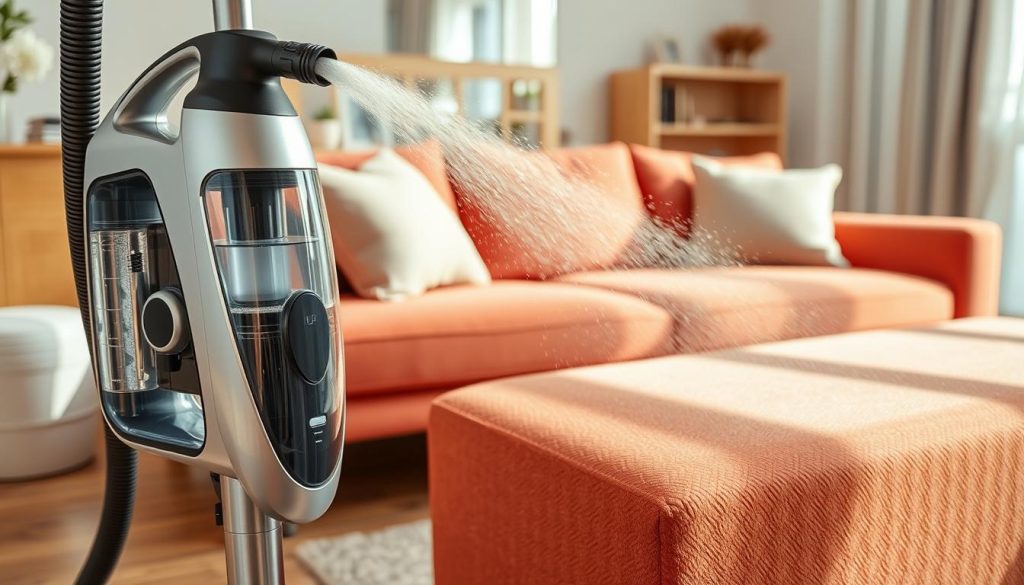
Wet and dry models versus spray extraction machines
Wet dry machines are versatile. They pick up spills and dry debris across floors and carpets. Drum models suit heavy-duty tasks and big messes. Stick types often combine cordless dry pick-up with mopping functions.
Dedicated spray extraction units focus on a more thorough cleaning of upholstery fibres. They inject solution and extract it back out, which yields deeper stain removal and fresher fabric than a single dry pass.
“Pre-vacuum, spray evenly, extract slowly — rushing any step reduces results.”
For spot stains or tipped drinks, a wet dry option offers quick recovery. For regular deep fabric care, a spray extraction system will usually give the best finish. Learn more about when to use a carpet-style extraction in our practical guide at clean your couch with a carpet.
What to look for in a water vacuum cleaner for sofa
A good purchase starts with stable extraction power and a layout that makes cleaning easy. We focus on practical specs that matter in Singapore: steady suction, tidy tank handling and accessories that reach seams and crevices.
Power and sustained suction
Powerful suction matters: it pulls moisture and grime out of fibres, not just move surface dust. Higher suction speeds drying and reduces lingering odours in humid climates.
Tank layout and safety
Look for an easy-to-remove clean water tank and a removable dirty tank with an auto-stop feature. A 1L clean water tank suits spot work and avoids bulky refills.
Spray control and accessories
Spray & soak control helps target stains without over-wetting. Prioritise a unit with upholstery nozzles, small brushes and push-to-release attachments that work on furniture and car seats.
- Good filtration and steady air flow to handle fine dust and allergens.
- Compact design, carrying handle and light weight for small flats.
- Real-world specs to watch: suction (kPa), motor power (W) and easy accessory storage.
For a deeper comparison of formats and features, see our guide on how to choose wet-dry models.
Choosing the right format for your home and lifestyle
We pick tools that suit small homes and real routines: quick spot work or whole-room recovery. Match format to what we clean most often, not to the latest buzz.

Compact spot machines
When to choose this format: targeted spills, soft toys, dining cushions and quick stain work. These units are light, easy to store and ready fast.
Advantages: fast turnaround, small tanks and specialised upholstery nozzles that treat stains without moving a larger appliance.
Wet dry models for multi-surface use
Wet dry models handle both spills and dry debris across floors, patios and cars. Drum types give larger capacity; stick types often add cordless cleaning plus mopping.
Advantages: one product that covers whole-home tasks and heavier messes. Typical Singapore pricing depends on the features you choose.
Pets and rapid recovery
If we have pets, prioritise tools that lift pet hair and reach seams. Look for motor strength, dedicated pet nozzles and quick drying so the couch is usable sooner.
Car owners and upholstery care
Owning a car means we can remove small stains and daily grime at home. A compact spot unit or a portable wet dry option saves on frequent detailing trips.
| Format | Best use | Storage |
|---|---|---|
| Compact spot | Targeted stains, soft toys, quick touch-ups | Small, easy to tuck away |
| Wet dry (drum/stick) | Multi-surface spills, floors, car interiors | Medium to large; needs a storage spot |
| Portable wet dry | Car cleaning and spot work with larger capacity | Compact to medium |
Choose this if…
- We mostly need quick spot fixes and tight storage: pick a compact spot model.
- We want one unit for whole-home spills and dry debris: pick a wet dry model.
- We own pets or a car and want fewer detailing trips: favour models with pet tools and portable extraction.
How we deep-clean a sofa safely and avoid water marks
A methodical approach protects fabric and helps us avoid visible water marks. We start by preparing the surface so the extraction can target embedded grime rather than scatter it.
Prep: dry vacuuming first
First, we do a full pass of vacuuming to remove loose dirt and dust. This prevents grit from turning into mud when we introduce liquid.
Fill, dose and test
We use a low-suds detergent and follow the manufacturer dosing. Always test colour-fastness on an inconspicuous patch and check water resistance before larger work.
Technique and timing
Keep the spray nozzle about 10 cm from the fabric and work evenly across connected sections. Leave the solution to sit for a few minutes, then extract slowly in steady passes.
Rinse cycles
If foam or residue appears, we perform one or two clear-water rinses until the recovered liquid runs clear. This helps avoid detergent build-up that attracts dust and causes marks.
Drying and final care
In Singapore’s humidity we maximise air flow and ventilation and allow ample drying time. Only when fully dry do we repeat a light vacuuming pass to lift remaining fibres and restore texture.
“Test first, spray evenly and extract slowly — rushing increases the risk of marks.”
Quick checklist:
- Pre-vacuum to remove dust and dirt.
- Use low-suds detergent and a patch test.
- Spray at ~10 cm, wait a few minutes, extract slowly.
- Rinse with clear water if needed and dry with good air flow.
Singapore buyer picks and what makes them stand out
Our Singapore picks highlight machines that actually remove set stains without fuss. We focus on practical specs and tidy design that suit compact flats and busy routines.
TOYOMI Spot and Stain Deep Cleaner VC 7336WD
TOYOMI’s VC 7336WD is built for quick, thorough upholstery work. It handles stains, spills and pet marks on cushions, soft toys and car seats with a spray & soak system and steady suction.
Key specs we like
- Power: 400W motor that sustains extraction.
- Suction: 10.5 kPa — enough to pull residue from fibres.
- Clean water tank: 1L removable tank for easy refills during a session.
Practical design touches
The removable dirty tank has an auto-stop when full, which cuts spill risk. Push-to-release accessories and a brush/suction hook keep tools organised in small storage spaces.
When to choose a wet dry vacuum instead
We’d pick a wet dry option if we need whole-home flexibility: floors, car interiors and larger spills. Expect Singapore pricing to be driven by capacity, suction performance and premium features.
| Model | Best use | Key spec |
|---|---|---|
| TOYOMI VC 7336WD | Spot upholstery & car seats | 400W / 10.5 kPa / 1L tank |
| Wet dry (drum) | Whole-home spills & floors | High capacity, stronger suction |
| Stick wet dry | Daily hard-floor care + mopping | Lightweight, cordless options |
For a broader view of top picks and formats, see our guide to the best vacuums in Singapore.
Conclusion
Choosing the right machine means balancing daily upkeep with deeper stain removal when it matters most.
Our core takeaway is simple: a dry vacuum handles routine dust and dirt, while spray extraction and wet dry options step in for set stains and embedded grime.
The features that change results are clear — steady suction, sensible tank layout, useful tools and maintenance we will actually do. Prioritise these over flashy extras.
Choose a compact upholstery-focused machine when frequent mishaps dominate. Pick wet dry models when spills and multi-surface use are regular. This gives the best practical balance at home.
Final care reminder: always test fabrics, avoid over-wetting, extract slowly and allow good drying time in Singapore’s humidity. As homes get busier, versatile, easy-to-store machines will make cleaning smarter and faster.

