

We introduce what spray extraction is and how it differs from dry methods. This method sprays detergent and extracts the solution to lift dirt from fabric. It is often faster drying than hand washing and suits water‑resistant upholstery.
We set clear expectations: spray extraction targets embedded dirt and common stains, not heavy soaking. Results depend on fabric type, the right detergent and careful extraction.
Two non‑negotiables: always check the care label and always test in a hidden spot before any wet cleaning. We emphasise these steps to avoid damage and musty odours in humid climates like Singapore.
Our guide covers prep, deep cleaning, spot treatment, drying and aftercare. We write for families, pet owners and drivers who want a fresher sofa and car interiors. Expect practical tips and step‑by‑step advice to keep your home fabric looking its best.
Why we clean upholstered furniture regularly in Singapore homes
In humid Singapore homes, regular upkeep keeps soft furniture hygienic and prevents grime from settling into fibres.
Loosening stubborn dirt — routine cleaning lifts grit and oils before they abrade fabric. This reduces wear and helps stubborn stains respond better to deep cleaning.
How regular cleaning loosens stubborn dirt and extends furniture life
We remove surface grit early so fibres do not break down. Regular care delays replacement and keeps a sofa and other furniture looking newer for longer.
Reducing pet hair, mites and allergens for a healthier home
Pets shed hair and bring in allergens. Frequent maintenance cuts mite populations and lowers airborne irritants, supporting a healthier home for all occupants.
Why sofas, mattresses and car seats need the same care routine
Seats in cars and beds collect the same debris as living‑room items. A consistent schedule — light cleaning often, deeper cleaning less often — prevents build-up without over‑wetting fabrics.
- Light upkeep: quick surface passes weekly.
- Deep reset: thorough extraction a few times a year, or sooner for high-use areas.
Before we start: check fabric type, cleaning codes and water resistance
A prudent start is to locate the upholstery tag and interpret its cleaning code. We find tags under loose cushions, under the frame or near seams. Reading the label tells us which cleaning method is safe.
Finding and interpreting upholstery cleaning codes
Cleaning codes read W, S, W/S or X. W means water‑based cleaners are allowed. S means solvent only. W/S accepts either. X requires vacuum or brushing only.
Always test in an inconspicuous spot
We always check a hidden area before full cleaning. Use a white cloth to blot a small patch.
- Look for colour transfer on the cloth.
- Check for texture change or piling.
- Watch for ring marks as the patch dries.
When water-based cleaning is not suitable for delicate fabrics
If the code is X or the fabric feels delicate, we avoid water-based cleaners and choose dry methods or professional help. Dyes, backing layers and finishes can react unpredictably, even on robust-looking fabrics.
Tip: For step-by-step care and professional options, see our furniture care guide.
Tools and products we prepare for upholstery cleaning with water
Before we wet any upholstery, we lay out every tool and product so the job stays controlled and efficient.
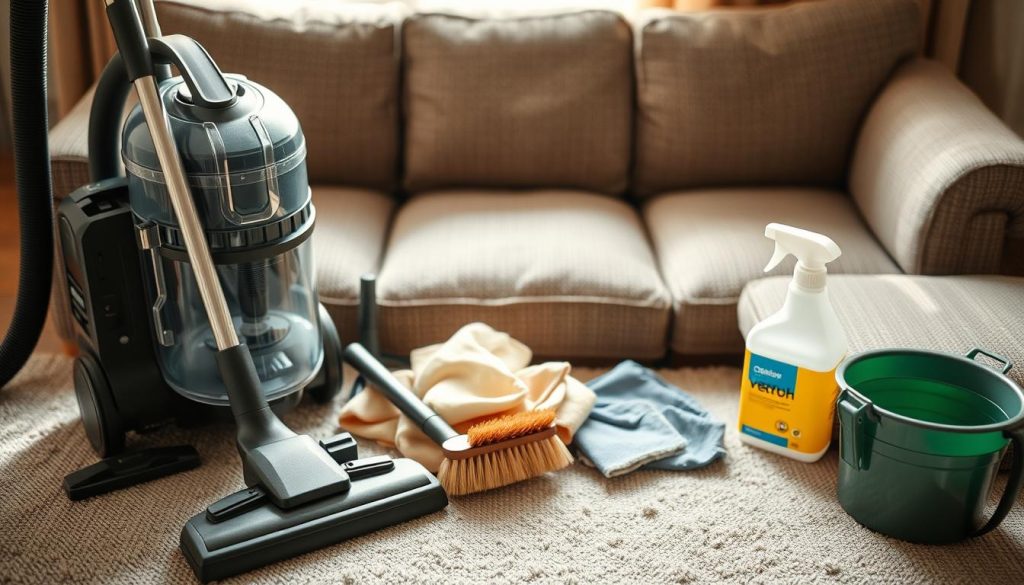
Core kit: a vacuum cleaner fitted with an upholstery nozzle, a crevice tool and an air‑powered turbo nozzle. These attachments concentrate airflow and increase suction power in seams and along edges.
Spray extraction and spot machines
We choose a spray extraction cleaner that has separate clean and dirty tanks. A model with a 1L removable clean tank and an auto‑stop dirty tank helps prevent overflow and keeps the process tidy.
Look for compatibility with low‑suds detergents labelled for carpet and upholstery, and a spray‑and‑soak function backed by powerful suction.
Helpful extras
We keep microfibre cloths for blotting, a soft brush to lift hair and fibres, a spray bottle for precise application and baking soda for deodorising between deep cleans.
- Checklist: tools, attachments, appropriate products, correct dosing.
- Reminder: match products to the fabric code — more detergent is not better.
Surface prep we do first: remove crumbs, dust and pet hair
We begin by clearing loose debris so the upcoming wet process does not turn grit into mud.
First, we run a quick pass with a handheld vacuum on cushions and the top surface. This removes coarse dirt and crumbs that would otherwise sink during cleaning.
Brushing and lifting hair so suction can reach deeper into the fibres
Next, we use a soft brush to lift pet hair and loose hair from the weave. Lifting strands helps the suction extract debris rather than glide over it.
Vacuuming seams, armrests and under cushions using the right attachments
We follow a set route: cushions (both sides), seams and piping, armrests, backrest joints and underneath seats. Crevice attachments and upholstery nozzles are vital for ribs and corners.
- Check grit traps at seat corners and hand-rest areas.
- Apply the same prep to car seats; crumbs hide in stitching and rails.
- Dry removal saves time and improves extraction results later.
| Area | Tool | Purpose |
|---|---|---|
| Cushion faces | Upholstery nozzle | Remove crumbs and loose dirt |
| Seams & piping | Crevice attachment | Extract trapped hair and grit |
| Under seats & rails | Hand tool + brush | Lift debris before main pass |
| Armrests & junctions | Turbo nozzle | Restore nap and remove oils |
How to use a couch vacuum cleaner with water for deep cleaning
Good results come from balancing spray coverage, dwell time and careful suction passes. We treat each seat panel as a single unit so edges and seams dry evenly.
Filling and dosing: we fill the clean tank and add a low‑suds detergent meant for carpet and upholstery. Follow the label dose — too much product leaves residue and foam that reduces powerful suction.
Spray technique and dwell time
Hold the nozzle about 10 cm from the fabric and spray in steady, overlapping sweeps for even coverage. Let the solution dwell for a few minutes so it loosens dirt and stains without soaking the backing.
Extraction technique
Place the nozzle on the fabric and use slow, steady suction strokes. Overlap each pass; patience and power remove more moisture and cut drying time in humid Singapore conditions.
Preventing marks and finishing passes
Wet connected surfaces consistently — for example, the whole seat panel — rather than isolated spots to avoid rings. Repeat passes until the extracted liquid runs clear.
If fabric feels tacky, we do one or two clear‑water rinse passes to remove leftover detergent. For a step‑by‑step demonstration, see our guide on how to clean fabric sofas.
Spot cleaning stains on sofas and car seats without damaging the fabric
A fast, calm response to a fresh spill often saves a fabric from a permanent mark. We act deliberately and follow a few simple rules to protect fibres and colour.
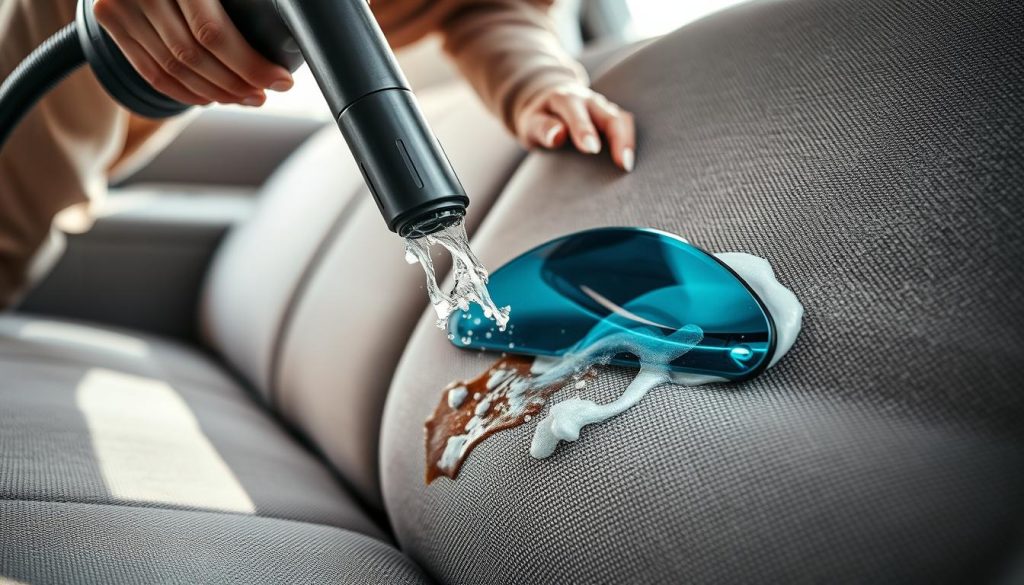
First aid for fresh spots
Blot, don’t rub. For wet spills we press a clean, dry cloth onto the stain to lift moisture. Rubbing spreads the mark and risks fibre damage.
Quick test for water‑soluble stains
About 90% of stains dissolve in mild liquid. We test for this by dabbing a white cloth moistened with lukewarm water onto an unseen area, watching for colour transfer.
Safe use of stain removers and finishing extraction
For non‑soluble marks, we apply a universal stain remover onto a colour‑fast cloth and dab the stain gently. Never flood the fabric.
After the stain lifts, we use the spray extraction cleaner as the finisher to rinse and extract residue. This step prevents rings and sticky deposits.
Dealing with stubborn stains
For set‑in marks on a sofa or car seats we use a brief spray‑and‑soak, agitate gently with a brush nozzle, then extract thoroughly. Work from the outside of the mark toward the centre.
- Practical tips: always check the fabric code and patch‑test first.
- Keep moisture even across a panel and avoid isolated wet spots.
- Prompt action reduces pet stains and odours before they set.
| Stain type | Immediate action | Tool / product |
|---|---|---|
| Spilled drink | Blot, test with lukewarm water | White cloth; mild solution; extraction finish |
| Oil or grease | Apply remover on cloth, dab | Universal stain remover; brush nozzle for stubborn marks |
| Mud or pet mess | Let dry slightly, brush off, then blot | Soft brush; spray‑and‑soak; extract thoroughly |
Drying and aftercare we follow for a fresher, longer-lasting sofa
We treat drying as part of the process, not a final step to be rushed. Proper drying prevents musty smells and helps the fibres recover after cleaning.
Ventilate and use fans. In Singapore humidity, we open windows where possible and run fans to move air across the upholstery. Allow ample time for the fabric to feel dry to the touch before using the sofa again.
Remove excess moisture immediately. After extraction we do extra suction-only passes and blot stubborn damp areas with a clean cloth. These actions cut drying time and reduce the chance of trapped dirt becoming a smell problem.
Final checks and optional protection
Plan realistic drying time: thick cushions or dense fabric take longer. The next day we perform a gentle vacuum to lift the nap and remove loosened dirt.
- Do one or two clear extraction passes if tackiness remains.
- Wait until fully dry before normal use — this protects seams and stuffing.
- Optionally, apply a textile impregnator to help repel future stains.
For step-by-step guidance on machine care and techniques, see our short guide to clean your couch with a carpet. These tips help extend the life of your sofa and improve ongoing cleaning results.
Common mistakes we avoid with water-based upholstery cleaning
A few simple errors can undo an otherwise careful upholstery cleaning job. We list the common pitfalls and how we prevent them to protect fabric and machine performance.
Over-wetting and tank discipline
Avoid saturation. Over-wetting pushes moisture into foam and backing. This lengthens drying time and invites musty odours.
We also monitor the dirty tank level and respect any auto‑stop feature. Letting the tank fill risks overflow and a drop in suction.
Wrong detergent and excess foam
High‑foaming soap reduces suction and can leave sticky residue that attracts dirt. We use low‑suds, carpet‑ or upholstery‑appropriate formulations.
Correct dosing preserves cleaning power and prevents machine problems.
Attachment choice and heat caution
Skipping the right attachments weakens suction power on pet hair, crumbs and seams. Turbo nozzles and upholstery heads make a real difference.
Steam or heat can help some stains but may harm sensitive fabric. We test a hidden patch first and only apply steam when the label allows.
- Rule of thumb: controlled moisture, correct products and patient extraction beat brute force.
Conclusion
Let’s wrap up with a clear, saveable step plan that makes sofa care straightforward.
Quick checklist: identify the fabric code, patch‑test, remove coarse dirt, fill and dose, spray evenly, extract slowly, repeat until clear, rinse if needed, dry fully, then vacuum once dry. Consider a textile protector as a final layer of care.
Two levers make the biggest difference: the right tools and strict moisture control. Our approach lifts visible stains and hidden grime that harms freshness and indoor air.
Build the habit: light upkeep often, deep cleaning sometimes helps families and pet owners manage hair and odours. If a fabric forbids wet cleaning, colour bleeds in testing, or marks spread, stop and seek professional upholstery help or safer alternatives. For related machine tips see wet-and-dry machine tips.

