
We start with a clear aim: to explain what the water vacuum cleaner price typically covers in Singapore and what to expect from models billed as wet dry or floor washers.
Our approach is practical. We compare not just the ticket figure but the real value you get for your money. This includes suction, tank size, runtime and any heating or steam functions.
We preview the categories we will test — budget, mid-range, premium, pet-focused and compact flats — and we flag common retailer terms so shoppers do not mix up different product types.
In short: we set expectations, outline key purchase drivers for Singapore homes (humidity, tiled floors, balcony dust and frequent spills) and promise model-level specs so our comparisons stay grounded and useful.
What a water vacuum cleaner is and why Singapore homes buy one
First, we clarify what a combined wet and dry model actually does around the house. By definition, buyers in Singapore expect a unit that picks up solid debris and handles liquid spills using separate tanks and washable filters.
Wet and dry versus dry-only units
A wet dry model copes with spilled drinks, damp mop runoff and small pools of dirty water. A dry vacuum cleaner should never be used on liquids; doing so risks damage and safety issues.
Everyday messes it handles
These machines speed up cleaning for crumbs, pet hair and gritty balcony dust. They are useful after mopping, when grout or entry rugs collect fine dust, or when accidental spills occur.
Best surfaces and real limits
They shine on hard floors, sealed wood and light rugs, but deep carpet requires a dedicated approach. Ownership means regular emptying and rinsing of tanks to prevent odour in our humid climate.
- Tip: families with children or pets often prefer the flexibility of wet dry systems.
- See the Electrolux wet and dry range for formats that suit flats and houses: Electrolux wet and dry range.
- For carpet-care tips after wet pick-up, consult our carpet-care tips.
Water vacuum cleaner price in Singapore: current ranges and what you get at each tier
We outline realistic market tiers so you can match features to your flat and routine.
Entry-level cordless wet dry vacuum options suit quick spot-cleans. Models like Simplus and Dibea offer around 13,000–21,000 Pa, roughly 38–50 minutes runtime, and small tank capacity (about 500 ml clean / 550–600 ml dirty). Expect fewer sensors and basic self-clean systems.
Mid-range sweet spot
The mid tier gives better suction power, larger tanks and longer runtime for whole-flat jobs. Examples include Narwal S20 Pro and Tineco Floor models with 20,000–22,000 Pa, 50–70 minutes runtime and 700–1,000 ml clean tank capacity. This is where versatile cleaning and reliability meet cost-effectiveness.
Premium features that push cost up
Premium units add smart sensing, hot water or steam, advanced self-clean bases and edge-focused brushes. Dyson-tier design and R&D also raise the figure, though they may offer superior filtration and ecosystem benefits.
Brand positioning in Singapore
- Value brands compete on Pa and tank specs.
- Premium brands charge for design, sensors and service.
- Our buying path: budget for spot-use, mid-range for daily upkeep, premium to minimise manual work.
The key features that change the price the most
Some features make a big difference to real-world results; here we unpack the ones that move the needle most.
Suction power explained
Suction power is shown as Pa for many floor washers (20,000–22,000 Pa on models like Narwal S20 Pro and Tineco) or as Air Watts on cordless sticks (Dyson V12s quotes ~130–140 Air Watts). These units use different measures, so compare within categories rather than directly between Pa and Air Watts.
Tank capacity and separation
Separate clean and dirty tanks reduce odour and make refills less frequent. For example, Tineco lists 1,000 ml clean / 720 ml dirty; Dreame shows about 800 ml / 650 ml. Higher capacity suits larger flats and cuts interruptions during a session.
Runtime, battery life and charging time
Quoted runtime in minutes often assumes eco modes on hard floors. Expect 3.5–4.5 hours charging on many models and vastly reduced minutes on boost modes. That influences whether a unit fits daily top-ups or weekly deep cleans.
Modes, sensors, heat and edge cleaning
Smart cleaning modes and sensors (iLoop, AI Dirt Sense) auto-adjust power and water use. Hot water or steam pays off for oily kitchen spills; otherwise, standard systems are fine for routine messes. Finally, brush design and edge cleaning systems decide how well a head reaches corners and skirting; dual-side rollers or lie-flat heads matter for neat results.
Best overall water vacuum cleaners to compare right now
To help you shortlist quickly, we pick three all‑round models that balance performance and everyday usability.
Tineco Floor One Switch S7 Stretch
Key strengths: 22,000 Pa suction, 1,000 ml clean / 720 ml dirty tanks, up to 50 min as a floor washer and 70 min as a stick vacuum. The iLoop sensor adjusts water and power to avoid over‑wetting.
Narwal S20 Pro
Key strengths: 20,000 Pa, 790 ml clean / 720 ml dirty, about 60 min runtime and 3.5 h charge. Lightweight (≈4.27 kg), AI Dirt Sense and triple‑sided edge cleaning suit narrow HDB corners.
Philips AquaTrio XW9465/11
Key strengths: 3‑in‑1 vacuum & wash with handheld mode, brushes ≈4,000 RPM, Auto‑Clean and LED nozzle lights. Runtime up to 45 min and coverage claims near 185 m² with optional battery.
| Model | Suction | Tanks | Runtime |
|---|---|---|---|
| Tineco S7 Stretch | 22,000 Pa | 1,000/720 ml | 50/70 min |
| Narwal S20 Pro | 20,000 Pa | 790/720 ml | 60 min |
| Philips AquaTrio | — (motor RPM) | Integrated | Up to 45 min |
We recommend these three as a compare‑first shortlist. They cover suction, tank size, runtime, edge performance and self‑clean convenience. Trade‑offs are clear: larger tanks add weight; smarter sensors raise cost but improve routine cleaning for hard floors.
Best hot water and steam models for deep-cleaning sticky messes
Heat changes certain spills from stubborn stains into a single-pass job.
Two heated options stand out for Singapore homes: the Dreame H15 Pro Heat uses hot water mopping at about 85°C and offers 22,000 Pa suction with an 800 ml clean / 650 ml dirty tank. Its normal runtime reaches up to 70 minutes but hot water mode drops to roughly 25 minutes and charge time is near 4 hours.
The Tineco Floor One S9 Artist Steam relies on a boiler up to 140°C (delivering ≥99°C to the floor). It pairs 22 kPa suction with DualBlock anti-tangle, FlashDry self-drying (≈85°C for ~5 minutes) and up to 75 minutes runtime. iLoop sensors tune power and water flow.
Practically, hot water excels on greasy splashes and sugary residues. Steam gives faster sanitisation and quicker drying thanks to FlashDry. Trade-offs are clear: these models are heavier, need more storage and cost more than standard wet dry options.
- Choose Dreame for stubborn stains that benefit from direct hot water on the roller.
- Choose Tineco S9 if you want boiler steam, fast dry cycles and low brush tangles.
Best for pet hair and family homes with frequent messes
Our focus here is on models built to handle fur, muddy paws and fast‑moving daily messes.
Bissell CrossWave X7 Cordless Pet Pro is purpose‑built for pawrents. It delivers up to 20,000 Pa suction with an 820 ml clean and 420 ml dirty tank. Turbo Pet mode targets fur and stains on tiles, sealed wood and low‑pile rugs.
The X7 excels at lifting hair without constant re‑clearing. Its dual‑action roller helps remove sticky spills before they stain. Maintenance needs are regular: rinse the roller and empty the dirty tank after each use to prevent odour.
Dyson V12s Detect Slim Submarine
Dyson’s stick format pairs 140 Air Watts of suction power with whole‑machine HEPA filtration. The Submarine head adds wet floor capability for hard surfaces and an anti‑tangle design that limits hair wrap.
Runtime reaches up to 60 minutes, so one charge can cover multiple rooms. The bin is compact, so we empty it more often when dealing with pet hair or fine dust.
- Practical trade‑offs: Bissell gives larger wet capacity but shorter runtime; Dyson is lighter and better for dust and allergens.
- Maintenance tips: empty dirty tanks promptly, rinse rollers and air‑dry parts to avoid smells.
- Choose based on mess: pick Bissell for heavy fur and muddy paw prints; choose Dyson for fine dust, crumbs and allergy control.
Best budget-friendly picks that still deliver strong suction
If you want usable performance without a premium tag, these three models balance value and function.
Simplus Cordless wet-dry: value with high Pa
Simplus packs 21,000 Pa of suction power and a practical runtime of up to 50 minutes. Its twin tanks (500 ml clean / 550 ml dirty) and 180° flat-folding head make it easy to reach under furniture in small flats.
Dibea H8: modes and a self-cleaning system
The Dibea H8 offers versatile cleaning with several modes and an onboard self-cleaning system. Suction is lower at 13,000 Pa, but the unit is lighter and gives around 38 minutes in auto (30 minutes on high), which suits routine upkeep.
Russell Taylors V10 iClean: quick, light-duty rescue
The V10 iClean is a cordless option for fast spill response and short sessions. Expect roughly 40 minutes runtime; it is best for light-duty jobs rather than heavy daily grime.
“Budget should still mean usable suction and a maintenance routine you can keep up with.”
How we judge them: look at tank separation, brush access and replacement costs. These models fit first-time wet dry buyers, renters and smaller households who need straightforward, reliable cleaning without extras.
Most manoeuvrable and compact designs for small Singapore flats
In compact Singapore homes, the balance between reach and storage often decides which model we use every week. A good compact design reduces the friction of routine cleaning and lets us cover floors quickly without shifting furniture.
Lie-flat and under-furniture reach: what 180° flat-folding changes
180° flat-folding heads on models such as Simplus and Narwal make under-bed and low-sofa cleaning effortless. We can glide the head flat, avoid heavy lifting and clear dust from tight zones in one pass.
Weight and handling compared: why lighter can be faster for daily cleaning
Light units encourage short, frequent sessions. A slightly lighter machine means we clean more often and cut down accumulated dust.
That said, smaller tanks trade capacity for manoeuvrability. Match tank capacity to your flat size and cleaning time to avoid constant refills.
Shark HydroVac: antimicrobial brush rollers for odour control and easy upkeep
The Shark HydroVac WD210SM pairs a compact design with antimicrobial brush rollers. Its 500 ml clean / 360 ml dirty tanks, ~2,700 Pa suction and ~30 minutes runtime suit quick spot jobs in humid homes.
Practical benefit: antimicrobial brushes cut bacterial build-up and reduce that “wet tool smell” many of us dread.
“Choose manoeuvrability over raw specs if you live in a small flat — you’ll clean more, and keep floors neater.”
- Checklist for small-flat buyers: docking footprint, turning radius, lie-flat clearance and upright storage.
- Check tank capacity versus typical session time to balance refills and runtime.
- Prefer designs with easy brush access for fast rinsing and odour prevention.
Electrolux wet and dry vacuums in Singapore: pricing, formats and who they suit
Electrolux splits its offering into two clear formats so buyers match capability to need.
Drum models versus cordless stick floor washer models
Drum units are heavy-duty. They suit renovation debris, garage use and tough spill clearance with blower functions.
Cordless stick floor washers are for daily hard-floor cleaning. They combine suction, mopping and a handheld mode for quick touch-ups.
Electrolux pricing benchmarks: what to expect across the range
Official Singapore pricing varies by model and promotions. Discounts, free delivery and 0% instalment plans often change the effective cost.
Models to consider and who they suit
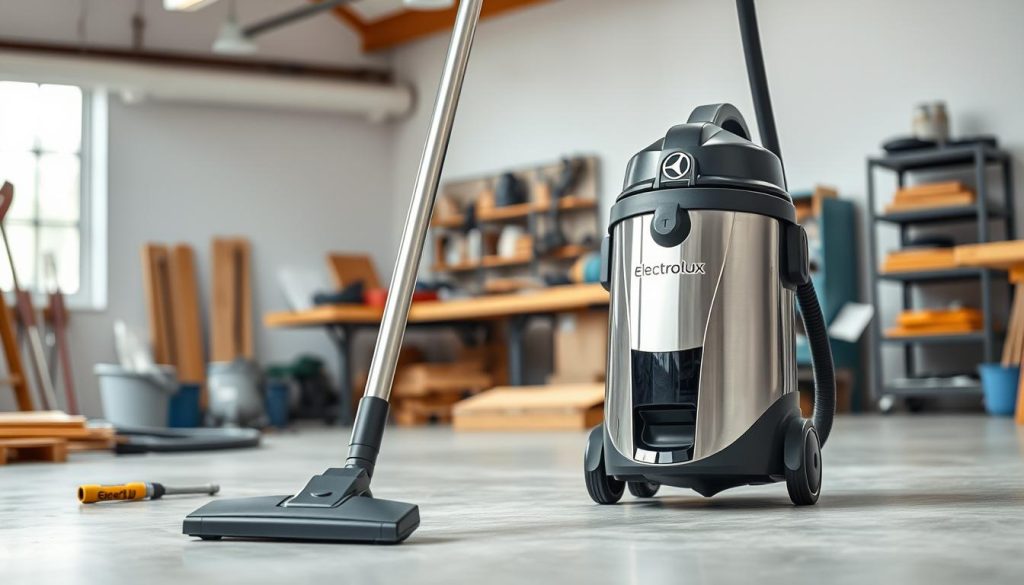
Flexio Power Z823: 1600W drum format for budget buyers who need robust power and manoeuvrability.
UltimateHome 700 EFW71711: antibacterial tanks and a self-cleaning nozzle for hygienic daily cleaning in family homes.
Electrolux 800 3‑in‑1 EFW81713: inverter motor, detachable hand unit and smart dirt detection for premium cordless convenience.
- How to compare: check tank capacity, suction approach and upkeep system rather than sticker figures alone.
- Practical note: drum units are not the same as stick models — don’t cross-compare as if they serve identical chores.
- Buying tip: official-store perks in Singapore can make higher-ticket models better value when instalments and delivery are included.
How we compare water vacuum cleaners for value, not just price
We judge each model by how much real cleaning it delivers for each pound or dollar you spend. Our tests focus on daily usefulness in Singapore homes and the long‑term cost of ownership.
What matters most per dollar
Suction, tank capacity and edge cleaning are the top drivers of satisfaction. Useful cleaning modes and brush design multiply usefulness by cutting session time.
Maintenance costs and effort
Filters, brush wear and spare parts add ongoing cost. Self‑cleaning systems and anti‑tangle brushes reduce hands‑on time and help avoid odour in humid climates.
Matching the right unit to your floors
Sealed wood, tiles and vinyl each need different settings or rollers. Hard floors benefit from softer rollers and lower water flow; delicate surfaces need gentle modes.
| Criteria | Why it matters | What to check |
|---|---|---|
| Suction power | Moves dirt and dust in fewer passes | Pa or Air Watts within category |
| Tank capacity | Fewer stops to empty during a session | Clean/dirty separation and easy emptying |
| Edge cleaning | Reduces detail work and mop time | Brush design, lie‑flat reach |
| Self‑clean system | Lower odour risk and less drying time | Auto‑rinse and heated dry options |
Decision rule: prioritise suction and tank for flats with lots of dust; choose self‑clean systems if you want low maintenance. Ask about filter cost and brush replacements before you buy.
Conclusion
To close, we offer a simple framework that helps you match features to everyday messes. ,
Start with floors and use-case: list your tiled areas, rugs and frequent dirt types. Then choose suction and tank capacity that cut session stops and scrubbing.
Shortlist fast: our all‑round picks (Tineco Floor One S7 Stretch, Narwal S20 Pro, Simplus) cover most homes. For deep heat clean, consider Dreame H15 Pro or the Tineco S9 Artist Steam.
Key takeaways: read suction numbers in context, expect runtime to fall on boost modes, and favour self‑clean/dry systems if you want lower upkeep for wet dry units.
Good / Better / Best: entry models suit spot jobs; mid range rewards daily upkeep; premium models save time long term. Check Electrolux official offers and retailer promos so you get the best overall deal.

