
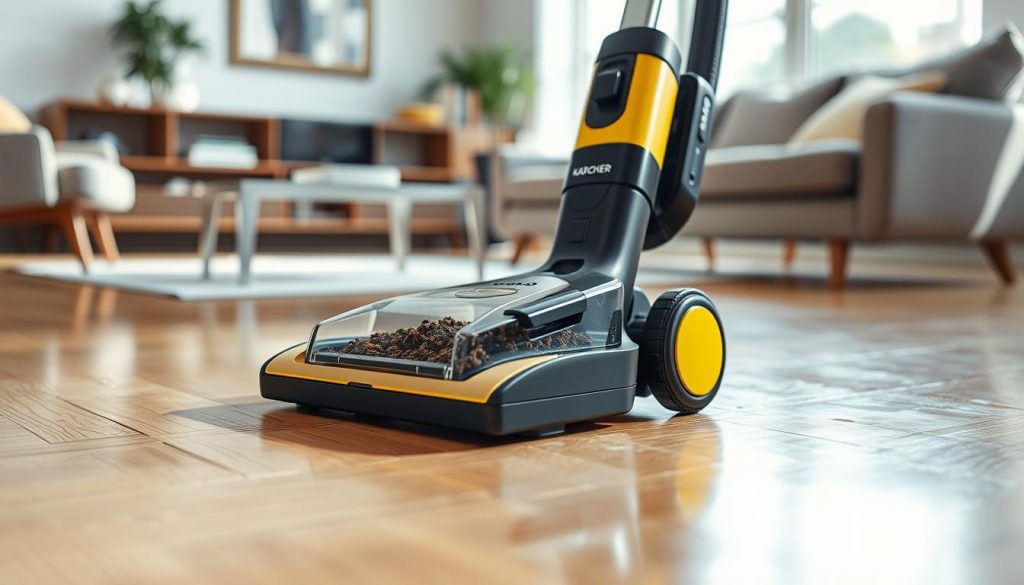
We outline what counts as a water-based cleaning system and why it matters for Singapore homes. Humidity, dust and urban air quality mean many households favour systems that trap debris in liquid rather than only dry bags.
This is a commercial-intent shortlist. We compare ownership costs, filtration performance and daily usability, not just specs. Expect trade-offs: these models can reduce dust kickback and handle wet spills, but they are often bulkier and need more upkeep.
Our guide suits allergy-prone families, pet owners and anyone after a deeper clean on hard floors common in HDB flats. We cover both canister-style systems and “vacuum mop” designs and list familiar names such as Tineco iFLOOR3, Sirena and POLTI Vaporetto Smart 100.
We won’t promise medical cures. Instead, we focus on lowering airborne particles and improving cleaning outcomes. Later, we return to key decision points: filtration stack, suction, floor compatibility and how much time you’ll spend rinsing and drying the unit.
For a practical how-to on carpet maintenance and a related dual-tank model option, see our quick guide on at-home carpet care.
Why we’re recommending water filtration vacuums for Singapore homes right now
Given our tropical climate and compact living spaces, a different approach to trapping dust can be useful right now.
What “water filtration” means for dust, dirt and indoor air quality
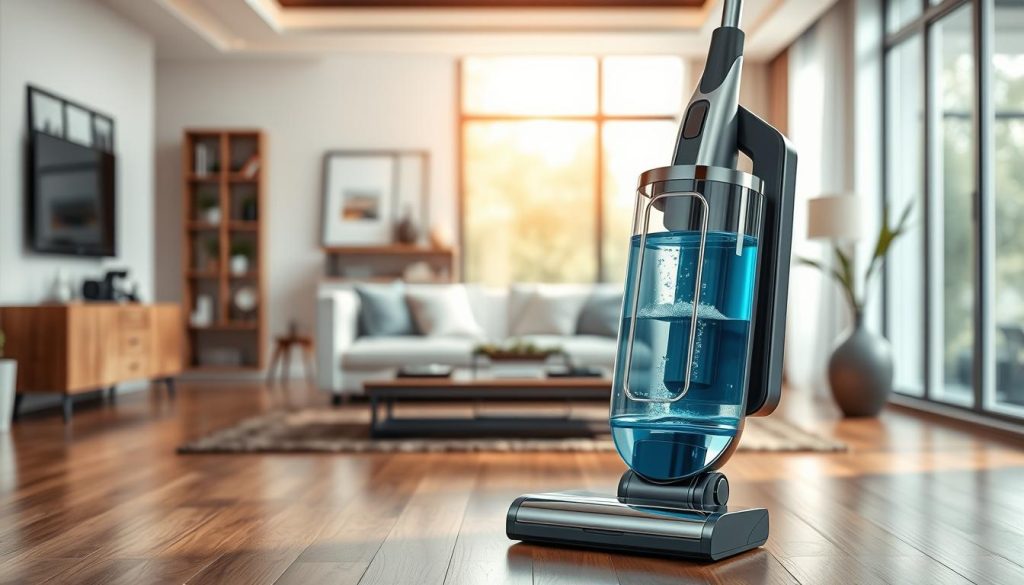
Water filtration systems use a basin of liquid to wash dust and microbes from the airstream. The process is like a brief rainstorm: particles become wet, heavy and fall into the tank rather than staying airborne.
This reduces the puffs of dust you see when emptying typical dust cups. Research cited in the Journal of Air & Waste Management Association found these systems captured particles more effectively and released fewer contaminants back into the room.
Why allergy-prone households notice the difference
For families concerned about allergies and dust mites, containment matters more than convenience. A system that traps dirt in liquid lowers the chance that fine particles re-enter bedroom or living room air.
- Practical note: water-based trapping helps, but it is one part of a wider routine.
- We will later: explain why HEPA and sealing quality still play key roles alongside basin filtration.
How water filter vacuum cleaners work compared with traditional vacuums
To understand the practical differences, we map the route dust takes through a water-based unit versus a standard cyclonic machine. The mechanical suction is familiar, but the path and final trap set these systems apart.
Using water as a trap in the basin
The floor nozzle dislodges debris and suction pulls it into the canister. The airstream is then routed so contaminants are bubbled through a basin.
The water tank acts as the primary trap: dust becomes wet and heavy, so it falls out of the airflow and collects in the basin. That makes the removed dirt visible and less likely to be re‑released.
Why many units add a HEPA stage
After the basin, manufacturers often include a HEPA or moisture‑tolerant hepa filter. This catches residual fine dust and tiny droplets before air exits the machine.
That dual stage—liquid plus hepa—helps reduce the chance of fines escaping into the room.
Cleaner air during use and what it is not
Compared with bag or cyclonic designs, these machines tend to produce less kickback. Sealed paths and the liquid trap lower the particles released while you clean.
They are not the same as large commercial wet/dry units, nor identical to small vacuum‑mop hybrids. The aim here is airborne particle control during routine home cleaning.
- Airflow path: nozzle → canister → water tank → hepa → exhaust.
- Main advantage: visible capture and fewer airborne particles during operation.
How we choose the right model for allergies, suction power and everyday cleaning
Our selection method balances filtration performance, measurable suction and real-world usability for typical flats in Singapore. We weight features that reduce airborne dust and make daily upkeep straightforward.
Filtration stack
The full stack matters: a water stage plus a downstream hepa filter, foam and good seals. Leaks or poor seals can cancel out the advantage of the basin, so we test for containment as well as labelled filter types.
Suction benchmarks
We use airflow (CFM) and air watts when brands publish them to avoid subjective claims. Typical CFM runs 50–100; the Prolux CTX reaches about 130 CFM and shows how higher airflow can translate to cleaner rugs and grout.
Floor types and usability
Singapore homes are mostly tiled, vinyl or sealed wood, with area rugs as the main carpet challenge. Models without a rotating brush often suit hard floors better.
- Practical factors: weight and how much time rinsing and storing the unit takes.
- Reach: hose length, cable and whether included attachments match sofas, gaps and curtains.
- Drive: motor and overall power for repeated sessions in small flats.
For a broader tool on comparing specs and usability, see our vacuum buying guide.
Our top picks: water filter vacuums we’d shortlist in Singapore
Below we list models that match common Singapore household needs, with a short note on what each excels at.
Best overall floor-washing option: Tineco iFLOOR3
Tineco iFLOOR3 is a cordless vacuum-mop style unit with roughly 25 minutes run time and a self‑clean function. It suits small flats that prefer a single pass for tiles and sealed wood.
Budget canister choice: Kalorik Water Filtration Canister
Kalorik water filtration units offer strong suction, high/low settings and light weight. The canister vacuum design handles hard floors well and supports wet dry use.
Premium canister: Sirena
Sirena focuses on build quality and layered filtration, with large reservoir capacity and long warranty options. Expect solid suction for rugs and carpets.
For pet hair: HYLA GST
HYLA GST has a larger tank and airflow aimed at reducing clogging from pet hair. It is energy‑efficient and good on upholstery.
Deep-clean carpets with steam: POLTI Vaporetto Smart 100
POLTI Vaporetto Smart 100 adds steam support for fabrics and drapes. Moisture management is important in humid climates.
Spot cleaning and car upholstery: Hoover CleanSlate
Hoover CleanSlate is compact for quick spills and car interiors. It is handy where a full canister is overkill.
Extra sanitising features: Prolux CTX Canister with UV‑C
Prolux CTX pairs a basin system with UV‑C and accessory storage. Accessories and correct use determine sanitising effectiveness.
| Model | Use-case | Key feature | Notes for Singapore |
|---|---|---|---|
| Tineco iFLOOR3 | Floor washing | Cordless vacuum-mop, self-clean | Good for tiles; short run time |
| Kalorik Water Filtration | Budget canister | High/low suction, wet dry | Lightweight; best on hard floors |
| Sirena | Premium canister | Large reservoir, HEPA stage | Strong suction; heavier unit |
| HYLA GST | Pet hair | Large tank, anti-clog design | Good for rugs and upholstery |
Best water filter vacuum cleaner for dust mite allergies: our take on Vacumi VC3
We highlight the Vacumi VC3 because it “ticked” three allergy priorities for us: HEPA capture, reduced allergen release and strong, controllable suction. The unit uses a triple‑layer system — a basin stage, a hepa filter and a foam post stage — so no single element bears all the work.
Why the triple-layer approach matters
Triple-layer filtration lowers the chance of fines escaping back into the room during use. The basin traps bulk debris, hepa catches the smallest particles and foam protects the motor and extends filter life.
Real-world suction and control
We found the VC3 offers stronger suction than a Dyson V7 in tests, with an adjustable control that helps on mattresses, sofas and delicate rugs. That control matters in compact Singapore rooms where over‑powering fabrics can cause damage.
Wet/dry flexibility and extra functions
The unit handles liquid messes safely when used per instructions. It also works as a blower by attaching the hose to the exhaust — useful for balconies and crevices.
- Practical tips: fill between Min and Max with the inlet under water, ensure the lid clicks securely, and rinse promptly after use.
- Reality check: it is bulkier than sticks and needs post‑clean care, but for dust mites and allergies we accept that trade‑off.
For our detailed hands‑on review, see the Vacumi VC3 review page here.
Water filter vacuum cleaner vs stick vacuum for Singapore flats
Small Singapore homes force a trade-off between raw suction and on-the-spot convenience. We compare how canister systems and stick models perform for everyday life, storage and actual cleaning needs.
Deep-clean performance vs convenience for quick clean-ups
Canister units like the Vacumi VC3 tend to outperform sticks on suction and containment. They remove finer dust from sofas and under beds but are heavier and need rinsing after use.
Sticks such as the Dyson V7 or the Tineco iFLOOR3 favour speed. They are ideal for fast touch-ups on tiled floors and stairs.
Battery, run time and recharging versus corded power consistency
Cordless sticks offer portability and quick starts, but battery life limits whole-flat sessions. For example, Tineco iFLOOR3 runs about 25 minutes, which suits short tasks.
Corded canisters give steady power and sustained suction. Cable management is a nuisance, yet for longer jobs the consistent power can save time and improve outcomes.
Storage and manoeuvrability in compact home layouts
Sticks store vertically and occupy less footprint. They also feel lighter during quick sweeps.
Canisters require more storage and room to dry the tank in humid conditions. However, a long hose can reach under sofas and into wardrobes without moving heavy furniture.
| Aspect | Stick models | Canister models (Vacumi VC3) |
|---|---|---|
| Suction & containment | Moderate suction; quick pickup on hard floors | Stronger suction; better containment for fine dust |
| Portability & storage | Light, vertical storage; easy access | Bulkier; needs drying space for tank |
| Power supply | Battery, limited run time (~25 mins typical) | Corded, consistent power for long sessions |
| Maintenance | Low per use; periodic filter cleaning | Higher: rinse tank and dry after every use |
Water filter vacuum cleaner vs bag vacuum and bagless cyclonic systems
Containment method matters: bags, cyclones and basins each change how dust and dirt are handled, how often you service the machine, and what you pay over time.
How bags and cyclones handle dust, hair and fine particles
Bags collect debris into a sealed compartment. When changed correctly, they can be hygienic and keep fines from escaping during disposal.
Bagless cyclonic systems use centrifugal force to sling larger debris out of the airflow. They work well for bits of dirt and pet hair, but fine particles still reach downstream filters and can build up over time.
What changes when the bin is a water basin instead of a dust cup
With a basin the debris becomes wet and sinks, so emptying tends to release fewer airborne particles if you pour carefully.
Trade-offs: you avoid buying replacement bags and reduce smelly dry deposits, but you must rinse and dry the tank after use. In tight Singapore flats, that extra step can be a practical burden.
| Containment type | How it traps debris | Pros | Cons |
|---|---|---|---|
| Bags | Sealed disposable sack | Hygienic when replaced; low hands‑on cleaning | Ongoing cost; possible dust escape on poor seals |
| Bagless cyclonic systems | Centrifugal separation into a dust cup | No consumables; strong suction retention | Fine dust may collect on filters; messy emptying |
| Water basin | Debris bubbled into a tank of liquid | Reduces dust cloud on disposal; keeps hair from becoming dry and smelly | Needs rinsing/drying; bulkier maintenance |
Practical tip: if you lack space to rinse and dry components, a bagged machine may be simpler despite the ongoing cost. For households with pets, basins can limit dry odours from trapped pet hair but require more aftercare.
Water filter vacuum vs HEPA vacuum: what actually improves air filtration
We look beyond labels to see what truly cleans indoor air. A tag that says “HEPA” offers limited insight if seals are poor or the filter sits in the wrong place.

Where the HEPA stage lives and what it catches
HEPA filters are designed to trap about 99.97% of particles at 0.3 microns. In practice, they sit as a final stage after primary separation — whether that separation is a bag, cyclone or basin.
If the exhaust bypasses the hepa filter because of leaks, performance falls sharply. We therefore check sealing, access to replacement hepa filter parts in Singapore, and whether the exhaust is truly routed through the stage.
Why water-based capture reduces kickback
Water filtration wets and weighs down dust early, so fewer fines stay airborne to be re‑entrained as you move the machine.
That reduced “kickback” complements a downstream hepa stage. Our rule of thumb: pair basin capture with a true HEPA stage for the most reliable air filtration.
“A HEPA label only counts when the system keeps exhaust air passing through the filter.”
- Check: seal quality, genuine HEPA certification and local filter availability.
- Decide: choose systems that pair basin capture with a final HEPA stage rather than rely on one method alone.
Practical ownership in Singapore: maintenance, cleaning and keeping performance high
Owning a basin-based unit in Singapore means a short daily ritual to keep performance and smells in check. We recommend a simple routine that protects suction, limits odours and extends component life.
Emptying and rinsing without making a mess
After each session, we empty the water tank immediately. Carry the basin steadily, pour slowly into a drain and rinse so dirt does not cling.
Low‑mess tip: rinse outdoors with a hose or under a fast tap to remove stubborn debris before it dries.
Cleaning foam and washable HEPA components
Wash foam under running water until clear. If a HEPA component is washable, rinse gently and do not wring.
Avoid spraying the motor: wipe the motor top with a damp cloth rather than using direct sprays.
Drying to prevent mould and odours
Dry parts completely before reassembly. In humid flats, leave components in a ventilated spot for several hours to stop mould and smells forming.
- Quick checklist: if suction drops, check for clogged filters, dirty water, loose lid seals or hose blockages.
- Expect extra post‑clean rinsing and drying time compared with many dry systems.
Downsides to consider before you purchase a water filter vacuum
Before you commit, it helps to weigh the practical trade‑offs that come with liquid‑based cleaning systems. We want readers to know the everyday chores and constraints so they do not abandon the machine after a couple of uses.
Bulk and weight
Canister models are often heavier because they carry a basin of liquid and robust construction. In some markets premium units tip the scales near 40 lbs, which makes stairs, lifts and narrow corridors awkward to navigate.
That extra mass improves stability and power, but it reduces portability. If you live in a multi‑storey HDB without a lift, consider whether you will move the unit frequently.
Time cost: cleaning after every use
Unlike many dry machines, these units demand rinsing and drying each session to prevent odour and microbial growth. Emptying into a drain, rinsing the basin and air‑drying parts adds minutes to every clean.
Reality check: skip this and you risk strong smells and hygiene problems. We treat this ritual as non‑negotiable.
Running costs and parts
Some vacuum‑mop hybrids require detergent for best results and ongoing purchases add up. Most models still need replacement filters and occasional new attachments, so plan for small recurring costs.
There is a trade‑off between suction and convenience: higher containment and suction often mean heavier build and more post‑clean care. If you will not rinse and dry consistently, a sealed bagged HEPA option may suit your routine better.
How to get the best value: price, warranties and what to look for in listings
A low sticker price can hide costs that quickly add up after purchase. We focus on long‑term value: how a model holds suction, how easy parts are to replace and whether servicing is local.
When “cheap” becomes costly
Sealing quality is critical. Poor seals let allergens escape, so a low price that trades off seals is a false economy.
Motor reliability and published suction metrics matter too. A weak motor loses power fast and raises running costs.
What we check for before you buy
- Warranty length: one year on budget models, longer on premium lines — check local service options.
- Parts availability: filters, hoses and replacement heads should be easy to source in Singapore.
- Water tank capacity: choose a size that fits your flat; small tanks mean frequent emptying, large tanks add weight.
- Included attachments: mattress, crevice and dusting tools prevent extra spending.
In short, compare listings by quality, not just price. We weigh motor life, service support and the actual items in the box to make a sensible choice for our homes and how vacuums use their parts over time.
Conclusion
Our final view: a strong, practical rule is to balance containment gains against upkeep. Water filtration can cut dust kickback and handle wet messes while improving room air during use.
Many top models pair basin capture with a HEPA stage to trap the smallest particles. Expect heavier canister designs, a routine of rinsing and drying after each session, and occasional detergent costs for vacuum‑mop style units.
Choose by use: pick a vacuum‑mop if frequent floor washing is your priority; select a basin canister for deeper containment and pet hair work. Shortlist 2–3 models, check warranty and parts availability in Singapore, and decide by your storage space and how much post‑clean time you will commit.

