

We want to help busy households in Singapore get reliable results from upholstery care. In this short guide we explain what a spray extraction machine can do and what to expect in one session.
Spray extraction works like this: spray a measured mix, let it sit briefly, then extract the dissolved dirt. Technique matters as much as the machine, so we show simple steps you can follow with confidence.
Two non-negotiables: always test a hidden spot for fabric tolerance and ensure drying conditions are suitable in humid weather to avoid lingering damp odours. We also caution: don’t overwet, don’t scrub aggressively and don’t rush drying.
We map the full process at a glance — prep, dry vacuum, tank fill, spray, extract, repeat, optional rinse, dry, final vacuum — and link to further manufacturer tips for safe use here.
Why we should clean sofas regularly in Singapore homes
Daily living in our tropical climate means upholstered seating attracts grime faster than we expect. Air movement from fans, open windows and frequent air-conditioning cycles lift dust and let odours linger when soils remain trapped.
What builds up over time
Common deposits that hide deep in fabrics
- Dust and dander (skin cells) that feed mites.
- Crumbs and surface debris that make the seat feel gritty.
- Pet hair and loose hair that bind with oils and dirt.
How routine cleaning helps
Regular cleaning removes allergens and lifts stubborn dirt before it bonds to fibres. That reduces stains and keeps colour and texture even as the years come.
“A weekly light pass and periodic deep clean protect appearance and extend furniture life.”
| Task | Purpose | Frequency |
|---|---|---|
| Quick upkeep | Remove crumbs, dust and pet hair | Weekly |
| Spot treatment | Treat spills before they set | As needed |
| Deep cleaning | Extract embedded dirt and allergens | Every 6–12 months |
We keep sofa care simple: light vacuuming for day-to-day upkeep, prompt spot treatment, and periodic deep cleaning to protect our investment.
What a sofa water vacuum cleaner does and when to use it
Knowing what each treatment achieves helps us pick the most efficient option for our living room. Here we explain the extraction process, when a standard pass will do, and why households with pets gain most from deep work.
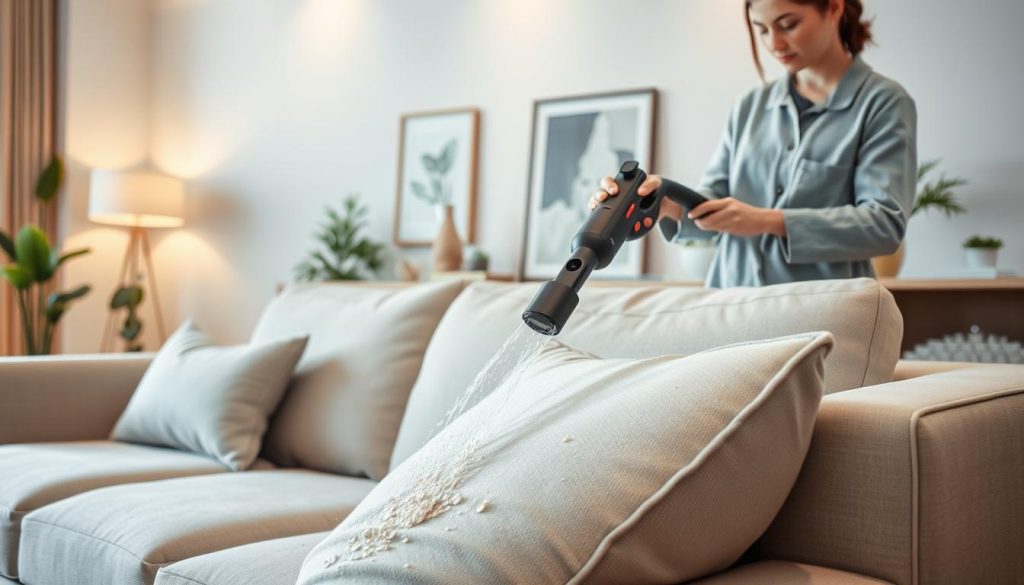
Spray extraction explained
Spray extraction applies a measured mist of water and upholstery detergent into the fibres. We then use strong suction to pull that mix back out, carrying dissolved dirt and grease with it.
When a standard machine is enough
A routine vacuum cleaner handles visible dust, crumbs and light pet hair on the surface. It brightens appearance quickly but does not remove residue lodged deep in the weave.
Why this method suits pet households
Extraction tackles trapped pet hair, oils and odours that ordinary cleaning can miss. It reduces allergens and helps with lingering smells from dander or accidents.
| Need | Best choice | Outcome |
|---|---|---|
| Surface dust, crumbs | Standard vacuum cleaner | Quick tidy, visible improvement |
| Dull patches, odours, sticky residue | Spray extraction | Deep removal of dirt, grease and smells |
| Pets and allergy concerns | Spray extraction with detergent | Reduced allergens and fresher upholstery |
Preparing the sofa and choosing the right tool before we start
A quick, methodical check of the seating and tools sets us up for a successful deep clean. Proper prep protects fabric and speeds work when we use a spray extraction machine.
Clearing and checking gaps
We remove cushions, throws and toys so seams and corners are visible. This helps us reach hidden seams and prevents re-soiling freshly cleaned areas.
We then inspect gaps for small items—coins, earrings and toy parts—that could damage the machine or the upholstery tool if drawn in.
Choosing the right attachments
We pick the right tool for each area: a soft brush for delicate fabric, an upholstery nozzle for broad panels, and a crevice tool for seams and piping.
Removing loose dust debris first is vital. Dry dust left on the surface can make muddy streaks if we wet the cloth or fabric too soon.
Always check material tolerance
We always check colour-fastness and water resistance in an inconspicuous spot. Use a small amount of solution and blot with a white cloth to avoid rings or texture change.
Finally, make sure the room supports drying — fans, open windows or a dehumidifier help prevent lingering damp odours.
| Preparation step | Why it matters | Done by |
|---|---|---|
| Remove cushions and items | Access seams; avoid re-contamination | Our team or household |
| Check gaps for small items | Prevents tool or machine damage | Careful visual check |
| Test fabric in hidden spot | Confirms water tolerance and colour stability | Small solution on a white cloth |
For more detail on safe extraction and dosing, see our guide to clean your couch with a carpet tool here: clean your couch.
How we use a sofa water vacuum cleaner for thorough cleaning
Our step-by-step method focuses on technique as much as the machine to get the best finish. Below we explain each short, practical stage so teams and households in Singapore can follow the same reliable routine.
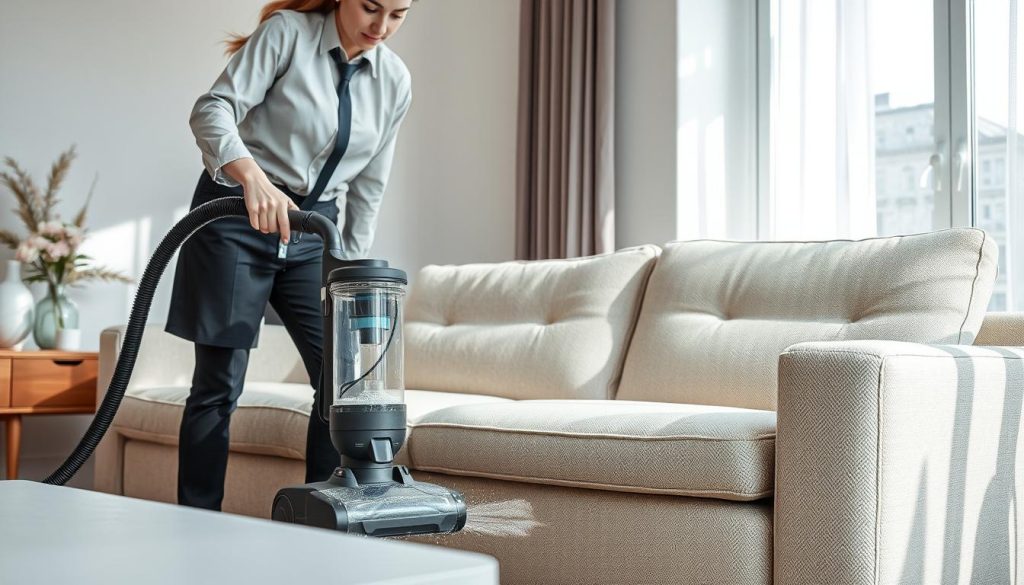
Start with a dry pass
We begin by using a handheld vacuum to lift loose dust and crumbs from the surface and seams. This prevents muddy streaks when we apply liquid.
Correct tank fill
We add clean water and the manufacturer’s detergent in the exact dose. Too much detergent leaves residue; too little reduces effectiveness.
Spray technique and dwell time
Hold the spray about 10 cm from the fabric and mist evenly in panels. Let the solution dwell for a few minutes so oils and grime loosen.
Slow, steady extraction
We extract with controlled, even passes. Moving slowly pulls moisture, dissolved dirt and detergent back into the tank rather than leaving it in the upholstery.
Prevent marks and repeat
Treat connected areas as one zone to avoid water marks. We repeat light passes until the extracted liquid runs clear and no suds appear.
Optional rinse and drying
Rinse with clean water only if fabric and stain load need it. In humid weather we ventilate, use fans, and allow ample time to dry to prevent odour and mildew.
Final finishing step
Once fully dry—ideally the next day—we do a final vacuum to lift the pile and remove any dried residue. For more detail on deep cleaning technique see how to deep clean a couch.
Targeted stain strategy for spills, stubborn stains and pet mess
When a spill happens, fast, calm action often saves the fabric from a permanent mark. Our first rule is simple and reliable.
First response for wet stains: Blot immediately with a clean, dry cloth and never rub. Rubbing spreads the liquid and presses colour deeper into the fibres.
Quick test for common marks
About 90% of stains are water-soluble. We test with a white cloth and lukewarm water, gently dabbing to see if colour lifts.
Treating non‑water‑soluble stains
For oily or dye‑heavy marks we dab a suitable stain remover onto a colour‑fast cloth and work from the edge inward. Rinse the residue so it does not attract further dirt.
Household remedies and grease tips
- Sprinkle bicarbonate of soda, leave overnight, then vacuum the next day to lift odours and loose soils.
- For red wine, absorb with mineral water plus salt or cornflour before blotting.
- Grease stains respond to warm water with a little washing‑up liquid or mild soap; rinse to remove detergent film.
Using steam carefully
Steam cleaners can help with small, localised marks when the detail nozzle is angled into the stain and a microfibre cloth collects the residue.
Test first. Heat‑sensitive fabric may change texture. Treat fast — the sooner we act, the less likely the stain becomes stubborn and the fewer extraction cycles we need later.
| Problem | Immediate action | Follow‑up |
|---|---|---|
| Wet spill | Blot with clean, dry cloth | Test with white cloth and lukewarm water |
| Oily/dye stain | Dab stain remover on colour‑fast cloth | Rinse residue; extract if needed |
| Grease | Warm water + mild soap | Rinse and allow to dry; extract if oils remain |
Fabric and leather upholstery considerations we should not skip
Different materials demand different care, so we adapt our approach to protect each finish.
Fabric panels: control moisture and respect drying time
For fabric upholstery we avoid overwetting. Apply measured solution, extract thoroughly and work in zones to prevent lap marks.
Drying is not optional. Good ventilation, fans and patience keep the seat fresh and stop musty odours in our humid climate.
Leather seats: gentle wiping and safe soap
Remove dust and crumbs first with a soft brush or cloth. Wipe with a damp cloth and, if needed, a neutral soap dissolved in lukewarm water.
Avoid grease‑removing detergents — they strip oils and make leather brittle over the years to come. Never overwet leather and treat spills quickly.
Reduce spotting with treated water
Use distilled or boiled and cooled water when rinsing to minimise lime marks, especially on dark finishes. This small step keeps leather and fabric looking even.
| Material | Key action | Why it matters |
|---|---|---|
| Fabric | Controlled spray, full extraction, ventilate | Prevents damp odour and patching |
| Leather | Dry dust, damp cloth, neutral soap, quick dry | Preserves oils and prevents cracking |
| Both | Use distilled/boiled water for rinsing | Reduces mineral spotting on finishes |
Conclusion
Simple habits at home prevent most stains and keep fabric looking its best. Regular light cleaning, quick blotting of spills and periodic deep extraction form a repeatable routine that saves time and protects furniture in Singapore’s humid living spaces.
Key principle: control moisture, remove residues and dry thoroughly to stop lingering odours and re‑soiling. Keep on top of dust and spots so each session is easier and results are consistent—a cleaner sofa becomes a habit, not a one‑off fix.
For heavy marks, large sectionals or when time is short, book professional cleaning for a full refresh. Small, steady actions at home protect comfort and extend the life of your sofa.

