

We explain what a wet dry model can and cannot do in Singapore homes. These machines tackle solids and spills, so they suit families with kids or pets. They are powerful, but expect more noise, weight and bulk than standard units.
We outline our simple testing method so you know how we judge performance, usability and value. We look at clean and dirty separation, tank size, suction, noise, storage footprint and drying time for floors.
Our shortlist covers a range of budgets and layouts: Tineco, Dreame, Narwal, Bissell, Simplus, Dibea, Shark, Dyson and Electrolux. We also note availability and warranty factors that matter in Singapore. Platform sales can sway the best buy.
This guide suits HDB flats, condos, landed houses, families and pet owners. If you prefer a conventional dry unit or a robotic option, we signpost that choice. For extra tips on odd uses, see our piece on unusual uses.
Why we recommend a wet dry vacuum for Singapore homes right now
In city living, a single machine that tackles liquids and solids saves time and reduces chore friction.
Everyday spills, sand, humidity-friendly clean-ups
Singapore’s climate and quick showers mean frequent damp spots, gritty doorways and sudden spills. These typical local messes—spilled drinks, sauce splatters, wet footprints—need a tool that handles both debris and moist dirt in one pass.
Prompt extraction helps reduce odour and build-up. Removing damp grime quickly keeps hard floors nicer between deeper cleans.
One machine for dry messes, dirty water, quick floor drying
We see wet dry models as an all-in-one solution: pick up loose debris, collect dirty water and leave the floor noticeably drier than a mop. The extra power speeds jobs but can mean more noise and weight.
- Who benefits: families with kids, pet owners, busy households.
- Decision lens: if you face regular wet messes plus daily dry cleaning, a combo unit saves time and effort.
What a wet and dry model actually does (and what it doesn’t)
We break down the practical role of a hybrid unit: it vacuums dry debris, sprays a measured solution to the brush, then extracts the dirty return into a separate receptacle. This design keeps the clean supply uncontaminated and speeds floor care when liquid spills meet loose dirt.
How the system separates clean supply and dirty return
Most models use a dedicated clean water pathway that wets the roller or brush. Extracted grime is pulled into a separate dirty tank so the clean water remains usable.
Why that matters: clean water in one container, dirty water in another prevents cross‑contamination and helps fast rinsing between passes.
Where these units work best around the home
They excel on hard floors, kitchens (oil splashes), bathrooms (drips) and dining areas (spills). Entryways benefit from quick sand and debris pickup.
Low‑pile rugs can be refreshed, but results depend on brush design and suction. They’re not ideal for deep‑pile carpets or delicate timber finishes, and smells can form if tanks or rollers stay wet.
One‑pass cleaning—spray and extract in a single stroke—cuts drying time. Some jobs still need a two‑step pass for stubborn dirt.
| Surface | Best use | Limitations |
|---|---|---|
| Hard floors | One‑pass cleaning, fast drying | None usual |
| Low rugs | Refresh pile, lift spills | Varies by brush and suction |
| Dining / kitchen | Grease, food spills | Oil may need pre‑treatment |
For more on practical uses and maintenance, see our detailed guide at what a wet dry model really or check local purchase options at order a compact model.
How we picked the best vacuum and water cleaner options
To pick the best models we tested real tasks that reflect everyday messes in HDB flats and condos. Our goal was simple: score each unit on wet‑dry performance, dry pickup and overall floor results so readers can compare like for like.
Performance factors we prioritised
Suction power and steady suction matter for pulling dirty water from grout and lifting grit from skirting boards. We measured how well each system handled both liquid spill recovery and dry debris pickup.
We tested edge cleaning by noting how close the brush reaches walls and tight gaps. That metric is vital for narrow corridors and compact kitchens.
Usability in real homes
Weight, manoeuvrability and noise shape whether a unit gets used weekly or stored. We timed maintenance steps: tank emptying, brush rinsing and drying, since easy care keeps devices in service.
Value in Singapore
We checked Lazada, Shopee and Amazon for availability, typical price ranges and accessory packs. Promotions often move price points; we prefer models that pair local service with useful parts in the box.
Key buying factors to compare before you buy
Focus on a short checklist of practical factors that predict real performance at home. These choices affect refill frequency, storage needs and how often you need to charge or empty tanks.
Tank capacity and refill frequency
Tank capacity matters. Larger clean water tank and larger dirty tank reduce refill and empty trips but raise weight and storage footprint.
Look for easy‑remove tanks, wide openings for rinsing and good seals to avoid drips when you carry dirty water to the sink.
Filter choices and odour control
A HEPA filter system helps if you have allergies or fine dust from pets and rugs. Standard filters work for basic debris, but HEPA improves long‑term odour control.
Cordless vs corded and runtime expectations
Cordless models trade reach for convenience. Check battery life and realistic runtime in minutes; high power modes cut runtime sharply.
Accessories that actually help
Choose useful accessories: edge brush, multi‑surface roller, extension tools and onboard storage. Skip filler add‑ons that rarely leave the box.
Noise, size and storage
Consider noise level and drying space for the brush head. For HDB flats and condos, a compact tank design and low storage footprint make daily use less of a chore.
Overall best wet and dry vacuum cleaner: Tineco Floor One Switch S7 Stretch
We favoured a model that makes wet and dry maintenance feel closer to an automatic task than a chore. The tineco floor design mixes a powered mop and stick-style tool so daily cleaning is faster in compact Singapore homes.

Smart sensor adjustments
iLoop technology senses soil levels and varies suction and flow to avoid over-wetting. In practice this reduces rinsing and keeps the clean water fresh for longer.
Specs that matter
The floor one Stretch carries a 1,000ml clean water tank and 720ml dirty water tank. Peak suction reaches 22,000 Pa. Runtime is up to 50 minutes in washer mode and up to 70 minutes as a stick unit.
Edge reach and everyday use
Its dual-side brush gives strong edge cleaning, reaching about 0.5cm from walls so you don’t get an untreated strip at skirtings. The Switch function means we replace two devices with one flexible system.
“A single, sensor-led tool that handles mixed messes without constant fiddling.”
Best hot water option for stubborn stains: Dreame H15 Pro Heat
Hot‑water mopping adds a thermal boost that helps lift stubborn kitchen grease and baked‑on spills.
Hot water mopping at 85°C: who it’s for and when it helps
Who benefits: home cooks, families with young children and anyone facing greasy floors or dried messes. Hot cleaning cuts through oils and loosens set‑in dirt for fewer passes.
Specs snapshot
Key figures: 800ml clean tank, 650ml dirty tank, 22,000 Pa suction. The listed runtime is up to 70 minutes in normal mode and about 25 minutes in hot mode.
This split means longer sessions on low power, with much shorter minutes when heat is active. Tank sizes suit 1–2 room runs before an emptying pause.
Trade-offs we’d flag
At 6kg the unit is heavier to lift and carry. The high temperature may be harsh on delicate timber floors, so test a hidden spot first. Flat‑folding and auto‑traction wheels help storage and use in tight Singapore homes.
Choose the Dreame H15 Pro Heat if hot performance matters more than light daily convenience or a lower price.
“Hot mopping at 85°C makes short work of greasy kitchen marks.”
Most manoeuvrable for tight spaces: Narwal S20 Pro with triple-sided edge cleaning
When rooms are compact, steering and edge reach matter more than sheer power, and the Narwal S20 Pro answers that need.
AI Dirt Sense and multiple cleaning modes for daily maintenance
AI Dirt Sense detects grime and varies effort so we use light passes on clean floors and more force where dirt builds up. This saves time and reduces unnecessary battery drain.
There are five cleaning modes to pick from. Quick weekday passes run on low power. Deeper weekend sessions step up suction and brush action.
What you get and real-world coverage
The S20 Pro carries a 790ml clean water tank and a 720ml dirty water tank. Peak suction is 20,000 Pa and the maximum runtime is about 60 minutes. Charge time is roughly 3.5 hours.
In an HDB flat or a two‑bed condo this setup typically covers hard floors plus occasional rugs before we need to refill or empty tanks.
- Triple-sided edge cleaning: reaches skirtings, corners and narrow gaps near furniture legs.
- Flat-folding design: easy storage in tight cupboards and short halls.
- Battery life: up to 60 minutes for daily rounds; heavy modes shorten runtime.
| Feature | Spec | Practical benefit |
|---|---|---|
| Clean tank | 790ml | Enough for most short to medium sessions |
| Dirty tank | 720ml | Holds soiled return without frequent emptying |
| Suction | 20,000 Pa | Strong for grout and light rug debris |
| Modes | 5 cleaning modes | From quick passes to deep cleans |
| Runtime | Up to 60 minutes | Covers one to two room runs in a condo |
“A small-space specialist that prioritises edge reach and simple, automated cleaning.”
Best for pet hair: Bissell CrossWave X7 Cordless Pet Pro
When fur and muddy paws are routine, you want a dedicated pet model that simplifies cleanup. The CrossWave X7 focuses on hair lift, stain treatment and quick maintenance for busy Singapore homes.
Why it stands out for fur and stains: Turbo Pet mode and cleaning solution support
Turbo Pet mode boosts suction and brush action to lift stubborn hair and loosen sticky spots. Pairing the unit with a pet-safe cleaning solution helps break down oily paw marks and food stains.
We note the easy-empty design; frequent hair collection makes fast tank emptying important for hygiene and odour control.
Where it performs best: hard floors and rugs in pet-friendly homes
Its strengths show on hard floors for daily fur removal and on low rugs for quick refreshes. Expect competent pickup of loose debris and fur, but set realistic expectations for deep carpets.
For larger homes, plan tasks in short sessions because the battery gives about 30 minutes per charge.
Key specs
| Feature | Spec | Practical note |
|---|---|---|
| Clean tank | 820ml | Good for several short passes |
| Dirty tank | 420ml | May need frequent emptying with wet fur messes |
| Peak suction | 20,000 Pa | Strong for pet hair and small debris |
| Runtime | Up to 30 minutes (charge ~4 hours) | Best for flats or focused rooms |
Who should buy: choose the CrossWave X7 if pets are the main driver and you want a pet-focused unit that pairs Turbo modes with compatible cleaning solution support rather than the highest-capacity all-rounder.
“A focused pet model that lifts hair and treats stains quickly — ideal for busy pet households.”
Best budget-friendly cordless wet-dry pick: Simplus Cordless Wet-Dry Vacuum Cleaner
Budget shoppers who still expect usable performance will find the Simplus Cordless a strong value option. It pairs notable suction power with a practical battery life so short sessions or a full tidy are both possible.
Strong value spec combo
The unit delivers 21,000 Pa suction and a maximum runtime of up to 50 minutes. Charge takes about 4.5 hours. In practice this means one solid run across a small flat without repeated pauses.
Usability details
Its 180° flat-folding reach helps under low furniture in compact Singapore homes. A narrow 6.5cm brush head improves edge cleaning and corner access for dried dirt and small debris.
Tank sizes and practical notes
The Simplus carries a 500ml clean water tank and a 550ml dirty water bin. Expect one to two short runs before refilling or emptying, depending on mess size. Check listings on Lazada or Shopee for current price, spare parts and warranty details.
Who should buy: small flats, light cleaning routines and shoppers prioritising value-per-use over sensors. Be aware of likely compromises at this price: materials, noise and long-term parts stock.
Best low-maintenance choice with self-cleaning: Dibea H8
Low-effort maintenance is what makes a model useful day after day in small Singapore homes. The Dibea H8 pairs a built-in self-cleaning system with sensible specs so routine upkeep takes less time.
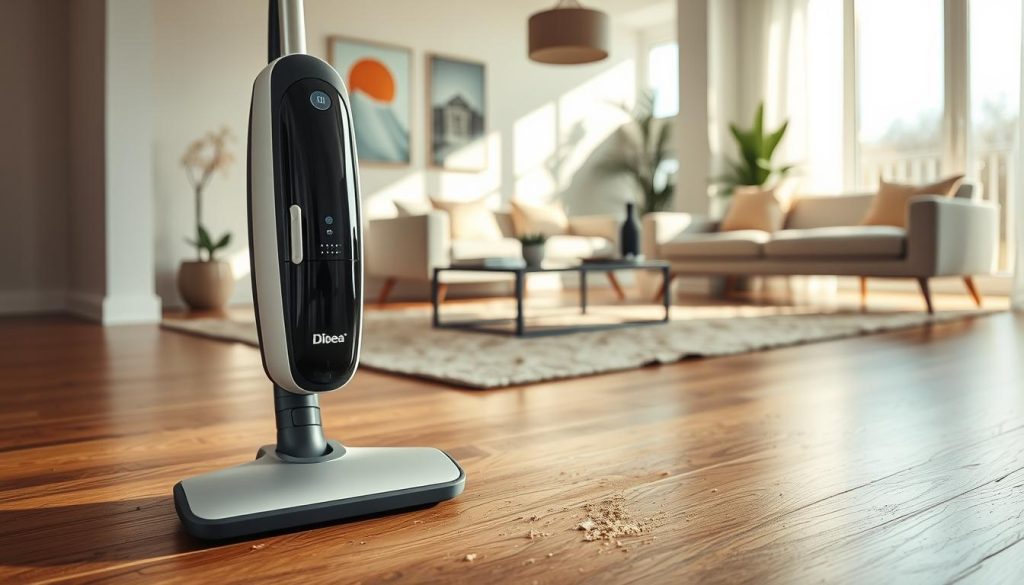
Balanced for everyday cleaning: multiple modes for wood, marble, and tiles
The H8 offers selectable modes to match timber, marble and ceramic floors. Gentle settings limit surface dampness while stronger modes lift dried dirt and light debris.
Self-cleaning runs roller rinse cycles after use. It reduces brush scrubbing, though you still need to empty and dry the tank and occasional hand‑wash parts to prevent odour.
Key figures and who it suits
Key specs: 500ml clean tank, 600ml dirty tank, 13,000 Pa suction and up to 38 minutes runtime in auto mode (about 30 minutes on high).
| Spec | Figure | Practical note |
|---|---|---|
| Clean tank | 500ml | Good for short to medium sessions |
| Dirty tank | 600ml | Holds soiled return without constant emptying |
| Suction | 13,000 Pa | Balanced power for hard floors |
| Runtime | Up to 38 minutes | Best for touch-ups in smaller flats |
We recommend the Dibea H8 for everyday cleaning in small to mid-size homes where simplicity and quick readiness beat peak specs. Empty dirty water promptly and let components air dry to avoid smells.
“A low-maintenance system that keeps daily floor care practical rather than picky.”
Best for larger wet cleaning sessions: Dibea HC26 with bigger tanks
For longer sessions across open-plan living spaces, a larger-capacity model reduces interruptions and keeps momentum during a full clean.
Why we position the Dibea HC26 for bigger jobs: it carries a 700ml clean tank and a 700ml dirty tank. That extra capacity lets us cover more floor area before we need to pause to empty or refill, which suits larger flats and family homes in Singapore.
Why choose HC26 over H8
The HC26’s larger tank capacity often matters more than a small suction difference when you’re doing extended wet dry runs. More holding space means fewer interruptions for debris and dirt recovery during a single session.
We note the claimed stronger suction, but advise readers to check regional listings for spec consistency and return policies. Marketing figures can vary, so verify before purchase.
Ergonomics and real-world use
The handle is lengthened to 568mm (vs 538mm on the H8). The extra reach reduces bending and makes it easier to clean under tables and along skirtings.
Runtime in auto mode is about 38 minutes and charge time tops 4.5 hours. That runtime matches the H8, so the HC26’s main gain is capacity rather than longer use time.
- Who it suits: larger homes, open-plan living, families wanting fewer interruptions.
- What to watch: bigger tanks can increase the storage footprint and weight.
- Buying tip: confirm suction figures and local after-sales support before you commit.
“Bigger tanks let you maintain cleaning flow across larger spaces — a practical trade for occasional extra bulk.”
| Spec | Figure | Practical note |
|---|---|---|
| Clean tank | 700ml | Longer runs without refill |
| Dirty tank | 700ml | Fewer empty cycles during a session |
| Handle length | 568mm | Better reach, less bending |
| Runtime (auto) | ~38 minutes | Similar to H8; plan charging accordingly |
Best odour-control design: Shark HydroVac WD210SM with antimicrobial brush rollers
A fresh-smelling floor after each quick clean changes how often a machine gets used.
The Shark HydroVac WD210SM uses antimicrobial rollers to limit bacterial build-up on the brush and reduce odour. This technology aims to keep damp parts from smelling in humid Singapore homes where smells form fast.
Who it suits
We recommend this model for families who prioritise hygiene and fresher-smelling floor care. It is ideal for frequent small spills and pet messes where routine cleaning matters more than tank capacity.
Specs check
| Spec | Figure | Note |
|---|---|---|
| Clean tank | 500ml | Enough for short runs |
| Dirty tank | 360ml | Requires frequent emptying for big messes |
| Runtime | 30 minutes | Cordless convenience; plan for refills on larger jobs |
Antimicrobial parts do not remove the need for basic care. We still empty dirty water, rinse tanks, and air parts to dry so smells do not return. A good routine keeps the system working and reduces long-term odour.
Buying tip: compare Lazada and Shopee bundles; extra rollers or solution packs often add more value than headline price alone.
“Antimicrobial rollers help limit bacterial build-up, but regular rinsing remains essential.”
Best lightweight premium choice: Dyson Submarine wet and dry range
A lightweight build and advanced filtration make Dyson’s Submarine series stand out for everyday floor care.
We see Dyson as a premium option that favours low weight, refined engineering and strong filtration technology. The range often costs more in Singapore, but it suits users who prize comfort and performance during regular cleaning.
Dyson V12s Origin Submarine
Key points: a very light 2.2kg body with Root Cyclone technology and up to 60 minutes runtime. This model suits quick daily rounds where low carrying weight matters most.
Dyson V12s Detect Slim Submarine
Key points: HEPA filtration and the Fluffy Optic head highlight fine dust on hard floors so we don’t miss small debris. Runtime is similar to the Origin, making it versatile for mixed chores.
Dyson Digital Slim Submarine
Key points: the most compact option. At around 40 minutes runtime it trades time for a smaller footprint, which fits smaller homes or shorter sessions.
Where Dyson fits: we position these models chiefly as high‑end dry vacuum options that offer wet dry capability in Submarine configurations. They excel at lightweight handling, filtration and cyclonic technology rather than large tank runs.
How to assess value: compare accessories, replacement parts costs and local price before you decide. If your routine needs long wet sessions, larger tank models elsewhere may be better value over time.
| Model | Weight | Runtime (minutes) | Notable tech |
|---|---|---|---|
| V12s Origin Submarine | 2.2kg | Up to 60 | Root Cyclone technology |
| V12s Detect Slim Submarine | ~2.2kg | Up to 60 | HEPA filter; Fluffy Optic head |
| Digital Slim Submarine | Light, compact | ~40 | Compact design for small homes |
“Dyson’s Submarine range is a premium pick when low weight, advanced filtration and refined cyclone technology matter more than large tank capacity.”
Electrolux wet and dry vacuum cleaners: drum vs cordless stick for different needs
For Singapore homes we found Electrolux offers two clear formats: rugged drum models for heavy jobs and cordless stick models for quick daily care.
Drum models
Heavy-duty use: drums suit garages, renovation debris and workshop messes. The built-in blower helps clear leaves and loose debris after a build‑up.
These systems prioritise raw power and larger tank capacity for long runs. They handle coarse dirt that would overwhelm a light unit.
Cordless stick models
Everyday convenience: sticks combine vacuuming with mopping in one pass. They save set-up time for spills and short routines in flats and condos.
Expect simple controls, modest runtime and quick-empty tanks that suit frequent, small sessions.
Price expectations in Singapore
Electrolux pricing typically ranges from entry level to premium. Official-store perks—free delivery, instalments and bundle discounts up to 47%—often shift the best value during sales.
| Format | Best for | Practical note |
|---|---|---|
| Drum | Garages, renovation debris | High power, blower function, larger tank |
| Cordless stick | Daily floor care, quick spills | Integrated mop, easy storage, limited runtime |
| Buying tips | Local purchase | Check warranty, included tools, and official-store promos |
“Electrolux is a practical, service-friendly choice when you value support and real-world reliability over headline specs.”
Choosing the right cleaner for your floors, messes, and routine
A practical match between your home layout and a machine’s strengths makes cleaning faster, less fiddly, and more likely to happen.
Hard floors vs rugs: brush design, suction, and water flow considerations
For hard floors choose a softer roller to avoid streaks. Higher suction helps lift grit from grout lines.
Low rugs need a denser brush and moderate water flow so fibres dry quickly. Heavy wet flow can flatten piles or leave marks.
Small flats vs larger homes: matching tank capacity and battery runtime to your space
Small flats cope with shorter battery life and smaller tank. In larger homes pick longer runtime plus bigger capacity to cut interruptions.
Kids and pets: prioritising hair pickup, edge cleaning, and easy tank emptying
We favour units with strong hair pickup, reliable edge cleaning close to skirtings, and simple quick‑release tanks for fast rinsing after spills.
When a robot vacuum makes sense alongside a wet dry option
A robot vacuum handles daily dust and dirt; use a wet dry model weekly for spots and sticky messes. If storage is tight a single good unit can replace both in simple routines.
Maintenance and running costs we’d plan for before checkout
Keeping a wet dry system hygienic and ready costs less in money than in habit. Regular care prevents smells, preserves suction and reduces part replacements over time. Below we cover the routine tasks that shape ongoing cost and performance for Singapore homes.
Cleaning solution, brush care, and preventing build-up in tanks
Follow manufacturer advice on cleaning solution. Branded solution often protects seals and leaves a mild scent; plain water may be acceptable for light use but can leave residue after greasy jobs.
Treat the brush as the workhorse: remove hair after each run, rinse after messy spills, then air fully dry. This step cuts odour and keeps rollers from stiffening in humid conditions.
Empty dirty tanks promptly. Residue and sludge form quickly in the dirty water area and around seals. A quick rinse after emptying and a deeper soak weekly reduces build-up that causes smells or blockages.
Self-cleaning systems: what they do and what you still need to do
Built-in rinse cycles automate roller washing and cut manual scrubbing. They help but don’t replace tasks we must do: wipe seals, remove trapped debris, check filters and let removable parts dry.
Plan periodic filter checks and replacement as part of running costs; neglect shortens motor life and affects suction in both wet dry and dry vacuum modes.
Storage, drying time, and keeping the unit ready for the next mess
After use, split removable parts and leave them to dry in a ventilated spot rather than a closed cupboard. In HDB and condo layouts we prefer a small open shelf or balcony corner for air circulation.
Allow at least a few hours for rollers and tanks to dry; in humid weather, add a fan to speed drying. Store the main unit with lids open so trapped moisture can escape and you avoid odour and mildew before the next clean.
“Simple habits — empty, rinse, dry — protect performance and cut long-term costs.”
Conclusion
strong, Here’s a quick wrap‑up to steer your choice between high‑capacity, hot‑water power, manoeuvrability, pet focus and budget picks.
For all‑round performance choose the Tineco Floor One Switch S7 Stretch. Pick the Dreame H15 Pro for hot cleaning. Choose Narwal for tight spaces, Bissell for pets and Simplus for value.
Match tank size, suction and cleaning style to your floors, typical messes and how much time you spend each week. Check clean water tank and dirty water handling before you commit.
Before purchase we urge a value‑first check: compare price on Lazada, Shopee, Amazon and official stores, and factor in bundles that lower running costs. If you want one reliable wet dry vacuum for daily floors, choose a model with strong edge reach, easy tank handling and a routine you can maintain.

