

We set the scene: in compact Singapore homes the choice between a water-based system and a bagged option depends on our space, health priorities and upkeep habits.
What we mean: a water-based design traps debris in liquid and can improve indoor air, while a sealed bag system keeps dirt contained for hygienic disposal. We will also note bagless models where that changes the decision.
We preview the practical questions we answer: what emptying feels like, how fine dust is handled, suction consistency and months-long maintenance. We judge each option on everyday convenience, indoor air impact, performance on hard floors and rugs, and ongoing costs.
For Singapore readers we consider compact flats, pet dander and humid conditions that affect odour and hygiene. We reference real examples and comparisons such as bagged vs bagless analysis and a detailed look at water-based designs like the one reviewed at Lura.
How water filter and bagged vacuum cleaners work
To make the choices clearer, we explain exactly where dust ends up in each design.
Water-based and wet-and-dry designs
Air and debris enter the unit and pass through a cyclone or inlet that drops heavier particles into a liquid reservoir. Next, airflow continues through a secondary filter stage to catch finer material.
We must still empty and rinse the reservoir, because used liquid holds trapped dust and can smell if left unchecked.
Bagged systems
Bagged vacuums store debris in a disposable paper or fabric bag. The bag acts as both storage and an extra filtration layer.
This sealed approach reduces contact with dust during disposal, which many of us prefer for hygiene.
Where bagless fits in
Bagless models collect debris into a clear bin. They remove the cost of bags, but emptying can release fine dust back into the air unless done carefully.
- Simple mental model: fine particles end up in the reservoir, bag fibres, or bin + filters.
- That containment difference shapes how often we touch dust, how suction behaves, and maintenance tasks.
For a deeper technical read on how water-based systems operate, see how water-based systems work.
vacuum cleaner water filter vs bag: what really changes for everyday cleaning
Daily use hinges less on specs and more on how we remove and contain debris at the end of a session. Disposal method shapes exposure, routines and the hassle of upkeep in compact Singapore homes.
Disposal and dust exposure when emptying
Emptying a clear bin often releases a cloud of fine dust and allergens. That can be annoying and unhealthy for sensitive family members.
Sealed systems minimise contact because debris is trapped inside a removable pouch for hygienic disposal. Pouring out dirty liquid from a reservoir carries its own smell and mess, so location matters — we prefer doing that near a sink.
Capacity and how often we need to empty or replace
Smaller containers mean more frequent stops during cleaning. In our experience, frequent light cleaning in small flats makes emptying a recurring chore.
More trips to empty raise the chance of dust puff-back each time we handle the collection chamber.
Consistency of performance over time
Suction and airflow fall if filters clog. Systems with sealed disposal keep performance steadier if we replace the pouch before it overfills.
For most households, weekly quick checks and monthly deeper care keep performance reliable without a big time cost.
- Disposal: tipping a bin (dust risk), removing a sealed pouch (low exposure), pouring reservoir (must rinse).
- Capacity: smaller bins = more frequent emptying; sealed pouches often hold more and reduce trips.
- Maintenance: quick weekly checks vs longer monthly cleaning.
| Feature | Bagged systems | Bagless / reservoir systems |
|---|---|---|
| Exposure when emptying | Low — sealed removal | Higher — tipping or pouring may release dust |
| Typical capacity | Often larger; less frequent replacement | Smaller bins; empty more often |
| Performance consistency | More stable if bags changed on time | Can drop quickly if filters are neglected |
| Best practice for Singapore flats | Good for hygiene and busy households | Works if we commit to frequent emptying and filter care |
Filtration, allergies and indoor air quality in Singapore homes
What actually leaves the machine and what returns to the room can make a big difference for sensitive households.
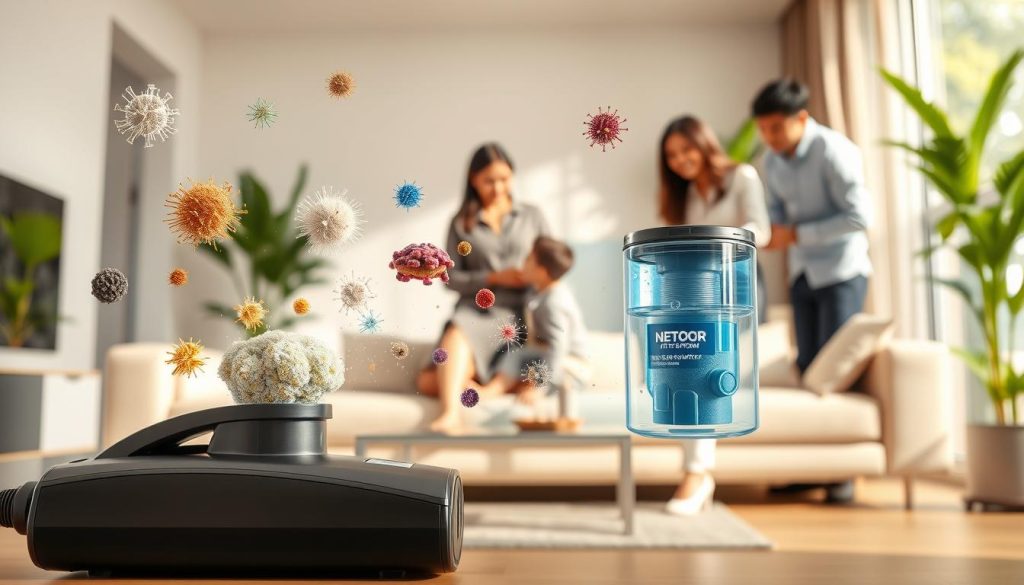
Good filtration matters in compact flats where airborne particles concentrate quickly. HEPA-class units trap dust mites, pet dander and pollen and so improve indoor air over time.
Why sealed disposal helps with sensitivities
Sealed disposal reduces contact with trapped debris and lowers the chance of releasing allergens during emptying. For anyone with respiratory issues, choosing a sealed pouch often cuts exposure at the point of disposal.
HEPA and high-grade options: look beyond the label
Don’t rely on a sticker alone. Check how well the system is sealed around lids, bins and gaskets. Even a good HEPA filter will underperform if leaks let contaminated air bypass the filters.
Practical routines to manage allergens
- Make slow, overlapping passes and use mattress or upholstery tools for pet dander and mites.
- Empty collection chambers gently and close to a bin to limit re-suspension of dust and allergens.
- Ventilate briefly after cleaning to clear airborne particles without spreading them through the home.
Results matter: proper filtration and careful emptying mean less visible settling, fewer irritations while we empty, and a steadier indoor air feel across the week.
Suction power and cleaning efficiency across surfaces
Strong suction and the right brush design decide whether grit and hair actually leave our floors or stay trapped in fibres. We separate hype from mechanics by showing how airflow, not just motor power, delivers pickup.
Maintaining strong suction: clogs in air paths or a saturated filter stage reduce suction power quickly. Even high-wattage models lose efficiency when a hose or head blocks or when fine dust coats the secondary elements.
Carpets and hard floors — match head to surface
On tiles and vinyl, lower brush speed and steady suction lift grit without scattering it. For rugs and carpets, we want adjustable heads and a brush roll that engages without snagging fibres.
Pet hair pick-up and brush design
Pet hair combines with fine dust to clog airways. Models geared to pets use tangle-resistant brush rolls and clear suction paths so hair does not build up and cut power.
- Check edge pickup and hair wrap after one room.
- Note suction feel from start to finish — steady suction means less repeat work.
- Prefer heads with brush engagement control for mixed surfaces.
Convenience and ease of use day to day
Everyday handling and quick checks shape whether a model suits our routine. We choose tools that give fast visual cues and simple maintenance steps so a quick evening clean stays a short task.
Monitoring fill levels and knowing when maintenance is due
See-through bins make it simple to judge fill levels at a glance. With a bagless design we can spot when emptying is needed and avoid sudden loss of pickup.
Warning signs include a faint odour, reduced pickup or louder airflow. Those clues tell us to check seals, clean a pre-motor element, or replace consumables.
Handling mess: what’s cleaner in real-world emptying and clean-up
Sealed pouch systems usually give a tidier disposal. We remove and discard without touching dust, which suits busy households and helpers.
Bagless bins require occasional wiping and filter care to prevent film and trapped debris in corners. That hands-on step is small, but real; it affects who should operate each model.
- Quick evening cleans: prefer easy latches and compact storage for tight Singapore flats.
- Older users or helpers: choose simple access and low-fuss emptying.
- Look for robust latches, wide access openings and washable components to avoid a second mess when cleaning the bin.
Maintenance workload and running costs over time
What looks cheap on the shelf can cost more in time and consumables across a year. We map real running costs and the chores that come with them for Singapore flats.
Bag replacements and filter care
Typical bags last around two to three months in a low-use home. In pet‑heavy households they may need changing every two to three weeks.
Bagless designs remove the ongoing purchase, but they demand frequent emptying and more regular washing or replacing of filters.
Timing, drying and spares
Washing a pre‑motor element requires a full dry cycle. Reassembling too soon can cause musty odour and reduced airflow. Keep a spare filter to avoid downtime.
When neglect hits efficiency
- Suction loss raises the number of passes per room.
- Clogged parts increase re‑circulation of fine dust.
- More time spent cleaning equals higher long‑term costs.
Changing consumables on schedule saves effort later: small, regular upkeep beats big, infrequent fixes.
| Item | Typical interval | Impact |
|---|---|---|
| Bags | 2–12 weeks | Hygiene and fewer handling moments |
| Filters | Monthly wash / 6–12 months replace | Suction and air quality |
| Bin emptying | After each heavy clean | Time and dust exposure |
Decision tip: if we vacuum often because of hair and dust, paying for sealed disposables can save us time and preserve efficiency.
Eco-friendliness and waste in a modern household
Our focus here is on the waste trail — what we toss, what we wash, and the trade-offs for city living.
Disposable bags versus reusable containers
Bagged systems produce regular disposable waste. Each replaced pouch adds to landfill and ongoing cost.
Bagless units reduce single‑use waste by using a reusable bin. That saves on bags but shifts the burden to regular emptying and occasional part replacement.
Water use considerations for liquid-based systems
Liquid-based designs feel cleaner because debris is trapped in a tank, yet we still pour out dirty water and rinse components. Frequent rinsing adds to household water use and time, which matters in compact Singapore flats.
Practical eco trade-offs and tips
- Where waste is created: single‑use pouches vs plastic wear from repeated bin use and filter changes.
- Bagless reduces landfill-bound sacks, but increases washing frequency and potential micro-residue handling.
- Liquid systems need careful disposal of dirty water; sustainability improves if used sparingly and rinsed efficiently.
“Choosing the most sustainable option often means balancing reduced landfill with realistic routines at home.”
How to make any option greener: use disposable items to full without overfilling, keep seals and parts maintained to extend life, and pick durable components that resist cracking.
| Aspect | Bagged systems | Bagless / reusable bin | Liquid-based option |
|---|---|---|---|
| Primary waste | Disposable pouches | Plastic bin wear, filters | Dirty rinse water |
| Household effort | Low — swap and discard | Higher — empty and clean often | Medium — pour and rinse tank |
| Best fit for Singapore flats | Busy households wanting low fuss | Eco-conscious users who can manage rinsing | Those who prefer perceived cleaner capture but accept extra rinsing |
For readers curious about the practical implications of liquid capture, see our look at the water-based option.
Which option suits your home setup and lifestyle
Deciding what suits our flat starts with honest checks on space, storage and how often we clean.
Small flats vs larger homes
For compact Singapore flats we value storage-friendly designs and modest power that still picks up grit. Aim for ~500–700W for small spaces and 700–1000W for medium homes.
Large homes need higher power and capacity. Models rated 1000W+ or larger dust capacity reduce refill stops and save time for longer sessions.
Families with children
Noise matters. Typical machines sit in the 60–80 dB range. Quieter operation and timing around naps matters more than maximum suction for daily tidiness.
Automated schedules or quiet modes help avoid disruption and keep our routine gentle for little ones.
Pet owners
If we live with pets, prioritise specialised tools for pet hair, sealed disposal and HEPA-grade options to cut airborne allergens. Strong suction plus hair-friendly brush rolls make repeated passes less necessary.
Set a routine: quick daily touch-ups, weekly deep runs and gentle emptying to keep air quality steady in a pet household.
Mixed flooring: canister vs stick vs cordless
Canister models give reach and flexibility for stairs and rugs. Sticks are portable and suit quick jobs in tight flats.
Cordless units win for fast touch-ups, but check runtime and bin size before relying on them as the main appliance.
| Feature | Canister | Stick / Cordless |
|---|---|---|
| Best for | Mixed floors, stairs | Quick touch-ups, tight storage |
| Storage & weight | Bulkier, more capacity | Compact, lighter |
| Use in Singapore homes | Good for larger flats | Ideal for small homes and fast daily upkeep |
Practical tip: match the device to what we actually do each week. A tool that fits our routine will be used far more than one chosen for specs alone.
Choosing the right vacuum type and features alongside the filtration system
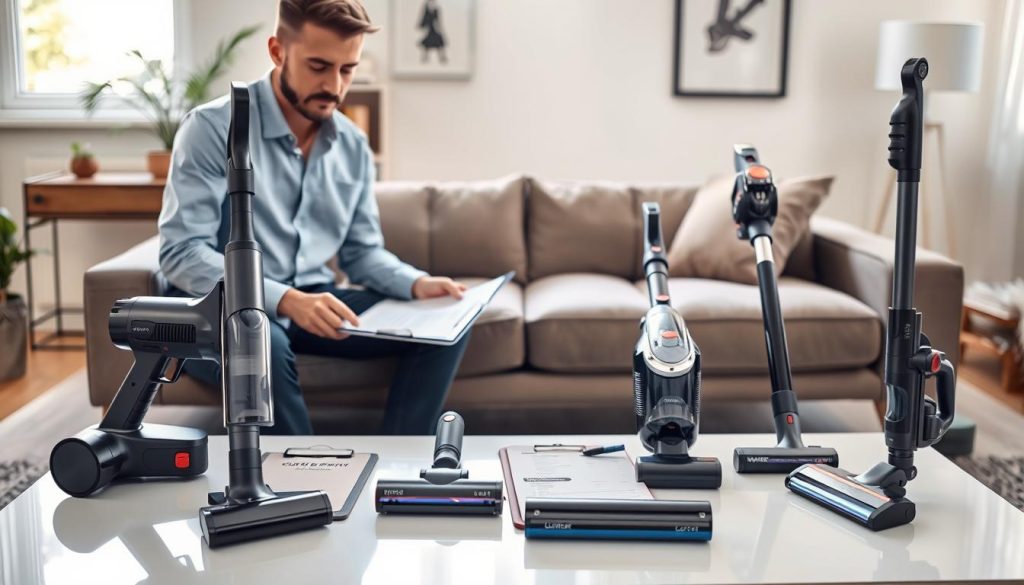
Deciding between portability and sustained power matters more than specs alone. We match device type to our cleaning pattern so the filtration choice supports daily habits rather than creates extra work.
Corded vs cordless: run time, voltage and one-pass cleaning
Cordless models trade continuous power for portability. Typical runtimes range from about 20 minutes to over an hour depending on mode.
If we need longer sessions, a corded unit or a high-capacity cordless with spare batteries ensures we finish without stopping to recharge.
Robot vacuums and self-empty stations: when bags return as convenience
Robots with self-empty docks bridge automation and sealed disposal. Stations often hold ~3L and can store debris for up to 90 days.
This is a practical “bagged bagless” crossover: the robot runs bagless while the dock uses a replaceable pouch for hands-off hygiene.
Attachments that matter: crevice tools, mattress brushes and upholstery heads
Good accessories change outcomes for cars, mattresses and sofas. Crevice tools reach tight gaps; mattress brushes dislodge mites; upholstery heads protect fabric.
Pick a brush and head set that resists tangling on carpets and hair to preserve strong suction and airflow over time.
- Choose canister, stick, wet-and-dry or robot after you decide on the filtration approach.
- Match runtime and power to your flat size and cleaning rhythm.
Conclusion
We draw together the key trade-offs so you can match a model to life in a compact Singapore home. Sealed pouches usually win for hygienic disposal; liquid capture feels thorough but needs rinsing; reusable bins cut waste but can release dust when emptied.
Who each option suits: allergy‑sensitive households favour sealed systems, pet owners need strong airflow and tangle‑resistant tools, and small flats prioritise compact storage and simple operation.
Quick checklist before buying: disposal comfort, maintenance willingness, surface mix, noise tolerance, and hands‑free features like a self‑empty dock. Keep maintenance regular — even the best vacuum cleaner loses efficiency if neglected.
Takeaway: choose the option that fits our routine and needs, not just the headline specs on the box.

