

We begin with one clear promise: this guide will set practical expectations about a water filter vacuum cleaner for home use in Singapore. Kärcher notes these machines spin water to trap dust, which helps cut the dreaded puff when you empty the bin. This can improve room air quality and offer relief to allergy sufferers.
We write for families with kids, pet owners and anyone who juggles quick upkeep with occasional deep cleaning. We will show which models suit HDB flats and condos and where compromises matter most.
Our review will explain key choices: filtration type, wet versus dry options, cordless versus corded, noise and storage, and the specs that match real use. We will compare brands such as Tineco, Bissell, Dyson, Dreame, Narwal, Shark, Electrolux and Kärcher to make trade-offs clear.
Value is judged on total cost of ownership, maintenance time and suitability. We will also cover haze-season needs, focusing on sealing and exhaust performance as part of everyday cleaning strategy.
Why we’re seeing more all-in-one vacuum cleaners in Singapore homes
We see a clear shift toward single tools that handle everyday crumbs and the odd spill without extra fuss. Compact flats and busy routines push buyers to pick solutions that save time and space.
Busy routines, smaller spaces, and the rise of robot models
Electrolux notes that robot vacuum cleaners use sensors and scheduling to keep floors tidy with minimal input. They excel at daily touch-ups, catching crumbs and dust while we focus on work or family life.
Keep in mind: a robot vacuum is great for maintenance but struggles with sticky messes and precise edge work.
Why wet dry formats suit kids, pets and everyday spills
Wet dry systems handle both dry debris and wet spills. That makes them handy after meals or when muddy paws bring in grime.
Trade-offs include greater weight, bulk and louder motors compared with single-purpose machines.
- One-appliance setups save storage space and reduce tool swapping.
- Robot vacuum cleaners are ideal for weekday upkeep between deep cleans.
- Wet dry options suit households with frequent spills and pet traffic.
| Format | Best use | Main trade-off |
|---|---|---|
| Robot vacuum | Daily touch-ups, scheduled cleaning | Limited edge cleaning, not for sticky messes |
| Wet dry unit | Debris and spills, post-meal and pet mess | Heavier, bulkier, louder |
| Combined approach | Robot for maintenance + occasional deep clean | Needs two devices or occasional manual work |
What a water filter vacuum cleaner for home actually is
Our aim here is to show how a rotating liquid chamber traps fine particles and changes the emptying experience.
How liquid binding keeps the dust cloud down
Core idea: instead of relying solely on a bag or dry cartridge, this system spins a small body of water to capture debris. The fast rotation forces particles into the liquid where they stay rather than re‑aerosolising when you empty the bin.
Why it matters: many bagless designs produce a visible puff when emptied. A liquid capture stage cuts that moment of exposure and makes disposal less messy.
Fresher exhaust and the multi-stage reality
Top models, such as the Kärcher DS 5.800, add an intermediate screen and a HEPA 12 stage. The maker claims exhaust air up to 99.99% clean and capture down to 0.3 µm.
“Rotating the liquid bath binds sucked-in dust and prevents a cloud at disposal.”
- What it helps: reduced dust on emptying and cleaner-feeling exhaust.
- Limits: sealing, airflow path and extra filters still determine final air quality.
- Ownership note: you must empty and rinse dirty water — different maintenance, not zero maintenance.
Water filter vs HEPA vs standard filters: what we recommend for dust, allergens, and haze-season living
Choosing the right capture method changes how much fine dust re-enters the room and how often we must service the unit. We compare three common approaches so you can match performance to your needs.
Multi-stage capture and what “HEPA” means in practice
HEPA denotes a measured capture efficiency. A HEPA 12 stage, such as cited by Kärcher, can trap most allergens and claim exhaust air that’s up to 99.99% clean at 0.3 µm when the air path is well sealed.
That means labels matter, but so does the seal. A certified HEPA cartridge is only effective if air cannot bypass it.
When a bagged option can be the more hygienic choice
Electrolux recommends sealed bags for households with pets or allergy sufferers. Bags allow disposal with minimal contact and reduce the puff you see during emptying.
Maintenance realities: washing washable parts, changing captured liquid, and avoiding odours
Wet systems give less dusty emptying but need prompt emptying, thorough rinsing and drying to prevent smells from standing liquid and damp rollers.
- Routine: empty dirty water immediately and rinse reservoirs.
- Filters: wash washable elements and replace HEPA cartridges per manufacturer guidance.
- Prevention: air-dry parts fully and use a manufacturer-approved cleaning solution if advised.
“If you want minimal contact with dust, choose a sealed bagged HEPA path; if you accept rinsing for less dusty emptying, a liquid-based capture system can be preferable.”
| Approach | Best for | Main trade-off |
|---|---|---|
| Standard cartridges | Everyday dust and crumbs | Lower capture of fine particles |
| HEPA stages (sealed) | Allergies and haze-season fine particles | Higher cost; needs sealed design |
| Spinning-liquid capture | Less dusty emptying; mixed wet/dry mess | Regular rinsing; odour risk if neglected |
Wet dry vacuum, dry vacuum cleaner, or robot vacuum: choosing the right format for your home
We start by matching the dominant floor type and the mess you face most days. Tiled living areas with kids or pets favour a wet dry setup because it clears debris and light grime in one pass.
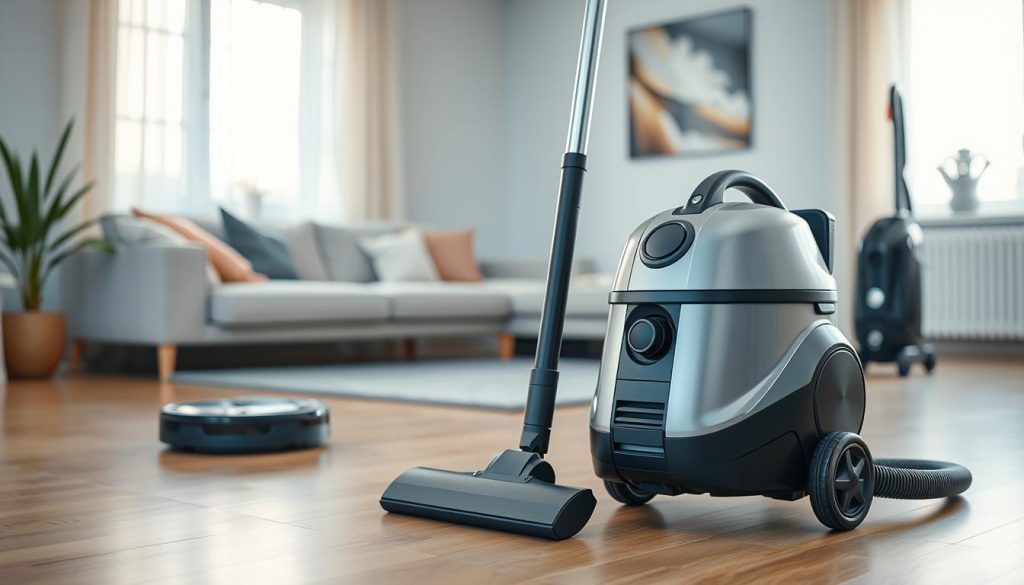
Wet dry for hard floors and sticky messes
Wet dry units shine on tiles and vinyl. They lift crumbs, tackle spills and avoid pushing sticky marks around. Expect more weight and noise, but greater satisfaction after a messy meal.
Dry machines for carpets, rugs and quick pick‑ups
When bedrooms and rugs dominate, a dry vacuum cleaner with a dedicated head and strong airflow cleans fibres better. These units are lighter and faster for everyday touch‑ups.
Robot vacuum for low‑touch maintenance
A robot vacuum gives reliable weekday upkeep. It cannot replace a full wet dry session when spills or dried stains need attention, but it keeps dust at bay between deep cleaning sessions.
“Pairing formats often gives the best result: automation on weekdays and a wet dry session at weekends.”
| Format | Best used on | Trade‑off |
|---|---|---|
| Wet dry | Tiled areas, sticky spills | Heavier, noisier; needs rinsing |
| Dry vacuum cleaner | Carpets, rugs, upholstery | Lighter; less effective on wet mess |
| Robot vacuum | Daily maintenance, open spaces | Limited edge and stain work |
Need help choosing? Read our short guide on how to choose wet‑dry models and match format to your layout and cleaning rhythm.
Suction power and real cleaning performance: what to look for (and what to ignore)
We judge real cleaning by what stays on the floor after one pass, not by headline specs alone.
Pa and Air Watts are different ecosystems. Pa figures (22,000 Pa on Dreame H15 Pro Heat and Tineco S7 Stretch; 20,000 Pa on Narwal S20 Pro; 2,700 Pa on Shark HydroVac) suit many floor-washing and cordless designs. Air Watts (130–140 on Dyson V12s variants) are common on stick models.
Matching suction to mess
For pet hair on hard floors, a steady airflow and a good brush head beat raw numbers. On rugs, higher suction helps with embedded hair and dust. Large debris needs wide inlets more than extreme power.
Trade-offs and practical checks
Higher power often brings more noise and extra weight. That can cut how often we use the machine in compact flats.
“Consistency over peaks: a steady suction path matters more than a single spec.”
- Quick tests: crumbs along the skirting, hair on a low‑pile rug, dried cereal and a small wet spill.
- Tip: prefer designs with good seals and brush heads tuned to your floors.
Tank capacity, dust capacity, and run time: sizing your vacuum to your floor area
We look at tank volumes and stated minutes so you know what a model will actually handle in one session. Small tanks mean more pauses to refill or empty, which can turn a quick tidy into a drawn-out chore.
Clean-water and dirty-water tanks: how often we’ll need to refill and empty
Models vary: Tineco offers a 1,000ml clean tank and 720ml dirty tank. Dreame sits at 800/650ml. Smaller units like Simplus or Shark use 500–550ml clean tanks and smaller dirty reservoirs.
What this means: a 1,000ml clean tank covers larger living rooms without a refill. A 500ml class device suits quick spot cleans but forces more frequent stops.
Runtime in minutes: what 30, 50, and 70 minutes means in real use
30 minutes suits tiny flats or short spot cleans. 50 minutes often covers a full HDB living area. 70 minutes gives flexibility for larger layouts or a slower, more thorough pass.
Note: high-heat or boost modes cut runtime. Plan cleaning time around charging habits and consider a cordless spare battery if you clean weekly.
Storage considerations for HDB flats and condos
Prioritise slim footprints, easy-to-drain tanks and parts that air-dry quickly to avoid odours in humid Singapore conditions.
“Tank size and runtime decide whether a quick tidy stays quick.”
| Floor size | Recommended capacity | Recommended runtime (minutes) |
|---|---|---|
| Small (studio/1-room) | 500–800ml | 30 |
| Medium (2–3-room HDB) | 800–1,000ml | 50 |
| Large (3BR+ or condo) | 1,000ml+ | 70 |
Cordless vacuum vs corded: battery life, charge time, and reach
Our focus here is practical: how battery life and charge time shape real cleaning sessions in Singapore flats.
When cordless makes sense: a cordless stick wins in multi-room homes because it removes cable snags. We find transitions are faster between bedrooms and living areas. Spot cleans after meals feel effortless and lighter sticks suit stairs and tight corridors.
When to expect real runtimes
Claimed runtimes (up to 60 minutes on some Dyson models) fall in everyday tests. High-power modes cut those minutes substantially. Plan using realistic battery life, not manufacturer peaks.
Charge-time planning
Many popular models charge in about 3.5–4.5 hours (Dyson 3.5h; Dreame 4h; Simplus and Tineco ~4.5h). That means daily top-ups work for short tidies while weekly deep sessions may need a full charge or a spare battery.
“Cordless freedom speeds room-to-room work, but corded power keeps going for long deep cleans.”
| Scenario | Recommended choice | Practical note |
|---|---|---|
| Quick multi-room tidies | Cordless | Dock near an entry; top up after use |
| Long deep cleans | Corded | No battery anxiety; steady power |
| Mixed routine | Cordless with spare battery | Swap in the second battery for extended sessions |
Ergonomics and reach: cordless designs reach under sofas and around dining chairs more easily. Yet heavier wet-dry units can fatigue wrists. Keep the dock accessible and avoid storing damp parts near the charging station to reduce smells and maintenance.
Noise level and neighbour-friendly cleaning in Singapore
Quiet operation often decides whether a device gets used daily or left on the shelf. In Singapore flats, thin walls and shared corridors make noise a real purchase factor.
Motor power and suction drive performance, but they also raise noise. Wet‑dry formats tend to house stronger motors and louder airflow paths, so they often sound louder than standard models.
How powerful motors affect noise (and what features reduce it)
Power increases strain on components and creates higher decibel output. That link is direct: more power often means more perceived noise.
Good design can cut that noise. Insulation, smoother airflow channels and tuned fans lower whine without losing suction. Electrolux, for example, markets models aimed at low‑disturbance living where neighbours are close.
- Check published decibel ratings and look for “night cleaning” mentions in reviews.
- Don’t assume higher price equals quieter operation; test or read user feedback.
- Keep brush rolls and filters clean to avoid extra noise from strain.
Practical tips: use auto modes, clean in short bursts and schedule chores during allowed hours. A quieter appliance gets used more often, which keeps the flat cleaner with less stress on neighbours.
“A quieter device is used more often, which usually leads to a cleaner home with less effort overall.”
Design and handling: weight, manoeuvrability, and edge cleaning on hard floors
Good handling often decides whether we tidy daily or delay until dirt gathers. A model that feels heavy or awkward reduces use, no matter the specs.
Flat-folding and traction matter. Flat-folding designs such as the Dreame H15 Pro Heat and Narwal S20 Pro help reach under low sofas and beds. Auto-traction wheels ease push and pull on heavier wet dry machines, reducing wrist strain on tiled and wooden floors.
Flat-folding, auto-traction wheels, and tight-corner cleaning
We test turning radius and the ability to lie flat in-store. A small turning circle helps in narrow corridors. Auto-traction wheels mean you do less pushing on long passes.
Brush roller types and antimicrobial rollers for odour control
Tineco’s dual-side roller extends reach to about 0.5cm along skirtings, while Narwal’s triple-sided approach reduces missed strips on hard floors. Shark HydroVac’s antimicrobial roller helps limit bacterial build-up and smells in humid climates like Singapore.
Floor safety: hot-water mopping and aggressive agitation can harm some wooden finishes. Check manufacturer guidance before using hot routines on sealed timber.
“If a device is easy to handle, we clean more often — and that keeps messes small.”
- Match design to mess: sticky spills need wiping action; sandy debris requires stable suction without scattering; hair needs tangle-resistant rollers.
- Quick in-store checks: turning radius, ability to lie flat, ease of lifting into a service yard, and how clean/dirty tanks click back in.
| Feature | Benefit | Example models |
|---|---|---|
| Flat-folding | Reach under low furniture easily | Dreame H15 Pro Heat, Narwal S20 Pro |
| Auto-traction wheels | Less push effort on long passes | Dreame H15 Pro Heat |
| Edge cleaning rollers | Reduced missed strips near skirting | Tineco S7 Stretch (dual-side), Narwal S20 Pro (triple-side) |
| Antimicrobial roller | Lower bacterial build-up and odours | Shark HydroVac |
Features we prioritise for wet and dry cleaning at home
We prioritise features that save time and keep results consistent across daily tidies and tougher jobs. Practical tech beats gimmicks: sensors that read dirt, systems that rinse rollers and heads, and controls that tame suction and liquid flow make a real difference.
Smart dirt detection that adjusts suction and water flow
Smart sensors matter. Systems such as the Tineco iLoop and Narwal AI Dirt Sense change suction and water delivery based on detected debris. That prevents over‑wetting light dust or under‑treating sticky spots.
Self‑cleaning systems to reduce daily maintenance
Self‑clean rigs like the Dibea H8 rinse rollers and internal channels. They cut hands‑on scrubbing and lower stale odour risk when used and dried promptly.
Hot‑water mopping: where it helps and where it can be risky
Hot‑water mopping at high temperatures (Dreame’s 85°C setting) lifts oily kitchen film and stubborn marks. We caution against use on sensitive timber or unfinished floors to avoid damage.
Attachments that matter: extension wands, brushes, and pet tools
A stick vacuum that converts with a long wand, soft brushes and a Turbo Pet head is genuinely useful. These attachments tackle upholstery, stairs and pet hair without extra trips to the service yard.
“Prioritise features that reduce hands‑on work and give consistent results.”
| Must‑have | Nice‑to‑have | When to choose |
|---|---|---|
| Smart sensing, self‑clean | App controls, LED maps | Busy households, pet owners |
| Hot‑wash option (careful use) | Extra batteries | Oily kitchens, tiled floors |
| Pet and upholstery heads | Fragrance pods | Fur and frequent spills |
Our short list of popular wet dry and water-filter-leaning picks in Singapore right now
To help final decisions, we’ve grouped popular products by real needs: all‑round performance, pets, budget and tight layouts.
Premium all‑rounders
Who it’s for: larger flats and mixed messes where runtime and edge cleaning matter.
Top picks: Tineco Floor One Switch S7 Stretch (1,000/720ml; 22,000 Pa; iLoop; 50–70 min) and Dreame H15 Pro Heat (800/650ml; 22,000 Pa; hot‑wash to 85°C; 70 min).
Best for pet hair and fur‑heavy households
Who it’s for: pet owners who need specialised modes and easy debris pick‑up.
Top pick: Bissell CrossWave X7 Cordless Pet Pro (820/420ml; up to 20,000 Pa; Turbo Pet mode). Its pet solution compatibility helps break down fur and sticky spots.
Best value choices
Who it’s for: shoppers sensitive to price who still want wet dry performance.
Top pick: Simplus Cordless Wet‑Dry (500/550ml; 21,000 Pa; 50 min). Expect smaller tanks and simpler materials, but solid everyday results at a lower price.
Lightweight and manoeuvrable options
Who it’s for: tight layouts, stairs and frequent spot cleans.
Consider Narwal S20 Pro (790/720ml; 20,000 Pa; 60 min; flat‑folding, triple‑edge) or the Dyson V12s variants (130–140 Air Watts; very light bodies; 60 min) when handling ease is the priority.
| Need | Example models | Key benefit |
|---|---|---|
| All‑round | Tineco S7 Stretch, Dreame H15 | Long runtime, edge cleaning |
| Pet hair | Bissell CrossWave X7 | Pet modes, solution support |
| Value | Simplus Cordless | Lower price, decent performance |
| Lightweight | Narwal S20 Pro, Dyson V12s | Easy manoeuvre, tight reach |
“Pick the product that matches your layout and mess frequency — that choice saves time and keeps floors cleaner.”
Budget and value: what we’d pay in Singapore and why
Setting a sensible budget starts with knowing typical local price bands and the extras that add up.
Typical price bands you can expect
In Singapore, ranges are wide. Electrolux pricing offers a useful anchor:
- Cordless stick: pricing varies widely by brand and features
- Canister: typically the most budget-friendly style
- Robot: priced for convenience and automation
- Wet & dry / all-in-one: broad range from budget to premium
Ongoing costs to budget
Sticker price is not the whole story. Water‑based systems may cut bag spend, but you still buy HEPA cartridges, replacement rollers and brand cleaning solution.
Also factor in battery ageing on cordless units and occasional service parts.
When higher price is justified
We pay more when better sealing, superior filtration and thoughtful design mean we use the machine more often. Dyson‑tier models can be worth the premium if they reduce fuss and lower yearly consumables.
“Compare cost per year, not just the upfront price.”
To see how running costs stack up against professional cleaning, check our short guide on cost to clean carpet.
Conclusion
Our final note: practical fit beats headline specs when choosing an all‑in‑one cleaning product. Start by matching format to your floors and mess patterns — wet dry, dry vacuum or a wet dry vacuum paired with a robot if you need both.
Remember that a rotating water capture can cut dusty puffs at emptying, while sealed bagged HEPA paths suit allergy sufferers. Expect trade‑offs: extra weight, higher noise and routine maintenance.
Read suction power claims in context and favour good sealing and brush heads over raw numbers. Size by capacity and storage fit for HDB flats and condos.
Buy with confidence: shortlist two or three models, check handling, test maintenance steps and compare total cost of ownership before you decide.

