
We tested the leading models to help Singapore households find a true all-in-one floor solution. The term water wash vacuum cleaner describes machines that both rinse and remove debris, replacing a mop-and-bucket routine for many families.
Our focus is practical: how each unit handles hard floors, quick wet spills and pet fur. We judge runtime, tank size, brush reach and hygiene features so you can compare price against real performance.
We preview top picks — models suited to pet owners, small flats and larger homes — and outline who benefits from hot‑water washing. This guide is written so you can scan the key comparison points and decide the best match for your layout and routine.
Why we’re recommending water-wash wet dry vacuums for Singapore homes
Singapore homes need tools that deal with tracked-in grit and sudden spills in one pass. We recommend wet dry vacuum systems because they combine liquid pickup and dry debris removal. That makes them practical for flats and landed houses alike.
Everyday messes they handle well
These machines clear common messes — spilled drinks, dry dust, crumbs, tracked-in sand and pet hair — often in a single run. They lift loose dirt and then apply a controlled rinse to sticky residues.
Where they beat a standard dry model and a robot
Compared with a dry vacuum, wet dry systems offer stronger suction and more power for stubborn grime, though they are usually heavier and noisier.
Compared with a robot vacuum, robots excel at daily surface maintenance. Wet dry floor washers handle wet messes and deeper cleaning on demand, so many households find a two-device routine works best.
- Local fit: ideal where rain and shoe traffic bring sand indoors.
- Trade-offs: expect a larger storage footprint, extra weight and more noise.
- When to choose one: if you need fast, thorough cleaning of hard floors and pet hair.
What a wet dry vacuum is and how the water tank system works
Let us unpack how a twin-tank design turns a single pass into both a rinse and pickup operation. We describe the parts and the flow so you know what drives performance in Singapore homes.
Clean tank vs dirty tank: roles explained
A dedicated clean water tank stores fresh solution. It feeds the brush and helps loosen grime. The separate dirty water tank collects spent fluid and debris. This separation keeps hygiene simple and avoids cross-contamination.
How the wet/dry cleaning flow works
The system delivers measured clean water to the brush, which agitates the floor. Suction pulls loosened dirt and the used liquid into the dirty tank. Filtration traps fine particles so the motor stays efficient.
Stick floor washers vs drum-format models
Stick, floor-washer style units suit flats and condos. They combine a brush roll and lighter motors for quick cleaning. Drum wet dry designs are heavier. They offer bigger tanks and stronger suction for garages or renovation jobs.
- Key parts that matter: tank design, brush roll, airflow and filtration.
- Why it works: coordinated brush and suction lift grit so it isn’t pushed across the floor.
water wash vacuum cleaner buying checklist for 2026
Choosing the right model in 2026 means matching real household routines to key specs, not marketing claims. Below we list the factors that matter for Singapore flats and landed homes so you refuel less, finish faster and avoid surprises at purchase.
Tank capacity: matching clean water and dirty water volume to your floor area
Check the tank capacity to estimate refill and empty frequency. A larger clean water tank suits big living areas; matched dirty water capacity avoids overflow.
Suction power: what higher Pa (or Air Watts) means for debris and dry messes
Higher suction power lifts grit and dry messes before the brush applies liquid. Look for Pa or Air Watts figures to compare real lifting ability.
Battery life and runtime: choosing minutes that fit your routine
Match battery life to typical jobs. Short daily touch-ups need 20–30 minutes; full-home sessions require 50–70 minutes of runtime.
Cleaning modes and edge cleaning performance
Useful cleaning modes include auto, high power and a pet/turbo mode for hair. Good edge cleaning reaches skirtings and corners without extra tools.
Filter system, weight and accessories
Prefer microfilters or HEPA for allergens and odour control. Consider weight and fold-flat reach for under-sofa access. A strong accessory set extends use to rugs and tight gaps.
Tip: balance tank size, suction and battery against price and storage. For broader product comparisons, see our roundup and the best vacuum reviews.
Our top-rated picks at a glance
We present a concise shortlist of the best models for quick decision-making. Below are five top-rated options, each summarised in one sentence so you can match a model to your layout, budget and cleaning habits.
Tineco Floor One Switch S7 Stretch — overall best
Who it suits: flats and landed homes that want strong suction and long runtime.
Why we like it: great edge cleaning, smart flow control, and balanced tank sizes; trade-off is a higher price for premium features.
Bissell CrossWave X7 Cordless Pet Pro — best for pet hair
Who it suits: pet owners who need targeted hair pickup and rug performance.
Why we like it: Turbo Pet mode boosts suction for fur and sticky messes; expect a smaller dirty tank and shorter runtime versus larger models.
Simplus Cordless Wet‑Dry Vacuum Cleaner — best budget buy
Who it suits: small homes on a tight price who still want usable suction and decent battery life.
Why we like it: strong value, compact tank layout and sensible runtime; compromises include smaller clean water capacity and fewer extras.
Narwal S20 Pro — most manoeuvrable
Who it suits: tight HDB and condo layouts where reach and turning are vital.
Why we like it: agile handling and precise edge cleaning; expect trade-offs in tank size for that compact form.
Dreame H15 Pro Heat — best hot water cleaning
Who it suits: homes needing hot water for stubborn stains and greasier residues.
Why we like it: hot water capability improves deep cleaning on hard floors and some rugs; note the higher price and extra weight.
Best overall: Tineco Floor One Switch S7 Stretch
Floor One S7 Stretch is our top pick for balanced, everyday performance in Singapore homes. The tineco floor design pairs strong specs with smart controls for fewer passes and neater results.
Key specs: 1,000ml clean water tank, 720ml dirty water, and up to 22,000 Pa suction. That tank size covers typical flats with fewer refills and long sessions in landed homes.
Smart iLoop sensor technology
The built-in iLoop technology senses dirt and adjusts suction power and water flow automatically. This system reduces overwetting while keeping suction where it matters.
Edge reach and brush performance
A dual-side brush roller reaches about 0.5cm from walls, improving edge cleaning along skirtings. That stops the narrow grime band that often collects at room edges.
Switch versatility and who it suits
The Switch converts to a stick vacuum with attachments for quick dry pick-ups. We recommend the floor one S7 Stretch for busy HDB and condo households that want efficient cleaning, and for landed homes that need larger tank capacity and longer runtime (up to 50 minutes as a floor washer, 70 minutes as a vacuum).
“A flexible system that combines strong suction with smart automation for everyday use.”
Best hot water mopping for stubborn stains: Dreame H15 Pro Heat
For kitchens and greasy spots, a targeted hot‑water option breaks down oils faster than cold rinses. We position the Dreame H15 Pro Heat as the specialist choice for households that need deeper cleaning for set‑in grime.
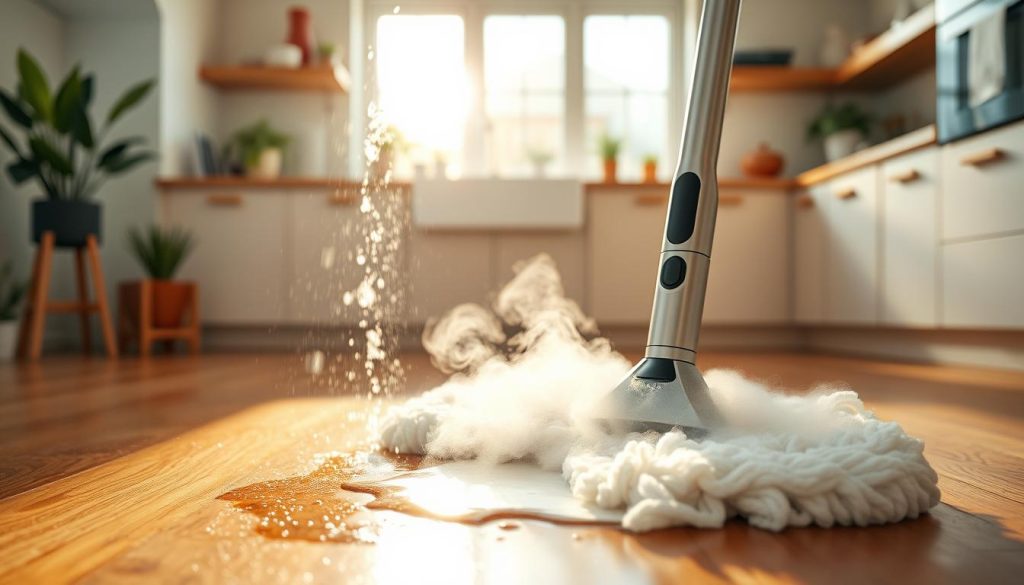
Hot water at 85°C: tackling oil spills and set‑in grime
85°C hot water softens grease and loosens sticky residues. That reduces repeated passes on hard floors and cuts the time needed for greasy kitchen messes.
Triple edge cleaning and flat‑fold design for tighter gaps
Triple edge cleaning reaches skirtings and corners more reliably. The flat‑fold head slips under low furniture so we remove trapped dirt where it builds up.
Specs that matter and what to watch
The key numbers are clear: 800ml clean tank, 650ml dirty tank and 22,000 Pa suction. In normal mode you get up to 70 minutes; hot mode runs about 25 minutes. Charge time is four hours and the model weighs 6kg.
Watch‑outs: the extra weight and hot treatment can be harsh on wooden floors. We advise using gentler modes or a non‑heated option for delicate surfaces.
“A specialist pick for cooks and busy families who trade extra weight for deeper, heat‑assisted cleaning.”
Most manoeuvrable and mode-rich: Narwal S20 Pro
We chose the Narwal S20 Pro for homes that need agile handling and precise control in tight Singapore layouts. Its compact weight and flat‑folding head make it simple to steer down narrow corridors and between furniture.
AI Dirt Sense technology
AI Dirt Sense scans floors and raises or lowers cleaning intensity to match visible dirt. That means the system uses less water and battery on light jobs and boosts suction where floors are grimier.
Five cleaning modes for different floors and messes
The S20 Pro offers five distinct modes from gentle to turbo. We find this useful on mixed floors: low‑moisture for timber, stronger modes for tiled kitchens, and a turbo setting for stuck-on grime.
Triple-sided edge cleaning for corners and edges
Triple-sided edge cleaning addresses the missed strip near skirtings and corners. The result is fewer follow‑up passes and a neater finish on skirting boards and tight angles.
| Spec | Value | Practical note |
|---|---|---|
| Clean tank | 790ml | Good for mid‑size flats without frequent refills |
| Dirty tank | 720ml | Matches clean capacity to avoid overflow |
| Suction | 20,000 Pa | Strong lifting power for grit and dry debris |
| Runtime | Up to 60 minutes | Enough for most full‑flat sessions on a single charge |
| Weight / Charge time | 4.27kg / 3.5 hours | Light to carry, moderate recharging time |
“A nimble system that blends smart sensing with varied modes for precise, efficient cleaning.”
Best for pet hair and rugs: Bissell CrossWave X7 Cordless Pet Pro
For households with shedding pets and several rugs, we picked a model built to handle fur and spills without fuss. The CrossWave X7 targets daily shedding with a mix of strong suction and a tailored cleaning solution to lift set‑in debris.
Turbo Pet mode: enhanced suction and cleaning solution for stubborn stains
Turbo Pet mode boosts suction and meters the right cleaning solution to loosen greasy stains and tracked‑in messes. We like that the pairing cuts repeat passes near feeding areas and pet beds.
How it performs on hard floors vs rugs
On hard floors the unit is swift and leaves minimal residue. On rugs it lifts hair well but needs slower passes for deep fibres.
Tip: use a lighter setting to avoid over‑wetting rugs and follow with a quick dry pass for faster drying.
Specs snapshot and what it means
| Spec | Value | Note |
|---|---|---|
| Clean tank | 820ml | Good for a full‑flat session |
| Dirty tank | 420ml | Expect more frequent emptying with heavy hair |
| Suction | Up to 20,000 Pa | Strong lifting power for hair and debris |
| Runtime | Up to 30 minutes | Plan short jobs or spot cleaning |
“A practical pick for pawrents who want one system for fur, crumbs and light wet cleaning.”
Who it suits: families managing daily shedding, multiple pets, and anyone wanting reliable rug and hard floor performance in compact sessions.
Best budget water-wash option: Simplus Cordless Wet-Dry Vacuum Cleaner
Many Singapore households prefer a straightforward unit that delivers dependable cleaning without premium bells and whistles. The Simplus Cordless offers that balance at a competitive price and sensible core specs.
Value highlights and performance
21,000 Pa suction power and up to 50 minutes runtime are the headline figures. That combination makes the model strong for weekly flats and spot jobs where runtime and suction matter more than smart sensors.
Practical design for tight spaces
The 180° flat‑folding head and a 6.5cm brush reach corners and slip under low beds. At 4.4kg the unit is easy to handle for quick passes around furniture.
Tank sizes and ownership notes
The 500ml clean water tank and 550ml dirty tank suit smaller homes; expect more frequent refills in larger houses. Charge time is about 4.5 hours, so plan charging if you run longer sessions.
- Who we recommend it for: first‑time wet‑dry buyers, renters and those on a budget seeking solid daily performance.
- Trade‑offs: fewer smart features and smaller tanks versus premium models.
“A sensible, affordable pick that nails the essentials: strong suction, good runtime and a compact, corner‑ready head.”
Best low-maintenance pick for mixed floor types: Dibea H8
For households that value fuss-free upkeep, the Dibea H8 aims to cut chores without cutting performance. It pairs a built-in self-cleaning system with practical modes for wooden floors, marble and ceramic tiles.
Built-in self-cleaning system and versatile modes
The self-cleaning cycle rinses the brush and internal channel after use. That reduces manual rinsing and shortens your post-job routine.
We still recommend emptying the dirty tank and letting parts dry between sessions to prevent smells and residue.
Power, tanks and everyday performance
Key specs: 13,000 Pa suction, 500ml clean tank and 600ml dirty tank. At about 3.7–3.9kg the unit is light to handle and good for routine dirt rather than heavy debris from renovations.
Runtime choices: auto mode vs high power mode
Use auto mode for mixed-floor jobs and up to 38 minutes of runtime. Switch to high power for stubborn marks and expect about 30 minutes per charge.
- Who it suits: families who clean often and want simpler upkeep.
- Where it works best: hard floors and tiled areas when you need controlled moisture and minimal streaking.
“A practical, low-maintenance system that keeps mixed floors tidy with fewer manual steps.”
Best for larger wet clean-ups: Dibea HC26
For bigger jobs that demand fewer stops, a matched‑tank design keeps momentum and reduces interruptions. The Dibea HC26 targets households that regularly cover wide hard floors or face frequent spills. We find it offers session-ready convenience rather than tech‑heavy automation.
Larger matched tanks and predictable cadence
The HC26 pairs a 700ml clean tank with a 700ml dirty tank. This symmetry means fewer mid-job refills and a steadier empty/refill cadence for longer sessions.
Reach and handling updates
We liked the longer handle (about 568mm versus 538mm on the H8). It reduces bending and improves reach across larger rooms.
The unit is slightly lighter and more manoeuvrable than the H8, so steering around furniture feels easier during extended runs.
Power expectation and recommended use
Expect solid suction aimed at coverage and wet‑clean convenience rather than premium smart features. Runtime in auto mode is about 38 minutes — enough for most full‑flat sessions in Singapore.
| Spec | Value | Practical note |
|---|---|---|
| Clean tank | 700ml | Fewer refills for medium to large rooms |
| Dirty tank | 700ml | Matched capacity avoids overflow |
| Runtime | ~38 minutes (auto) | Good for single‑session coverage |
| Handle length | 568mm | Better reach, less bending |
“A pragmatic pick for households that prioritise coverage and predictable session length over high-end smart features.”
Best for odour control and hygiene on hard floors: Shark HydroVac WD210SM
For households that prioritise hygiene, odour control is often the deciding factor when choosing a compact wet‑dry option. The Shark HydroVac WD210SM focuses on reducing bacterial build‑up while remaining light and easy to use in flats and small houses.
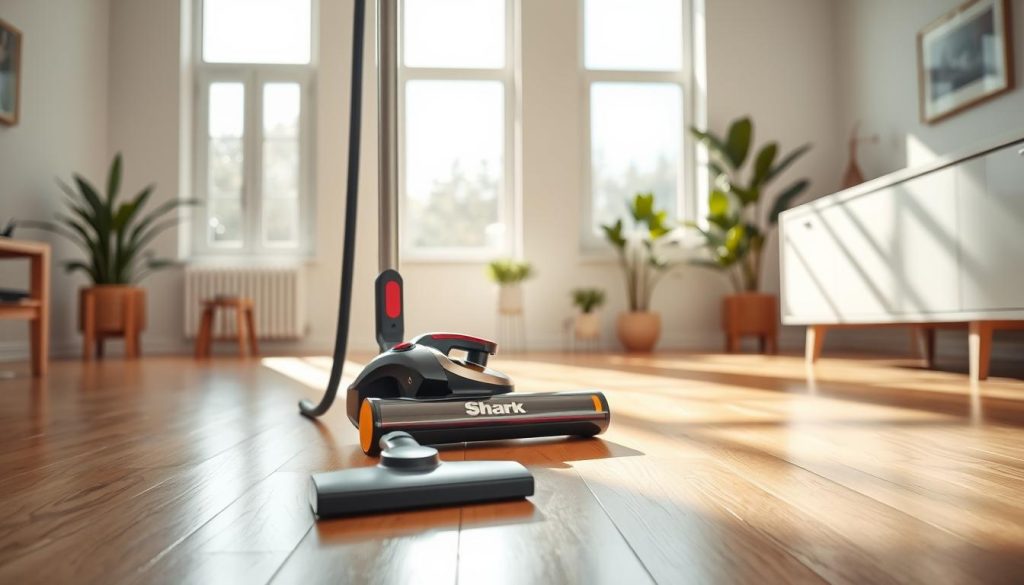
Antimicrobial brush rollers to reduce bacterial build‑up and smells
Antimicrobial brush rollers inhibit bacteria on contact and cut down lingering odour between sessions. That helps keep hard floors smelling fresher in humid conditions.
Note: this feature supports hygiene but does not replace regular rinsing and drying of the brush and tank.
Where its suction power fits: quick daily pick‑ups and light wet messes
The unit delivers about 2,700 Pa of suction — enough for crumbs, tracked‑in dirt and light wet messes. It is not positioned for heavy-duty renovation debris.
We view it as a daily driver: handy for short touch‑ups, spot cleaning and keeping high‑traffic hard floors tidy.
Specs snapshot and who benefits most
- Tank sizes: 500ml clean tank and 360ml dirty tank for short sessions.
- Runtime: up to 30 minutes on a single charge; charge time about 4 hours.
- Weight: 3.9kg — light for storage and handling.
“A hygiene‑led system that keeps hard floors fresher between deeper cleans.”
Who we recommend it for: smaller homes, households sensitive to odour, and those wanting a light, routine system to pair with a stronger dry unit for heavy jobs.
Dyson water wash options in Singapore: what we need to know before buying
Dyson machines sit at the premium end of the market. We explain what you actually pay for, how Dyson reports suction differently, and which Submarine models suit specific Singapore flats and houses.
Why Dyson costs more
Research and engineering drive much of the price. Dyson invests in R&D, cyclonic suction consistency, cordless design and finer exhaust filtration. That results in lighter units that keep suction stable as bins fill.
Dyson V12s Origin Submarine — lightweight and long runtime
The V12s Origin Submarine is a portable option at 2.2kg. It delivers about 130 Air Watts and up to 60 minutes on a single charge, so it balances portability with steady cleaning performance for typical flats.
Dyson V12s Detect Slim Submarine — HEPA and Fluffy Optic visibility
The Detect Slim steps up to roughly 140 Air Watts, a HEPA filter and the Fluffy Optic head that helps show fine dust on hard floors. It weighs about 3.1kg and also offers around 60 minutes of runtime.
Dyson Digital Slim Submarine — compact trade-off
The Digital Slim is the most compact choice with shorter runtime — roughly 40 minutes — and lower weight. It suits small flats where quick maintenance sessions beat long sessions or large tank systems.
“Dyson makes sense as a premium, cordless complement — ideal for quick, polished cleans. For heavy wet/dry sessions, a dedicated floor washer remains more practical.”
Electrolux wet and dry vacuum cleaners: drum vs cordless stick formats
Electrolux offers two clear formats so shoppers in Singapore can match a machine to household needs. Drum models tackle heavy-duty jobs and blower tasks, while cordless stick designs focus on daily floor upkeep with integrated dry and mop functions.
Drum models: wet, dry, and blower function for garages and renovations
When to choose a drum system: large debris, renovation dust and garage spills. Drum units such as the Flexio Power Z823 include a 1600W motor and a blower mode that helps clear leaves, sawdust and bulky dirt from workshops or renovation sites.
Stick models: integrated vacuuming and mopping for hard floors
Cordless sticks like the 800 3‑in‑1 EFW81713 combine suction and an integrated mop for rapid daily upkeep on hard floors. They suit flats and condos where storage, manoeuvrability and quicker sessions beat raw power.
Stand-out features: TriAction nozzle, smart dirt detection, and self-cleaning
Key tech: the TriAction nozzle claims up to 99% debris pick-up and improves edge performance. Selected models add smart dirt detection and self‑cleaning cycles, plus microfilters and antibacterial tanks to reduce odour and maintenance.
Price expectations in Singapore: typical range and promo considerations
Expect prices from entry-level sticks up to premium drum or feature-rich stick models. Promotions, instalment plans and free delivery often change the effective price, so factor offers into the final choice.
“Match the format to your job: choose a drum for heavy clean-ups and a cordless stick for everyday hard-floor maintenance.”
How to compare: return to our buying checklist and weigh tank size, power, tools and floor suitability against price and storage before deciding which Electrolux system suits your home.
Side-by-side comparison: suction, tanks, battery, and edge cleaning
A clear comparison helps shortlist models by real‑world trade‑offs rather than specs alone. Below we map the core differences so you can match a model to your flat or landed layout.
Tank capacity quick guide: when you’ll refill clean water and empty dirty water
Match capacity to area. Tineco (1,000/720ml) and Dibea HC26 (700/700ml) suit larger rooms with fewer stops.
Smaller tanks like Simplus or Shark (about 500ml clean) need top‑ups for big sessions and more frequent emptying when debris is heavy.
Runtime reality check: matching battery life to your floor plan
Advertised minutes vary by mode. Dreame offers up to 70 minutes in normal mode but much less in hot mode. Narwal and Tineco cover most flats with 50–60 minutes runtime.
Short runs (30 minutes) suit Bissell and Shark for spot work; plan charging for full‑flat jobs.
Edge cleaning performance: single vs dual vs triple edge approaches
Single‑edge heads are fine for broad swathes. Dual rollers improve skirting reach, while triple‑edge designs reduce follow‑up passes in corners and tight angles.
Hot water vs room‑temperature washing: where benefits are most noticeable
Hot water helps kitchen grease and set stains; Dreame’s heated option shows this best. For routine floor upkeep, room‑temperature modes save time and reduce drying on rugs.
“Match tanks, battery and edge design to your typical job — that reduces stops and gives a cleaner finish.”
- Tip: choose larger tank and longer runtime for landed homes.
- Tip: pick triple‑edge or dual rollers if you want fewer corner passes.
How we choose the right model for different Singapore homes
Choosing a model in Singapore means matching layout and daily habits to real performance. We judge each option by storage, tank size, suction and how long it runs in practical use.
HDB and condo layouts: storage, weight, and quick daily cleaning
For small flats we favour compact, cordless units that are light to lift and easy to store. Short runtime in the 20–40 minutes range often fits quick jobs.
Tip: pick models with a flat head and modest tank capacity so they tuck away in a cupboard.
Landed homes: larger tank capacity, longer runtime, and stronger suction power
In larger houses choose bigger capacity and stronger suction. That reduces stops and covers more floors per session.
Expect heavier weight where extra power and larger tanks give longer single‑session coverage.
Homes with kids and pets: brush design, cleaning solution support, and hair handling
Families need a robust brush that resists tangles and good hair handling. Models that accept dedicated cleaning solution help lift sticky messes and trapped dirt.
We prefer systems with a simple bin and easy access for daily emptying to cut maintenance time.
Hard floors, mats, and rugs: picking cleaning modes that avoid over‑wetting
Choose cleaning modes that limit moisture on rugs and delicate wood. Use gentle modes for mats and a stronger setting for tiled areas.
Smart sensing helps adjust flow and suction so you spend less time managing settings and more on real cleaning.
| Home type | Key focus | Recommended feature |
|---|---|---|
| HDB / Condo | Storage, light handling | Cordless, compact head, 20–40 minutes runtime |
| Landed | Coverage, fewer refills | Large tank, strong suction, longer runtime |
| Kids & Pets | Stain and hair management | Anti‑tangle brush, cleaning solution support, easy emptying |
“Balance performance with the time you will actually use the device — the best choice is the one that fits your routine.”
Care, running costs, and keeping your system hygienic
A straightforward after‑care habit goes a long way to preserving performance and cutting running costs. Small tasks after each session keep suction and parts working well. They also reduce smells in humid Singapore flats.
Daily routine: emptying dirty water, refilling clean water, and drying components
Empty the dirty water immediately after use and rinse the tank to remove visible dirt and debris. Refill the clean water only when you are ready for the next session.
Leave the removable parts to air dry in a well‑ventilated spot. Drying prevents odour and bacterial build‑up and keeps the tank ready for the next job.
Using cleaning solution safely and avoiding residue build‑up
Use only manufacturer‑recommended cleaning solution and dilute to the suggested ratio. Over‑concentrated mixes leave sticky residue on floors and inside the tank.
If you swap brands, rinse the system between solutions to avoid chemical buildup that harms seals and reduces power over time.
Filter and brush upkeep: maintaining suction and reducing odour over time
Check the filter and brush weekly. Clogged filters and tangled brush fibres cut suction and trap fine dirt.
Replace consumables as advised; antimicrobial rollers help with odour but do not replace routine rinsing. For heavy jobs, pair a wet dry unit with a dry vacuum for best results.
“Consistent, simple care keeps the system fresh, extends component life and lowers long‑term running costs.”
Conclusion
In short, match real household routines to machine specs and you’ll choose a model you actually use.
Our top pick remains the Tineco Floor One Switch S7 Stretch for balanced suction, tank size and edge cleaning. The Dreame H15 Pro Heat wins where hot water helps shift greasy marks quickly.
Narwal’s smart sensing suits tight layouts; Bissell targets hair and rugs; Simplus is the sensible budget choice. Shark and Dibea help if hygiene and low upkeep matter.
Choose by tank, suction, runtime and storage, not marketing alone. A wet dry vacuum pairs well with a robot vacuum or a dry vacuum for routine upkeep and big spills. In Singapore, factor price, space and how often you’ll use and maintain the system.

