

We introduce what this machine does and why many Singapore businesses choose it as a single solution. A commercial wet and dry vacuum cleaner lifts dry debris, damp grime and liquid spills with one robust unit. Brands such as Kärcher and Nilfisk design models for constant use on sites where speed and hygiene matter.
In this buyer’s guide we explain how we compare machines and which specifications matter on site. We focus on suction, filtration and dust class, container capacity, filter cleaning systems and total cost of ownership.
We clarify the gap between professional needs and household models. Durability, continuous run capability and ease of service are vital for construction, hospitality, healthcare, automotive, retail and warehouses in Singapore.
We signpost the main types — fine‑dust, all‑rounders, liquid/coarse dirt and safety models — so you can go straight to the section that fits your needs. We also highlight which products offer the best balance of performance and value.
Why wet and dry vacuums are indispensable for Singapore workplaces
Keeping a busy Singapore workplace safe often starts with the right multipurpose cleaning kit.
We choose machines that shift quickly between dry debris, damp grime and liquid spills. This reduces the need for multiple tools and avoids process delays when tasks change. Fast response keeps areas open and lowers downtime.
Good routines matter. Better cleaning cuts slip risks from water and limits airborne dust by capturing particles rather than re-suspending them. That protects staff health in retail, F&B back‑of‑house and workshops.
“A single-purpose strategy for mixed waste rarely matches the speed and consistency of a multipurpose unit.”
Operational benefits
- One tool for mixed waste: fewer handovers and simpler training.
- Lower disruption: quicker clearing means work resumes sooner.
- Consistent standards: the same process across shifts keeps hygiene measurable.
| Problem | Benefit of a multipurpose unit | Impact |
|---|---|---|
| Dust and small debris | Effective particle capture | Improved air quality |
| Liquid spills | Rapid pick-up and safe disposal | Fewer slip incidents |
| Mixed site tasks | One operator, one machine | Lower downtime and training cost |
To explore models suited for high-throughput sites, see our detailed review on industrial wet dry units.
Commercial wet and dry vacuum cleaner: what makes it different from dry vacuum cleaners
We look for machines built to endure long shifts on sites where grit, dust and spills are routine.
Trade‑grade models use heavier materials, stronger casings and industrial‑rated rollers and cables. That means fewer failures during continuous use on construction sites and in facility maintenance teams across Singapore.
A standard dry vacuum cleaner often struggles with liquids and mixed debris. It may clog, suffer filter damage or require frequent service. By contrast, a purpose‑built unit handles coarse dirt, fine dust and large volumes of water safely and quickly.
Different contaminants stress parts in different ways. Coarse debris abrades seals and hoses. Fine dust loads filters and reduces airflow. Large water pick‑ups demand sealing, shut‑off systems and corrosion‑resistant tanks.
- What we check: container design, sealing, filtration options and serviceability.
- Why it matters: reliability on busy schedules and rapid response to spills.
Match the vacuum to your site: typical applications in Singapore
Choosing the right machine means matching its strengths to the tasks your site faces every day.
Construction sites and workshops. These environments demand stable suction for heavy dust, mixed rubble and fine particulates. We prioritise higher dust‑class filtration and robust hoses when plaster, wood or concrete dust is common.
Hotels, restaurants and contract cleaning. Fast turnarounds and frequent liquid pick‑ups require safe wet operation, quick emptying and easy‑change nozzles. Standard class models often suit foodservice and lobby use.
Hospitals and high‑hygiene facilities; automotive service centres. Here we pick Ap class or higher for mixed contamination and controlled disposal. Filtration choices and certified separation reduce exposure and meet strict standards.
“Match what happens on the floor, not the biggest number in the spec sheet.”
| Site type | Key needs | Recommended class |
|---|---|---|
| Construction sites | Stable suction, M/H filtration, rugged build | M or H class models |
| Hospitality | Liquid handling, quick empty, low-noise | Standard class, Ap for mixed use |
| Automotive & hospitals | Mixed contamination, controlled disposal | Ap class or specialised units |
We map common applications to capability so you only buy what the floor needs.
Wet vs dry contamination: how the machine works in each mode
Understanding how the unit switches modes helps operators avoid downtime and costly repairs.
Wet pick-up basics
We prefer models that use a bypass blower to create steady suction while protecting the motor from liquid. The blower keeps air moving through a separate path so moisture does not contact sensitive parts.
Overfill protection uses either a mechanical float that blocks the hose port or an electronic cut-off that senses conductivity and stops the motor (Kärcher-style). These features reduce the risk of motor damage and spills during busy shifts.
Dry pick-up basics
For dry work, debris travels through the hose into the tank where filters trap fine particles. Flat or cartridge filters capture dust while allowing air to pass.
Cyclone-style settling is often achieved by port geometry that induces rotation so heavier material drops to the base before reaching the filter. This lowers filter loading and keeps suction stable.
Operator tips: always switch off filter-cleaning when picking up liquids, fit disposable bags for hazardous dust, and empty tanks promptly. If liquid pick-up is frequent, prioritise overfill sensors and tank drainage over marginal spec gains.
| Mode | Key protection | Operator action |
|---|---|---|
| Liquid pick-up | Float or electronic cut-off | Use tank drainage; disable filter cleaning |
| Fine dust | Cartridge/HEPA filters | Use bags or frequent filter checks |
| Mixed debris | Cyclone settling + robust sealing | Empty container often; check seals |
For more on choosing the right unit for frequent liquid work see our comparison guide.
Suction power and performance: what to prioritise for efficient cleaning
Real-world performance comes from sustained airflow and smart filter maintenance, not headline wattage.
What suction power means on site. We look beyond motor ratings and test how well a machine lifts fine dust, grit and pooled spills. True suction power combines airflow, mouth velocity and how filters hold up under load.
Consistently high suction for long working periods
When teams clean for hours, steady performance beats a short peak every time. Models with Tact‑style self‑cleaning keep filters clear and maintain suction power without frequent stops.
Powerful suction for fine dust and heavy debris
We reserve powerful suction for tool extraction, dense debris and dusty trades where pickup is otherwise slow. For light housekeeping, a lower setting saves energy and reduces noise.
Choosing performance for large volumes versus detailed spot cleaning
Match performance to the regular task, not the occasional worst case. High sustained power speeds large-area work and spill recovery. For edges and fixtures, a compact high‑velocity nozzle often does the job faster.
- Rule of thumb: pick suction and power to match your dirtiest, most frequent task.
- Efficiency: sustained performance reduces total time and labour per zone.
- Tip: prefer automatic filter cleaning for continuous high-dust jobs.
| Task | Needed trait | Why it matters |
|---|---|---|
| Large floors & spills | Sustained airflow | Faster area clearing, less downtime |
| Tool‑connected extraction | Powerful suction | Prevents tool clogging, keeps work moving |
| Detail cleaning | High mouth velocity | Precise pick‑up in corners and fittings |
“Sustained suction, not peak numbers, is the best predictor of on‑site efficiency.”
Container capacity and size: selecting the right range for your floor area
Capacity and footprint shape how a machine performs across shifts and different floor plans.
Larger container capacity reduces emptying stops and cuts disposal trips. For big floor areas and long runs this saves time and keeps teams productive.
Bagless operation with active filter cleaning can let you use more of the container volume, but it changes how we plan disposal and hygiene controls.
Compact machines for tight spaces
In Singapore back‑of‑house areas, lifts and narrow corridors, size and manoeuvrability matter most.
We favour smaller units where storage, turning radius and weight limit how a unit is used. These models speed work in confined sites and simplify transport between floors.
Larger chassis for big sites
For warehouses and supermarkets, a larger chassis with high capacity is often the right trade‑off.
Robust frames and quality components support daily heavy use and long runs across wide floors.
“Choose capacity to match the dirtiest shift and the distance to your disposal point.”
- Match to needs: pick capacity for the heaviest typical shift, not the occasional worst case.
- Balance: weigh tank size against weight, turning radius and storage constraints.
- Operational tip: consider bagless use only if filter cleaning and hygiene plans are in place.
| Site type | Recommended capacity | Key reason |
|---|---|---|
| Tight corridors / lifts | Small (10–20 L) | Easy manoeuvre, simple storage |
| Hotels / retail back‑of‑house | Medium (20–40 L) | Balance of runtime and portability |
| Warehouses / supermarkets | Large (40–80+ L) | Fewer stops, long continuous runs |
Filter cleaning systems: semi-automatic vs fully automatic (Tact)
A reliable filter-cleaning system turns routine upkeep into a background task rather than an operational headache.
Why filter cleaning matters when we operate without a filter bag. Filters clog quickly when we pick up fine dust without a bag. That build-up reduces suction and forces frequent stops for manual cleaning. Regular clearing keeps suction power stable and preserves productivity.
Benefits of automatic cleaning
Automatic systems reverse air briefly to dislodge dust from the filter. This keeps suction consistent, saves time and lowers operator exposure to airborne dust during servicing.
Understanding Tact
Tact uses sensor-controlled differential pressure to trigger short reversed-air pulses. On M and H classes the system decides cleaning intervals automatically. L-class units allow set intervals (for example, 60s to 15s ranges). Tact switches off when liquids are present or when filter bags are in use.
Semi-automatic cleaning: when it fits
Semi-automatic cleaning is user-triggered and suits small to medium dust loads. It is cost-effective where dust levels are moderate and operators prefer manual control.
“Consistent filter cleaning is the simplest route to less downtime and better safety on site.”
| Feature | Automatic (Tact) | Semi-automatic |
|---|---|---|
| Suction stability | High | Medium, operator dependent |
| Time saved | Significant | Moderate |
| Best use | Heavy or variable dust | Small–medium dust loads |
Dust classes L, M and H: choosing filtration for health and compliance
Not all dust is the same; filtration choice must reflect the real risks on the floor.
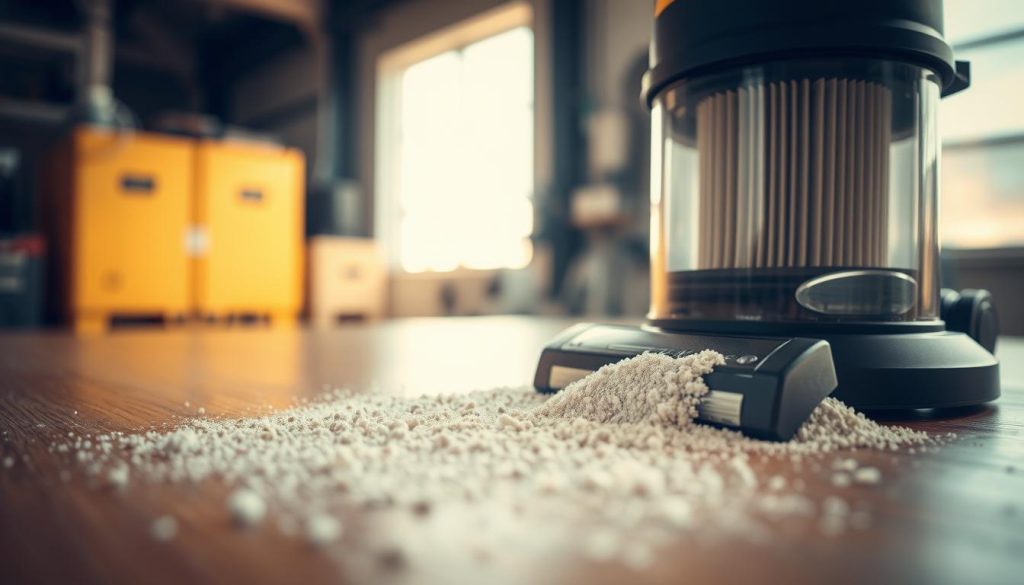
Dust class L
L class suits moderate-risk debris such as chalk and plaster. Permeation limits sit around 1.0% and disposal is straightforward.
Dust class M
M class is the common minimum on construction sites. It covers hardwood, panels, paint, concrete and brick dust with permeation below 0.1%.
Dust class H
H class protects against hazardous and carcinogenic substances — asbestos, lead, cadmium and certain mould spores.
H-class units use HEPA-level separation with permeation under 0.005% and require certified containment and disposal.
Special requirements
Asbestos work and explosive dust in ATEX zone 22 demand purpose-built, certified solutions. These tasks need strict procedural controls to protect worker health and site safety.
“Match the filter class to the worst credible exposure during normal work, not the best-case scenario.”
| Class | Typical materials | Why it matters |
|---|---|---|
| L | Chalk, plaster | Basic protection, easy disposal |
| M | Concrete, wood panels, paint | Construction requirement; stronger protection |
| H | Asbestos, lead, carcinogenic dust | Highest health and legal controls |
Filter types and materials: selecting the right filter for wet dry work
We place filter choice at the centre of every spec decision. Filters determine service life, suction stability and how well a unit copes when we alternate between liquid pick-up and particle removal.
PTFE, PES and paper filters: performance and moisture resistance
PTFE filters resist moisture and rot, cut clogging and extend service intervals. They are suitable where frequent switching between wet dry tasks happens and can be certified for M/L use with ~99.9% dust separation (Kärcher).
PES filters are common in newer NT Tact models. They share PTFE’s moisture resistance and perform well when operators move rapidly between liquid work and dust pickup.
Paper filters are economical for strictly dry work. They require drying after liquid exposure and are best where moisture risk is low but budget control is important.
HEPA-level separation and certified filters for hazardous dust
H-class (HEPA-level) filters deliver around 99.995% separation. Cleanable PTFE H filters exist, but hazardous dust often needs a certified safety filter set or disposal bags to prevent re‑exposure during service.
Our rule: match filter materials to moisture exposure, dust type and switching frequency to lower downtime and replacement costs.
“The right filter reduces stops, preserves suction and cuts total ownership costs.”
| Filter | Best use | Key benefit |
|---|---|---|
| PTFE | Frequent wet dry switching | Moisture resistant; long life |
| PES | High use Tact systems | Good moisture resistance; stable performance |
| Paper | Dry-only, budget sites | Low cost; must dry after liquids |
| H-class (HEPA) | Hazardous dust | Certified high separation; safe disposal needed |
Construction dust risks and prevention: protecting operator health
Protecting lungs on site starts with capturing dust the moment it forms at the tool tip. Respirable particles stay in the air and can reach deep into the lungs, so effective controls are non‑negotiable for construction teams in Singapore.
Common sources
We see three frequent sources on building sites: respirable crystalline silica from concrete, bricks and mortar; wood dust from MDF and plywood; and plaster‑based fines from gypsum, limestone or marble.
Prevention methods
Vacuum at source by connecting extraction to power tools so dust is caught immediately. Where tool ports are not possible, damp working or dust binding with water reduces airborne spread.
Tool connection and auto-start
Auto‑start sockets that power on the vacuum when tools run improve compliance. They remove the human step and ensure extraction is active whenever power tools draw power.
“Capture first, clean later” — it keeps air cleaner and preserves operator health.
Pick filters and dust class to match the risk. Correct pairing of filtration to the material and task completes the control chain and gives lasting site safety.
Choosing by job type: fine dust, all-rounder, large liquid volumes and safety vacuums
We guide you through a job‑based framework so the main machine matches routine demand, not occasional extremes. This keeps running costs low and reduces downtime on busy Singapore sites.
Fine‑dust machines for uninterrupted work on high‑dust sites
When fine dust is the daily norm, we favour Kärcher NT Tact models. Their patented Tact system gives consistent suction power with automatic filter pulses.
They can run without a bag to use the full container volume — ideal where frequent emptying would interrupt shifts.
All‑rounder (Ap class) machines for mixed tasks
Ap class units balance liquid pick‑up and medium‑fine dust removal. Semi‑automatic filter cleaning keeps service simple for mixed workloads.
These products suit facilities that face varied routine tasks and need one reliable unit for most jobs.
Standard class for coarse dirt and large liquid volumes
Standard class models handle coarse debris and large volumes swiftly. They are robust, easy to manoeuvre and built for daily spill recovery.
We recommend these where fast throughput and simple serviceability are priorities for cleaning teams.
Safety machines for respirable or hazardous dust
Where health risk is real, safety units with certified H‑class filtration are essential. They protect operators from respirable dust and carcinogenic materials such as asbestos.
Options include explosion‑proof units for zone 22 hazards and full certified containment for safe disposal.
“Buy for the workload you have every shift, not the rare worst case.”
We also suggest reviewing the wider product range and aligning purchase to how often each task occurs. For help ordering the right solution for deep cleaning, see our recommended option order Lura wet dry vacuum today.
Usability and durability features that matter in commercial environments
Good design reduces downtime by making handling fast, predictable and damage‑resistant across busy shifts. We focus on features that keep operators productive and machines in service.
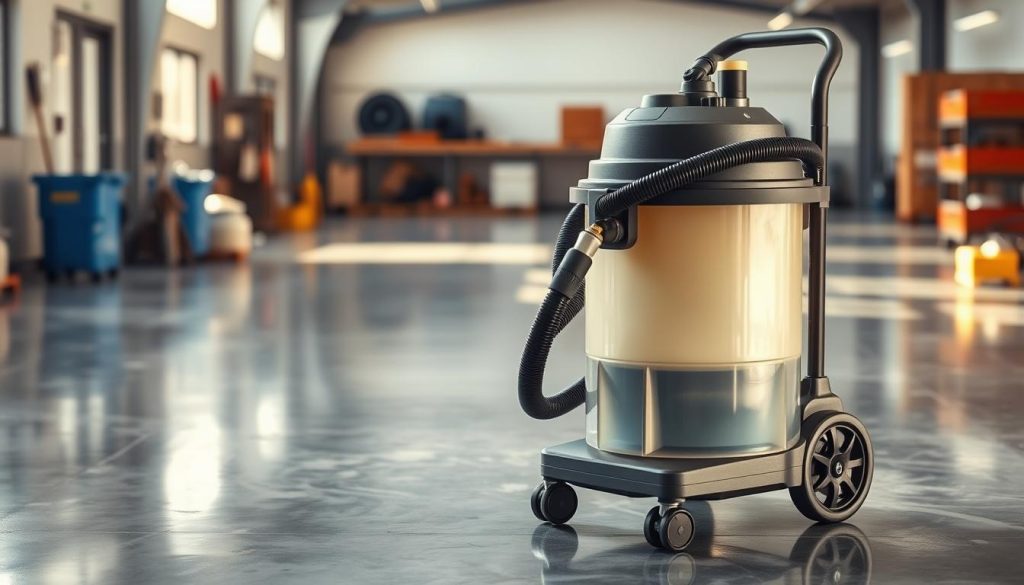
Mobility, robust castors and bumpers for tough worksites
Sturdy metal castors and impact bumpers protect the chassis when units move between floors or over thresholds.
Handholds and reinforced frames cut accidental drops and make it easier to lift the machine in tight service lifts. This lowers repair calls and extends the machine life.
Nozzles and quick-change inserts for wet and dry applications
Wide floor nozzles with bayonet fastenings and quick-change inserts let us switch modes without wasting time.
Tool sleeves and crevice holders on-board mean fewer lost parts and faster set-up for varied work.
Storage, hose management and ergonomic handling to speed up work
Cable wraps, hose bays and clip systems keep accessories tidy and reduce trip hazards for cleaners.
Ergonomic bends, soft handles and Nilfisk/Kärcher-style clips reduce operator fatigue, which improves consistency and overall performance.
“Features that make correct use easier drive better uptime and lower total service costs.”
Maintenance, service life and total cost of ownership
How we maintain a machine often matters more than the headline specification when calculating long‑term cost. Procurement teams should budget for consumables, labour time, downtime and disposal, not just the purchase price.
Filter service life: replace versus clean
Automatic filter cleaning systems extend service intervals and keep suction steady. Kärcher reports Tact-style systems can delay filter replacement substantially — in one test a filter only needed changing after roughly 180 kg of fine mineral dust.
When to replace: change filters if damage, tears or reduced separation occur. Otherwise, use cleaning cycles to stretch life.
Bagless operation versus filter bags
Bagless use opens full tank capacity and reduces consumable cost. Automatic cleaning lowers labour time and avoids frequent bag swaps.
Filter bags simplify disposal and lower exposure risk when dust is hazardous. They raise ongoing cost but can be mandatory for regulated work.
Emptying, disposal and avoiding contamination
Safe emptying keeps staff and site clean. We follow sealed transfer methods, PPE, and dedicated waste routes when dust is fine or hazardous.
“Plan disposal as part of service — the right process protects staff and limits regulatory risk.”
| Cost factor | What we measure | How to reduce it |
|---|---|---|
| Consumables | Filters, bags, seals | Choose longer‑life filters; use automatic cleaning |
| Labour & time | Servicing, emptying, checks | Automate cleaning cycles; train staff |
| Downtime & repairs | Service calls, part replacement | Prefer serviceable parts and local support |
| Disposal | Hazard handling, waste fees | Use sealed bags or certified safety sets |
Match maintenance intensity to your needs: high-frequency construction use needs ready spare parts and fast service contracts. For hospitality and retail, focus on fast emptying and low staff time spent on upkeep.
Conclusion
Effective selection hinges on three questions: what we pick up, where we work, and how often tasks recur.
Start by listing dust types, dirt and liquid volumes per shift. Match that to capacity, range and service access so teams waste less time on emptying or breakdowns.
Remember: a purpose-built machine lasts longer under heavy use than a domestic dry unit. Filtration and dust class are health choices as much as equipment choices, especially in construction and high‑hygiene sites.
Prioritise steady suction and stable performance over headline wattage. Usability features cut task time, reduce fatigue and ensure the equipment is used correctly every day.
Simple checklist: match requirements to dust class; pick the right filter and cleaning system; confirm wet shut‑off protection; plan safe disposal. Compare products by primary use — fine dust, mixed wet dry work, large water recovery or safety applications — to pick a fit‑for‑purpose solution.

