

We explain a clear, practical approach to upholstery care that suits homes in Singapore. Hot vapour can reach deep fibres and lift odours, dust and trapped dirt while using less water and little or no chemical agent.
We set realistic expectations about what this method will do — and what it won’t. Our workflow favours a dry start, gentle application and measured drying to prevent water marks and prolonged dampness.
We rely on a vacuum cleaner, the right attachments and a reliable steam cleaner to keep the process consistent. We also test on a hidden patch first to protect colour and texture on mixed fabrics common in modern furniture.
Follow our concise steps for prep, stain handling, steaming technique and follow-up care. For an extended guide on safe prep and tools, see our practical link on using a carpet machine here.
Why we steam clean sofas regularly for a healthier home in Singapore
Regular deep cleaning keeps upholstery fresh and reduces hidden allergens in humid Singapore homes. Daily use, air‑conditioning and moisture let dust and odours sink into the fabric. A planned deeper clean lifts what normal upkeep leaves behind.
How heat and vapour work: Hot vapour penetrates fibres to loosen embedded dirt and stubborn stains. It uses less water and often needs minimal cleaning agent, so the fabric dries faster.
What we remove beyond the surface: Thorough cleaning extracts dust, pet hair, grit and mite matter hidden in seams and cushions. This improves air quality and the feel of your furniture after busy weeks.
When to choose deep cleaning: For visible stains, persistent smells or a heavy build‑up of dirt we recommend a full steam‑based refresh. For quick upkeep, a vacuum cleaner pass and a damp wipe will usually do the job and save time.
- We make sure households with pets schedule deeper cleans more often to reduce allergens.
- We balance convenience and results: routine vacuuming plus periodic intensive work keeps fabric in good condition.
- For more detail on benefits and timing, see our five reasons to steam clean.
Before we start: checking fabric, labels and whether steam is safe
Before we begin, we check labels and fabric closely so we know whether heat and moisture are safe. A quick label read saves time and prevents costly mistakes. We follow the manufacturer’s instructions and adapt our approach to each case.
Reading upholstery care codes and what they mean
We read the W/S/SW/X codes to decide if the material tolerates water or solvent. W means water-safe. S is solvent only. SW allows both, and X means professional service is needed.
Testing an inconspicuous area for colour and heat reaction
We always test a hidden spot behind a cushion. Use a white cloth to check for colour transfer and look for texture or sheen changes.
We watch for stiffening or any sign the fabric reacts badly to heat or moisture. If the test shows risk, we stop and choose a gentler option.
Materials we avoid and safer maintenance routes
We avoid using hot vapour on leather and leather upholstered furniture, velvet and some microfibre. These fabrics can lose elasticity or dull with heat.
For those materials we favour vacuuming, a damp cloth or specialist products rather than aggressive cleaning. This keeps the upholstery in good condition and reduces the chance of damage.
Pre-clean prep we never skip: vacuuming for better results
A careful vacuum pass is the simple step that sets every successful deep clean in motion. We remove loose crumbs and dust so subsequent work targets stains and odours, not dry debris. This step protects fabric and speeds drying.
Removing crumbs, dust and surface dirt first
We start with a thorough vacuum of cushions, backs and armrests. We work top to bottom and left to right so no area is missed.
Why it matters: Vacuuming removes grit that would otherwise turn into muddy residue when moisture is applied.
Using a turbo upholstery nozzle to lift stubborn grime
For seams and creases we attach a turbo upholstery nozzle. Slow passes and angle changes help pull out embedded dirt, pet hair and mite matter.
- Use the right upholstery tool on a vacuum cleaner to protect the weave.
- Gentle, repeated strokes reveal hidden dirt without snagging fabric.
- Done looks like no loose particles and less dust when cushions are tapped.
Think of vacuuming as ongoing furniture maintenance between deep cleans. For a wider guide on preparation and tools, see our advice on using a carpet machine here.
Setting up the steam cleaner for sofa: water, temperature and the right nozzle
We begin by preparing the unit to give a gentle, measured mist that protects fabric and speeds drying. Proper setup reduces the risk of water marks and keeps high humidity in Singapore from slowing the process.
We fill the tank to the marked level with clean tap or distilled water and secure the cap. Using the correct water amount limits excess moisture and helps steady output.
Filling the tank and controlling moisture
Fill only to the indicator. A full tank doesn’t mean more cleaning power; it often means more damp. We set the output low and increase temperature or flow only if the first pass is ineffective.
Choosing the right attachment
We select a wide nozzle for general cleaning and a detail nozzle for seams or tough spots. Where fabric is delicate, we fit a thin cloth cover over the head to catch loosened dirt and protect texture.
When we add an upholstery product
We mostly use plain vapour, adding a small amount of specialist cleaner only on heavy stains. Less detergent leaves less residue and reduces re‑soiling.
- Make sure to follow the machine instructions on water type and heating time.
- Test settings on a hidden area before working visible surfaces.
- Keep the nozzle moving to avoid hot spots and saturation.
| Setting | Use | Risk | Suitable fabric |
|---|---|---|---|
| Low output | Light refresh, odour removal | Low moisture, quick dry | Most woven fabric |
| Medium output | Stains that need extra heat | Moderate damp, slower dry | Mixed blends |
| Detail nozzle | Seams, creases, targeted stain work | Localised wetting | Edges and piping |
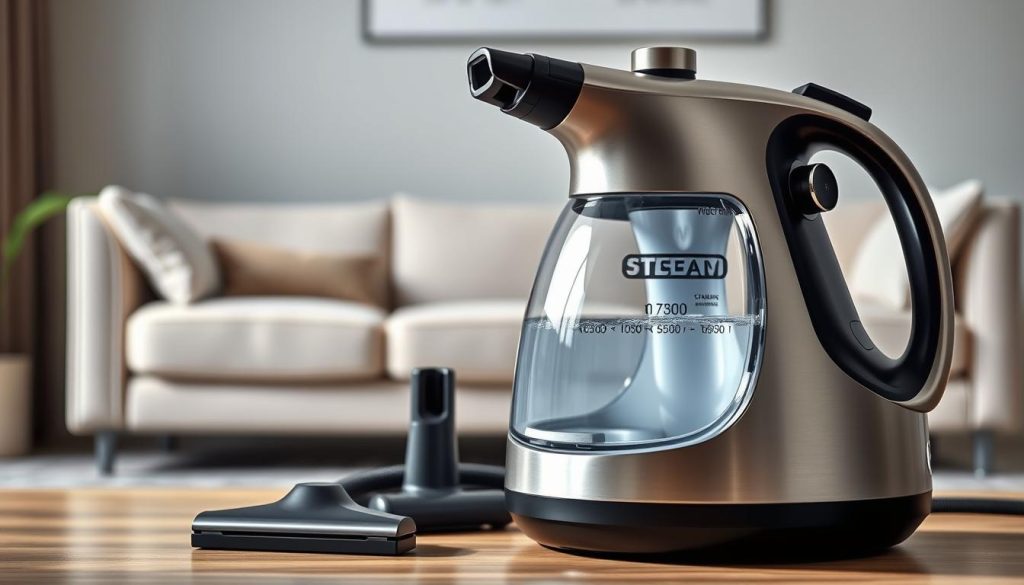
Final note: we treat setup as the step that makes cleaning efficient. When in doubt, err on the side of less moisture and repeat passes rather than one heavy application.
How we use a steam cleaner on a sofa step by step
To avoid excess wetting we always work in compact sections and use short passes. This helps us control moisture, reduce tide marks and speed drying. We treat each seat, arm and back in measured passes rather than one long application.
- Prep: We vacuum thoroughly and separate cushions where possible so edges and seams are accessible.
- Small areas: We work on a small area at a time. Short sweeps stop the surface becoming too damp.
- Nozzle motion: We keep the nozzle moving at a steady pace and overlap slightly. We raise output only when necessary rather than applying pressure.
- Order: We clean high-contact zones first (seat cushions, armrests), then backrests. This helps fabric dry evenly across the furniture.
When we meet visible stains we reduce dwell time and repeat passes instead of soaking. If moisture builds, we blot with a clean cloth to lift excess water and loosened dirt.
Timing and drying: Allow enough time for the task and for drying afterwards. We keep windows or fans on to aid airflow. Once fully dry, we give the upholstery a light vacuum to lift the pile and remove any loose particles.
| Step | Action | Why it matters |
|---|---|---|
| 1 | Vacuum and separate cushions | Removes surface dirt and exposes seams for even cleaning |
| 2 | Work small areas, short passes | Prevents over-wetting and water marks |
| 3 | Keep nozzle moving; adjust output | Controls wetting and protects fabric texture |
| 4 | Ventilate and allow full drying | Speeds drying time and prevents musty odour |
Spot treating stains first, then steaming: techniques that prevent damage
Quick, precise action on a stain often saves a whole upholstery pass later. We treat each spot before any full-area cleaning to avoid setting marks or spreading dirt.
Blot, don’t rub. For wet stains we press a clean, dry cloth into the area. Press, lift and rotate to a clean section of the cloth each time. Rubbing pushes the liquid deeper and risks fabric harm.
About 90% of marks are water-soluble. We test with a white cloth and lukewarm water on a hidden patch. If dye transfers, we stop and choose a gentler route.
For stubborn stains that resist water, we apply a universal stain remover to a colour-fast cloth and dab gently. We never pour product directly onto the fabric. If colour shifts, we cease immediately.
- Rinse residue: Leftover cleaner attracts dirt, so we plan a follow-up rinse or use spray extraction later to remove detergent traces.
- Detail nozzle method: Hold the nozzle at an angle and place a microfibre cloth beside it. Release a short burst so the jet blasts the mark into the cloth without soaking the cushion.
- Pacing tips: Treat one spot at a time, reassess between attempts, and let the area cool if the material seems heat-sensitive.
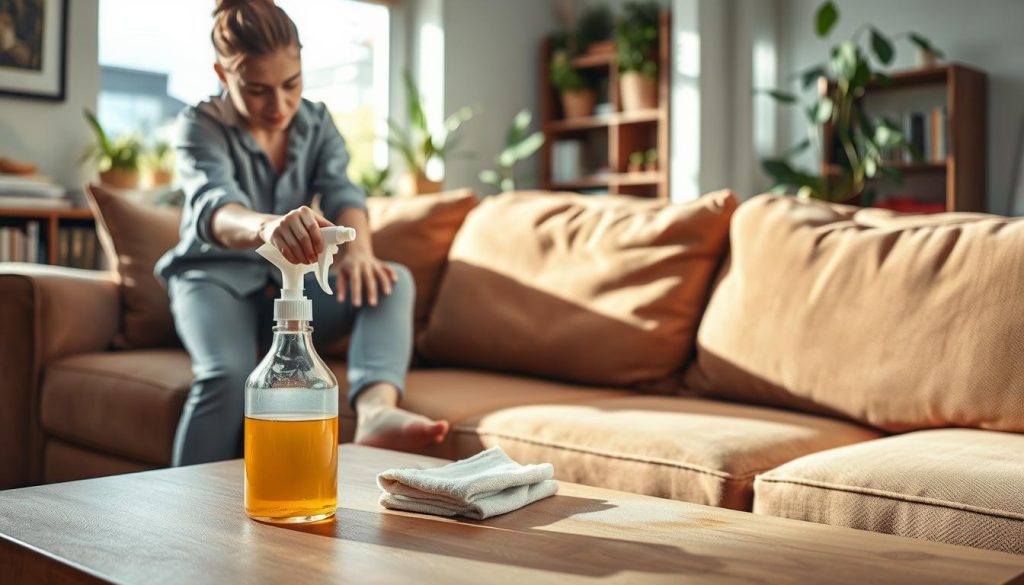
When steam isn’t enough: spray extraction cleaner options for deep upholstery cleaning
When heavy soiling or lingering odours remain, we move to spray extraction. This method sprays a measured mix of water and detergent into the pile and then suctions the solution and loosened dirt away.
How it works: We vacuum coarse debris first, then fill the machine tank and dose detergent per instructions. From about 10 cm distance we spray evenly across connected surfaces to avoid patchy wetting.
We leave the solution to dwell a few minutes, then use slow, overlapping passes to suck out moisture. Repeat until the extracted water runs clear. Wet adjacent panels consistently to prevent water marks.
Rinse once or twice with clear water at a safe temperature for the fabric type. Allow ample drying time with good ventilation, fans or air‑conditioning to speed drying in Singapore.
Final step: Once fully dry — often the next day — we vacuum again to lift the nap. This method works well on car seats and carpets and also pulls out excess detergent left by prior treatments.
Conclusion
In conclusion, simple habits make the biggest difference to fabric longevity and hygiene. We recap the safest workflow: check labels, test a hidden spot, vacuum first, then use a steam device with controlled output and minimal water.
Good results come from restraint and repetition, not soaking. Several light passes remove stubborn dirt more safely than one heavy attempt.
Act fast on stains: blot with a clean cloth, test water‑solubility, and escalate carefully to a targeted product when needed. For deeper contamination or frequent pet issues, spray extraction can remove residue trapped deep within furniture.
Allow ample time to dry, ventilate well and keep pets off the upholstery until fibres are fully dry. Regular vacuuming reduces dust, hair and crumbs, so each future cleaning session takes less time and protects your investment.

