

We tested and compared models suited to Singapore homes to help reduce allergens on beds and sofas. Recent mattress testing showed daily use of a bed vacuum lowered allergens and bacteria; the roundup named the Jimmy BX5 Pro (corded) with HEPA filtration and UV‑C lighting as its top pick.
In this guide we set realistic expectations: these devices aim to cut allergen levels and ease symptoms, not to replace medical treatment. Our audience includes allergy‑prone households, families with children, and anyone troubled by sneezing or itchy eyes.
We compare corded mattress cleaners, a cordless handheld, a premium stick and robot mop‑vac options for automated hygiene. Selection favours real‑world usability on beds, sofas, rugs and curtains plus purchase confidence — returns, warranties and durability.
What “best” means here: strong suction, meaningful filtration, practical attachments and easy upkeep. We introduce models such as Jimmy, UZK, JIGOO, Dyson, Tineco and Narwal and explain which suits different budgets and homes.
We aim to help readers buy with confidence for allergen reduction and daily cleaning ease.
Why dust mites are a problem in Singapore homes
Singapore’s warm, humid flats create ideal conditions for tiny household allergens to thrive. We find these organisms in soft furnishings where they feed on shed skin and settle into fibres.
Where they thrive: mattresses, upholstery, carpets and curtains
Common hot spots are mattresses, pillows, sofas, rugs and curtains. These areas trap skin flakes and retain moisture, giving mites and similar microscopic life a place to multiply.
How waste and particles trigger allergies and asthma
The issue is not bites but allergenic waste and shed material. When disturbed, these particles float into the air and enter noses and lungs.
“Allergenic fragments can cause sneezing, nasal congestion, itchy eyes and asthma flare-ups, especially in bedrooms.”
Why warm, humid conditions make control harder
Routine cleaning can seem ineffective because these organisms hide deep in fibres and reproduce quickly in damp conditions.
We recommend combining better cleaning tools with ventilation and humidity control. For step-by-step mattress care, see our mattress sanitation guide.
- Prioritise mattresses and pillows first, then sofas, carpets and curtains.
- Targeting high-risk areas reduces airborne particles and helps limit allergy symptoms.
Do dust mite vacuum cleaners actually work?
We tested whether dedicated mattress cleaners truly lower allergens on sleep surfaces. The evidence and our trials show a clear effect when these tools are used often and correctly.
What daily bed cleaning can reduce
Daily or frequent passes remove accumulated skin flakes and surface particles. This cuts the food source for mites and reduces airborne allergens and bacteria.
Why some traditional models fall short
Not all household vacuums perform the same. Weak suction at the nozzle, poor seals and low-grade filters can stir fine particles back into the room.
Filtration quality is key. A HEPA filter or equivalent traps microscopic allergens that visible cleaning misses. Without it, a device can make symptoms worse.
- Yes: a dedicated mattress cleaner can lower allergen load when used consistently.
- Pair cleaning with washed bedding, protectors and humidity control for best results.
- Choose a unit with strong suction and a sealed, HEPA-grade filter over gimmicks like lights alone.
| Feature | Why it matters | Practical tip |
|---|---|---|
| Suction | Removes flakes and embedded debris from surface fibres | Look for sustained nozzle pull, not just motor power |
| Filtration | Traps microscopic allergen and bacteria particles | Prefer HEPA-grade or tightly sealed multi-stage filters |
| Seal and design | Prevents leakage of fine particles back into air | Check seals and exhaust routing before purchase |
How we choose the best dust mites vacuum for mattresses, sofas and more
To pick models that suit Singapore homes, we focused on measurable performance and everyday use. Our tests balanced technical figures with handling, storage and service considerations.
Suction power explained
We translate kPa and Pa into real effects: kPa figures are common for mattress tools, Pa for robot units. What matters is how fast the nozzle lifts fine debris from fabric.
Powerful suction without a sealed airflow can still release fine particles back into the room. So we rate suction together with sealing and exhaust routing.
Filtration that matters
We look for HEPA or verified HEPA-grade filters that capture 99.97% of airborne particles. A good hepa filter reduces allergen load only when fitted and replaced as recommended.
Supportive hygiene features
UV‑C light and hot air aim to add sanitation and reduce moisture that encourages growth. We treat these as helpful extras—suction and filtration do the heavy lifting.
Brushes, ergonomics and practical trade-offs
High-frequency brush and tapping heads agitate fibres to free embedded debris. We test handle weight and angle for portability and handheld use across beds and sofas.
For Singapore flats, corded models give steady power but need cord management. Cordless vacuum options add manoeuvrability; battery life must fit routine use.
Ownership checks
We assess noise for evening cleaning, how cleanly the dust cup empties, and storage fit in wardrobes. We also check warranties and marketplace return windows such as Amazon 30‑day returns and brand guarantees like Dyson’s two‑year coverage.
- Key focus: match suction power with a true filter and good seal.
- Look for: brush action, ergonomics, battery life and easy bin emptying.
- Value checks: replacement filters, warranty length and local service.
Our top picks at a glance
Below is a short decision map for readers who want targeted allergen control or whole‑home cleaning. We summarise each pick and state the main trade-off so you can jump straight to the product that fits your flat and routine.
Jimmy BX5 Pro — mattress hygiene
Why buy: deep mattress cleaning with strong suction, HEPA filtration and UV‑C.
Trade‑off: cord management for steady power.
UZK Bed Vacuum Cleaner — multi‑use cleaner
Why buy: versatile for sofas, pet beds and mattresses.
Trade‑off: corded operation can limit reach in tight rooms.
JIGOO J300 — affordable option
Why buy: solid filtration and heat features at a lower price.
Trade‑off: fewer premium extras and wider head for corners.
Dyson Car + Boat — cordless handheld
Why buy: nimble handheld vacuum for crevices, cars and upholstery.
Trade‑off: higher cost and no UV or hot‑air features.
Tineco Pure One Station — premium cordless stick
Why buy: whole‑home pick-up with smart features and easy upkeep.
Trade‑off: premium price for extra conveniences.
Narwal range — robot vacuum‑mop options
Why buy: low‑effort automated cleaning with sealed systems and strong suction for regular upkeep.
Trade‑off: automation misses some edges and tight corners; choose models meeting the ≥7,800 Pa guidance for deeper cleaning. See detailed Narwal recommendations in our robot picks and reviews.
“Pick a model that matches your space: mattress-first for bedrooms, a cordless stick for mixed floors, or a robot for low-effort daily maintenance.”
| Use case | Recommended type | Quick note |
|---|---|---|
| Small bedrooms | mattress-only cleaner | compact storage and high suction |
| Mixed floors & rugs | cordless stick | lightweight and versatile |
| Low-effort upkeep | robot vacuum-mop | choose sealed filters and strong suction |
Best mattress vacuum overall: Jimmy BX5 Pro (corded)
When targeting mattress hygiene, we favoured machines that combine mechanical agitation with sealed filtration. The Jimmy BX5 Pro scored highest for consistent removal of embedded debris and surface flakes.
Why we chose it
High-frequency tapping brush agitates fibres while steady suction lifts loosened material. This pairing removes hair, dander and fine dust rather than only clearing loose crumbs.
Filtration and hygiene
The multi-stage design includes a HEPA filter to cut allergen recirculation. UV‑C lighting adds an extra hygiene layer, but we view it as supportive rather than the main reason to buy.
Best use and practical notes
- Ideal for weekly deep cleaning of mattresses and quick passes on sofas.
- 5‑metre cord gives steady power in tight flats; cord management is required.
- Wider head means extra passes in crevices; consider a handheld cleaner for edges.
“Choose a model that pairs true filtration with mechanical action to reduce airborne allergens.”
Best multi-use mattress vacuum: UZK Bed Vacuum Cleaner
For households that want one compact tool for beds and sofas, the UZK model aims to bridge mattress care and daily upholstery upkeep.
Why it stands out: the unit pairs a HEPA filter with UV‑C and hot‑air features. In humid Singapore flats, the hot air helps dry fibres and reduce lingering odours while HEPA capture limits airborne particles.
What it works well on
We find it useful on sofa arms, fabric headboards, pet beds and quick spot cleans. Its compact size and portability make it easier to use than a full-sized cleaner for short sessions.
Considerations before you buy
The UZK is corded, so you must stay near an outlet and manage the non-retractable cord. Some tests noted mixed suction; crumbs sometimes need multiple passes for full pick‑up.
- Performance tip: judge it by number of passes and dust cup fill after a session.
- Living space: lightweight design suits small wardrobes and tight storage in Singapore flats.
“A compact, multi-function unit that favours convenience over single‑purpose deep cleaning.”
Best affordable mattress vacuum: JIGOO J300 (corded)
If you want reliable mattress upkeep on a budget, the JIGOO J300 gives sensible performance for regular use.
What you get for the money: a corded cleaner with a HEPA-style filter, UV lights and a hot-air mode. These features help reduce surface allergens and cut the amount of fine lint and dirt that feeds mites.
Practical performance
In testing we saw a noticeable amount of fine dust and debris in the cup after a single pass. That visible pick-up matters: regular passes reduce the food source for allergens and ease symptoms for sensitive households.
Where it fits
- Best for: weekly mattress upkeep, pillow tops and quick sofa checks.
- Value note: HEPA filter and heat modes add hygiene benefits at a lower price point.
- Trade-offs: mode indicators can be unclear and the wide head covers fast but is less precise along edges and frames.
“A sensible entry point: strong pick-up on open surfaces, with a few usability compromises to bear in mind.”
Best cordless handheld vacuum: Dyson Car + Boat
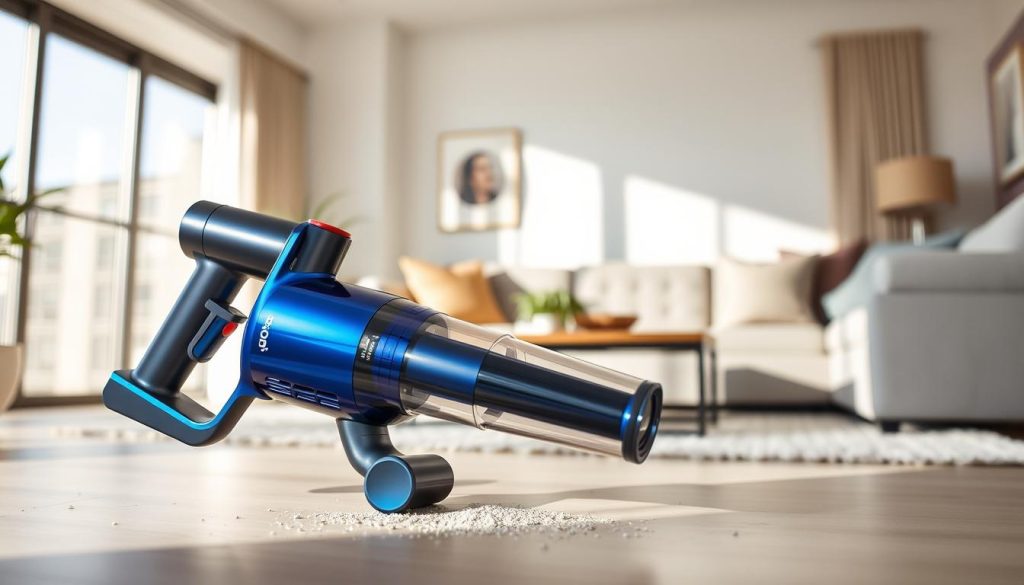
A compact cordless handheld often becomes the most-used tool in a small flat. We found the Dyson Car + Boat stands out for rapid spot cleaning, quick access and storage that fits Singapore homes.
Why we picked it
The unit packs a high-speed motor (Dyson cites ~110,000 rpm) that delivers noticeable suction for its size. Its ergonomics and narrow tools offer easy manoeuvr around seams, skirting and car seats.
Where it works best
Use it on bed seams, sofa gaps, vehicle interiors and tight corners. It excels removing hair and loose debris between deeper cleans, making it ideal for households with pets and allergy concerns.
Considerations and ownership notes
- Price sits in the higher bracket; you pay for power and build quality.
- There is no UV‑C or hot‑air mode, so hygiene gains rely on suction and the right attachments.
- Emptying the bin is straightforward and designed to limit airborne release. Keep filters clean to maintain consistent power.
- Dyson offers a two‑year warranty, which matters when investing in a premium handheld unit.
“A cordless handheld gives fast, targeted cleaning between deeper sessions.”
For a fuller primer on reducing household allergens and complementary steps, see our house dust mite guide.
Best premium cordless stick for allergy sufferers: Tineco Pure One Station
A premium cordless stick can serve as a true whole‑home partner for routine allergy management. In our tests the Tineco Pure One Station picked up 99.8% of debris in one minute, showing strong cleaning performance on open surfaces.
Debris pick‑up and limits
The unit removed most visible dirt and loose particles rapidly, which helps reduce airborne allergens between deep cleans.
It struggled with tight corners and very small items — for example, orzo‑sized particles sometimes needed a second pass. That affects edge cleaning along skirtings in compact Singapore flats.
Convenience features that matter
Lightweight handling and a front light make quick sessions easier, especially on hard floors and upholstery. Assembly was simple and the non‑wall‑mounted station frees up wall space.
The quieter operation makes evening cleaning less intrusive in shared living spaces.
Smart extras vs value
The model includes Wi‑Fi and AI voice, which are neat for remote control and status alerts. We judge these as handy but not essential if you prioritise raw power and a sealed filter.
“If you want a single‑tool whole‑home companion, a premium cordless stick combines agility and strong pickup for everyday allergen control.”
Price note: this model sits in the premium bracket. For allergy‑conscious households it pairs well with a mattress cleaner to cover both floors and sleep surfaces.
Best robot vacuum-mop options for dust mite reduction: what to look for
For busy households that need daily upkeep, a robot mop‑vac can lower baseline allergen levels with minimal effort.
We recommend this type of unit when you want steady, hands‑free cleaning to keep airborne particles and surface allergens down between deeper sessions.
Minimum suction benchmarks: 7,800 Pa and above
Choose robots with at least 7,800 Pa. That level helps pull fine dust from textured rugs and upholstery so trapped particles are actually lifted, not just moved around.
HEPA or antibacterial filtration
Filtration matters. Units with HEPA or antibacterial filters reduce recirculation of allergens into indoor air after cleaning.
Smart mapping and dirt detection
Good mapping and spot detection let the robot focus on high-traffic zones — under beds, near sofas and entrances — rather than treating navigation as a gimmick.
Sealed self-emptying systems
Sealed bins with automatic emptying keep us away from contact with collected dust and debris. This is a practical hygiene gain for allergy-prone homes.
Mop washing and drying
Mop washing plus fast drying stops damp conditions that encourage mites. A drying cycle is not a luxury; it is a hygiene feature that helps keep fabrics less hospitable to growth.
- When to pick this type: ideal for households wanting baseline daily cleaning with minimal fuss.
- Key specs to check: suction ≥7,800 Pa, HEPA-grade filtration, sealed empties and mop‑drying.
“A robot that maps well and dries its mop can maintain lower allergen loads with little hands-on work.”
Narwal picks for automated deep hygiene cleaning
Automated cleaning systems now pair strong pick‑up with hands‑free maintenance for busy Singapore flats.
We recommend Narwal models if you want steady daily cleaning that cuts the build‑up of dust and allergens between deeper mattress sessions. Each model targets a different balance of suction, mop hygiene and storage for pet owners and allergy‑conscious households.
Narwal Freo Z Ultra
What stands out: 12,000 Pa powerful suction and dual AI camera recognition. The mop washing reaches up to 75°C, which helps remove residue and reduce odours.
Narwal Freo X Ultra
Balanced option: 8,200 Pa suction with DirtSense™ and tri‑laser obstacle detection. It runs at ~53 dB, so you can schedule cycles at night without major disruption.
Narwal Freo X Plus
Value and practicality: 7,800 Pa suction meets the guidance for deeper pick‑up. The zero‑tangling brush and roughly seven‑week sealed dust storage make it a good fit for homes with pets and long intervals between emptying.
Narwal S20 Pro
High‑spec claims: up to 20,000 Pa suction and an antibacterial filter with >99.9% antibacterial rate. The fold‑flat 180° design aids access under low furniture for more thorough cleaning of hidden debris.
- Pet guidance: a zero‑tangling brush and sealed dust bin reduce hair build‑up and dander recirculation.
- Hygiene note: high‑temperature mop washing and antibacterial filtration help limit residue that can harbour allergens.
- Recommendation: pair a robot for daily upkeep with a dedicated mattress cleaner for weekly deep work.
| Model | Suction (Pa) | Key hygiene feature | Practical note |
|---|---|---|---|
| Freo Z Ultra | 12,000 | Mop wash up to 75°C; dual AI cameras | Hygiene‑driven pick; strong deep pick‑up |
| Freo X Ultra | 8,200 | DirtSense™; tri‑laser detection | Quieter ~53 dB; balanced daily use |
| Freo X Plus | 7,800 | Zero‑tangling brush; long dust storage | Value for pet owners; low maintenance |
| S20 Pro | Up to 20,000 (claim) | Antibacterial filter >99.9% | High power claims; fold‑flat access for under‑furniture |
“We find Narwal models useful for maintaining lower allergen loads day-to-day, while targeted mattress cleaning still handles deep fabric debris.”
Buying guide for Singapore: choosing the right vacuum type for your home
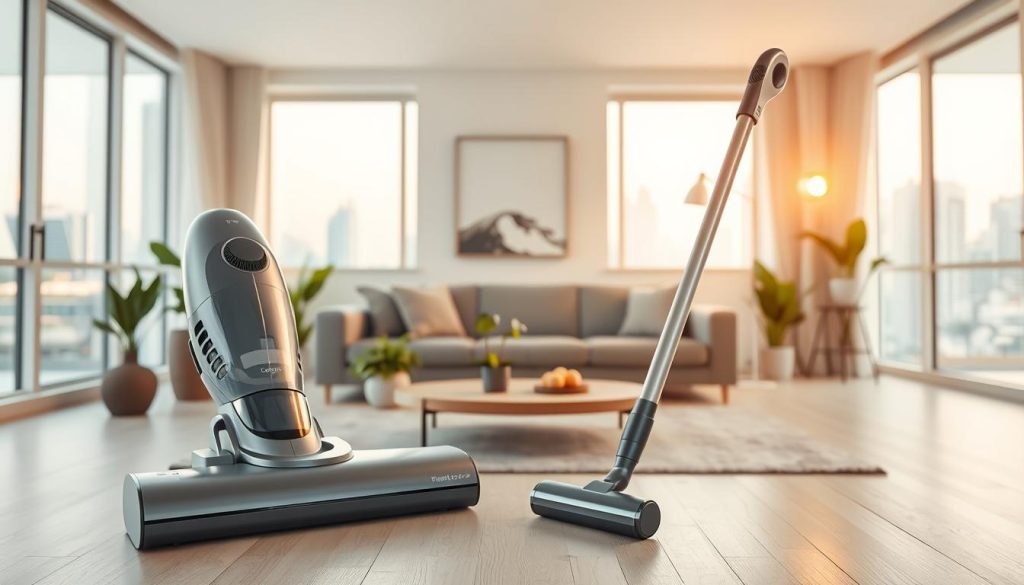
Pick a tool that matches how you live: focused mattress cleaning, fast whole‑home passes, or automated upkeep.
Mattress‑first vs whole‑home cleaning
If bedroom allergens are the priority, a handheld vacuum cleaner gives precise agitation and filtration for seams and pillows. For broad coverage, a cordless vacuum or stick delivers quick passes across tiles and rugs.
Hard floors, rugs and upholstery
Match the brush to the surface. A soft roller prevents scatter on hard floors. A motorised brush lifts fibres on rugs and upholstery for deeper pick‑up.
Homes with pets
Choose sealed dust bins and good filters to trap dander. For pet hair, a tangle‑resistant brush and wider head reduce clogging and keep suction steady.
Humidity management
Even the best tools cannot replace ventilation. Keep indoor humidity below 50–60% with dehumidifying habits to limit mite-friendly conditions and protect indoor air quality.
- Pay attention to suction specs, filter replacements and the fit of the unit in a small home.
- Check brush compatibility with your hard floors and rugs.
- Factor storage and weekly routine into your final choice.
“Match tool type to priority: mattress hygiene, whole‑home speed or automated consistency.”
Keeping dust mites and allergens down between cleans
A simple between-cleans routine keeps airborne allergens lower and makes deep sessions more effective. We focus on repeatable steps you can follow in a Singapore flat to preserve fabric freshness and maintain appliance performance.
Routine basics
Change bedding frequently and run quick vacuum passes on high-contact areas—mattress seams, pillow tops and sofa arms. Vacuuming under mattress protectors matters because dirt and skin flakes can collect between layers even when sheets look clean.
Deodorising and stain care
For fabric freshness, sprinkle baking soda, let sit for 30–60 minutes, then remove. For stains, try a small test patch with a baking soda + vinegar mix to lift marks before full treatment. These are common, low-cost approaches we recommend.
Maintenance essentials
Keep filters and bins serviced to protect suction and stop allergens leaking back into the air. Clean or replace each filter on schedule, empty the bin outdoors or into a sealed bag to avoid puffs of like dust, and check brushes and hoses for blockages.
- Quick wins: ventilate daily and aim for humidity below ~50–60% to make conditions less hospitable to mites.
- Service tip: a clean hepa filter and steady suction deliver the biggest allergy-control gains between deep cleans.
Conclusion
Start by matching your routine to a model category: a dedicated mattress vacuum for bed hygiene, a cordless handheld for crevices and quick jobs, a premium stick for whole‑home coverage, or a robot for automated daily control.
Non‑negotiables are clear: steady suction, a sealed hepa filter or equivalent, and regular cleaning habits to keep allergens and dust low.
Families with allergies should favour mattress‑first machines. Pet owners who deal with hair will value seals, tangle‑free brushes and easy bin emptying. If you want low‑effort upkeep, consider robot options despite some edge limits.
Weigh corded power versus portability, premium price versus performance, and automation versus edge detail. Check storage, noise, bin emptying and replacement filter costs in Singapore before you buy.
Choose the category that fits your life, then commit to consistent cleaning to reduce particles and debris over time.

