

We explain what a chemical free mattress cleaning routine really means and why it matters in humid Singapore. Mattresses gather dust, sweat, allergens, bacteria and mould over time. Many standard products can emit VOCs, so we favour household methods that reduce residues and fumes.
Our method uses simple ingredients — baking soda, white vinegar, lemon, steam — plus sunlight and good ventilation. These approaches deodorise and sanitise without leaving sticky residue. They suit families with babies, young children and those with sensitive skin.
We set clear expectations: a clean mattress should smell neutral, feel dry and look fresher. This short guide previews the steps we follow — strip, inspect, vacuum, deodorise, spot-treat and fully air dry — and why each step matters for lasting results.
Our aim is to give practical, repeatable tips you can use between deeper care sessions, while noting that severe mould or pest problems may need specialist help.
Why we choose non-toxic mattress cleaning for Singapore homes
We favour low-odour routines that reduce what lingers in enclosed bedrooms and air‑conditioned flats. Our aim is simple: safer air and less residue while keeping the bed fresh and usable.
Reducing exposure to harsh chemicals and VOC fumes
Enclosed rooms and AC can trap volatile fumes from some products. We prefer methods that limit VOCs so breathing and indoor air quality improve overnight.
Health and comfort benefits for sensitive skin, allergies and young children
Sensitive groups—babies and those with reactive skin or hay fever—respond better to low‑residue routines. Reducing strong-smelling cleaners cuts irritation and helps sleep quality.
Eco‑friendly and cost‑effective cleaning with household ingredients
Simple ingredients like baking soda and vinegar are effective and inexpensive. A good mattress protector helps, but it does not stop all build-up or pests over time.
- Plan by choosing a sunny day and allow enough time to dry fully.
- Use low-odour steps to avoid repeat spending on harsh products.
- For professional options see eco-friendly mattress cleaning services or compare costs for mattress cleaning in Singapore.
These practical tips keep our sleeping space healthier with minimal fuss and reliable results.
What builds up in a mattress in Singapore’s humid climate
In Singapore’s heat and humidity, a bed can quietly become a reservoir of skin flakes, oils and tiny organisms.
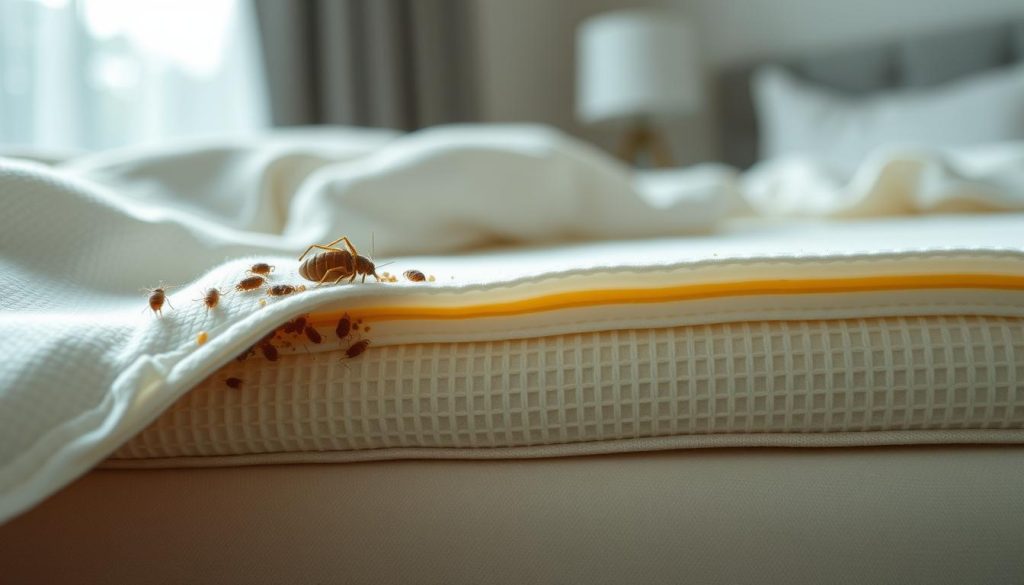
Dust and dead organic matter collect in fibres and seams. Humans shed millions of skin cells daily, which feed dust mites and create a steady food supply. An average mattress may hold millions of mites; a female can lay about 300 eggs. Their droppings are a common allergy trigger.
How sweat, oils and odour take hold
Sweat and body oils soak into fabric over time. Poor ventilation and warm nights make odours worse. These trapped residues sit below the surface and are hard to remove with a quick wipe.
Microbial growth and warning signs
Bacteria, mould and fungal spores thrive where moisture is trapped. Early mould can be invisible yet cause a musty smell.
- Symptoms after sleep: runny nose, itchy or watery eyes, coughing and scratchy throat.
- Skin reactions: eczema flare-ups and rashes may appear.
- We must check seams, edges and the full surface — surface cleaning alone often misses concentrated dirt and allergens.
For a practical step-by-step approach to address these issues, see our guide on what to use to clean a.
chemical free mattress cleaning step-by-step
Start with a full inspection and work methodically to lift dirt and smells while keeping moisture low.
Strip and inspect
We remove all bedding to see the full surface. Check for stains, damp patches and grime around edges and seams.
Vacuum seams and surface
We vacuum mattress seams first, then the top and sides to lift dust and allergens. This prevents debris from sinking when we apply deodoriser.
Deodorise with baking soda and let sit
We sprinkle baking soda evenly, focusing on sweat-prone areas. We let sit for at least an hour to absorb odours before vacuuming again.
Spot-treat and air dry
For fresh stains we blot with water and a clean cloth — never rub. Keep moisture minimal and air the bed fully; do not remake until the mattress air dry stage is complete.
| Step | Purpose | Typical time |
|---|---|---|
| Strip & inspect | Reveal stains and damp areas | 5–10 minutes |
| Vacuum seams & surface | Remove dust and allergens | 10–20 minutes |
| Baking soda application | Absorb odour and oils | 1–4 hours |
| Blot stains & air dry | Lift spills and prevent mould | Varies — until fully dry |
Natural stain and odour solutions we use for common messes
For common household spills we pick simple, effective remedies that target both marks and lingering odour.
Urine and heavy sweat respond well to a white vinegar and water solution. We mix one part vinegar with two parts water, apply lightly and let sit about 10–15 minutes. Then we blot with a clean cloth to lift moisture and residues. Blotting pulls the stain up; rubbing spreads it and roughens fibres.
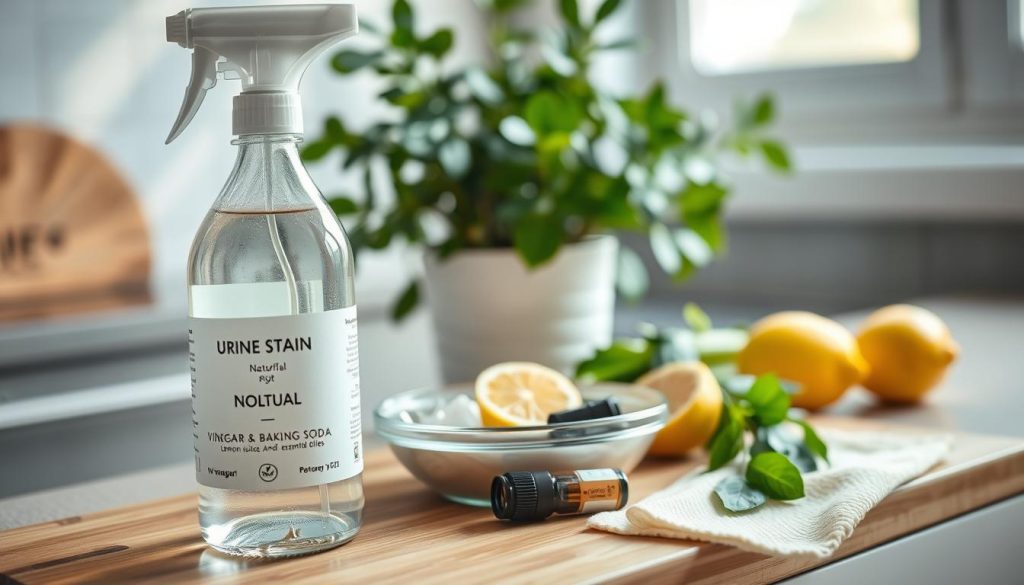
Lemon juice for yellowing
Lemon juice diluted with water acts as a gentle disinfectant and stain remover for yellowing. Use a light application and avoid soaking the area. Allow a short dwell time, then blot and air the surface until fully dry.
Baking soda: amount and timing
For odour control we sprinkle baking soda evenly over the affected area. Use enough to give consistent coverage — a light dusting for a single spot, more for a larger surface. Let it sit at least one hour; for stronger smells we leave it for several hours before vacuuming.
Note: Older, set‑in stains may need repeated treatment rather than more liquid. These ingredient‑based stain remover methods are practical and low‑residue, keeping drying time short in Singapore’s humidity.
Deep sanitising without chemicals: steam, sunlight and ventilation
For deeper sanitisation we rely on targeted heat, bright sunlight and steady airflow to reduce mites, bacteria and mould. We escalate when musty odours persist, allergy symptoms remain or long gaps have passed since a proper mattress cleaning cycle.
Steam to tackle mites and microbes
We always vacuum first to remove loose dirt and dust. Then we pass a steam nozzle evenly across the surface so high heat reaches seams and fabric layers. Steam helps kill mites, bacteria and mould without harsh cleaners.
Sunlight and airflow as natural disinfectants
When possible we remove mattress from the frame and place it in direct sunlight or near an open window. Sunlight and fresh air reduce musty smells and lower microbial load.
Drying precautions in Singapore humidity
We avoid lingering moisture: steady movement with the steamer and fans or dehumidifiers speed the mattress air dry stage. Let mattress dry completely before remaking the bed to prevent mould returning.
Tip: For professional options and more guidance on chemical-free options see chemical-free options.
Conclusion
Consistent care — quick vacuuming, prompt stain attention and occasional airing — saves time and keeps the bed fresher.
Follow our simple steps: inspect, vacuum, deodorise, spot‑treat and fully dry. These actions make mattress cleaning manageable and cut down on lingering dirt and odour in humid Singapore. Plan work around weather and airflow to avoid mustiness.
We advise a deep refresh every 3–6 months, quarterly if stains are common and monthly to bi‑monthly when allergies flare. A waterproof mattress or a good mattress protector helps day‑to‑day but does not replace regular care.
Practical next steps: one deodorising session (baking soda and let sit), one targeted stain treatment and one deeper sanitise by steam or sunlight. Vacuum the mattress regularly, blot stains immediately and rotate or remove mattress to air it — small tips that keep mattresses in top condition.

