

We start by setting clear expectations for microsuede sofa care in Singapore homes. It is lower maintenance than many upholstered pieces, but it still needs a steady routine to stop marks and wear. Regular attention keeps your furniture looking fresh and extends its life.
Microsuede is a kind of microfiber made from ultra-fine synthetic fibres that mimic suede. Treat it like a delicate fabric, not as natural suede. That prevents accidental damage and helps you choose the right approach when a spill happens.
Our guide explains the practical steps we use on our own couch. We always read the care tag first and do a spot test. From there we follow either a water-safe or solvent-safe route, using gentle motion rather than soaking the material.
Two simple aims guide us: remove surface dirt before it becomes grime, and treat stains early with the correct method. The right cloth and a light touch matter as much as the product you pick. Most everyday marks improve at home, but we note when professional upholstery help is wise.
What microsuede is and why it needs a specific cleaning approach
We must know the textile before we treat it. This material is a tightly woven microfiber fabric made from ultra-fine synthetic fibres that mimic natural suede. The ultra-fine pile gives a soft feel, but it also means the surface can show nap changes after treatment.
It is not leather suede. That difference matters: leather products need different products and oils. Using heavy conditioners or leather cleaners on this textile can harm the fibres and the look.
Although the material is more water-resistant than many fabrics, resistance is not the same as immunity. Water may bead briefly, yet spills left to sit can spread and leave stains.
Common household culprits in Singapore include sweet drinks, coffee and tea, oily foods, makeup and sweat at frequent contact points. If we over-wet an area or scrub hard, we risk pushing grime deeper, distorting the nap and creating visible water rings across the couch.
Choose the right method by reading the care code, work in small areas, and use blotting with a clean cloth rather than aggressive wiping. Controlled moisture and gentle motion protect your furniture and keep the surface even.
Check the care tag first: choosing the right cleaner for your sofa
Finding the care label tells us whether water or solvents are the right route for treatment. We look under loose cushions or along seams where manufacturers place the tag. Never begin without it: the tag gives the cleaning code and any specific instructions for that fabric.
Understanding cleaning codes
W — use water-based solutions safely. S — use solvent cleaners only. S‑W — either approach is acceptable. X — vacuum only; professional dry cleaning may be required.
Cleaners we avoid
We never use bleach or chlorine products, acetone (nail‑polish remover) or carpet formulas not made for upholstery. These can strip colour, damage the pile and cause irreversible marks on microfiber furniture.
Why we always spot-test
Before full treatment we do a small spot test on a hidden area with our chosen cleaner and a clean cloth. Then we wait to confirm no discolouration, nap change or ring formation. Following the tag and those simple tests keeps a small stain from becoming a bigger problem.
Pre-clean preparation we do every time in Singapore homes
We begin by clearing the immediate area and checking humidity so drying won’t be a problem later. This short step saves time and prevents damp odour and watermarking on furniture.
Tools we gather:
- vacuum with a brush attachment to lift dirt and trapped hair
- spray bottle filled with plain water or approved solution
- several clean microfiber cloths and a soft-bristled brush
We vacuum the couch thoroughly first. The brush attachment lifts surface dust without roughening the nap. Removing crumbs and hair avoids muddy streaks when we use any water or solvent later.
For fresh spills we act fast. Blot with a clean cloth, switch to fresh sections as they dampen, and never rub. We ring-fence the area and work from the outside in so the stain does not spread across the surface.
| Step | Tool | Why it matters |
|---|---|---|
| Vacuum first | vacuum + brush | Removes dirt and hair to prevent streaking |
| Prepare cloths | microfiber cloths | Absorb spills without lint or over-wetting |
| Assess covers | check care tag | Remove covers only if manufacturer allows |
We note that removable cushion covers get washed separately only when the care instructions permit it. We keep components together so colour and wear remain consistent across the couch.
Microsuede sofa cleaning with water-based solutions for W and S-W codes
When the care code allows water, we treat moisture as a precise tool rather than a cure‑all. We always begin with vacuuming and a soft brush to lift dust. Controlled wetting prevents tide marks and pile damage.

Light soil refresh
For light soil we mist warm water over a small area and blot with a clean cloth. The aim is to lift surface dirt without flattening fibres. Work in short passes and change to a dry section of cloth as it absorbs soil.
Our gentle suds method
Make foam from a few drops of dish soap in warm water and use only the suds on the fabric. Apply the foam with a cloth so the material never becomes saturated. Rinse the cloth and repeat until the area looks clean.
Spot-clean technique for a stained area
On a stained area we use small circular motions to loosen residue, then blot immediately. Move from the outer edge towards the centre to stop spreading the stain. If colour transfers to the cloth, pause and test a subtler solution.
Finishing steps
We work in manageable sections so one part does not dry differently from another. Once dry, vacuum again to remove loosened detergent and then brush the fabric to restore the nap.
For more detailed guidance on product choices and deeper methods, see our recommended resources — care tag guidance and machine-assisted tips.
Solvent-safe stain removal for S and S‑W codes
Where water risks setting marks, we use targeted solvent options and steady, small‑area treatments. For S‑coded fabrics we never begin with water. Instead we pick products made for upholstery and test a hidden patch first.
Rubbing alcohol spot treatment: blotting for stubborn stains
For stubborn stains we apply a small amount of rubbing alcohol to a clean cloth. We blot the mark gently, working from the outer edge toward the centre.
Keep pressure light and replace the cloth as it darkens. Repeat in short passes until the stain lifts.
Using a solvent-based upholstery cleaner safely and evenly
When using a commercial solvent cleaner, follow the instructions and ventilate the room. Apply a small amount evenly across the stained area and the immediate surrounding surface.
This prevents a visible “clean spot” and keeps the pile uniform. Avoid over‑application to prevent texture change.
Vinegar for oil-based stains and odour control
White vinegar can help with oil marks. We dilute it and use sparingly, then follow with the code‑approved solvent step.
To remove lingering vinegar odour, we air the area well and finish with a light vacuum once dry.
Dry detergent and other low‑moisture options
For quick fixes, dry dish detergent can be brushed in, left to bind oils, then vacuumed out. It’s a low‑moisture solution for humid Singapore conditions.
If a stain persists after careful, code‑correct attempts, we stop DIY and seek professional upholstery help rather than escalate to harsher solvents.
Drying, deodorising and restoring the texture after cleaning
Drying and texture recovery are the final steps that decide whether a job looks professional or homemade. Uneven drying can leave watermarking, and slow evaporation in humid Singapore air often causes lingering smells. We treat this stage as part of the result, not an afterthought.
Speeding up drying safely
We increase airflow with fans and open windows where possible. If needed, we use a hairdryer on the lowest setting and keep it moving across the area to avoid overheating any panel.
Keep the device at least 30 cm away and never concentrate heat on one spot.
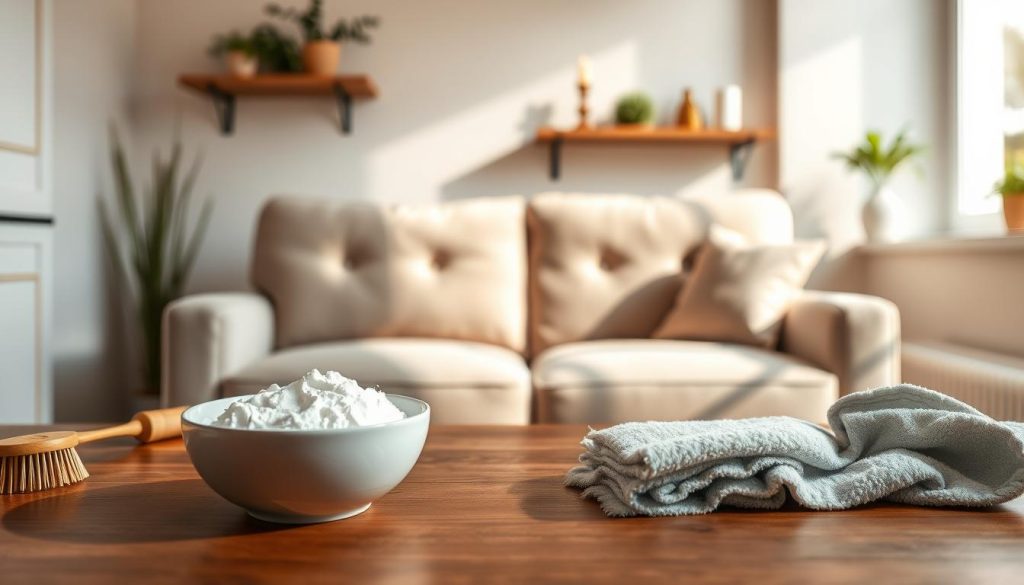
Deodorising with baking soda
For odour control we sprinkle baking soda across the affected surface or a targeted area. Leave it to absorb smells for several hours or overnight.
After resting, we vacuum thoroughly to remove the baking powder and trapped particles. Baking soda is our go‑to when we want freshness without adding more water to the fabric.
Restoring the nap
Once dry, we gently work a soft-bristled brush over hard patches left by stains. Brushing lifts and realigns fibres so the surface looks even again.
We brush in consistent directions panel-by-panel so light does not reveal patchy zones. A final pass with a clean cloth evens the look and leaves the furniture ready for daily use.
“The aim is not just ‘clean’ but a uniform, like-new feel that lasts.”
For step-by-step care that includes fibre-specific advice, see our detailed guide: microfiber care and drying tips.
Conclusion
We end with a clear routine that keeps the upholstery fresh and prevents stubborn marks.
Follow the care tag and simple instructions: read the tag, vacuum regularly, pick the correct method and spot‑test before you apply any product.
Use light motion, blot rather than rub, and move in small sections. Microfiber and suede‑like fabrics respond best to controlled steps rather than heavy soaking or harsh cleaners.
Keep a ready kit — cloths, a soft brush and a suitable cleaner — so we can act before dirt or a stain sets. For a practical checklist and quick tips, see our small emergency kit.
If marks persist after careful, code‑correct work, we opt for professional upholstery support instead of risking further damage.

