
We present a single solution for businesses in Singapore that need reliable, professional results. Our aim is to help commercial buyers choose equipment that handles dust, debris and liquid spills without fuss.
Our range of vacuum cleaners is built for heavy use. Each unit has a robust housing, sturdy rollers and long cables for real sites.
We explain what best quality means in practice: consistent performance, practical accessories and predictable running costs. We keep selection simple so you can shortlist fast.
We help you match machines to risk, volume and routine. From daily facility tasks to tougher site work, our solutions fit varied needs.
Below we preview the decision factors buyers value most: suction, filtration, dust class safety, tank size, mobility and maintenance. Use our guide to pick the right vacuum setup for your operation.
Built for Singapore worksites: our industrial cleaning performance promise
We design machines that meet the pace of Singapore worksites without fuss. Our focus is on compact builds that handle frequent moves between lifts, loading bays and mixed indoor-outdoor zones.
Durable, compact designs for fast-paced environments
Durability and small footprints are central to our range. Tough casings and secure fastenings reduce wear on site. Castors and grips make transit simple for busy teams.
Efficient cleaning that supports hygiene and productivity
We link routine cleaning to better hygiene, staff comfort and steady productivity. Reliable suction and fit-for-purpose accessories help teams finish tasks on time.
- Our wet dry vacuum approach fits high-throughput operations where spills and dust need instant attention.
- Compact, robust choices cut transit time and lower downtime during audits or shift changes.
- We offer consultative support so buyers match machines to real workflows without over-specifying.
Performance promise: dependable suction, stable mobility and accessories that keep sites presentable and safe for daily work.
Industrial dry and wet vacuum cleaner range for commercial use
We group our commercial machines into clear categories so buyers can match kit to site needs fast.
Wet & dry all‑rounders suit daily tasks where teams face mixed mess — general dust, damp dirt and occasional spills. Models in this class use robust housings and tool kits for versatile cleaning across floors and loading bays.
Fine‑dust capable models keep suction steady in high‑demand jobs. Systems such as Kärcher NT Tact use automatic filter cleaning to limit downtime and maintain airflow when handling very fine dust.
Standard class machines are built for coarse debris and larger liquid recovery. These types focus on volume handling and simple maintenance to cut running costs.
Safety vacuum cleaners protect operators where hazardous dust exists. We offer M and H‑class options for respirable hazards, including asbestos, and units that meet local safety rules.
Special‑purpose options cover niche needs: disposal pump units, bakery models and explosion‑proof choices for zone 22. Choosing the right type up front reduces wear, service bills and performance drop‑offs in real work conditions.
Key benefits of choosing a wet dry vacuum over separate machines
When sites see dust, spills and damp residue in quick succession, a single multi‑purpose unit keeps operations moving. We find this approach reduces confusion for teams and cuts needless equipment storage.
One machine for dry debris, damp dirt and liquid spills
Versatility matters on mixed‑use sites. A combined unit picks up loose debris, sluices out liquids and handles damp residue without swapping machines.
Reduced downtime and faster turnaround between tasks
Switching modes takes moments compared with fetching a second device. That faster changeover saves measurable time on shift handovers and reactive cleanups.
- Fewer machines mean less storage and lower maintenance for our cleaning teams.
- Operators face fewer errors when one unit covers multiple tasks.
- Quicker response to spills limits damage and improves site safety.
“A single, reliable unit often delivers the best balance of cost, uptime and consistent cleaning results.”
We set clear rules for correct use. Run wet pickup mode only when recovering liquids; switch to the dry setup for dust and loose debris. This discipline protects the motor and extends service life.
For practical tips on unusual applications and how teams maximise use, see our guide on alternative uses for a wet dry.
Suction power and airflow that stay consistent during long jobs
Sustained suction and steady air flow matter most when teams run long shifts on site. By “consistent suction power” we mean stable airflow and minimal fade as filters load with fine dust.
Filters clog over time, which restricts air movement and reduces suction. The motor is often blamed, but a blocked filter is usually the real cause. Regular cleaning keeps the pathway clear so power stays usable for longer.
Why suction drops and how filter cleaning prevents it
Automatic and semi-automatic systems briefly reverse airflow to shake dust free. Sensor-controlled units such as NT Tact use differential-pressure triggers to clean at set intervals, restoring suction without stopping work.
Some settings clean every 60s at MIN and every 15s at MAX on lighter classes. Tact filters can last until roughly 180 kg of fine mineral dust before replacement, depending on the model.
Designed to handle large volumes of fine dust and debris
Workshops and construction sites need purpose-built machines to manage heavy fine-dust loads. Light commercial models lack the filter design and cleaning cycles required for continuous duty.
What to look for when comparing motor power
Compare power figures alongside airflow (m³/h) and filter design. High motor power without effective filtration or cleaning gives short bursts of performance only.
“Better filter cleaning equals longer continuous work periods with fewer interruptions.”
- Check airflow ratings, not just watts.
- Look for automatic cleaning or easy semi-auto options.
- Match filter class to the dust type you handle.
| Motor rating | Airflow (m³/h) | Filter-cleaning | Best for |
|---|---|---|---|
| 2.2 kW | 3600 | Semi-automatic | Workshops, light dust |
| 3.0 kW | 4800 | Automatic sensor-controlled | Construction, heavy fine dust |
| 4.0 kW | 6000 | Automatic with frequent cycles | High-volume continuous use |
For hands-on filter care tips, see our short guide on how to clean a vacuum filter. Proper maintenance keeps suction steady and productivity high.
Filtration and air quality: protecting people, not just floors
Air quality is the real measure of an effective cleaning system. We prioritise staff safety by fitting machines with staged filtration that traps fine particles before they leave the unit.
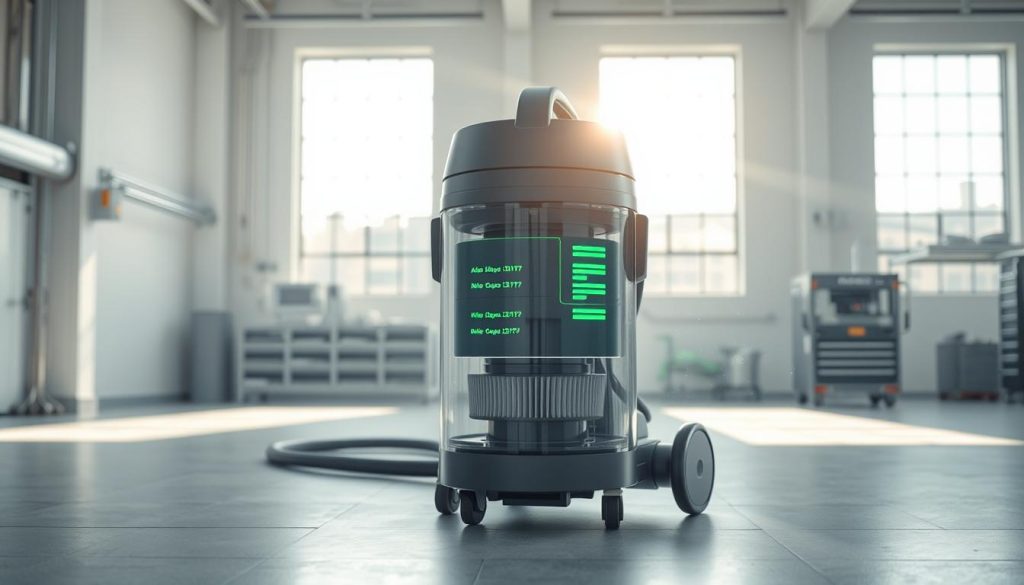
Multi-stage filtration and optional HEPA for fine particles
Our multi-stage systems use pre-filters, fine pleated stages and optional HEPA modules to capture the smallest dust particles.
Certified H-class flat pleated filters retain hazardous material. Typical separation rates are M/L at 99.9% and H (HEPA) at 99.995% (model dependent).
Keeping dust inside the machine for a cleaner exhaust air stream
We ensure tight seals and correct filter fit so exhausted air is cleaner. Strong suction without the right filters can still let fine particles pass through.
- We configure filtration by task, from everyday housekeeping to higher-risk fine dust control.
- This reduces airborne exposure and supports long-term staff health.
“Effective filtration protects people, not just surfaces.”
| Filter stage | Typical retention | Best for |
|---|---|---|
| Pre-filter | ~90% | Large debris, coarse dust |
| M/L pleated | 99.9% | Construction and workshop dust |
| H / HEPA | 99.995% | Fine dust particles, hazardous material |
Dust classes L, M and H explained for professional vacuums
Knowing L, M and H classes avoids under‑specifying machines and costly safety gaps.
We define the classes simply so buyers can match a unit to the actual hazard, not marketing claims.
Class L — moderate‑risk dusts such as chalk and plaster
Class L is for low to moderate dust risks where permeation is ≤ 1.0%. Typical materials include lime, chalk and plaster.
These units suit routine site housekeeping and general finishing trades where exposures are not high.
Class M — the baseline for construction sites and mixed materials
Class M limits permeation to
We recommend Class M as the default for general construction because it balances performance and safety for common materials.
Class H — hazardous substances including asbestos and carcinogenic dust
Class H offers the highest protection with permeation
Certified systems and correct disposal are essential when materials meet this risk level.
When to consider explosion‑risk dust requirements (Zone 22)
Combustible dust such as paper or flour can create Zone 22 risks. In those environments, choose ATEX‑rated equipment and accessories.
- Match class to material: select L, M or H based on the dust type you handle.
- Follow safety rules: certified H class for carcinogens; M class as site baseline.
- Flag explosion risks: use specialised ATEX options where combustible dust exists.
“Choose the class that matches the hazard, not the marketing name on the machine.”
Automatic and semi-automatic filter cleaning systems
Smart filter cleaning cuts mid‑shift downtime and keeps suction steady where it matters. Triggered air cleaning technology (Tact) uses short, powerful reverse pulses to shake dust from pleated filters without stopping work.
Triggered air cleaning technology for uninterrupted use
Sensor‑controlled systems monitor differential pressure and fire cleaning cycles when needed. This keeps airflow and suction stable during long runs of fine dust recovery.
Benefits of automatic filter cleaning for efficiency and cost control
Automatic cleaning reduces operator contact with dirt and lowers the risk of inhalation during maintenance.
Practical gains include less downtime, fewer filter changes, and the option to run without filter bags in suitable tasks. That improves container use and cuts consumable spend.
How semi-automatic cleaning supports small to medium fine‑dust tasks
Semi‑auto units let users trigger a cleaning cycle manually — typically a brief button press sequence. This is ideal for smaller sites where teams prefer control over intervals.
- Keep automatic cleaning off for liquid pickup or when using disposable bags.
- Use sensor modes for heavy fine dust to protect power and prolong filter life.
- View filter cleaning as a productivity tool that saves time and ensures consistent results.
“Automatic filter cleaning is a productivity feature, not a gimmick — it reduces time lost to manual maintenance mid‑job.”
How wet and dry vacuum cleaners work in real environments
We explain how a combined unit protects the motor and the operator, and why those protections matter on busy sites.
Wet pickup: float shut-off and overfill protection
A bypass blower creates the suction that lifts water and small liquids into the tank. A mechanical float then blocks the suction channel when the level rises.
Some models use an electronic cut-off. Conductive contacts sense when water reaches a threshold and the unit switches off to prevent damage.
Dry pickup: cyclone separation and cartridge filters
For solid debris, a cyclone-style rotation drops heavy grit to the container base before fine filtration starts. This reduces dust loading on the filter.
Flat or cartridge filters trap the finer particles. Poor filter condition lowers air flow, so cleaning or replacement restores performance quickly.
“Correct design reduces breakdown risk and keeps cleaning work steady under pressure.”
Applications across Singapore industries we support
We map applications to practical machine choices so teams in Singapore get the right kit for the job. Our aim is to match filtration, tools and capacity to each sector, not to sell one size to everyone.
Construction and renovation sites
On construction sites, cement dust, slurry and coarse debris demand machines that switch quickly between fine dust control and wet recovery.
We specify filter class and container size so teams keep suction and limit dust escape during heavy work.
Workshops and garages
Workshops face metal shavings, sawdust, oils and water from routine servicing. Fast, robust cleaning keeps bays safe and productive.
Our recommendations for workshops consider tool extraction, hose length and sturdy nozzles for repeat use.
Factories, warehouses and commercial facilities
Factories and warehouses need oil and liquids recovery plus general waste pick-up in high-traffic areas.
Commercial sites require rapid response to spills and gentle cleaning that does not disturb customers or tenants.
- We support automotive, marine, chemical, agriculture and building sectors with tailored applications guidance.
- Match the machine, filtration and accessories to your application for safer, faster work.
“Choose the right setup for each application rather than a single catch‑all option.”
Construction dust, health and safety considerations
We see a wide range of dust types on building sites. Cutting, sanding and demolition release particles from concrete, timber and plasterboard that behave very differently.
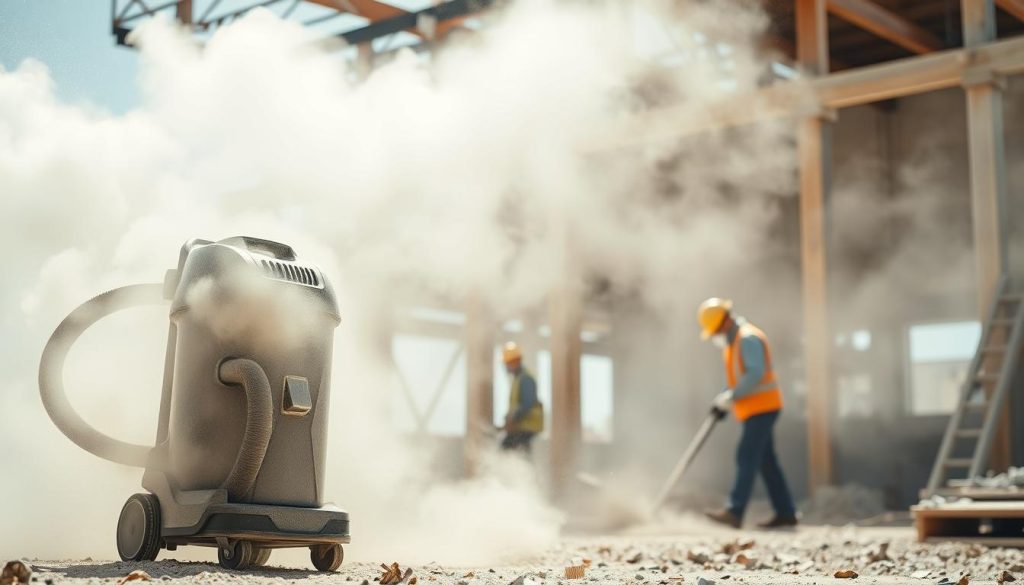
Common types from concrete, wood and plaster
Respirable crystalline silica comes from concrete, bricks, tiles, mortar and sandstone. It creates fine particles that reach deep lungs.
Wood dust varies by species—softwood, hardwood, MDF and plywood produce different hazards. Plasterboard, limestone and marble add further dust loads.
Why fine dust control matters for long‑term respiratory health
We stress health over neatness. Long-term exposure to silica or asbestos raises cancer risk. Certain hardwoods carry a higher nasal cancer risk.
Good control protects staff and reduces cleaning frequency for equipment.
Practical prevention measures for site use
Vacuum at source by fitting power-tool extraction ports and using correct filtration. This stops most dust before it spreads.
- Prefer low-dust methods such as damp work or binding dust with water where safe.
- Avoid sweeping or actions that stir settled dust.
- Choose certified filters and compatible vacuum systems for high‑risk tasks.
“Controlling dust at source is the most effective safety measure on site.”
Tank capacity and productivity: choosing the right collection volume
Tank volume directly shapes how much cleaning we complete in a shift. Choosing the right capacity reduces stops and keeps teams working to schedule.
High-capacity tanks for fewer emptying cycles
High-capacity tanks cut interruption time. A larger container means fewer trips to dispose of waste and more continuous work.
Typical capacity options for demanding clean-up work
We recommend matching size to task. The CIMAR JB Series offers 30L, 60L and 100L options to minimise downtime on large-scale clean-ups.
For heavy liquid recovery a bigger tank reduces stops. For bulky debris in tight spaces a smaller tank eases handling.
- Productivity: fewer emptying cycles raise output per shift.
- Practicality: weight when full affects manoeuvrability and emptying effort.
- Balance: oversize tanks can be impractical in confined sites.
“Tank size is a productivity lever: pick capacity to match your typical job, not the largest possible option.”
| Capacity | Best for | Emptying frequency (typical) | Effect on time & efficiency |
|---|---|---|---|
| 30L | Confined sites, mixed debris | High | Better manoeuvre, more stops |
| 60L | General contracting, mixed liquids | Moderate | Balanced performance and time savings |
| 100L | Large-scale clean-ups, long runs | Low | Fewer interruptions, higher output |
We view capacity as part of overall performance. Suction, filtration and tool choice work with tank size to deliver real efficiency on site.
Build quality and mobility for harsh worksites
Robust build and smart mobility keep machines running day after day on busy Singapore sites. We focus on parts that tolerate knocks, moisture and regular movement.
Rugged containers use stainless steel or reinforced polypropylene to resist corrosion when recovering liquids, oils or chemical residues. Bumpers and handholds protect the tank and make lifting easier for our teams.
Castors, handles and stable movement
Large metal castors, wide handles and low centres of gravity help units cross uneven surfaces and thresholds without tipping. That stability keeps the floor and operators safe during frequent moves.
Cable, hose and tool storage
Built-in hose wraps, side pockets for crevice nozzles and case racks for small toolboxes cut trip hazards. Neat storage protects accessories and keeps machines ready for use.
Long-term value: durable materials and sensible mobility features cut repair bills, lengthen service life and deliver consistent results across shifts. We test models for both indoor floor protection and rough semi-covered areas common in local sites.
“Durable design reduces downtime and raises ownership value.”
Accessories and tool compatibility for faster cleaning
The right tool kit turns routine tasks into quick, repeatable work. We focus on accessories that cut cycle time, protect filters and deliver consistent pickup across floors, edges and tight equipment gaps.
Wet floor heads, dry nozzles and crevice tools
Wide floor nozzles with quick-change inserts suit both liquid recovery and loose debris. A single head that swaps seals speeds swaps and reduces lost parts.
Crevice tools clip neatly to the frame so operators never hunt for the right piece at shift handover.
Power-tool extraction readiness and airflow control
We fit a tool sleeve with an airflow regulator and rubber attachment to match power-tool ports. This keeps dust capture at source and lowers airborne particles.
Airflow control at the tool end preserves suction where it matters most — at the point of contact with the work surface.
- Reduce time: correct tools mean fewer passes and faster completion.
- Standardise kits: keep one set per team so switching tasks is seamless.
- Buy for compatibility: contractors should choose models that accept common nozzles and sleeves.
For a compact guide to crevice options and clips, see our short note on crevice tools in Canada.
Maintenance, service and running costs we help you manage
A planned programme of checks and simple cleaning preserves suction and lowers lifetime cost.
Filter care to maintain suction and extend service life
Keep filters clear to maintain steady suction. We advise a short daily check of pre-filters and pleated stages. Remove large debris, tap out dust away from people and run an automatic cleaning cycle where fitted.
Timely replacement prevents motor strain. That reduces service visits and keeps the unit reliable across long shifts.
Bagless vs filter bag operation: when each makes sense
Bagless systems cut consumable spend when automatic cleaning is available. They suit sites where dust handling is controlled and staff follow safe cleaning steps.
Filter bags offer safer containment for hazardous material and simplify disposal. Choose bags for high-risk tasks and bagless for routine site housekeeping to save time and cost.
Replacement parts and after-sales support for machines
Accessible parts and prompt service reduce downtime. We keep common seals, castors and motor spares on hand and provide clear guidance for routine tasks.
Planned maintenance is a safety measure as much as a cost control. Regular checks cut long-term spend on filters, bags and accessories while keeping cleaners productive.
| Item | Recommended interval | Effect on cost |
|---|---|---|
| Pre-filter check | Daily | Maintains suction; low cost |
| Pleated filter cleaning | Weekly or auto cycles | Fewer replacements; saves service time |
| Filter bag change | Per full container | Higher consumable cost; better containment |
| Parts & service inspection | 6–12 months | Prevents major repairs; reduces downtime |
How we help you select the right model for your site and debris type
Selecting the right model starts with a short audit of what you actually pick up on site. We ask about the material type, volume and how often teams clean. This prevents over‑specifying and keeps running costs down.
Matching debris type
Coarse dirt needs wide nozzles and larger tanks to cut emptying time. Fine dust particles require pleated filters and, for hazardous dust, H‑class or HEPA options.
Liquids and oil demand float shut‑off, suitable seals and appropriate disposal methods. Viscous liquids may also need pump‑out accessories.
Matching risk level
We map L, M and H classes to filter setups and containment. For higher risk tasks we recommend sealed bagging or HEPA filtration to protect people and the environment.
Matching workload
Continuous use needs automatic filter cleaning, stable airflow and motor power in the CIMAR JB Series range (1.2–3.6 kW). Noise below 80 dB matters for occupied sites.
Request a recommendation
Tell our Singapore team about material types, daily volume, shift length and compliance needs. We will propose the best model, accessories and a maintenance plan.
| Factor | What we ask | Suggested feature |
|---|---|---|
| Debris type | Coarse, fine, liquids, oil | Nozzles, filter class, seals |
| Risk level | L / M / H classification | HEPA, sealed bags, disposals |
| Workload | Shift length, continuous use | Auto filter cleaning, 1.2–3.6 kW motors |
Conclusion
A well-specified combined unit delivers steady performance across dust, damp residue and liquid spills.
We recommend a clear buying checklist: stable suction power, effective filtration, the correct dust class (L/M/H) and a tank size suited to your workload. These priorities protect long‑term performance and reduce interruption on Singapore construction sites.
Safety and health are central. Choose sealed containment or HEPA options where hazardous dust exists, and consider explosion-rated units for Zone 22 risks.
Remember: true results come from the full system — machine, filters, tools, seals and correct operator practice — not headline motor ratings alone.
Explore our range and tell us about your site so we can recommend the right wet dry vacuum and accessories for confident buying.

